This article contains advertising. Our booking links are routed through a partner that adds commission tracking automatically, so if you book through one we earn a commission from the provider, at no extra cost to you. It never affects what we recommend. Affiliate disclosure
Walk east from Glasgow Cross on a Saturday afternoon in October and you can hear Celtic Park before you can see it — a low, rolling noise carried on the wind over the Gallowgate, punctuated every few minutes by something that sounds like a wave breaking. Do the same walk on a Wednesday and the street is empty, the shutters are down on the ticket office, and the only clue is the floodlight pylons standing over the tenements. That gap between the two Glasgows is what surprises visitors most. Glasgow football is not a sideshow you can dip into on a whim; it runs to a timetable, and the whole experience — the tours, the tickets, the pubs, the buses — bends around whether there is a match on.
This guide covers the three big grounds you can actually get inside — Celtic Park, Ibrox and Hampden Park — plus how match tickets work when you are not a season-ticket holder, what a matchday actually feels like, where to watch a game if you cannot get in, and how to reach each stadium without a car. Prices were checked in September 2026; treat them as the right order of magnitude rather than a quote, because clubs adjust tour and ticket pricing every season and matchday categories change fixture by fixture.
Glasgow football at a glance: what it costs
Four numbers do most of the planning work. Everything else is detail.
| What | Typical cost | How long | Book ahead? |
|---|---|---|---|
| Celtic Park stadium tour | From about £20 per adult | About 1 hour | Yes — sells out on school holidays |
| Ibrox stadium tour | From about £28 per adult | About 1.5 hours | Yes — non-match days only |
| Hampden Park tour and Scottish Football Museum | About £16–20 per adult | 1.5–2 hours | Recommended, not essential |
| Scottish Premiership league ticket (non-Old Firm) | Roughly £25–40 | ~2 hours plus travel | Yes — see the ticketing section |
| Old Firm derby ticket at face value | Effectively unobtainable to visitors | — | See the honest verdict below |
| Subway single / all-day cap | £1.80 / £3.40 | — | No — tap in with contactless |
A realistic football-focused day out — one stadium tour, transport, lunch and a pint afterwards — lands somewhere between £45 and £60 per person. Two tours in one day is doable but tight, and the two clubs are on opposite sides of the city.
Why Glasgow is an unusual football city
Most cities of 600,000 people have one senior club and perhaps a second-tier neighbour. Glasgow has Celtic and Rangers, both of whom regularly fill stadiums bigger than anything in Scotland outside the national ground; it has Partick Thistle in Maryhill; it has Queen’s Park, the oldest association football club in Scotland, playing in the shadow of the national stadium it used to own; and it has Hampden Park itself, which is not a club ground at all but the home of the Scotland national team, the Scottish Cup final and the Scottish Football Museum.
The practical consequence for a visitor is that there is almost always football on somewhere within half an hour of George Square between late July and late May, and that the city genuinely changes character around it. Trains fill up. Pubs near the grounds go to one-in-one-out. Police close streets in Govan and the East End. None of this is a problem if you know it is coming, and all of it is annoying if you have booked a table for 3pm near Ibrox on a matchday without checking the fixture list.
There is also a sectarian history behind the Celtic–Rangers rivalry — Irish Catholic and Ulster Protestant identities imported into the city in the nineteenth century that have never fully detached from the two clubs. Most Glaswegians will tell you it matters far less than it used to and far more than it should. The derby section below covers what that means in practice, without pretending it is not there.
Celtic Park
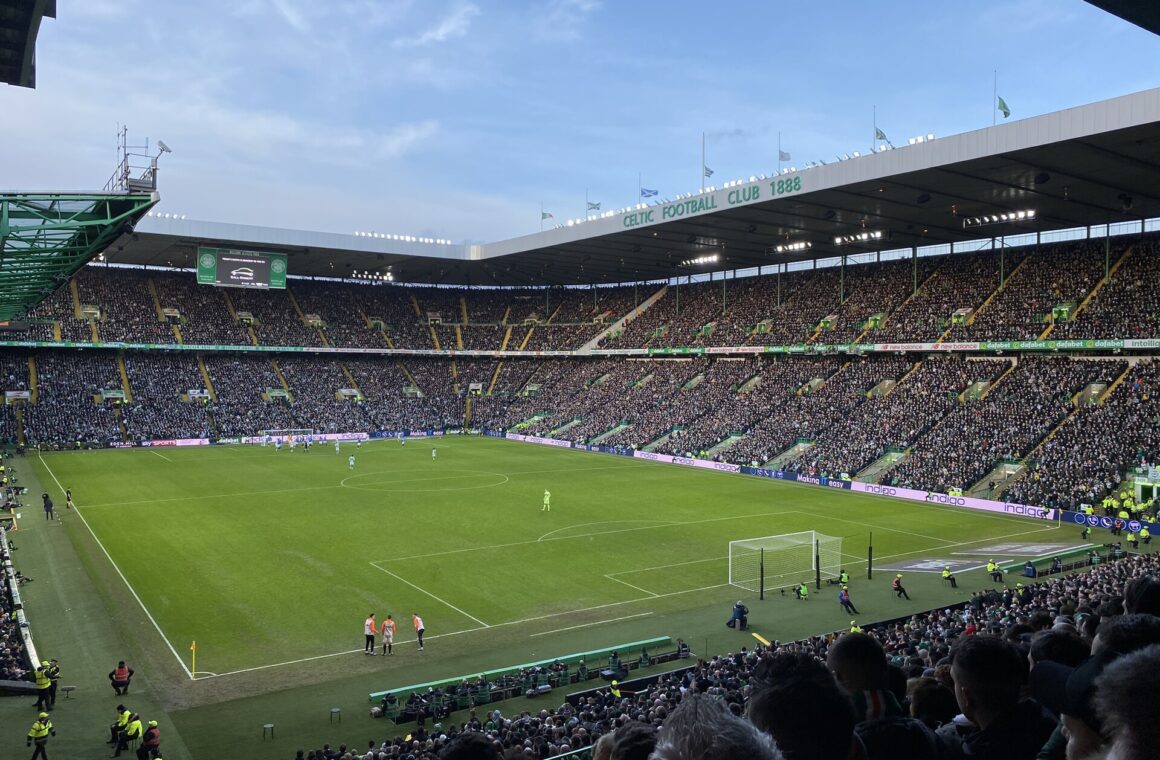
Celtic Park sits in Parkhead in the East End, about two miles east of the city centre, and holds just over 60,000 — the largest football ground in Scotland. Celtic have played on the same patch of ground since 1892, though almost nothing you see now predates the mid-1990s rebuild, which is why the outside looks like a modern bowl and the inside feels older than it is.
The stadium tour
The guided tour runs about an hour and costs from roughly £20 for an adult. You get the dressing rooms, the players’ tunnel, the trophy room and a seat in the stand, with a guide who will happily field questions about 1967 for as long as you let them. Tours run on non-match days and on the morning of some home fixtures, but the schedule tightens sharply around European nights and cup ties, so check the club’s own booking page for the exact date you want rather than assuming a daily 11am slot exists.
Honest verdict: this is the better of the two Old Firm tours for anyone with a casual interest, because it is shorter, cheaper and more briskly run. It is the weaker of the two for anyone interested in architecture or in club history as a physical artefact — Ibrox simply has more to look at.
Matchday at Celtic Park
The atmosphere on a big European night is genuinely one of the loudest in British football, and even a routine league fixture against a mid-table side generates more noise than the equivalent in England. The rail seating in the north-east corner — the safe-standing section — is where most of the singing comes from, and the noise builds from there rather than from the main stand.
Arrive at least 45 minutes before kick-off. Turnstile queues on the Janefield Street side back up badly in the final 20 minutes, and the streets around the ground have very little in the way of cafés, so eat before you come or accept a pie inside.
Getting to Celtic Park
There is no Subway station anywhere near Parkhead, which catches out a lot of visitors who assume the underground goes everywhere. Your options are the 61 and 62 buses from the city centre along the Gallowgate, a ScotRail train to Dalmarnock or Bridgeton followed by a 10–15 minute walk, or simply walking the whole way from Glasgow Cross, which takes about 35 minutes and is genuinely pleasant on a matchday because you walk out with the crowd. Taxis are easy going there and close to impossible for the hour after full time.
Ibrox
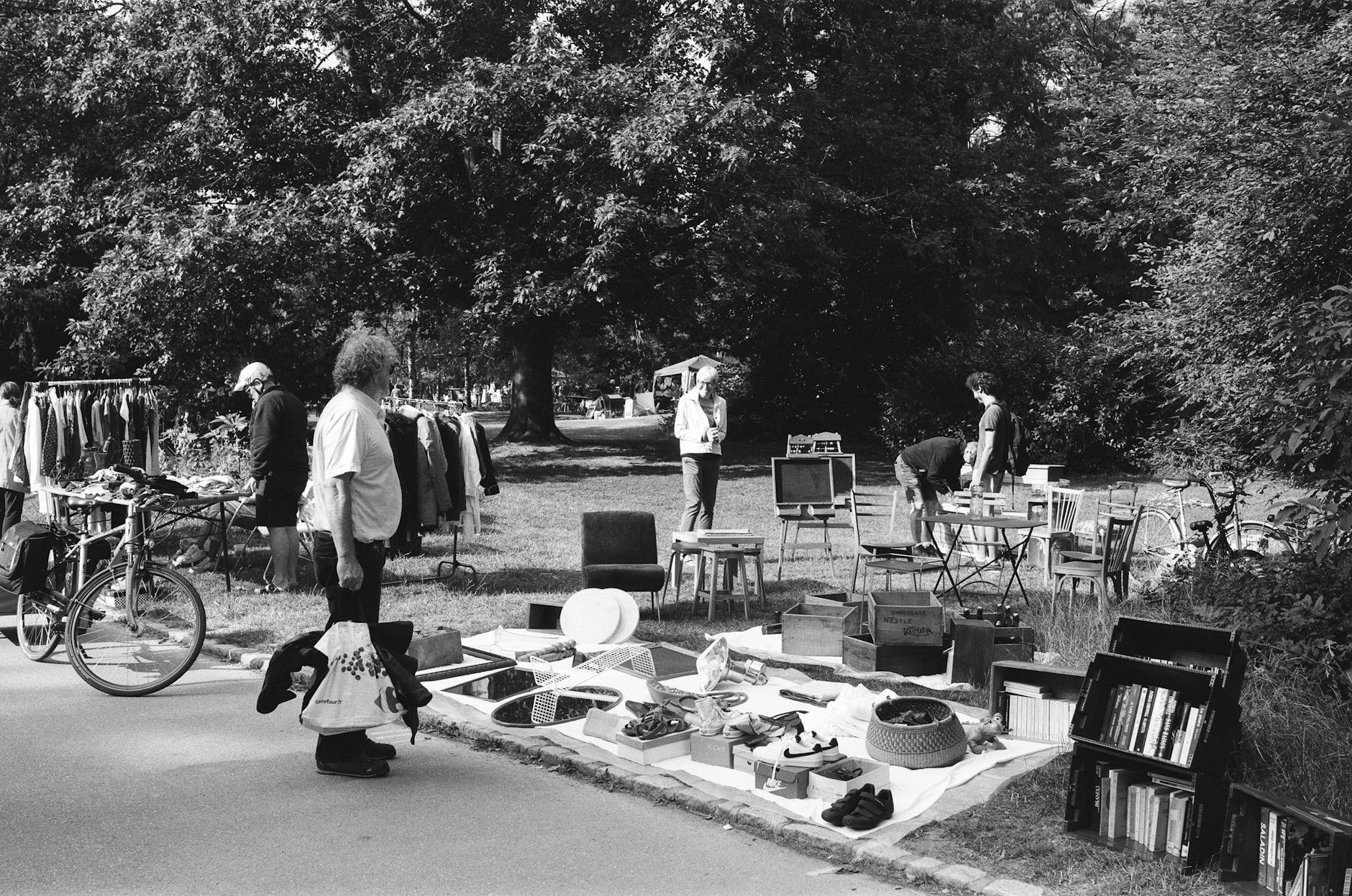
Ibrox is in Govan, south of the river, and holds around 51,000. The Bill Struth Main Stand — the red-brick, category B listed frontage on Edmiston Drive — was designed by Archibald Leitch and completed in 1929, and it is the single most impressive piece of football architecture in Scotland. The marble staircase, the oak-panelled Blue Room and the wood-lined Manager’s Room behind that façade are the reason the tour costs more than Celtic’s.
The stadium tour
Ibrox tours run about 90 minutes and start from roughly £28 for an adult. They cover the Blue Room, the old Manager’s Room, the marble staircase, the trophy room, the dressing rooms and the dugout. Crucially they run on non-match days only — there is no morning-of-the-game tour here, and the schedule also goes dark for concerts and events. Book directly with the club rather than through a third-party reseller.
Honest verdict: worth the premium over Celtic Park if you have any interest in inter-war architecture or in football as social history. If you are only doing one stadium tour in Glasgow and what you want is the biggest, loudest, most modern-feeling ground, do Celtic Park instead and keep the £8.
Getting to Ibrox
This one is easy. Ibrox has its own Subway station, roughly seven minutes from St Enoch on the outer circle, and the walk from the station to the ground takes about five minutes. On matchdays the Subway runs a queuing system at Ibrox and St Enoch and it works well, but expect to wait 15–20 minutes to board after full time. Cessnock is the next station along and is often quicker to get away from.
Hampden Park and the Scottish Football Museum
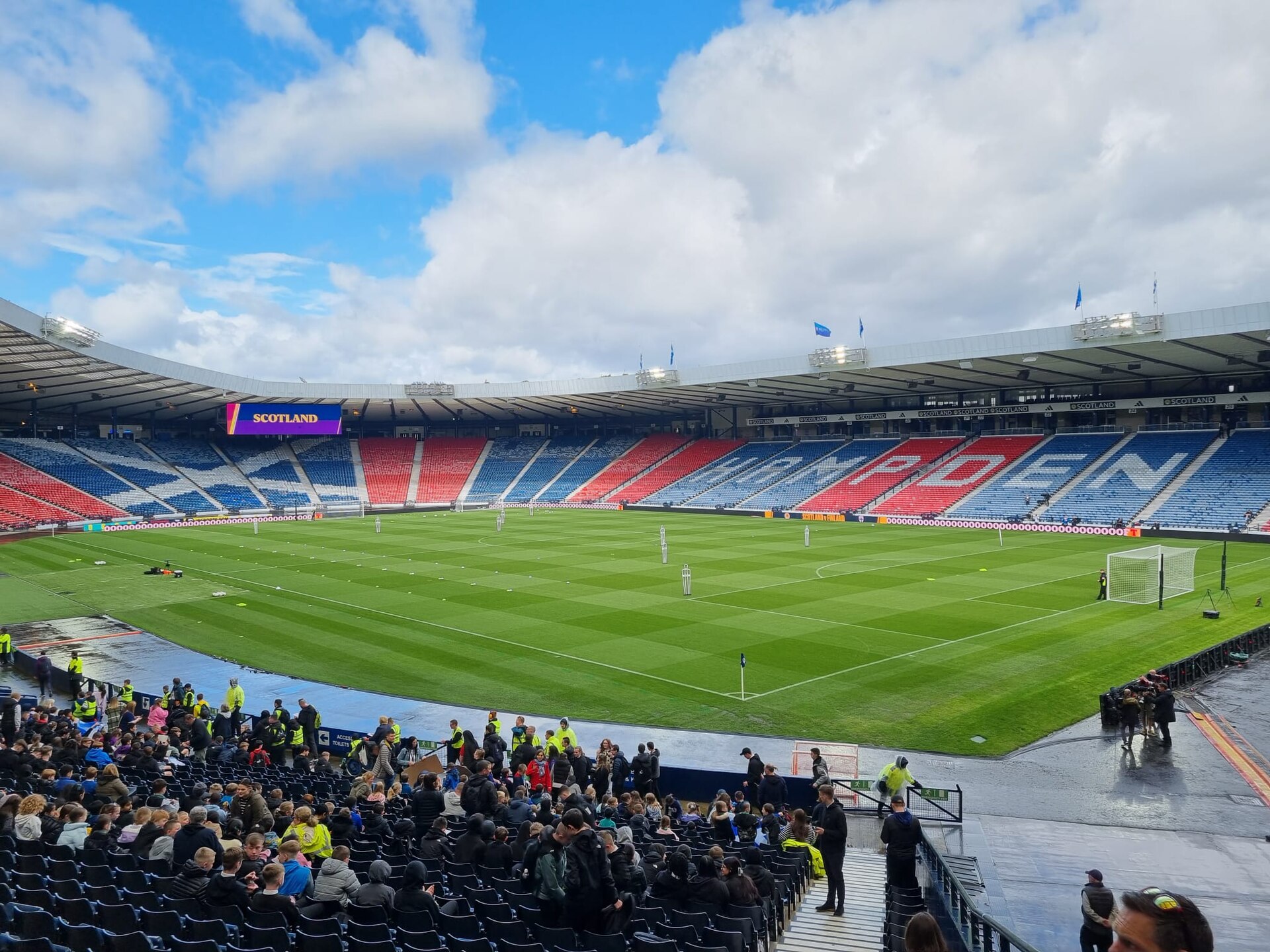
Hampden is in Mount Florida on the South Side, holds just under 52,000, and is the national stadium rather than a club ground. Scotland internationals, both domestic cup finals and the occasional major concert happen here. It is also, structurally, the least atmospheric of the three — the old running-track geometry pushes the stands back from the pitch, and a half-full Hampden on a wet Tuesday for a qualifier is a strange, echoing experience.
The tour is bundled with the Scottish Football Museum, which is on site, and the combined ticket is about £16–20. The museum is the best of the three club-adjacent attractions by a distance: the original Scottish Cup, the oldest national football trophy in the world, is in the collection, along with material from the 1872 first international, which was played in Glasgow. If you have limited time and a general interest in football rather than a specific club allegiance, this is the one to do.
Getting there is a train job. Mount Florida and King’s Park are both a 10-minute walk from the ground and both are about nine minutes from Glasgow Central on the ScotRail Cathcart Circle. The stadium sits directly beside Queen’s Park, so you can pair the museum with an hour on the park’s hill, which has the best free view over the city centre skyline anywhere on the South Side.
Beyond the big three
If you want live football without the Old Firm price tag or the security cordon, the smaller Glasgow clubs are a far easier proposition and a better story to take home.
- Partick Thistle at Firhill Stadium in Maryhill, about 20 minutes from the city centre by bus. Tickets are usually available on the day, the ground is a proper old-fashioned four-sided stadium hemmed in by tenements and the canal, and the club has a self-deprecating streak that visitors tend to love.
- Queen’s Park, founded in 1867 and the oldest football club in Scotland, now playing at Lesser Hampden beside the national stadium. Amateur for over 150 years until 2019. Small crowds, cheap tickets, genuine history.
- Clyde, who despite the name now play at Broadwood in Cumbernauld, about 30 minutes out by train. Worth the trip only if you are collecting grounds.
Women’s football is also worth a look — Celtic, Rangers and Glasgow City all play in the Scottish Women’s Premier League, tickets are typically under £10, and Glasgow City in particular have a long record in European competition. Fixtures move around between smaller venues, so check the club site before travelling.
Getting match tickets as a visitor
This is the part that trips people up, so here it is plainly. Celtic and Rangers both sell the large majority of their capacity as season tickets. What is left goes first to paid members, then to the general public, and for the bigger fixtures it often never reaches a public on-sale at all.
What actually works
- Pick a small fixture. A midweek league game against a bottom-half side in November is the single most obtainable ticket at either club. A Sunday lunchtime fixture against Aberdeen, Hearts or Hibs is harder. A European group-stage night is harder again.
- Buy the club membership if the maths works. Both clubs run a paid supporter membership that gets you into the pre-sale window. If you are only ever going to one match, the membership fee plus the ticket may still come in under what a resale platform wants.
- Check the away allocation. If you support — or can plausibly claim a connection to — the visiting club, away tickets are sometimes sold through that club with far less competition.
- Watch for hospitality. Matchday hospitality packages at both grounds are frequently available when general admission is not. They are expensive, typically £150 and up, but they are real tickets sold by the club rather than a gamble.
What does not work
Unofficial resale sites listing Old Firm derby tickets at £400 are, at best, selling you a seat in the wrong end. Both clubs cancel tickets found to have been resold, and both operate identity checks in the segregated sections. If a listing does not come from the club, from the away club, or from an official hospitality partner, treat the money as spent rather than invested.
The Old Firm derby, honestly
Celtic against Rangers is played four times in a normal league season plus any cup meetings, and it is the fixture everyone asks about. Two things are true at once. It is a remarkable sporting occasion, and it is the hardest ticket in Scottish sport for a neutral to obtain legitimately — the away allocation is small, the home allocation goes to season-ticket holders, and there is effectively no neutral section.
The realistic advice is this: do not build a trip around getting into an Old Firm derby. Build the trip around a stadium tour, a smaller fixture and a good pub, and treat a derby ticket as a lottery win if it comes off. If a derby is on while you are in town and you are watching it in a bar, pick a city-centre or West End pub rather than one near either ground, and read the room before you celebrate anything. Our Glasgow safety guide goes into more detail; the short version is that the city is very safe, derby day is loud rather than dangerous, and wearing either shirt in the wrong postcode is the one genuinely unnecessary risk you can take here.
Where to watch football without a ticket
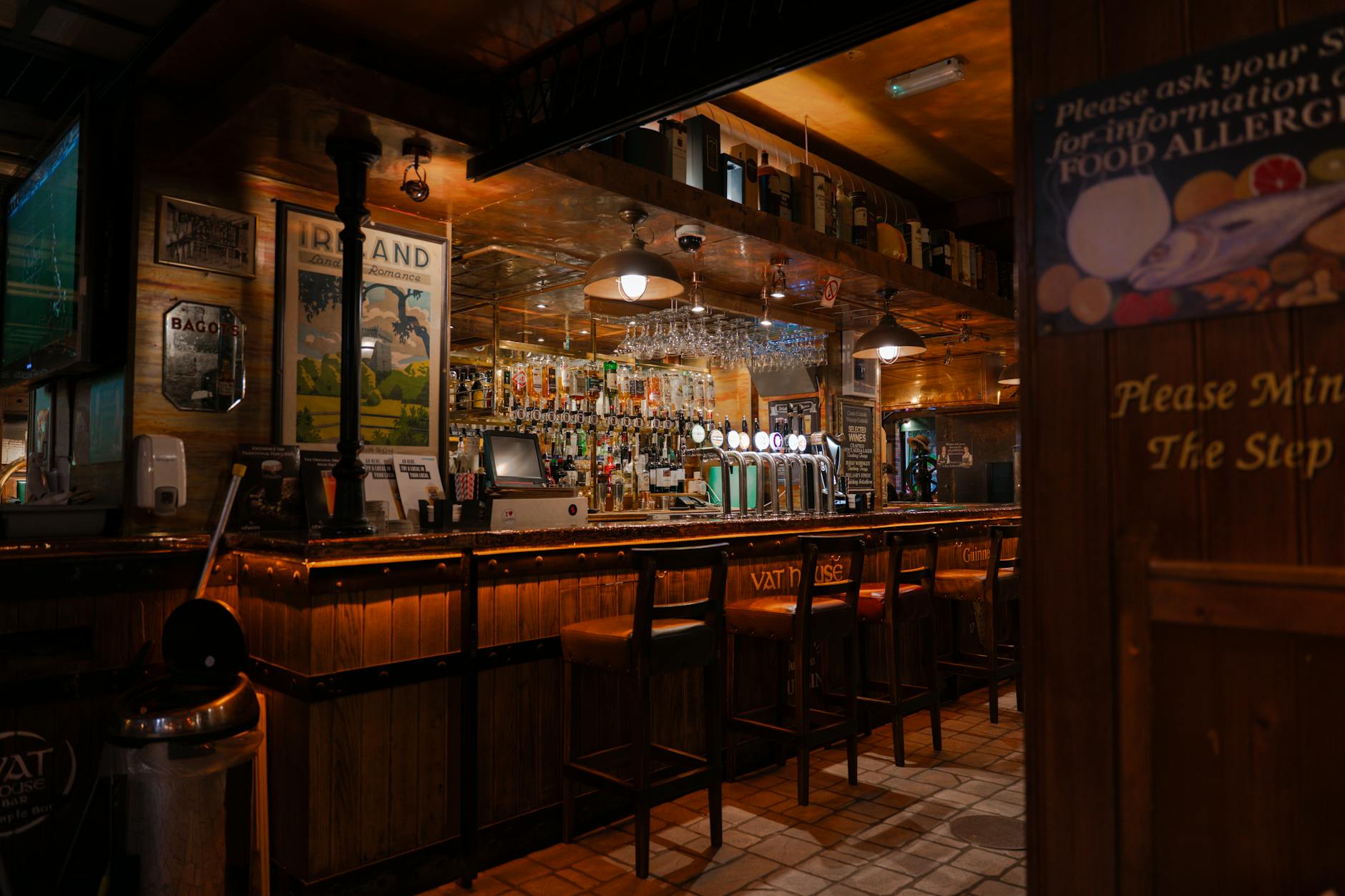
Glasgow is an excellent city for watching football in a pub, with one rule worth knowing before you plan around it: the UK broadcast blackout means no live football is shown anywhere in Britain, Scotland included, between roughly 2.45pm and 5.15pm on a Saturday. That is precisely why so many Scottish Premiership fixtures are moved to Sunday, lunchtime or evening slots, and it makes Sundays and midweek nights by far the best pub-watching windows here.
- City centre — the streets around Hope Street, Bath Street and Mitchell Street have a high density of big-screen sports bars. Easy, busy, no allegiance required.
- Merchant City — more mixed crowds and better food, though the screens are often smaller and tucked at the back.
- West End — Byres Road and the Finnieston strip. Good for internationals and big European nights, less so for routine Scottish Premiership fixtures.
- Near the grounds — the Gallowgate for Celtic, Paisley Road West for Rangers. Atmospheric and partisan. Go if you know what you are walking into.
Our guide to traditional pubs in Glasgow covers the older, quieter end of the spectrum, and the Glasgow nightlife guide deals with what happens after full time.
Matchday practicalities
Timings
Scottish Premiership fixtures are moved around constantly for television, and a game listed as a Saturday 3pm kick-off in June can be a Sunday noon kick-off by the time you travel. Check the fixture 10 days out and again in the week you travel. European fixtures fall on Tuesday, Wednesday or Thursday evenings, kicking off at 8pm or 5.45pm.
Driving and the Low Emission Zone
Do not drive to a Glasgow match. The city-centre Low Emission Zone has been live since June 2023 and, unlike London’s ULEZ, it is a ban rather than a charge — non-compliant vehicles may not enter at all, and the penalty starts at £60, reduced to £30 if paid within 14 days, then doubling with each further breach. Even in a compliant car, matchday street closures around Ibrox and Parkhead make parking miserable. The park-and-ride sites all sit outside the zone and cost around £8.15 for the day including a return Subway trip, which is the sensible compromise if you are already driving in Scotland. More detail in our Glasgow driving and car hire guide.
Public transport after the final whistle
Add 30–45 minutes to any post-match journey. Subway queues at Ibrox, bus queues on the Gallowgate and a solid wall of people at Mount Florida station are all normal rather than exceptional. The getting around Glasgow guide has the full network picture, and the bus guide covers the East End routes that Subway users tend to overlook.
What to wear
Glasgow is cold and wet for most of the football season. Concourses are open to the weather at all three grounds and none of the stands are fully enclosed. Layers and a waterproof, not an umbrella — you will not be allowed to bring one in.
A football weekend in Glasgow
If you have two days and want the football version of the city rather than the museum version, this order works well:
- Friday afternoon — Ibrox tour, then the Subway back into town and dinner in the Merchant City.
- Saturday morning — the Barras and the Gallowgate, then walk out to Parkhead for an afternoon fixture, or do the Celtic Park tour if there is no home game.
- Saturday night — a city-centre pub for whatever is on the screens.
- Sunday — train to Mount Florida for Hampden and the Scottish Football Museum, then an hour on the hill in Queen’s Park for the view before heading back.
That leaves room for one non-football thing, and the obvious candidate is Kelvingrove. Our broader things to do in Glasgow guide has the alternatives if the weather closes in.
Frequently asked questions
Can I visit Celtic Park and Ibrox on the same day?
Yes, but only just. The two grounds are about 25 minutes apart by public transport with a change in the city centre, and the tours run to fixed start times that are not designed to dovetail. Allow four hours in total and book both slots before you travel. If the schedules do not line up, do one properly rather than rushing both.
Are the stadium tours suitable for children?
Very much so, and all three do reduced child pricing. Celtic Park is the easiest with younger children because it is the shortest. Hampden works best for children of roughly eight and up, because the museum rewards reading. All three grounds have step-free routes; contact the club in advance if you need one.
Is Hampden Park worth visiting if I do not support Scotland?
The stadium tour on its own, probably not. The Scottish Football Museum, yes — it holds the oldest national trophy in world football and material from the first-ever international, played in Glasgow in 1872, and it is a proper museum rather than a club shop with captions. Treat it as a museum visit that happens to include a stadium.
How far in advance should I book a stadium tour?
A week is usually enough outside school holidays. During Scottish school holidays, over Christmas and around any European fixture, make it three to four weeks. Ibrox is the one that sells out first, because it runs fewer slots.
What happens if my match is rescheduled after I have booked flights?
You lose. Scottish television rescheduling is frequent and can move a fixture by a full day at three or four weeks’ notice, which is often after cheap flights are booked. If the match is the entire point of the trip, book flexible travel or accept the risk consciously.
Is it safe to wear a Celtic or Rangers shirt around Glasgow?
In the city centre, the West End and the main visitor areas, nobody will care. Near the opposing club’s ground on a matchday, it is asking for a conversation you do not want to have. Neutral clothing costs you nothing and removes the question entirely.
Do any Glasgow clubs sell tickets on the day at the turnstile?
Celtic and Rangers, effectively no — everything is digital and pre-sold. Partick Thistle and Queen’s Park, usually yes, though even they now prefer online purchase. If you want a spontaneous Saturday afternoon of Scottish football, Firhill is the answer.
When does the Scottish football season run?
Late July or early August through to late May, with a winter break of a few weeks in January. There is no club football for most of June and early July, though Hampden sometimes hosts summer internationals and concerts. If you are visiting in high summer, plan for stadium tours rather than matches.
If you want the full detail on the Parkhead tour rather than the summary above — the exact route through the dressing room and tunnel, how far ahead the slots sell out, and why we rate it above Ibrox for anyone travelling with children — our dedicated Celtic Park stadium tour guide goes through it properly, including the three ways to get out to the East End without a car.
The Govan tour gets its own treatment too, because there is more to say about it than a paragraph allows — the 1929 Leitch stand, the marble staircase, the oak-panelled Blue Room and the memorial at Exit 14 are all on the route, and the club runs it on non-match days only. Our Ibrox stadium tour guide has prices, booking timings and a side-by-side comparison with Celtic Park.
Of the three grounds, the national stadium is the one we recommend to visitors with no club allegiance, and mostly because of what is stored inside it rather than the bowl itself — the oldest national trophy in world football, material from the 1872 first international, and a collection that leans towards the small clubs rather than the Old Firm. Our guide to Hampden Park and the Scottish Football Museum covers prices, timings and which of the two tickets to buy.
The Parkhead half of the ticketing problem deserves its own walkthrough, because the sale runs in windows rather than as a single on-sale and most visitors never see a seat appear at all. Our guide to getting Celtic match tickets as a visitor ranks the fixtures by how obtainable they actually are, explains why the paid membership usually beats a resale site on price alone, and sets out what happens at the turnstile if you bought from a stranger.
Govan gets its own walkthrough as well, and the answer there is a little more encouraging than at Parkhead — not because tickets are easier to come by, but because the Subway drops you five minutes from the turnstiles and takes you away again afterwards. Our guide to getting Rangers match tickets as a visitor covers the four routes in, which fixtures actually reach a general sale, and the matchday timings that matter for an evening kick-off.
The derby needs more than the paragraphs above give it, partly because the rivalry is a nineteenth-century migration story rather than a sporting one and partly because the practical advice is unusually specific. Our Old Firm derby guide covers where it came from, why there is no neutral section, which pubs to choose and which to avoid, and the five things a visitor should do differently on derby day.
One practical detail catches out almost every visitor who plans to watch a game in a bar: the UK broadcast blackout means no pub anywhere in Scotland can legally show a Saturday 3pm kick-off, which is why so many Scottish fixtures are shifted to Sunday or the evening. Our guide to the best pubs to watch football in Glasgow explains how to plan around it and which districts suit which kind of match.
Because the transport question is the one readers ask most often, it has a page of its own. Our guide to getting to Celtic Park, Ibrox and Hampden by public transport gives the exact routes, walking times and 2026 fares for all three grounds — and, more useful than any of that, the local trick for getting away again once the ground has emptied.
Related Glasgow Guides
- Things to Do in Glasgow — what else fills a weekend around a fixture.
- Getting Around Glasgow — Subway, trains, buses and how they behave on matchdays.
- Glasgow Subway Guide — fares, the circle line and the Ibrox queueing system.
- Glasgow Nightlife — where the city goes after the final whistle.
- Traditional Pubs in Glasgow — the older bars, including the ones that show the football.
- Glasgow Museums — where the Scottish Football Museum sits among the rest.
- Queen’s Park — the park beside Hampden, and the best free skyline view on the South Side.
- Glasgow History and Architecture — context for the Leitch grandstand at Ibrox.
- Glasgow Safety Tips — practical advice for derby day and late nights.
- The Barras Market — on the walking route between the city centre and Celtic Park.
- Trains in Glasgow — the Cathcart Circle to Mount Florida and the East End lines.
Photo Credits
Celtic Park on a matchday: Celtic Park during an Old Firm derby between Celtic FC and Rangers FC by Vincenzo.togni, CC BY-SA 4.0, via Wikimedia Commons.
Ibrox Stadium from the air: Ibrox Stadium, Rangers FC by Lesterhobbes764, CC BY-SA 4.0, via Wikimedia Commons.
Hampden Park interior: Hampden Park, 2024 by Goodreg3, CC0, via Wikimedia Commons.