This article contains advertising. Our booking links are routed through a partner that adds commission tracking automatically, so if you book through one we earn a commission from the provider, at no extra cost to you. It never affects what we recommend. Affiliate disclosure
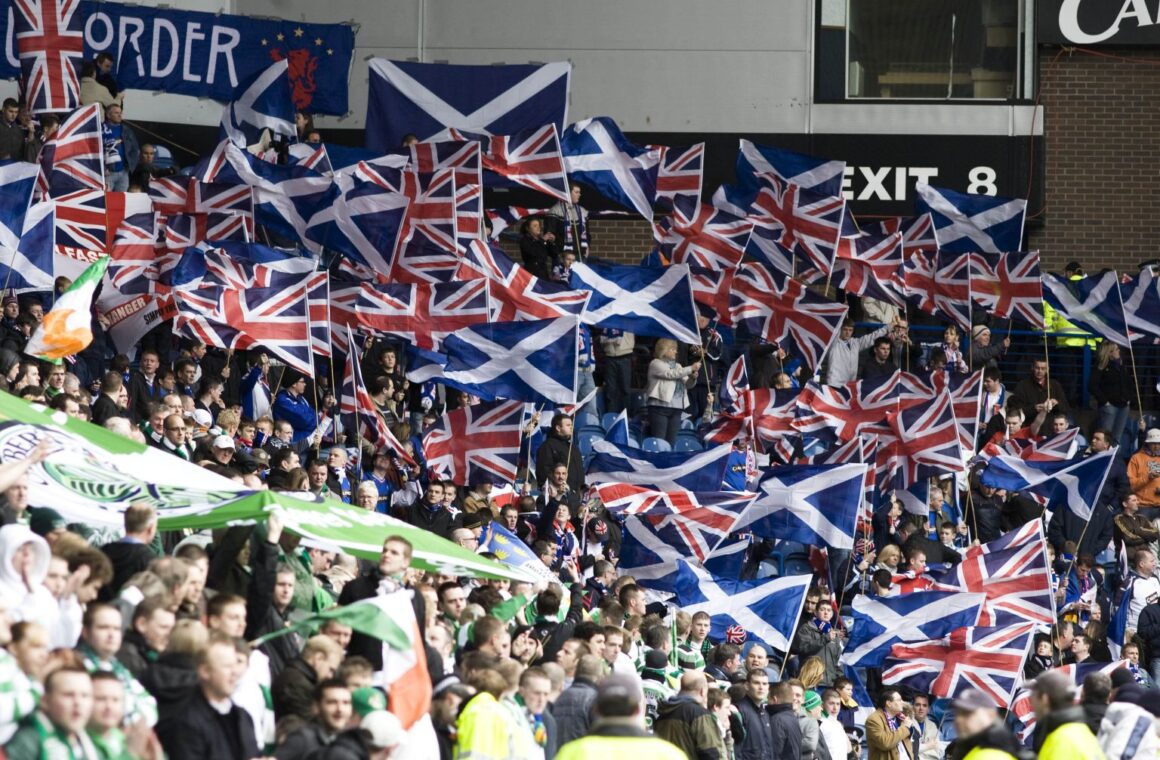
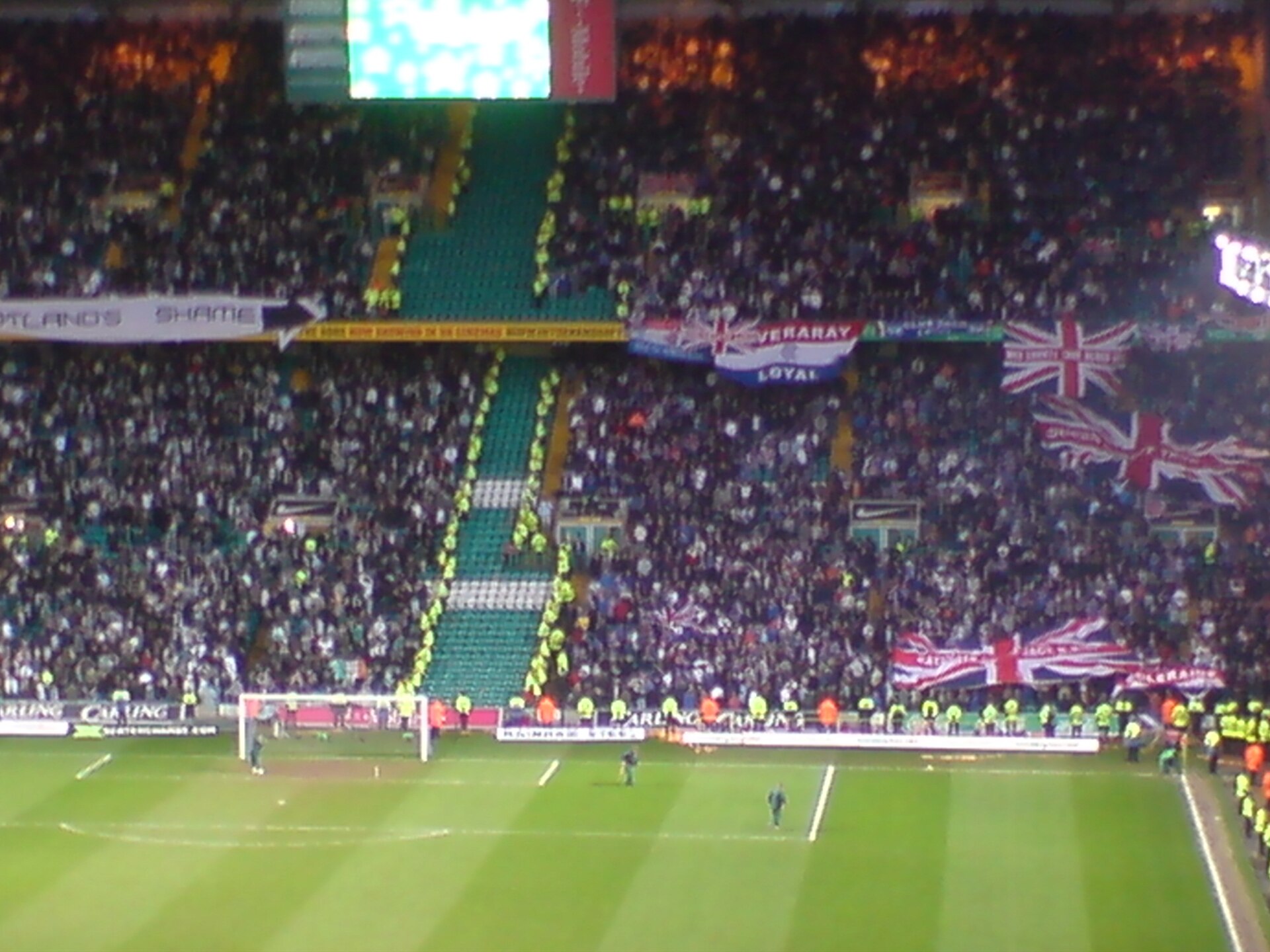
There is a photograph that explains this fixture better than any paragraph can. It shows a block of seats at Ibrox where two crowds meet: Union flags and saltires on one side, Irish tricolours and green-and-white banners on the other, and between them a line of stewards in hi-vis standing in a channel of empty plastic. Nobody is fighting. They are just singing at each other, very loudly, about things that happened a long way from Glasgow and a long time ago. The Old Firm derby is the most intense fixture in British football, and the reason has less to do with football than most visitors expect.
This guide explains what the rivalry actually is and where it came from, when the fixture is played, why tickets are close to unobtainable for a visitor, where to watch it if you cannot get in, and how to behave on derby day so that the only thing you take home is the memory. It is written for people coming to Glasgow, not for supporters of either club, and it tries to be straight about a subject the city itself argues about constantly.
What the Old Firm is
Celtic and Rangers are the two dominant clubs in Scottish football and have been since the nineteenth century. Between them they have won the overwhelming majority of Scottish league titles ever contested. The name “Old Firm” is thought to date from a nineteenth-century joke about the two clubs profiting handsomely from playing each other — which, in a league where their meetings sell out instantly and are broadcast worldwide, has aged into something closer to a description than a gag.
Where the rivalry came from
Rangers were founded in 1872 by a group of young men who rowed on the Clyde and wanted a football team. Celtic were founded in 1888 in the East End by Brother Walfrid, a Marist brother, explicitly to raise money to feed poor children in the Irish Catholic parishes of the Calton and the Gorbals.
Those origins mattered because of what was happening around them. Glasgow in the late nineteenth century absorbed enormous numbers of Irish Catholic migrants, and a Protestant, unionist working-class identity — strengthened by shipyard labour links with Belfast — sat alongside it uneasily. The two clubs became flags for those two communities. That is the whole of it, and it is why the banners in the away end are national rather than sporting.
Where it is now
Most Glaswegians will tell you it matters far less than it used to and far more than it should. Both clubs run anti-sectarian programmes, both issue bans, and offensive singing is treated as a policing and disciplinary matter rather than as colour. Intermarriage, secular schooling patterns and simple time have thinned it considerably. What survives is loud, largely performative, and occasionally not — which is why the stewarding you see in the photograph above exists.
As a visitor you are not being asked to take a side and nobody will expect you to. You are being asked to notice that this is not a Manchester derby with different accents. Our Glasgow history guide covers the industrial and migration story the clubs grew out of.
When the derby is played
Celtic and Rangers meet four times in a normal Scottish Premiership season — twice at each ground before the post-split fixtures, with the fourth meeting’s venue depending on how the split falls. Cup draws can add more, and a cup final between them is played at Hampden Park.
Dates move constantly for television. A derby pencilled in for a Sunday can shift by a day or a kick-off time at three or four weeks’ notice, which is regularly after cheap flights have been bought. If your trip depends on the fixture, book flexible travel.
Tickets: the honest position
You are very unlikely to get one at face value, and you should plan on that basis.
- Home seats go to season-ticket holders, who overwhelmingly renew and overwhelmingly attend this fixture.
- The away allocation is small, is sold by the away club to its own members, and has at times been cut to a few hundred seats. Check the arrangement for the specific match — it has changed repeatedly in recent years.
- There is no neutral section. Not a small one, not an expensive one. There is not one.
- Hospitality occasionally exists for this fixture at a very high price. If a package is offered by the club itself, it is real. If it is offered by anyone else, it very likely is not.
- Resale listings at £300–500 are the most common way visitors lose money on Scottish football. Tickets are digital and account-linked, the clubs void tickets found to have been resold, and identity is checked in segregated areas.
The practical advice is the same one we give throughout this section of the site: build the trip around something obtainable and treat a derby ticket as a windfall. Our guides to Celtic match tickets and Rangers match tickets explain which fixtures a visitor can realistically attend.
Watching it in a pub, which is what you will actually do
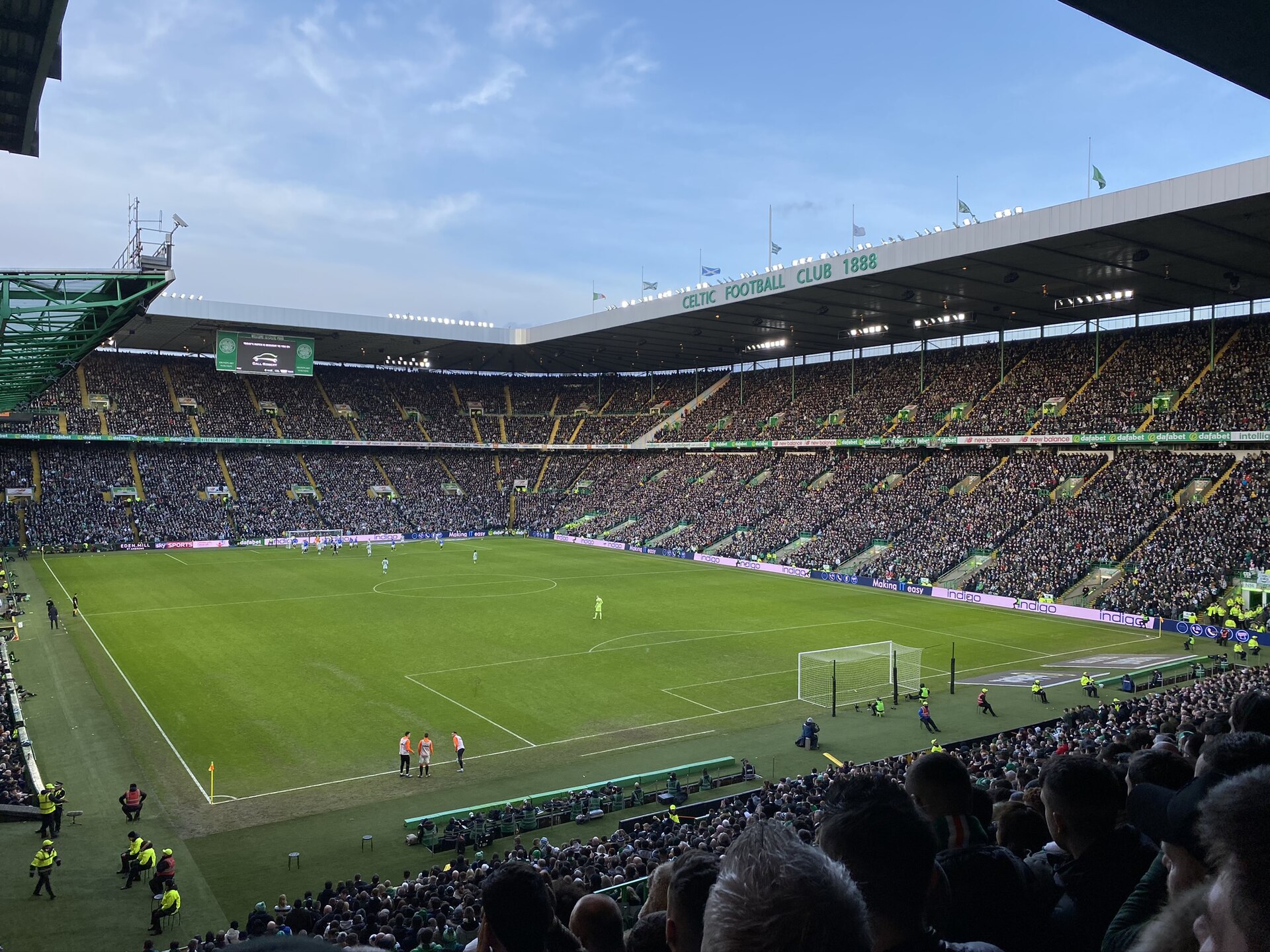
This is not a consolation prize. Watching an Old Firm derby in a Glasgow pub is a genuine experience, and for a first-time visitor it is arguably the better one — you can see the whole thing, hear the room, and leave whenever you like.
Where to go
- City centre — the streets around Hope Street, Bath Street and Mitchell Street. Big screens, mixed crowds, no allegiance assumed. This is the right answer for most visitors.
- West End — Byres Road and Finnieston. Calmer again, more students and professionals, and the football is on but not the entire point of the room.
- Merchant City — mixed, food-led, screens often smaller.
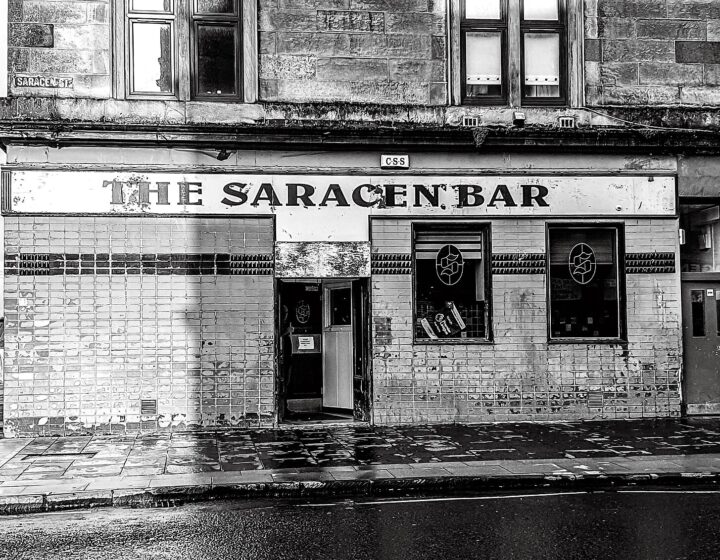
- The Gallowgate or Paisley Road West — deeply partisan, extraordinary atmosphere, and not where a neutral tourist should choose to spend derby afternoon.
Get there early. Pubs showing the derby fill up an hour or more before kick-off and many operate one-in-one-out for the duration. Our traditional pubs guide and nightlife guide between them cover most of the reasonable options.
Derby day etiquette, in five lines
- Wear neutral clothing. This is the single most useful thing on this page. Not a green shirt, not a blue one, not an Irish or Northern Irish top. A jacket.
- Do not sing along. You do not know what the words mean, and some of them carry consequences.
- Do not ask people which one they support. In a pub on derby day it is not small talk.
- Leave before the final whistle if the pub is tense. Nobody will notice and you will avoid the crush.
- Take a taxi or walk a main road afterwards. Public transport is heaving and the city centre is busy but perfectly fine.
None of that is because Glasgow is dangerous — it is not, and violent incidents around the fixture are rare and heavily policed. It is because there is no upside to being the visitor who wandered into the wrong room in the wrong shirt. Our Glasgow safety guide puts this in proportion alongside the ordinary business of city travel.
Getting around on derby day
Whichever ground is hosting, expect the transport network to be at capacity for about two hours either side of kick-off.
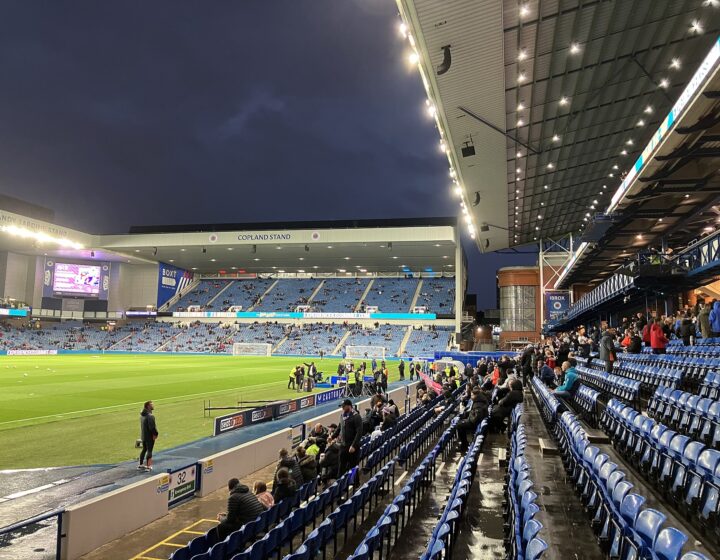
- Ibrox hosting — the Subway runs a managed queue at Ibrox and St Enoch; add 20 minutes each way. Cessnock is the escape valve.
- Celtic Park hosting — the 61 and 64 along the Gallowgate, or trains from Dalmarnock and Bridgeton. Taxis are effectively unobtainable afterwards.
- City centre — busy from lunchtime, and busier again at full time. Restaurants take bookings as normal but will be loud.
- Driving — no. Street closures, the Low Emission Zone, and nowhere to park. See our getting around Glasgow guide.
Is it worth planning a trip around?
No, if the plan is to be inside the ground. The odds are poor, the risk of paying a lot for a cancelled ticket is real, and the fixture may move after you have booked.
Yes, if the plan is to be in the city on the day. Glasgow on a derby afternoon is a different place — the streets empty at ten to three and refill at ten to five — and being in a good pub for it is a proper travel experience. Combine it with a stadium tour earlier in the week and you have seen more of the story than most ticket-holders do.
Frequently asked questions
How many times a season is the Old Firm derby played?
Four times in a normal league season, plus any cup meetings. A cup final between them takes place at Hampden Park.
Can a tourist get an Old Firm ticket?
Realistically, no. Home seats belong to season-ticket holders, the away allocation is small and members-only through the visiting club, and there is no neutral section. Club hospitality is the only legitimate route and it is expensive and limited.
Why are Celtic and Rangers so hostile to each other?
The rivalry maps onto Irish Catholic and Protestant unionist identities in Glasgow, formed by nineteenth-century migration and industrial labour patterns rather than by football itself. It is much diminished from its worst period and still stronger than a normal sporting rivalry.
Is it safe for a visitor to be in Glasgow on derby day?
Yes. The city is safe, the fixture is heavily policed, and trouble is rare and localised. Wear neutral clothing, avoid the partisan pubs near either ground, and you will have no problems at all.
Where should I watch the derby if I do not have a ticket?
A city-centre or West End pub. Arrive an hour before kick-off, because they fill early and many go to one-in-one-out.
Can I wear a Celtic or Rangers shirt?
You can, and if you genuinely support one of them, plenty of people will. If you are a neutral, do not — there is no benefit and there is an obvious downside.
What happens to the fixture list around the derby?
It moves. Television rescheduling can change the day and the kick-off time at three to four weeks’ notice, which is often after flights are booked.
Is there anything to see on derby day besides the match?
The city centre is unusually quiet during the ninety minutes, which makes it a good window for the museums. Kelvingrove, the Burrell and the Scottish Football Museum are all open and all empty.
For the wider question of where Glasgow watches football on every other weekend of the season — including which streets have the densest concentration of screens and why a Saturday 3pm game is never on anywhere — see our guide to the best pubs to watch football in Glasgow.
Related Glasgow Guides
- Glasgow Football — the parent guide to the three grounds, tours and matchdays.
- Celtic Match Tickets — how the Parkhead sale windows work.
- Rangers Match Tickets — the four routes into Ibrox.
- Hampden Park and the Scottish Football Museum — neutral ground, and open on derby day.
- Glasgow Safety Tips — the proportionate version of the advice above.
- Glasgow History and Architecture — the migration and industry the rivalry grew out of.
- Traditional Pubs in Glasgow — where to watch it, and where not to.
- Glasgow Nightlife — what the city does afterwards.
- Getting Around Glasgow — transport at capacity, and how to work around it.
Photo Credits
Flags at the segregation line: Rangers fans flags by stevelynch, CC BY 2.0, via Wikimedia Commons.
Stewards dividing the two supports: Glasgow Derby by Mark Sheffield, CC BY-SA 1.0, via Wikimedia Commons.