This article contains advertising. Our booking links are routed through a partner that adds commission tracking automatically, so if you book through one we earn a commission from the provider, at no extra cost to you. It never affects what we recommend. Affiliate disclosure
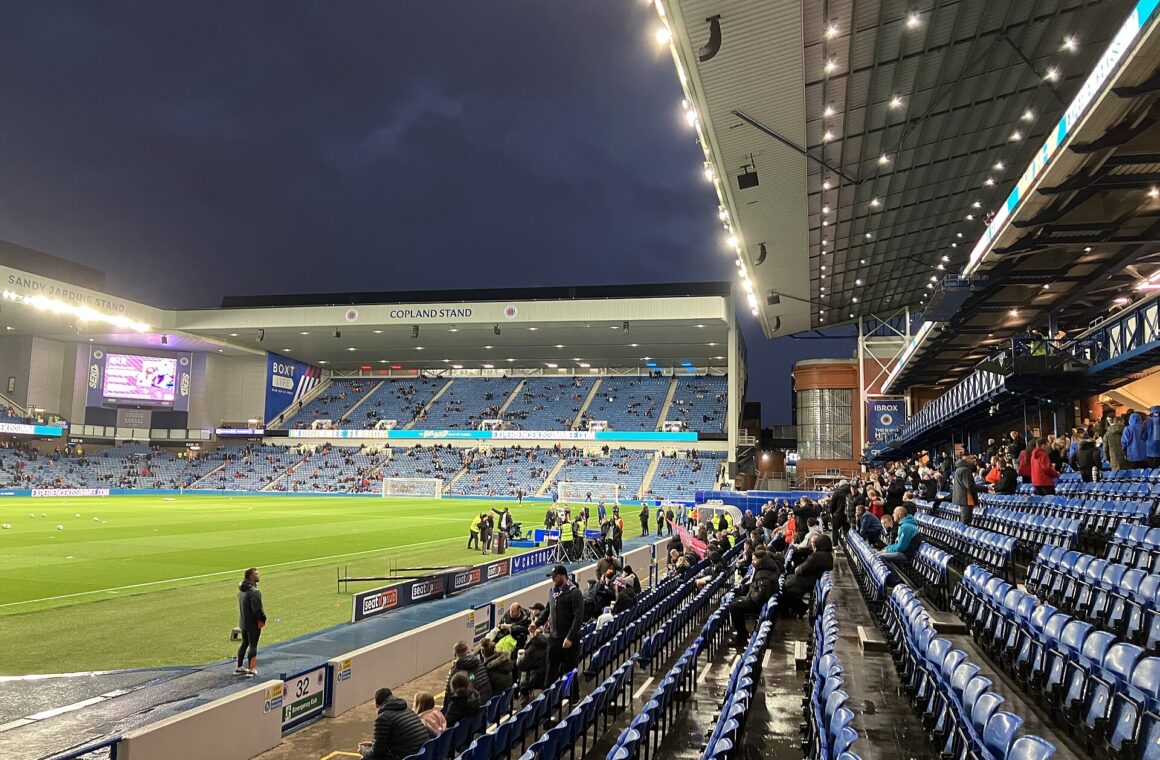
Half an hour before an evening kick-off in Govan the Copland Stand is still two-thirds empty, the seats are wet, and a couple of hundred people are standing at the front taking photographs of an empty pitch. Forty minutes later there is not a spare seat in the building. Getting into that building is the hard part, and if you are reading this from outside Scotland the honest starting position is that Rangers match tickets are not something you buy — they are something you queue for, in a sequence of online windows most visitors never find out about until the seats have gone.
This guide sets out the four routes in, which fixtures are realistically obtainable, what a seat costs, why the Subway makes an Ibrox matchday considerably easier than the equivalent across the city, and what to do when it does not come off. Written September 2026; the sale mechanics have been stable for several seasons but membership products and prices change annually, so confirm on the club’s own site before paying for anything.
The four routes in
Route one: membership and the pre-sale window
Rangers, like Celtic, sell the large majority of Ibrox as season tickets. The remainder goes to paid members first in a timed pre-sale, and only what survives that reaches a general sale — which for the better fixtures is nothing at all.
If you are travelling for a specific match, buy the membership as soon as you have committed to the trip, not the week of the game. Processing takes time, sale windows are short, and the fee plus a face-value ticket is almost always cheaper than the same seat on a resale platform. This is the route that actually works for most visitors.
Route two: pick a fixture nobody else wants
The most obtainable ticket at Ibrox is a midweek league game in the depths of winter against a side in the bottom half of the table. The least obtainable is the derby, followed by European nights and the visits of Aberdeen, Hearts and Hibernian.
| Fixture | Realistic chance for a visitor |
|---|---|
| Midweek league v a bottom-half club | Good — often reaches general sale |
| Early-round domestic cup tie | Good |
| Weekend league v a mid-table club | Moderate, members only |
| League v Aberdeen, Hearts or Hibernian | Poor |
| European group-stage night | Poor to very poor |
| Old Firm derby | Effectively zero at face value |
The stadium does not change between those fixtures. Neither, in any meaningful way, does the noise. Choosing the boring game is the single most effective thing a visitor can do.
Route three: go with the away support
Visiting clubs get an allocation at the Broomloan Road end and sell it through their own systems, usually to their own members. If the away side is one you have any connection to, that queue is often far shorter than the home one. You will be segregated, you will be escorted, and you should be entirely comfortable with that before you buy — this is not a way to sneak into a home section.
Route four: hospitality
Matchday hospitality is sold separately and is frequently available when general admission is long gone. It starts around £150 per person and climbs quickly, and it usually includes food and a good seat in the Main Stand. It is expensive, and it is a real ticket bought from the club — which puts it well ahead of a £300 listing from a stranger.
What tickets cost
Adult general admission for a Scottish Premiership fixture at Ibrox typically sits in the £25–40 range depending on the fixture category and the stand, with concessions for children and older supporters and higher prices for European nights. Hospitality begins around £150.
Prices checked October 2026; treat them as the right order of magnitude.
Which stand to pick
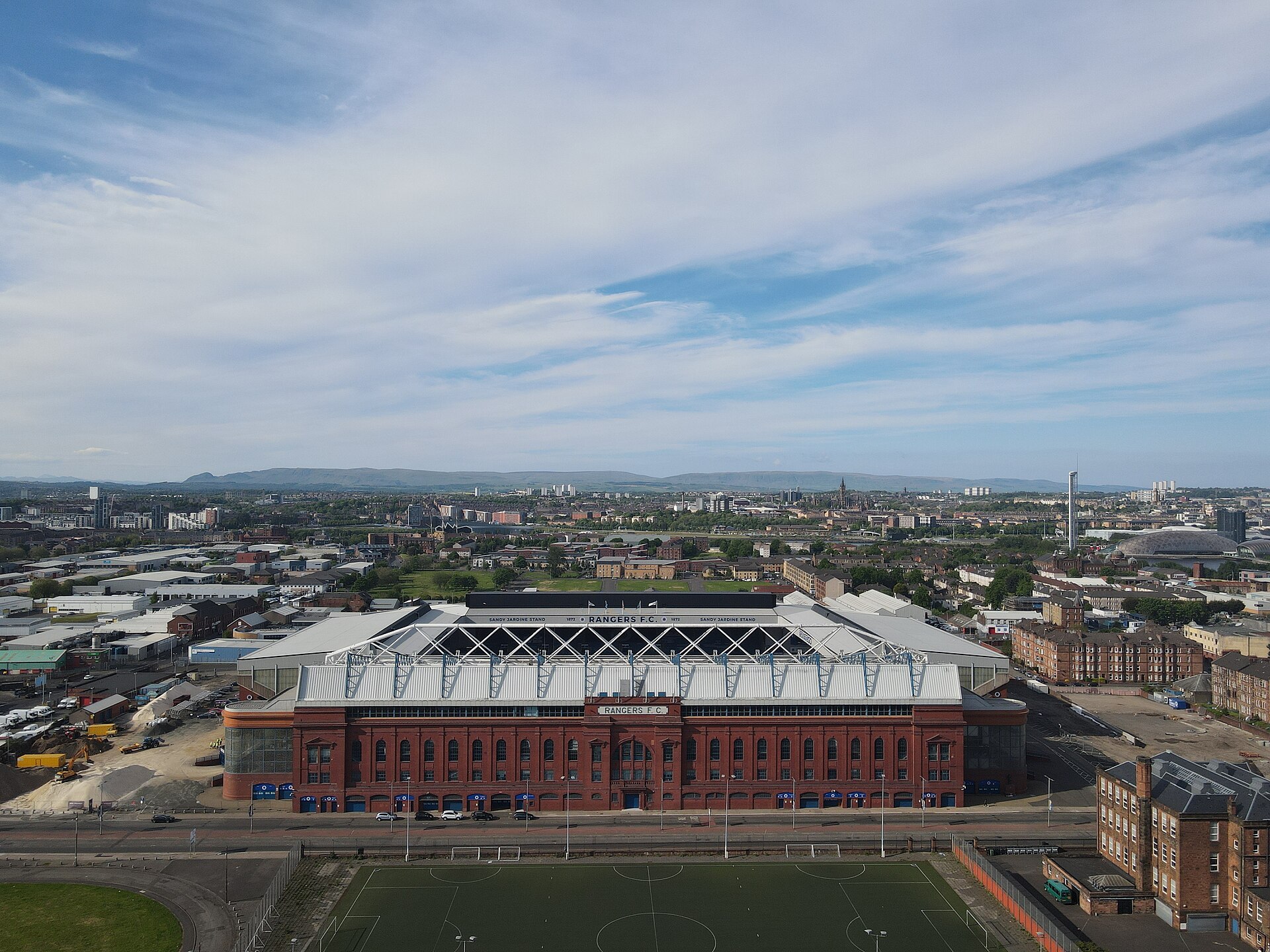
When a sale window does open, the seats that remain are usually the ones nobody with a choice wanted, so the decision is often made for you. If you do get options, here is what the four stands are like.
- Bill Struth Main Stand — the 1929 Leitch structure on Edmiston Drive. The most expensive, the most comfortable, and the quietest.
- Sandy Jardine Stand — the opposite side, two tiers, good elevated views of the shape of the game. A sensible neutral choice.
- Copland Road — the noisiest home end, behind the goal. Great atmosphere, poor sightlines for anything happening at the far end.
- Broomloan Road — the away end. Do not buy here unless you are with the away support and intend to be.
Restricted-view seats do exist, mostly under the Main Stand overhang, and they are labelled as such. They are cheaper for a reason, but for a one-off visit the atmosphere is worth more than a perfect line on the far corner flag.
European nights are a different animal
If Rangers are in a European group stage, those fixtures are the hardest tickets of the season after the derby, and they also carry practical complications a visitor should know about. Kick-off is in the evening rather than a weekend afternoon, so check the fixture. The stadium is busier and the security perimeter is wider. The Subway runs until 23:40 Monday to Saturday, so check the last departure from Ibrox before you settle in for an evening game.
They are also, by some distance, the best atmosphere available at Ibrox. If you can get one and you are staying somewhere central, take it — just plan the journey back before you go, rather than at ten to ten with forty thousand other people.
Why resale sites are a bad idea here
- Tickets are digital and tied to an account. They are not bearer instruments and a forwarded screenshot is worth nothing at a turnstile.
- The club voids tickets identified as resold. You find out at the gate, having flown there.
- Segregation is enforced and checked. A ticket in the wrong end is a worse outcome than no ticket at all.
- There is a legitimate exchange. Season-ticket holders can return unused seats through the club’s own system, and those re-enter the pool properly. That is the only resale worth monitoring.
Matchday logistics — the part Ibrox does well
This is where an Ibrox match is genuinely easier than one at Parkhead. The ground has its own Subway station, five minutes’ walk from the turnstiles and about seven minutes from St Enoch on the outer circle. A single is £1.80 on contactless and the day cap is £3.40.
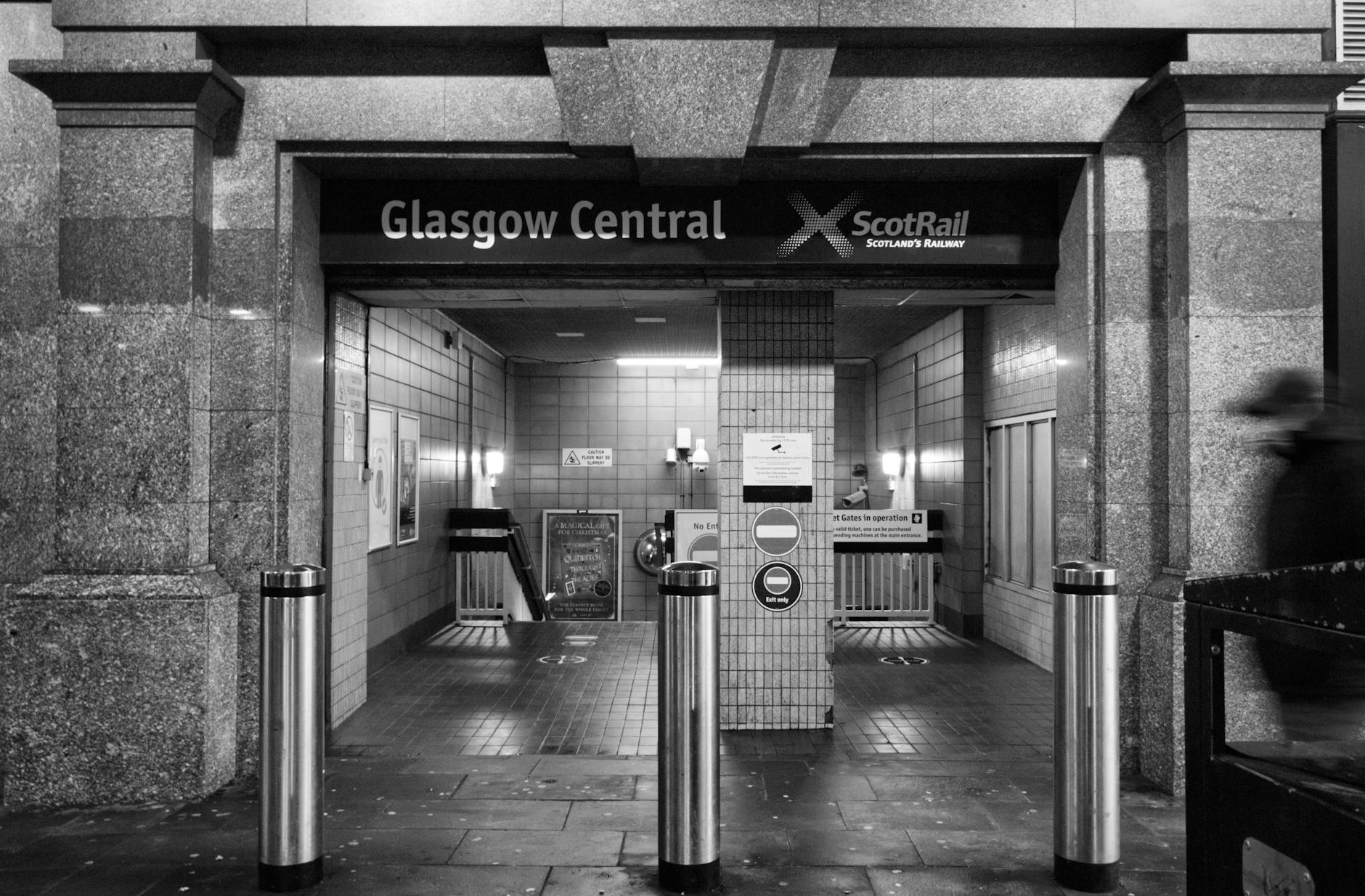
- Going out: trains get busy before kick-off. Cessnock, one stop further round, is a slightly longer walk and usually quicker to board at.
- Coming back: the Subway operates a managed queue at Ibrox after full time. Walking to Cessnock frequently beats waiting.
- Late kick-offs: the Subway closes at 23:40 Monday to Saturday and 18:12 on Sunday, so check the last train from Ibrox before an evening fixture. Buses on Paisley Road West are the fallback.
- Driving: do not. The Subway takes you to the ground without the parking problem, and the Low Emission Zone bans non-compliant vehicles from the city centre, with a £60 penalty reduced to £30 if paid within 14 days. Our getting around Glasgow guide has the full picture.
On the day itself
- Arrive 45 minutes early. Turnstiles scan slowly and the queues build fast in the last twenty minutes.
- Bring the phone the ticket was issued to, charged.
- Bag restrictions apply — no large bags, no umbrellas, no bottles.
- Eat before you travel. Paisley Road West has pubs and takeaways but they are heaving on matchdays.
- Wear something neutral if you are not committed to a side. This is the single easiest precaution to take and it removes an entire category of problem. Our Glasgow safety guide covers the rest.
If you cannot get in
- Do the stadium tour. The Ibrox tour runs on non-match days, costs from about £28, and takes you through the marble staircase, the Blue Room and the 1929 Leitch main stand — the best football building in Scotland.
- Watch it in a pub. The city centre is easy and unaligned. Paisley Road West is partisan and atmospheric. Our traditional pubs guide and nightlife guide cover both ends.
- Go and see somebody smaller. Partick Thistle at Firhill and Queen’s Park at Lesser Hampden both sell on the day for a fraction of the price.
- Do Hampden. The Scottish Football Museum is open regardless of the fixture list.
The derby, briefly
Rangers against Celtic is the fixture everyone asks about and the one that nobody can arrange for you. Home seats go to season-ticket holders, the away allocation is small and sold by the other club, and there is no neutral section. Plan the trip around a stadium tour and a gettable fixture, and treat a derby ticket as luck. The wider context is in our Glasgow football guide, and the same page explains where to watch it instead.
Frequently asked questions
Can I buy Rangers tickets on the day at Ibrox?
Effectively no. Ticketing is digital and pre-sold, and the ticket centre handles collections and enquiries rather than walk-up sales for most fixtures.
Do I need a membership to buy Rangers tickets?
Not for every match — the least attractive fixtures reach a general sale — but for anything worth travelling for, membership is what puts you in the window where seats still exist.
How much are Rangers tickets?
Roughly £25–40 for adult general admission at a league fixture as of September 2026, more for European nights, with concessions available. Hospitality from about £150 per person.
Which Subway station is Ibrox?
Ibrox, on the outer circle, about seven minutes from St Enoch and five minutes’ walk from the turnstiles. Cessnock is the alternative and is usually quicker to leave from after full time.
Where is the away end at Ibrox?
The Broomloan Road stand. Away allocations are sold through the visiting club rather than by Rangers.
Is it safe to go to Ibrox as a neutral?
Yes. Scottish grounds are well stewarded and Glasgow is a safe city. The one sensible precaution is neutral clothing — do not wear the other club’s colours anywhere near either ground on a matchday.
How early do I need to arrive?
Forty-five minutes before kick-off. The Subway is quick but the turnstiles are not, and the last twenty minutes are the worst of it.
Does the Subway run late enough for an evening match?
Check before you travel. The Glasgow Subway closes at 23:40 Monday to Saturday and 18:12 on Sunday, so look up the last train from Ibrox before an evening kick-off. Buses on Paisley Road West run later.
Related Glasgow Guides
- Glasgow Football — the parent guide to all three grounds and how matchdays work.
- Ibrox Stadium Tour — the reliable alternative, and the best building of the three.
- Celtic Match Tickets — the same problem across the city, with a harder journey attached.
- Hampden Park and the Scottish Football Museum — open whatever the fixture list says.
- Glasgow Subway Guide — fares, the circle line, closing times and the Ibrox queue system.
- Getting Around Glasgow — the network and the Low Emission Zone.
- Glasgow Travel Guide — planning the trip around the fixture.
- Glasgow Safety Tips — the short practical version for matchdays.
Photo Credits
Ibrox before kick-off: Ibrox Stadium (2023-09-27) 09 by DaHuzyBru, CC BY-SA 4.0, via Wikimedia Commons.
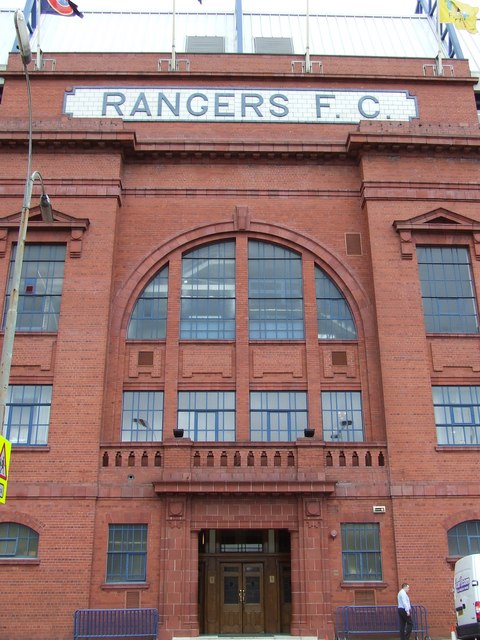
The Ibrox main entrance: Ibrox Stadium façade by HUGH CRAIG, CC BY-SA 2.0, via Wikimedia Commons.