This article contains advertising. Our booking links are routed through a partner that adds commission tracking automatically, so if you book through one we earn a commission from the provider, at no extra cost to you. It never affects what we recommend. Affiliate disclosure
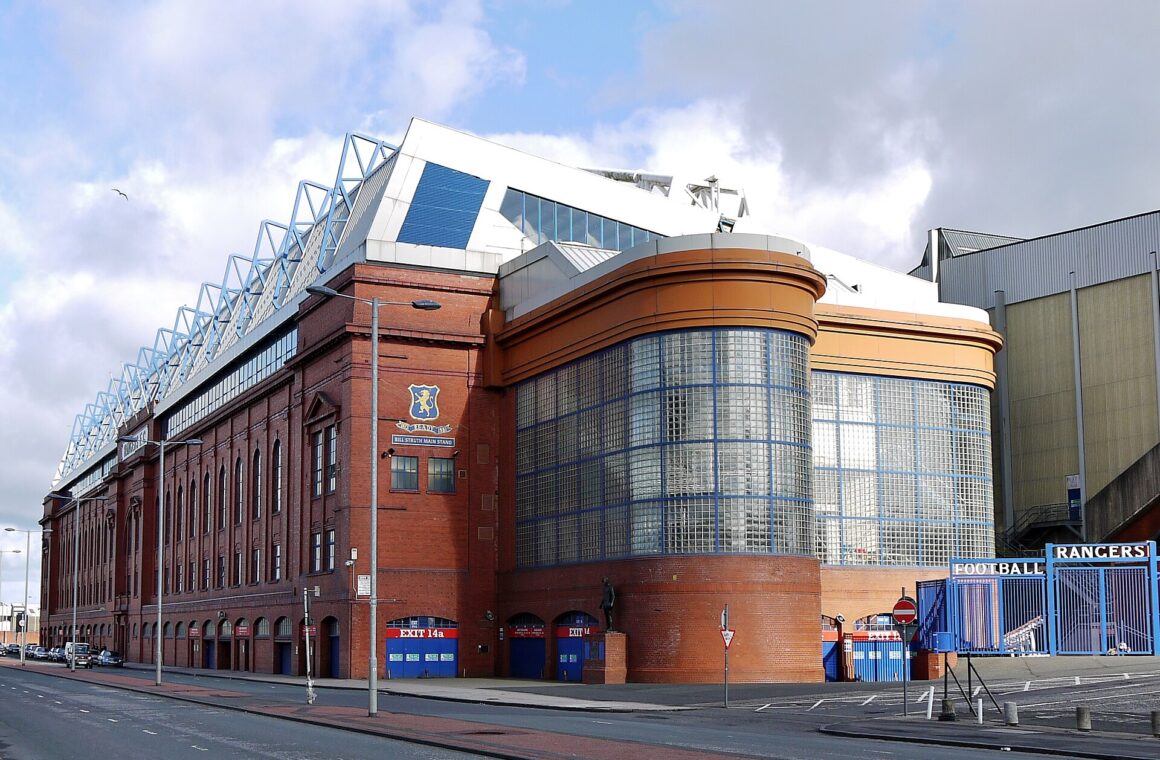
Most football grounds are sheds with seats in them. The building on Edmiston Drive is not — it is a red-brick, category B listed structure with a curved corner in glass block, a crest above the door and a bronze footballer standing over the pavement, and it would be a notable piece of Glasgow architecture even if nobody had ever kicked a ball behind it. That building is the reason an Ibrox stadium tour costs more than its counterpart across the city and takes half an hour longer, and it is the reason we think it is the better of the two if you are choosing only one.
This guide covers what the tour includes, what it costs, when it runs and when it definitely does not, how to reach Govan by Subway, what the Blue Room and the marble staircase actually are, and an honest comparison with the tour at Celtic Park. Prices were checked in September 2026; treat them as the right order of magnitude, because Rangers adjust tour pricing between seasons.
Ibrox stadium tour: the essentials
| Detail | What to expect |
|---|---|
| Adult price | From about £28 |
| Child / concession | Reduced rates; family tickets usually available |
| Duration | About 1 hour 30 minutes, guided |
| Runs on | Non-match days only — no matchday mornings |
| Booking | Direct with the club, online, in advance |
| Nearest Subway | Ibrox, about a five-minute walk |
| From St Enoch | Roughly 7 minutes on the outer circle |
| Highlights | Marble staircase, Blue Room, Manager’s Room, trophy room, dressing rooms, dugout |
What makes the building worth the ticket
The Bill Struth Main Stand was designed by Archibald Leitch, the Glasgow engineer whose criss-cross balcony detailing turns up at grounds all over Britain, and it was completed in 1929. Behind the brick frontage is a set of rooms built for a football club that thought of itself as an institution: an oak-panelled boardroom known as the Blue Room, a Manager’s Room lined in wood, and a marble staircase that the tour walks you up rather than past.
None of this is a reconstruction. It is the original 1920s fabric, maintained rather than restyled, and it is the single strongest argument for doing this tour instead of, or as well as, its rival. If you have any interest in inter-war British architecture, this is a better hour than most of what is on the standard Glasgow itinerary. Our Glasgow history and architecture guide puts Leitch in context alongside the city’s better-known Victorian and Mackintosh work.
The marble staircase
A wide, shallow flight in dark marble with a wrought-iron balustrade, hung with portraits. Players walk up it on matchdays and visiting officials are received at the top. It photographs badly and works well in person, which is a fair summary of the whole tour.
The Blue Room
The club’s formal reception room, oak-panelled, used for board business and for entertaining visiting directors. Guides tend to spend a good ten minutes here, and it is where the tour stops feeling like a stadium visit and starts feeling like a house tour.
The Manager’s Room
Preserved as it was under Bill Struth, who managed the club from 1920 to 1954 and after whom the stand is now named. Small, wood-lined, and more interesting than that description makes it sound.
Trophy room, dressing rooms and dugout
The back half of the tour is the conventional stadium sequence — silverware, the home dressing room, the tunnel, and out to the dugout at pitch level. You do not walk on the grass.
The memorials, and the history the tour does not skip
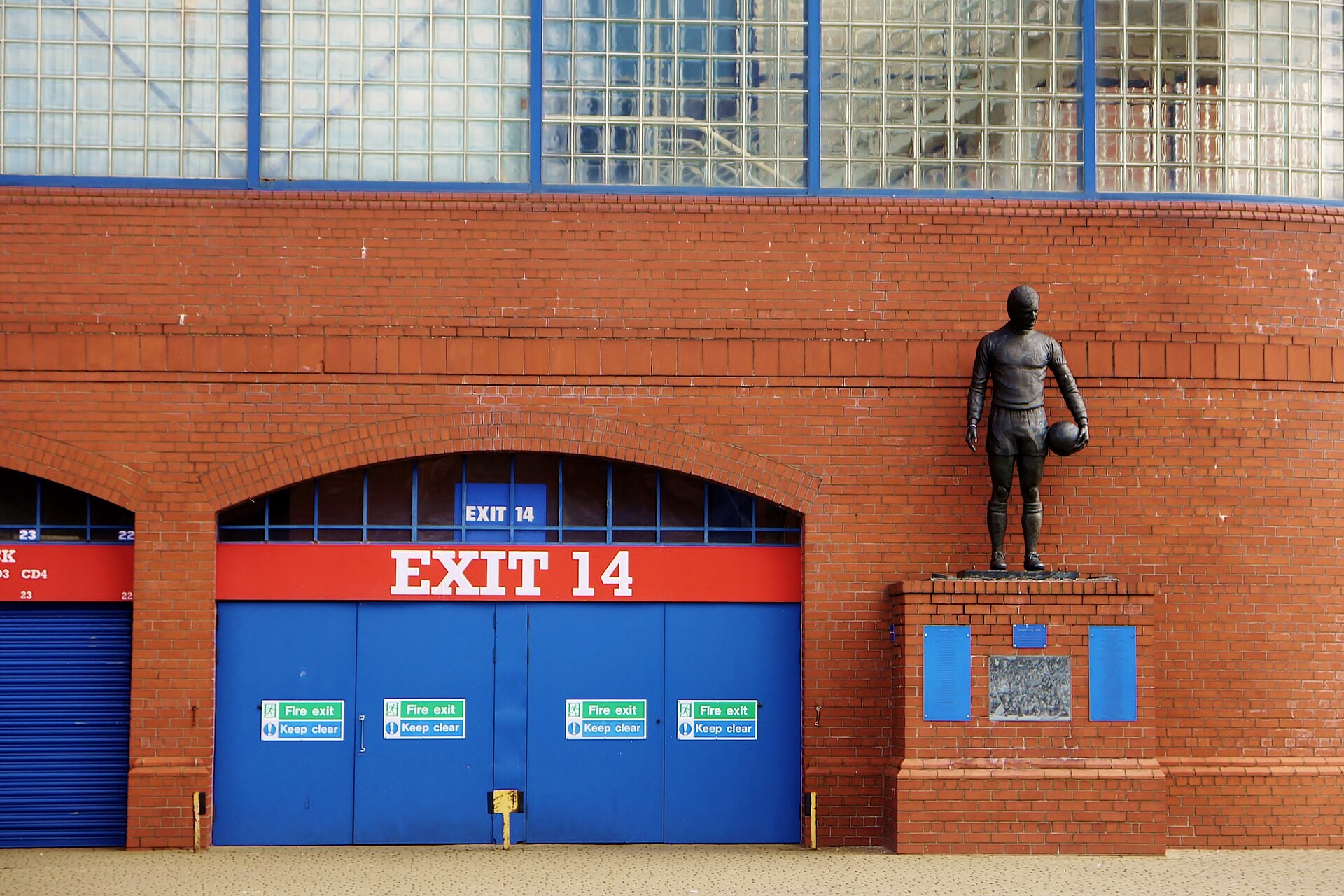
At the corner of the Main Stand, above Exit 14, stands a bronze statue of John Greig with his head bowed. It is the memorial to the people who died at Ibrox — 66 in the 1971 disaster on Stairway 13, 25 in a terracing collapse in 1902, and others in earlier crushes. The plaques below it carry the names.
Tours address this directly rather than glossing it, and the modern stadium you walk around exists partly because of it: the ground was substantially rebuilt in the late 1970s and early 1980s as an all-seated bowl, which is why three sides look nothing like the fourth. It is worth a few minutes outside at the memorial before or after the tour, and it costs nothing.
Booking and timings
Book directly with Rangers. The key constraint, and the one that catches people out, is that the tour runs on non-match days only. There is no morning-of-the-game option here, unlike at Celtic Park, and the schedule also closes for concerts, corporate events and pitch work.
- Outside school holidays — one to two weeks ahead is usually enough.
- School holidays and Christmas — three to four weeks. Ibrox runs fewer slots than Celtic Park and sells out sooner.
- Match weeks — check the fixture list first, then book. European home nights close the tour for the whole day, not just the evening.
- Summer — June and early July are the quietest football weeks of the year and the easiest time to get a slot, though the schedule can go dark for stadium works.
Allow 90 minutes for the tour itself and about three hours door to door from the city centre, including the Subway both ways and time at the memorial and the club shop.
Getting to Ibrox
This is the easiest stadium journey in Glasgow. Ibrox has its own Subway station on the outer circle, roughly seven minutes from St Enoch, and the walk from the station exit to the Main Stand takes about five minutes along Copland Road. A single is £1.80 on contactless or Smartcard and the daily cap is £3.40, so the return trip costs less than a coffee.
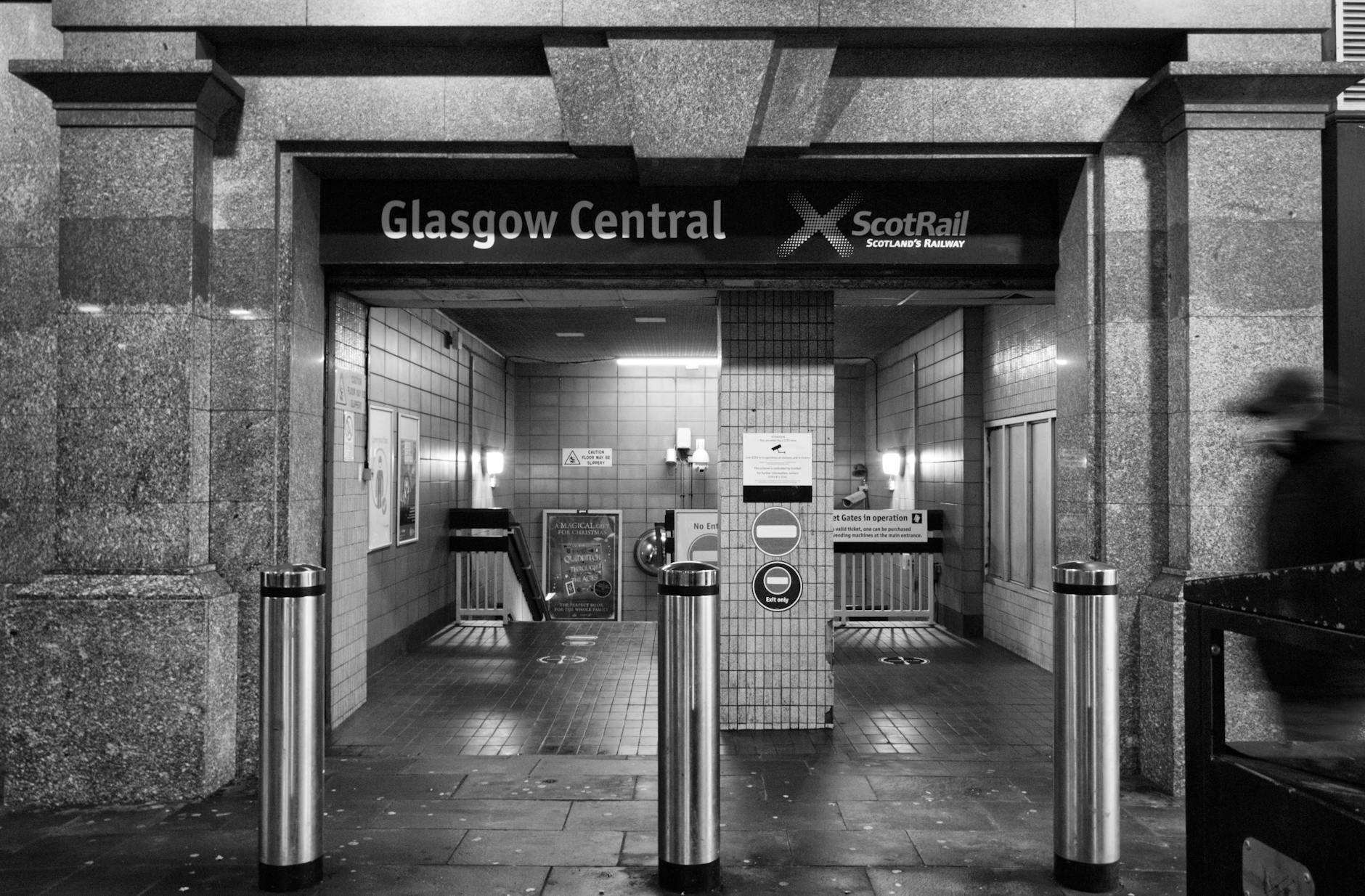
Cessnock is the next station along and is a slightly longer but perfectly pleasant walk, useful mainly on matchdays when Ibrox station queues. Buses run along Paisley Road West from the city centre. Driving is a poor idea: the Low Emission Zone bans non-compliant vehicles from the city centre outright, and the streets around the ground are residential and permit-controlled. Our getting around Glasgow guide has the full picture.
Ibrox or Celtic Park? An honest comparison
| Ibrox | Celtic Park | |
|---|---|---|
| Adult price | From about £28 | From about £20 |
| Length | About 90 minutes | About 60 minutes |
| Matchday tours | No | Sometimes, mornings |
| Transport | Own Subway station | Bus, train or a 35-minute walk |
| Architecture | 1929 Leitch main stand, listed | 1990s rebuild |
| Capacity | Around 51,000 | Just over 60,000 |
| Best for | Architecture, club history, adults | Scale, younger children, tight budgets |
The verdict. If you have one afternoon and a general interest in football, do Ibrox — the building is better, the tour is longer, and the Subway makes it painless. If you are travelling with children under about eight, or you are counting every pound, the Celtic Park tour is shorter, cheaper and easier to hold their attention through. If you are a neutral doing only one football thing in Glasgow and you care more about the game than about buildings, skip both and do Hampden with the Scottish Football Museum instead.
Doing both in one day is technically possible — about 25 minutes apart with a change in town — but the fixed start times rarely line up and you will spend the day in transit. Our Glasgow football guide sets out the alternatives.
Accessibility and practicalities
Step-free routes exist but must be arranged when you book — the standard route uses the marble staircase, which is the whole point of it, so the accessible route is genuinely different rather than merely slower. Tell the club at the point of purchase and they will accommodate it.
There is a club shop and a café on site, both open on tour days. Photography is allowed throughout for personal use. The stadium is exposed to the weather at pitch level, so bring a jacket even for an indoor-sounding activity. Bags are subject to search.
What else is nearby
Govan is not a conventional visitor district, but two things within walking or one-stop distance are worth building into the day:
- Govan Old and the Govan Stones — a collection of early medieval carved stones, including a remarkable sarcophagus, in a parish church about 20 minutes’ walk from the ground. Free, and one of the genuinely surprising things in the city.
- The Riverside Museum and the Tall Ship — across the Clyde and reachable via the Govan–Partick bridge, or one Subway stop to Partick. Free entry, and a natural pairing with a morning tour.
For everything else on the south side of the river, our things to do in Glasgow guide has the full list.
Frequently asked questions
How much does the Ibrox stadium tour cost?
From about £28 for an adult as of September 2026, with reduced child and concession pricing and family tickets usually available. Premium and legends variants cost more. Confirm on the club’s booking page for your date.
How long is the tour?
About 90 minutes guided. Allow three hours door to door from the city centre including the Subway, the memorial and the shop.
Can I do the tour on a matchday?
No. Ibrox tours run on non-match days only. If there is a home fixture on your date, pick another day.
Do you actually go into the Blue Room?
Yes — the Blue Room, the Manager’s Room and the marble staircase are all on the standard route, and they are the reason the tour costs what it does.
Which Subway station is Ibrox?
Ibrox, on the outer circle, roughly seven minutes from St Enoch. It is about five minutes’ walk from the station to the Main Stand. Cessnock is the alternative one stop further round.
Is the tour suitable for children?
For football-interested children of roughly eight and up, yes. Younger children will find 90 minutes long and the panelled rooms dull. Celtic Park is the better choice for under-eights.
Do I need to be a Rangers supporter to enjoy it?
No. The tour is pitched at visitors as much as supporters, and a good half of what makes it worthwhile is architectural rather than tribal. Neutral clothing is sensible around any Glasgow ground, but nobody on a weekday tour will ask which club you follow.
Is there a museum at Ibrox?
There is a trophy room on the tour route rather than a separate ticketed museum. If you want a proper football museum in Glasgow, that is the Scottish Football Museum at Hampden Park.
If the tour is a consolation prize and what you really wanted was a match, it is worth knowing that a midweek league fixture against a bottom-half side is genuinely obtainable at around £25–40, while the games most visitors ask about are not. Our guide to getting Rangers match tickets as a visitor ranks the fixtures honestly and explains how the members’ pre-sale window works.
Related Glasgow Guides
- Glasgow Football — the parent guide to all three stadiums, tickets and matchdays.
- Celtic Park Stadium Tour — the direct comparison, with prices and booking advice.
- Glasgow History and Architecture — where Archibald Leitch fits among the city’s builders.
- Victorian Glasgow Architecture — the red sandstone and brick tradition the Main Stand belongs to.
- Glasgow Subway Guide — fares, the circle line and how Ibrox station works.
- Getting Around Glasgow — the network and the Low Emission Zone.
- Things to Do in Glasgow — what else to build the day around.
- Riverside Museum — across the river from Govan, free, and an easy pairing.
Photo Credits
The Bill Struth Main Stand: Ibrox Bill Struth Main Stand by Graham Laird, CC BY-SA 3.0, via Wikimedia Commons.
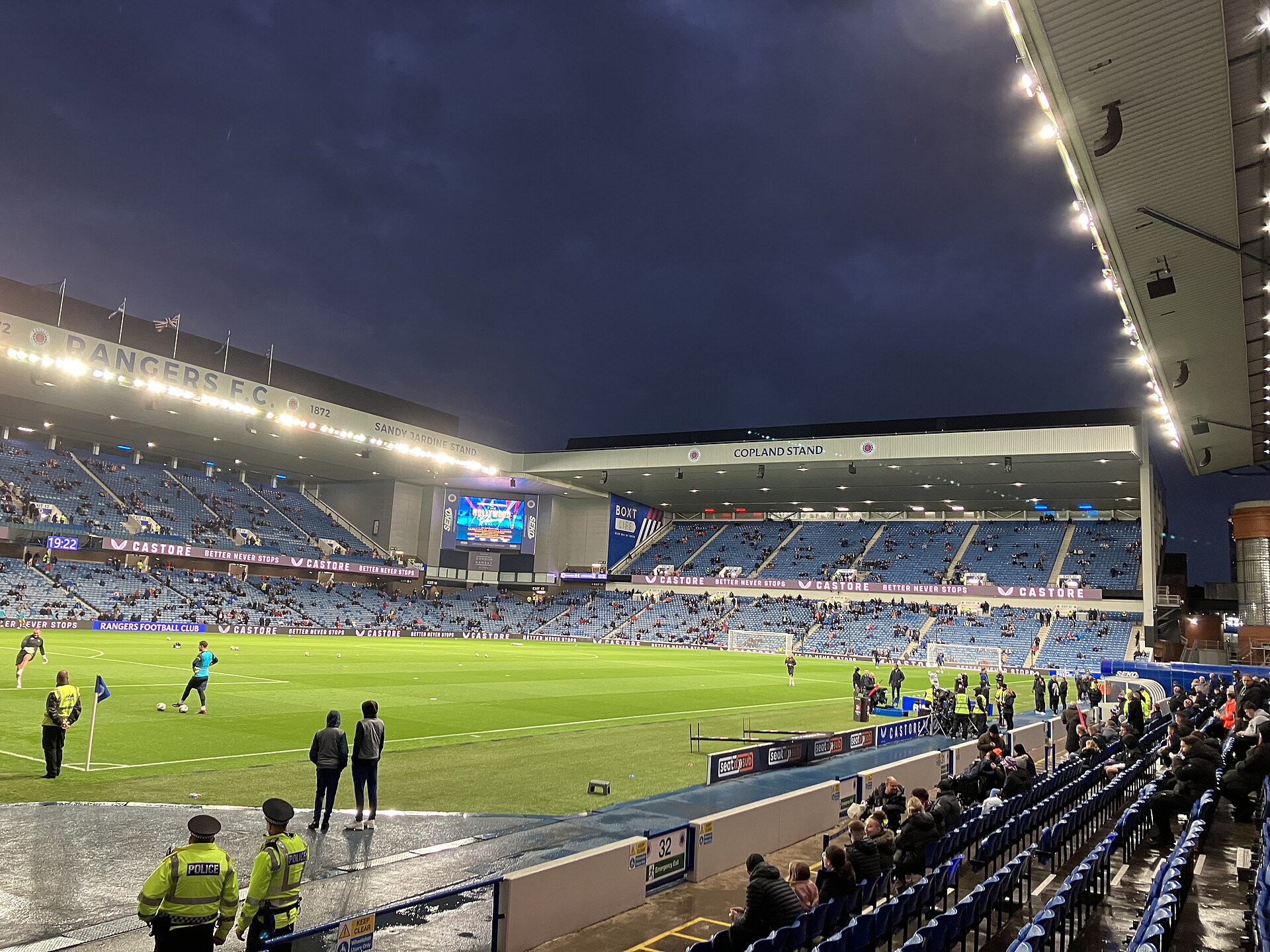
Ibrox under floodlights: Ibrox Stadium (2023-09-27) 07 by DaHuzyBru, CC BY-SA 4.0, via Wikimedia Commons.
The memorial outside the Main Stand: Memorial Outside Main Stand of Ibrox Stadium by Graham Laird, CC BY-SA 3.0, via Wikimedia Commons.