This article contains advertising. Our booking links are routed through a partner that adds commission tracking automatically, so if you book through one we earn a commission from the provider, at no extra cost to you. It never affects what we recommend. Affiliate disclosure
The single most common mistake visitors make about Glasgow football is assuming the Subway goes to the grounds. It goes to one of them. The other two need a train or a bus, and the question of how to get to Celtic Park in particular has an answer that surprises people who have looked at the Subway map and seen a neat orange circle covering the city. That circle does not reach the East End at all.
This guide gives the practical routes to Celtic Park, Ibrox and Hampden Park from the city centre — which line, which station, how long the walk is, what it costs, and, more usefully, how to get away again once fifty thousand people have had the same idea. Fares and times were checked in October 2026; treat them as accurate to the nearest few minutes and pence.
The three grounds compared
| Celtic Park | Ibrox | Hampden Park | |
|---|---|---|---|
| Area | Parkhead, East End | Govan, south of the river | Mount Florida, South Side |
| Subway? | No | Yes — Ibrox station | No |
| Nearest rail | Dalmarnock or Bridgeton | Cardonald (a long walk) | Mount Florida or King’s Park |
| Best way from centre | Bus (61 or 64) or train | Subway | Train |
| Cost each way | £2 bus, £1.90–2.90 train | £1.80 Subway | Around £2.90 train |
| Walkable from centre? | Yes — out the Gallowgate | Better by Subway | Better by train |
| Getting away difficulty | Hard | Moderate | Hard |
Fares vary by operator and are given as an indication. The Subway day cap is £3.40, First Bus singles are capped at £2, and rail fares depend on the route; contactless works on the Subway and on First Bus.
Getting to Celtic Park
Celtic Park is in Parkhead, roughly two miles east of George Square. There is no Subway station within useful distance, so it comes down to bus, train or your own legs.
By bus — the default
The 61 and 64 run east from the city centre to Parkhead, the 64 by way of Bridgeton, and drop you within a few minutes of the ground. Journey time depends on traffic, and contactless payment works on board. On matchdays these routes get extremely busy in both directions and additional services are sometimes laid on. Our Glasgow bus guide covers how the network and fares work more generally.
By train
Trains run to Dalmarnock and Bridgeton from Glasgow Central, and both stations are within walking distance of the stadium. Dalmarnock is the closer of the two. This is the better option on a matchday because trains are less affected by road closures than buses are. Details of how the low-level lines work are in our Glasgow trains guide.
On foot
From Glasgow Cross it is a straight walk out the Gallowgate. It is flat, easy to follow and — on a matchday — genuinely enjoyable, because you walk out with several thousand other people and past the Barras on the way. This is our recommendation if the weather is tolerable and you are not in a hurry.
Getting away afterwards
This is the hard part, so allow extra time. Buses, taxis and the walk back down London Road are all slower with a full stadium emptying around you. The most reliable strategy is to walk to Dalmarnock or Bridgeton and take a train, accepting that the platforms will be busy. Budget 45 minutes to be back in the city centre.
Getting to Ibrox
Ibrox is the easy one, and it is the reason we tell people that if they have a choice of fixture and are not fussy about which club, the Govan trip is far less trouble.
By Subway — the obvious answer
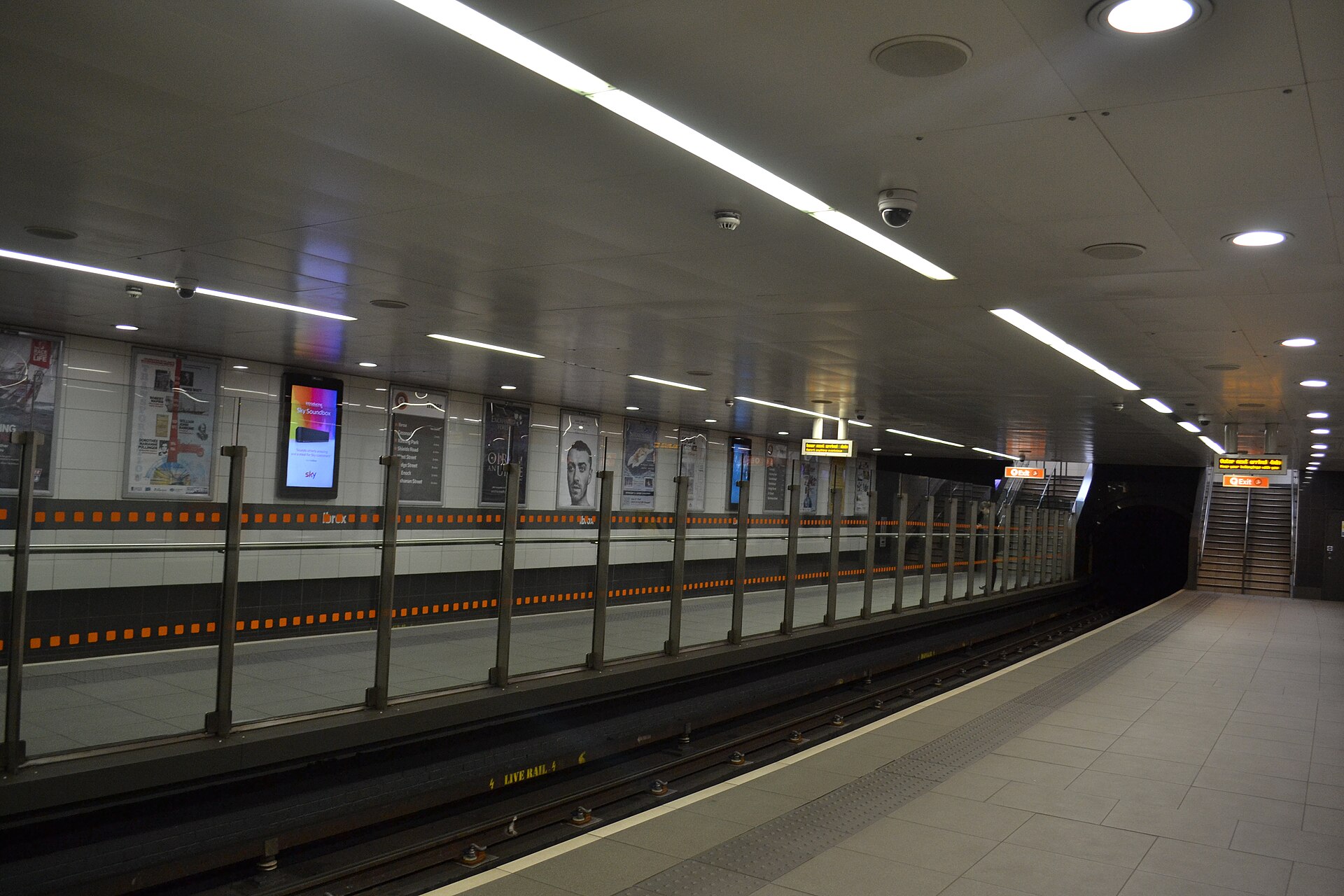
Ibrox has its own station on the outer circle, roughly seven minutes from St Enoch or nine from Buchanan Street. An adult single is £1.80 on contactless or Smartcard and the daily cap is £3.40. The walk from the station exit up Copland Road to the turnstiles takes about five minutes and is signposted, though on a matchday you can simply follow everybody else. Full fare and route detail is in our Glasgow Subway guide.
By bus
First Glasgow’s 9 and 9A run from the city centre along Paisley Road West, a short walk from Ibrox; journey times depend on traffic. Useful mainly for evening fixtures that finish close to the Subway’s closing time.
Getting away afterwards
Expect to queue for the Subway at Ibrox after full time. The single best piece of local knowledge on this page: walk to Cessnock instead. It is the next station round the circle, roughly ten minutes on foot, and you will usually be through it and moving before the Ibrox queue has cleared.
Check the Subway’s last train before an evening kick-off. It runs until 11.40pm Monday to Saturday and 6.12pm on Sunday, and the last departure from some stations leaves well before closing. Buses on Paisley Road West run later, and taxis are easier here than in the East End.
Getting to Hampden Park
Hampden is in Mount Florida on the South Side, and this is a train journey.
By train
Mount Florida and King’s Park are both on the Cathcart Circle from Glasgow Central’s high-level platforms, about nine minutes out, and both are roughly a ten-minute walk from the stadium. Mount Florida is marginally closer and considerably busier; King’s Park is the local’s choice on event days.
One quirk to know: the Cathcart Circle is a loop, so trains are shown by their routing rather than a single terminus, and both directions eventually reach the stations you want. If in doubt, ask at the barrier at Central — staff are used to the question on event days.
By bus
Routes run south along Cathcart Road and Aikenhead Road from the city centre, with journey times at the mercy of traffic. Slower than the train but useful if you are staying on the South Side already.
Getting away afterwards
Mount Florida station becomes a solid wall of people after an international or a cup final, and queueing systems are put in place on the approach roads. King’s Park is the escape valve and is usually ten minutes’ walk with a much shorter queue at the end of it. Alternatively, walk twenty minutes north-west through Queen’s Park to Queen’s Park or Crosshill station and pick up a train there.
Driving, and why you should not
Two things make driving to a Glasgow match a bad idea even before you consider parking.
First, the Low Emission Zone. Unlike London’s ULEZ, it is a ban rather than a charge — non-compliant cars and vans may not enter the city centre at all. The penalty starts at £60, reduced to £30 if paid within 14 days, and repeat breaches cost more. Motorcycles and mopeds are unaffected. If you are in a hire car, check its compliance before you go anywhere near the centre.
Second, matchday street closures. The roads immediately around Celtic Park and Ibrox close to traffic before and after fixtures, residential streets nearby are permit-controlled, and there is no meaningful public parking at any of the three grounds.
If you are already driving in Scotland, the park-and-ride sites are the sensible compromise. They sit outside the LEZ, cost around £8.15 for the day including a return Subway trip, and let you leave an older car legally parked. Our Glasgow driving guide has the full picture.
Accessibility
All three stadiums offer accessible provision for disabled fans, so check each club’s accessibility information before you book; the journeys vary a great deal in how easy they are.
- Ibrox Subway station has escalators and stairs; check current step-free provision with SPT before relying on it, as the Subway’s older stations are not uniformly accessible.
- Mount Florida and King’s Park are traditional suburban stations and step-free access is limited. Contact ScotRail in advance.
- Buses on the Gallowgate and Paisley Road West routes are low-floor and are frequently the most straightforward option.
- Accessible parking at each ground must be arranged with the club or the stadium operator in advance, and it is genuinely limited.
Contact the club rather than guessing — all three handle this routinely and none of them will make it difficult.
A simple rule for planning your day
Add 30 to 45 minutes to every post-match journey, whichever ground you are at. That is not pessimism: tens of thousands of people leave at the same moment and head for the same stops. Plan dinner for two hours after the final whistle rather than one, and you will never be the person sprinting for a train.
The broader picture of how Glasgow’s transport fits together is in our getting around Glasgow guide, and the fixture-specific advice sits in the Glasgow football guide.
Frequently asked questions
How do I get to Celtic Park from Glasgow city centre?
The 61 or 64 bus to Parkhead, a train from Glasgow Central to Dalmarnock or Bridgeton, or a walk out the Gallowgate from Glasgow Cross. There is no Subway station near the ground.
Is there a Subway station at Celtic Park?
No. The Glasgow Subway is a single circle covering the city centre and the west, and it does not reach the East End.
Which Subway station is Ibrox?
Ibrox, on the outer circle, about seven minutes from St Enoch and five minutes’ walk from the turnstiles. Cessnock is the next station round and is usually faster to leave from after a match.
How do I get to Hampden Park?
Train from Glasgow Central to Mount Florida or King’s Park on the Cathcart Circle, about nine minutes, then roughly ten minutes on foot. Buses run down Cathcart Road and Aikenhead Road too, more slowly when traffic is heavy.
How much does it cost to get to a Glasgow stadium?
A Subway single is £1.80 with a £3.40 daily cap, so Ibrox and back costs no more than £3.40 on contactless or a Smartcard. First Glasgow bus singles are capped at £2 and returns are no longer sold, which makes a round trip by bus about £4. Train fares to the East End and South Side are typically around £1.90–2.90 each way.
Can I drive to a Glasgow football match?
You should not. The Low Emission Zone bans non-compliant vehicles from the city centre with a £60 penalty, and matchday parking near the grounds is limited and varies by fixture, so check the home club’s supporter information for your match. Use park and ride at about £8.15 for the day if you must drive.
How long should I allow to get away after a match?
Thirty to forty-five minutes on top of the normal journey time, at every ground. Walk to the second-nearest station rather than queueing at the nearest one.
Does the Subway run late enough for an evening kick-off?
Check on the day. The Glasgow Subway runs until 11.40pm from Monday to Saturday and only until 6.12pm on Sunday, so look up your station’s last departure before an evening match. Buses on Paisley Road West are the fallback from Ibrox.
Related Glasgow Guides
- Glasgow Football — the parent guide to the three grounds and matchdays.
- Glasgow Subway Guide — fares, the circle line and closing times.
- Glasgow Bus Guide — the East End routes and contactless fares.
- Trains in Glasgow — the Argyle Line and the Cathcart Circle.
- Getting Around Glasgow — the network as a whole.
- Driving and Car Hire in Glasgow — the Low Emission Zone and park and ride.
- Celtic Park Stadium Tour — the non-matchday version of the same journey.
- Hampden Park and the Scottish Football Museum — what is at the end of the Cathcart Circle trip.
- Queen’s Park — the walk-out option after a Hampden fixture.
Photo Credits
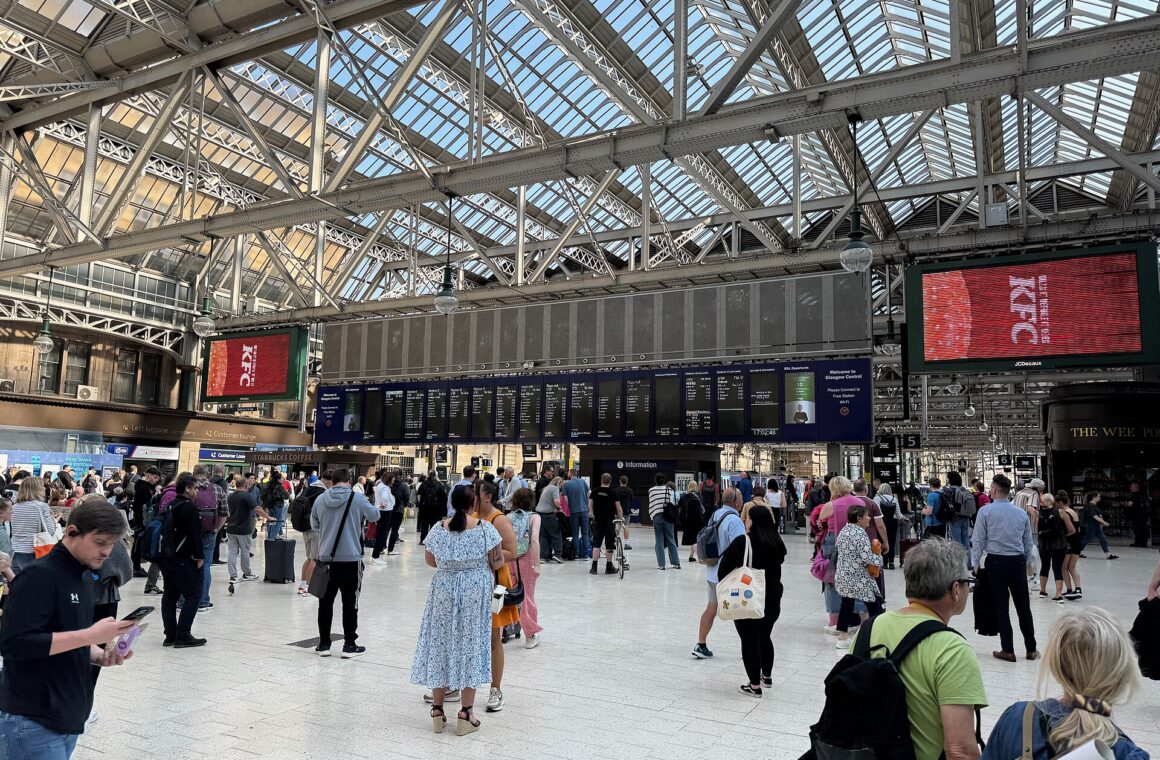
Glasgow Central concourse: Glasgow Central main concourse 2024 by Seasider53, CC BY 4.0, via Wikimedia Commons.
Ibrox Subway station: Glasgow, October 24th 2017 (13) by Daniel from Glasgow, United Kingdom, CC BY 2.0, via Wikimedia Commons.