This article contains advertising. Our booking links are routed through a partner that adds commission tracking automatically, so if you book through one we earn a commission from the provider, at no extra cost to you. It never affects what we recommend. Affiliate disclosure
There is no blue plaque on the Cineworld on Renfield Street, and most people queuing for a film have no idea that the ground under them once shook to the Rolling Stones, Queen and AC/DC. That is Glasgow all over. The city’s music history is everywhere, but a lot of it is hidden in basements, down lanes and inside buildings that now do something else. The Glasgow music trail in this guide joins it up into a single walk across the city centre, from the neon of the Barrowland in the East End to the tenement flat in the West End where a tiny record label changed British indie.
The route is about 6km and covers twelve stops, with an optional extension to the arena district. It takes around two and a half to three hours at a relaxed pace with time to look around, or a full afternoon if you stop for a record shop, a coffee and a pint. Everything on it is free to see from the street. Details were checked in September 2026; venues change, so check opening times if you plan to go inside anywhere.
The trail at a glance
| What | Detail |
|---|---|
| Distance | About 6km for the main route; add around 2km for the arena extension |
| Time | 2.5–3 hours walking with stops; half a day with breaks |
| Start | Barrowland Ballroom, 244 Gallowgate |
| Finish | West Princes Street, Woodlands, near Kelvingrove Park |
| Cost | Free — budget for coffee, lunch and any records you buy |
| Best day | Saturday or Sunday, when the Barras market is open at the start |
| Terrain | City streets; one steady climb up to Sauchiehall Street and a short hill into Woodlands |
| Public transport back | Kelvinbridge or St George’s Cross Subway, both a short walk from the finish (£1.80 single, £3.40 daily cap) |
Before you set off
- Go on a weekend. The Barras market is a weekend operation and adds a lot to the start. The record shops are busiest and most sociable on Saturday afternoons.
- Wear proper shoes and bring a waterproof. This is Glasgow. The route is on pavements, but it is long and the weather will change at least once.
- Be respectful at private addresses. One stop is a private tenement flat. Look from the pavement, take your photograph and move on.
- Treat it as a starting point. The best way to finish the trail is at a gig. Check the listings for the Barrowland, King Tut’s and the smaller rooms before you set out and plan to end the day in one of them.
The walk is written east to west so that it ends near the West End, where there is plenty to eat and drink. It works equally well in reverse if you would rather finish near the Barrowland for a show.
Part one: the East End
1. Barrowland Ballroom, Gallowgate
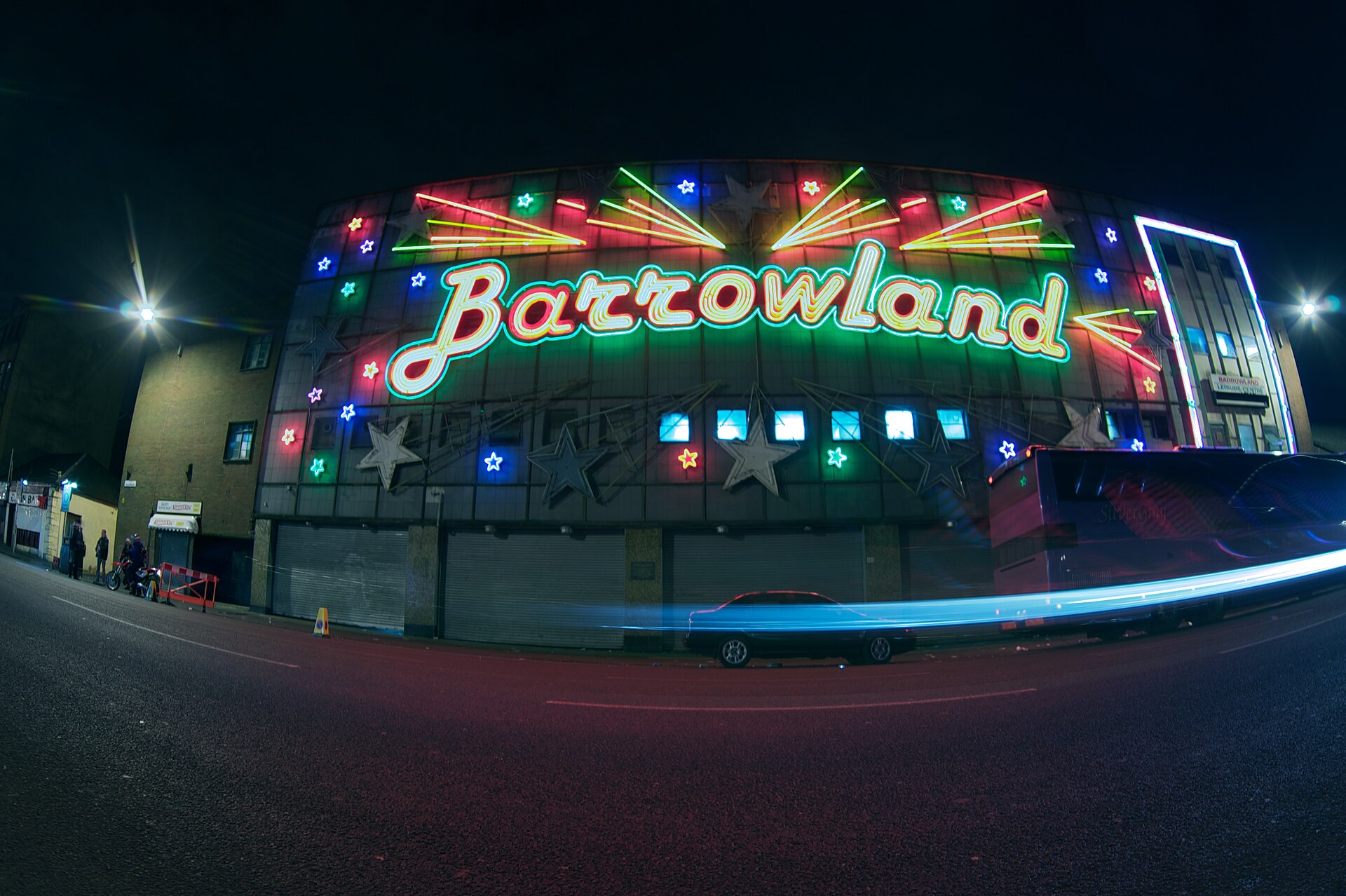
Start at the most famous music venue in Scotland. Maggie McIver opened the ballroom above the Barras market in 1934; it burned down in 1958, reopened on Christmas Eve 1960, and became a rock venue in 1983 after Simple Minds filmed a video there. The neon sign, switched on in 1985, is one of the most photographed things in the city.
In daylight the sign is unlit and the building can look surprisingly ordinary. That is part of the charm. Stand across the road and look up at the stars and the looping script, and remember that David Bowie, Oasis and the Foo Fighters all walked in through that door. Our Barrowland Ballroom guide has the full story.
2. Barrowland Park and the album pathway
Directly across the Gallowgate, Barrowland Park has one of the best pieces of music-themed public art in Britain. The artist Jim Lambie designed a pathway around 100 metres long, laid out like record spines on a shelf, listing bands who have played the Barrowland since 1983. It was created for the Glasgow 2014 Cultural Programme. Some names have worn with weather and footfall, but it is still a joy to walk along looking for the ones you know.
3. The Barras
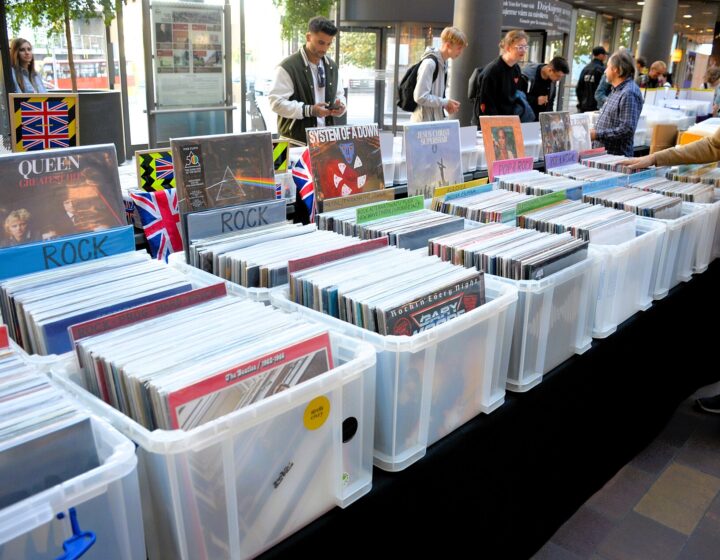
Behind and below the ballroom is the Barras, Glasgow’s weekend market, where the McIver family made the money that built the Barrowland. Among the stalls you will still find second-hand records and CDs, and the BAaD courtyard is now a venue in its own right for gigs and events. If you want to browse properly, our Barras market guide has opening times and tips.
Walk on: head west along the Gallowgate to Glasgow Cross, then along the Trongate and left onto King Street — about ten to fifteen minutes.
Part two: the Merchant City
4. Mono and Monorail Music, King’s Court
On King Street, inside King’s Court, is one of the most important small music spaces in the city. Mono is a vegan café-bar with its own micro-brewery tanks and a small stage for gigs. Monorail Music, sharing the same roof, is one of Glasgow’s best independent record shops, run by people deeply connected to the city’s indie scene.
This is the ideal place for your first break. Have a coffee or a beer, browse the racks, and pick up flyers for what is on this week — they are often more up to date than any website. It is also a good place to ask the staff what you should see while you are in town.
5. City Halls and the Old Fruitmarket, Candleriggs
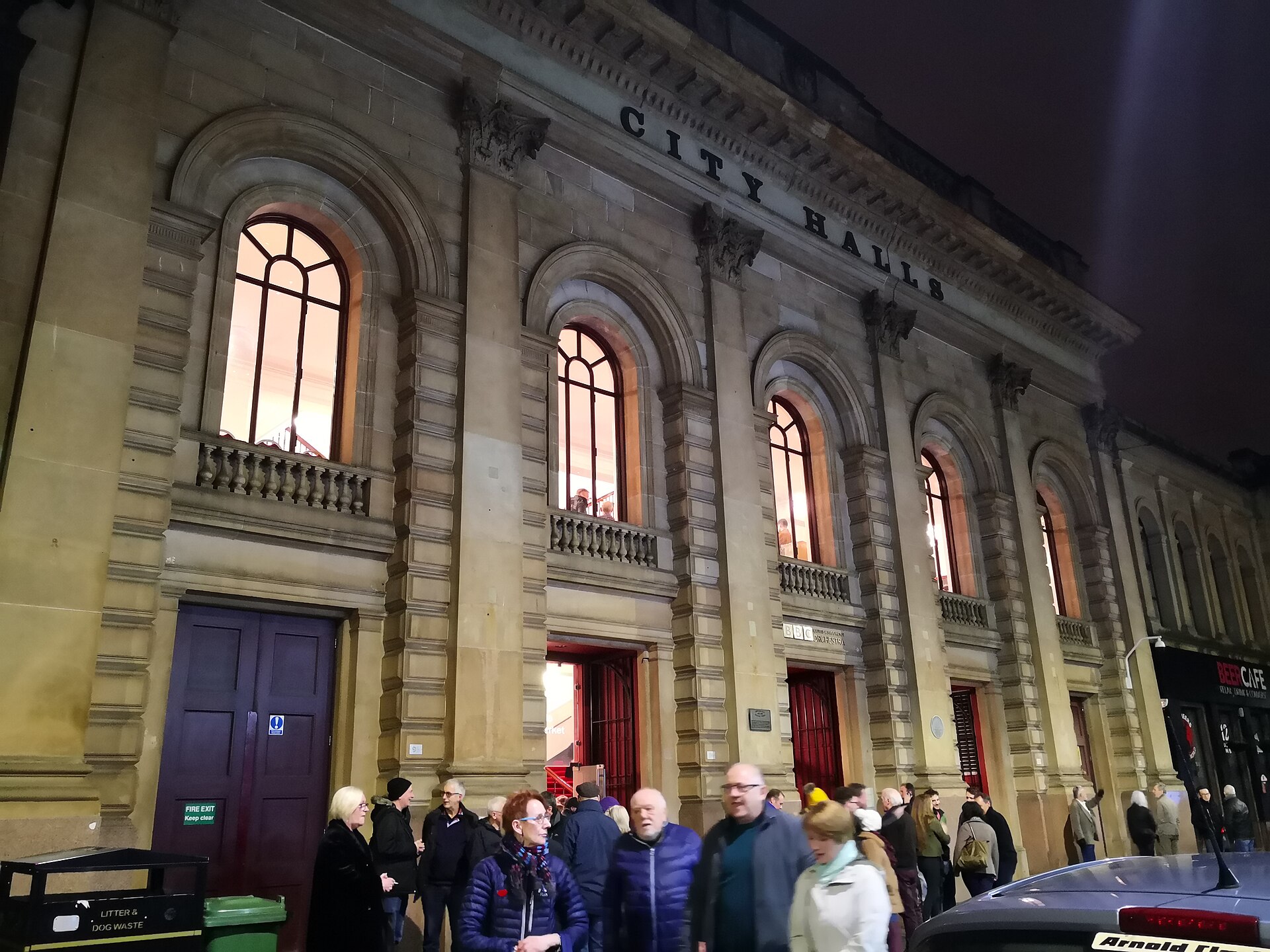
A few minutes’ walk north through the Merchant City brings you to Candleriggs and the handsome City Halls, home to classical concerts and part of the city’s orchestral life. Behind the City Halls is the Old Fruitmarket, once Glasgow’s wholesale fruit market and now a performance venue with its cast-iron structure and painted merchants’ names still in place. It is one of the key venues for Celtic Connections, the city’s huge January folk and roots festival.
If the doors are open during the day for an event, look inside. If not, the frontage and the surrounding streets of the Merchant City are worth seeing anyway. Our Merchant City guide covers the area, and our guide to Glasgow’s warehouse venues explains how the Old Fruitmarket fits into the city’s scene.
Walk on: head south-west through the Merchant City to Argyle Street, then west along Argyle Street to the corner of Jamaica Street — about fifteen minutes.
Part three: the city centre
6. Sub Club, Jamaica Street
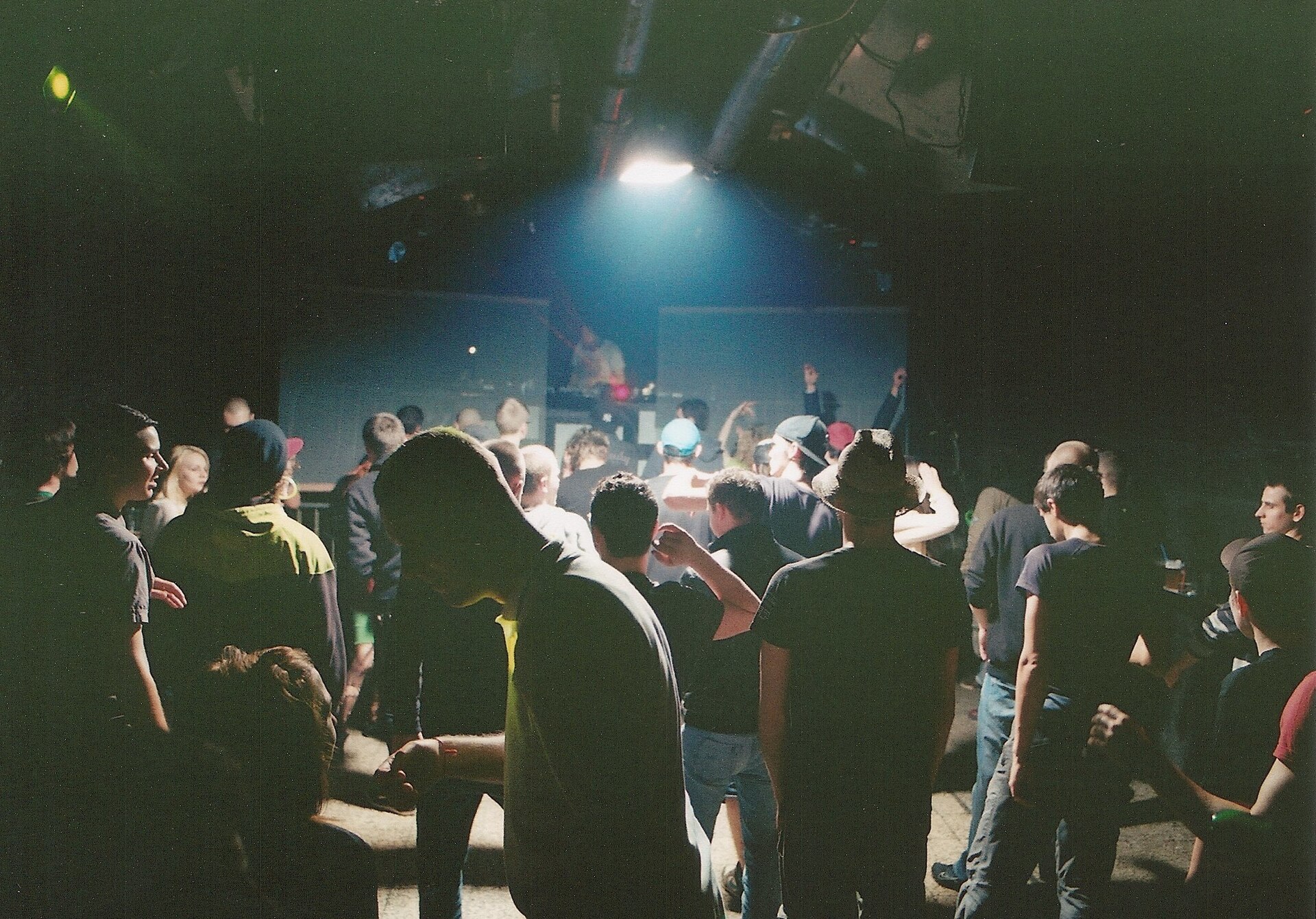
At 22 Jamaica Street, down a set of stairs, is the Sub Club. It opened on 1 April 1987 and describes itself as the longest-running underground dance club in the world. It is small, dark, famously hot and one of the most respected clubs in Europe, and generations of DJs and dance music fans consider it close to sacred.
There is nothing to see from the street except a doorway, but that is the point. The Sub Club is part of the reason Glasgow is taken seriously in electronic music. If you are a clubber and staying the weekend, come back late at night; our best nightclubs in Glasgow guide explains how it works.
7. The Apollo site, Renfield Street
Walk north up Union Street and Renfield Street to number 126, where a 14-screen Cineworld now stands. This was the site of the Glasgow Apollo, and before that Green’s Playhouse. From 1973 to 1985 the Apollo was the most feared and loved rock venue in Britain, with a famously high stage and a balcony that regulars swear bounced when the crowd jumped. The Rolling Stones, Queen, David Bowie, The Who, AC/DC, Simple Minds and Abba all played here.
The building closed in 1985 and was demolished in 1987. Nothing of it remains, which makes it an odd stop — you are looking at a cinema — but anyone in Glasgow over a certain age will tell you it deserves to be on the trail more than almost anywhere else. Stand across the street and imagine the queues.
8. Glasgow Royal Concert Hall, Sauchiehall Street
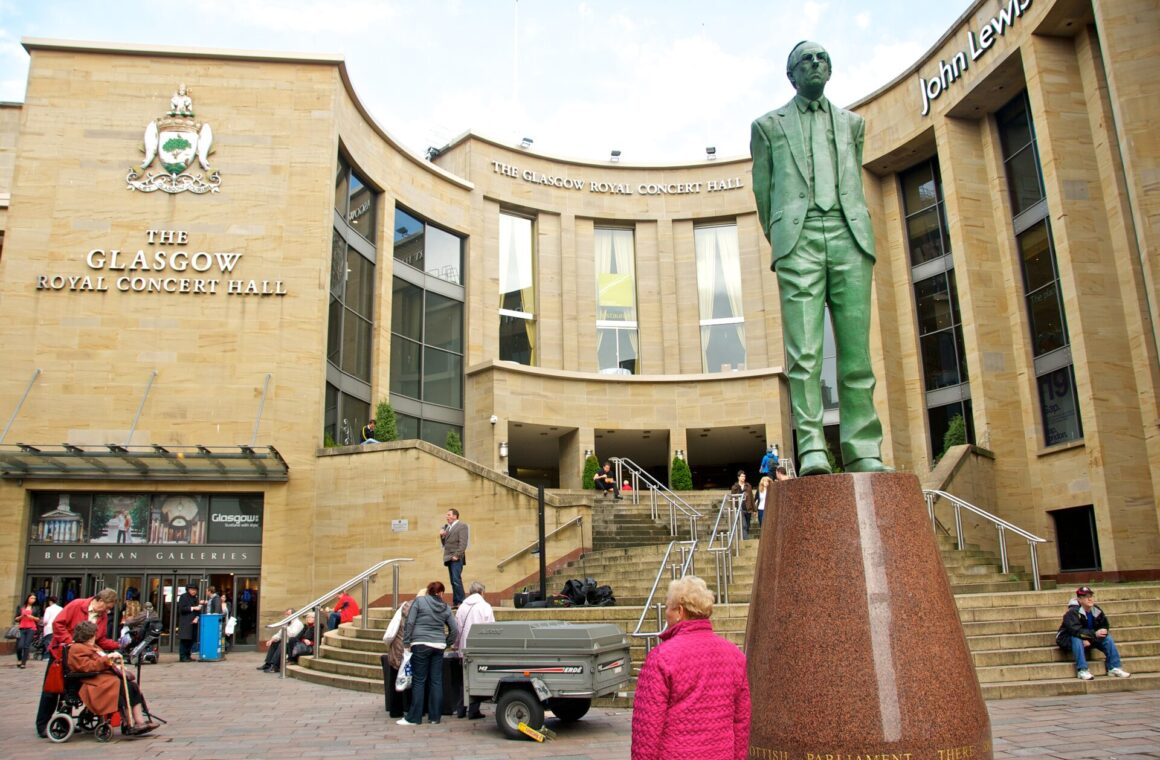
Carry on up the hill and cut east along Sauchiehall Street to the top of Buchanan Street, where the Glasgow Royal Concert Hall looks down the city’s main shopping street. It opened in 1990, the year Glasgow was European City of Culture, and it is home to the Royal Scottish National Orchestra and a major venue for Celtic Connections. Outside is a large statue of Donald Dewar, Scotland’s first First Minister.
The Concert Hall is not only for classical music. It hosts rock, pop, folk and comedy, and its steps are a popular meeting place. It is also a good place to pause and look back down Buchanan Street, where buskers of widely varying quality provide a live soundtrack most days.
9. Sauchiehall Street: the ABC site and Nice N Sleazy
Now turn back west along Sauchiehall Street. This stretch has had a hard decade. On 15 June 2018 fire spread through the Glasgow School of Art’s Mackintosh Building and into the neighbouring O2 ABC, one of the city’s best mid-sized music venues. The ABC was gutted, parts of it including its facade have since been demolished, and plans for the site have been caught up in planning disputes. It has not reopened as a venue.
Further along, Nice N Sleazy has been running on Sauchiehall Street since 1991. The bar upstairs is a local institution and the basement puts on bands and DJs most nights, with a focus on punk, garage rock, indie and electronic music. It is the kind of place where you hear about next month’s big thing, and it is a good spot for a drink if you started early.
Walk on: head south down one of the side streets to St Vincent Street and turn right — about ten minutes.
10. King Tut’s Wah Wah Hut, St Vincent Street
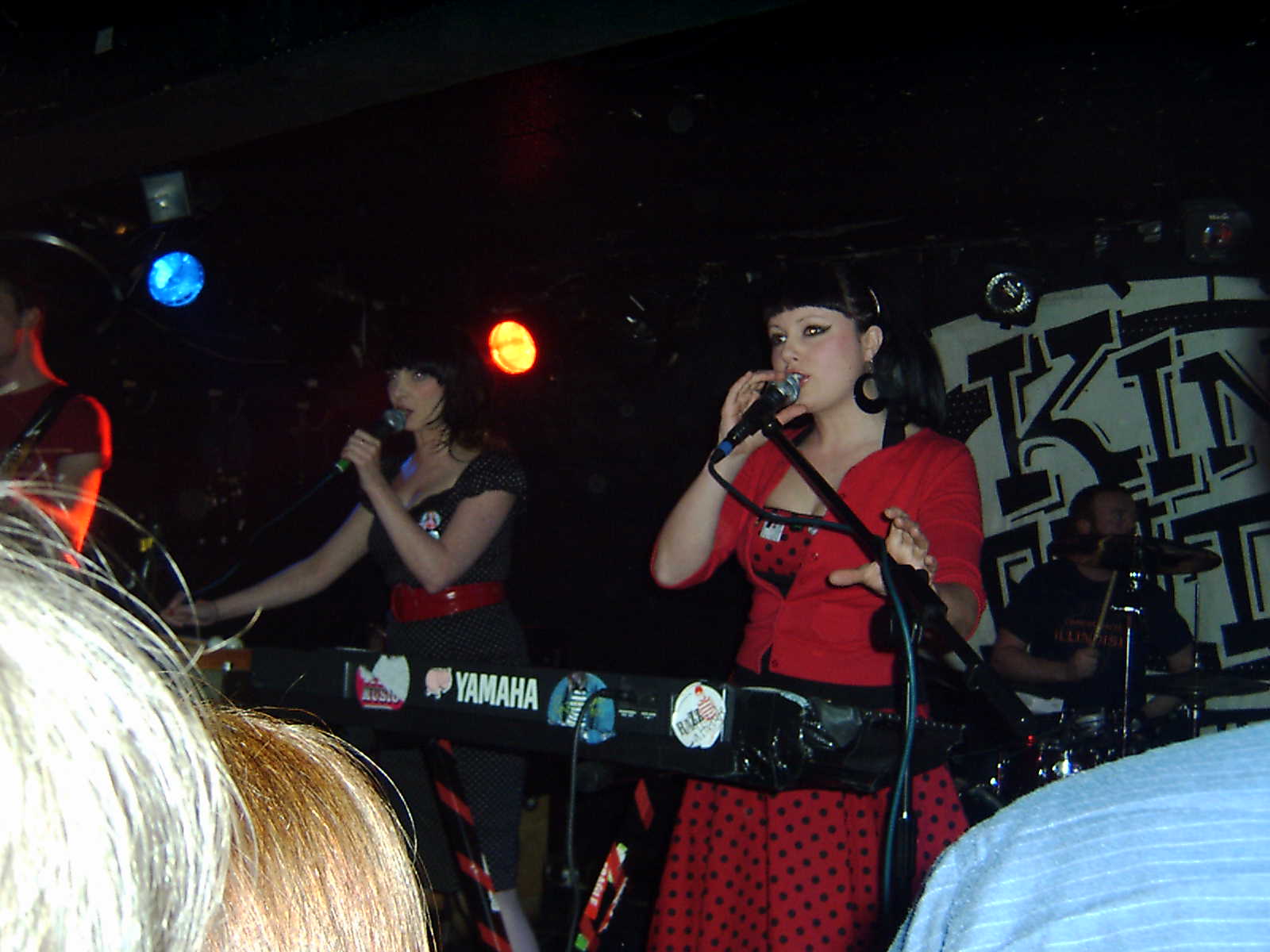
At 272A St Vincent Street is King Tut’s Wah Wah Hut, the 300-capacity room where Oasis talked their way onto a bill in May 1993, played four songs, and were signed by Alan McGee of Creation Records. Blur played their first Scottish gig here in 1990 to about forty people, and Radiohead, The Verve, Coldplay and Biffy Clyro all played here on the way up.
The bar is open to non-ticket holders at most times, so this is a good point for lunch or a pint. Look for the band names painted on the stairs up to the gig room. Our King Tut’s guide covers its history and how to get tickets.
Part four: towards the West End
11. Charing Cross and the road west
From King Tut’s, head west to Charing Cross and cross the motorway into the Woodlands area. This is the transition from the city centre to the West End, and it is where Glasgow’s student and bohemian life begins to take over. Many of the bands who came out of Glasgow in the 1980s, 1990s and 2000s lived in tenement flats in these streets, and the area around Great Western Road and Woodlands Road remains full of musicians.
12. Postcard Records, 185 West Princes Street
End the main trail at an ordinary sandstone tenement on West Princes Street. In 1979 Alan Horne started Postcard Records from his flat at number 185, releasing records by Orange Juice and Josef K and, soon after, Aztec Camera. The label was tiny and short-lived, but it proved that a band could make internationally important music in Glasgow without moving to London, and it influenced a huge amount of British indie music that followed.
This is a private residential building. There is no sign, no plaque and nothing to visit — simply look from the pavement and appreciate how much began inside a normal tenement flat. It is a fitting end: much of Glasgow’s music story happened in places exactly like this.
From here: Kelvinbridge and St George’s Cross Subway stations are both a short walk away. Kelvingrove Park is close by, with the Kelvingrove Bandstand hosting open-air concerts in summer; see our Kelvingrove Park guide.
Optional extension: the arena district
If you have more energy, add a loop south-west to the Clyde. From Kelvingrove Park walk down through Finnieston to see the silver drum of the OVO Hydro, the biggest venue in Scotland, and nearby SWG3, the former galvanising works whose street is lined with huge murals. This adds around 2km and works especially well in the late afternoon if you are going to a show at the Hydro that evening.
Where to eat and drink on the trail
| Stage | Where to stop | Why |
|---|---|---|
| Early | Mono, King’s Court | Coffee, vegan food and beer beside a record shop |
| Middle | The Merchant City | The widest choice of cafés and restaurants on the route |
| Late lunch | King Tut’s bar | Pub food in a legendary venue |
| After | Finnieston or the West End | The best bars and restaurants near the finish |
If you are on a budget, our cheap eats guide has good options along the whole route.
Making it a music weekend
The trail works best as the daytime half of a music day. A good plan is to walk it on a Saturday, buy records along the way, and finish with a gig — the Barrowland or King Tut’s if you can get tickets, or a small basement show if not. On Sunday, look for a traditional session in a pub or a matinee at the Royal Concert Hall.
If you visit in January, time the trail around Celtic Connections, when venues on the route are busy almost every night; our Celtic Connections guide has the details. Our Glasgow music scene guide explains how the whole city’s scene fits together.
Is the Glasgow music trail worth doing?
For a music fan, yes — it is one of the best free ways to understand the city, and it takes you through neighbourhoods you would not otherwise see. It also gives you a sense of how much of Glasgow’s music culture is still active rather than historical.
Be realistic about what you will see, though. Several stops are just doorways, a cinema or a tenement, and the story matters more than the sight. If you are not particularly interested in music, you will get more from our general Glasgow walking routes or the street art and mural trail. And if you want to go inside the venues rather than just look at them, the answer is simple: buy a ticket for a gig.
Frequently asked questions
How long is the Glasgow music trail?
The main route in this guide is about 6km and takes two and a half to three hours at a relaxed pace, or half a day with breaks. The optional arena extension adds about 2km.
Is the Glasgow music trail free?
Yes. All the stops can be seen from the street for free. You will only spend money on food, drink, records or any gig tickets you choose to buy.
Can I go inside the venues on the trail?
Mostly only for events. The bars at King Tut’s and Nice N Sleazy, Mono and Monorail Music are usually open to the public during the day or evening. The Barrowland, Sub Club and Old Fruitmarket open for events only.
Where was the Glasgow Apollo?
At 126 Renfield Street, where a Cineworld now stands. It operated from 1973 to 1985 and was demolished in 1987.
Where were Oasis discovered in Glasgow?
At King Tut’s Wah Wah Hut on St Vincent Street in May 1993, when Alan McGee of Creation Records saw them play four songs.
Are there guided music tours in Glasgow?
Yes, guided music tours do operate in Glasgow, and they add stories you will not get on your own. This self-guided trail is a free alternative if you prefer to go at your own pace.
What is the best day to walk the trail?
Saturday, so the Barras market is open at the start and the record shops are at their liveliest, with time for a gig in the evening.
Related Glasgow Guides
- The Glasgow Music Scene — venues, festivals and the UNESCO City of Music.
- Glasgow Walking Routes — more self-guided walks around the city.
- Glasgow History and Architecture — the city behind the music.
- Barrowland Ballroom — the starting point of the trail.
- King Tut’s Wah Wah Hut — the small venue with the famous stairs.
- SWG3 and Glasgow’s Warehouse Venues — including the Old Fruitmarket.
- Merchant City — the neighbourhood in the middle of the route.
- Street Art and Mural Trail — another free self-guided walk.
Photo Credits
The Glasgow Royal Concert Hall and the Donald Dewar statue: Glasgow Royal Concert Hall (6182751252) by Greg Neate from Sussex, UK, CC BY 2.0, via Wikimedia Commons.
The dance floor at the Sub Club: Sub Club 2012 01 by Grey World, CC BY 2.0, via Wikimedia Commons.
The Barrowland sign at night: The Barrowlands by Rob Sinclair, CC BY-SA 2.0, via Wikimedia Commons.
The City Halls and Old Fruitmarket, Candleriggs: 100 Candleriggs, City Hall And Old Fruitmarket by Frayedattheedges, CC BY-SA 4.0, via Wikimedia Commons.
The Chalets playing King Tut’s: Chalets gig glasgow, CC BY-SA 2.5, via Wikimedia Commons.