This article contains advertising. Our booking links are routed through a partner that adds commission tracking automatically, so if you book through one we earn a commission from the provider, at no extra cost to you. It never affects what we recommend. Affiliate disclosure
Walk up the stairs at 272A St Vincent Street and you are stepping on band names — Arctic Monkeys on one tread, Kasabian a couple further up, a list of years and acts climbing towards a room that holds about 300 people. Most of the bands on those steps went on to play arenas. When they came through here, hardly anyone had heard of them. That is still the entire point of the place, and it is why so many music fans planning a trip type King Tuts Glasgow into a search bar before they have booked a hotel.
This guide covers the story behind King Tut’s Wah Wah Hut, including the Oasis night everyone has heard a version of, what the venue is actually like on a gig night, how its January and summer seasons work, and the practical side — tickets, age limits, food, getting there and what else to do nearby. Prices were checked in September 2026; treat them as the right order of magnitude and confirm on the show listing before you buy.
King Tut’s at a glance
| What | Detail |
|---|---|
| Address | 272A St Vincent Street, Glasgow G2 5RL |
| Opened | First gig in February 1990, in the former Saints and Sinners pub |
| Run by | DF Concerts, the Glasgow promoter behind TRNSMT |
| Capacity | About 300, standing |
| Typical ticket | £10–20 for most shows; bigger names on intimate dates can cost more |
| Busy seasons | New Year’s Revolution (all of January) and Summer Nights |
| Food | Pub food in the bar, which is open before gigs |
| Nearest stations | Anderston and Charing Cross (ScotRail), each roughly ten minutes’ walk; Glasgow Central about fifteen |
| Recent recognition | Access All Areas Legacy Award, 2024 |

The story of King Tut’s
A pub becomes a venue
King Tut’s opened in 1990 in a building that had been a pub called Saints and Sinners. The founders were DF Concerts, then a young Glasgow promoter and now the company behind TRNSMT on Glasgow Green, and the idea was simple: a room where bands on the way up could play in front of people who would actually listen.
The early bookings show how quickly it found its footing. Blur played their first ever Scottish show here in 1990, to about forty people. The Manic Street Preachers made their Scottish debut on the same stage the following year. Through the 1990s the list of bands who came through before anyone was paying attention grew absurd — Radiohead, The Verve, Travis, Skunk Anansie, Muse, No Doubt, Snow Patrol, Coldplay and Biffy Clyro all played here on their way up.
The Oasis night
In May 1993 a Manchester band nobody in Glasgow knew turned up at King Tut’s expecting to play, despite not being on the bill. There are plenty of versions of what happened next, and the band members tell it with varying amounts of menace, but the core of it is agreed: after some argument they were allowed on early, played four songs to a nearly empty room, and one of the few people watching was Alan McGee, who ran Creation Records and happened to be in town for another band. He offered to sign them that night.
The band was Oasis. Within two years they were the biggest group in Britain, and the story has been retold so often that it has become part of how the music industry talks about itself — the idea that the next big thing might be in a small room in Glasgow on a Monday night. The venue does not lean on it as hard as it could, which is to its credit.
Still doing the same job
What makes King Tut’s more than a museum piece is that it has kept booking bands before they are famous. In the 2020s the stage has hosted early shows from Arlo Parks, Fontaines D.C., The Snuts and Olivia Dean. In 2024 it won the Access All Areas Legacy Award, which recognised its long run as one of the most important small venues in Britain rather than its most famous night.
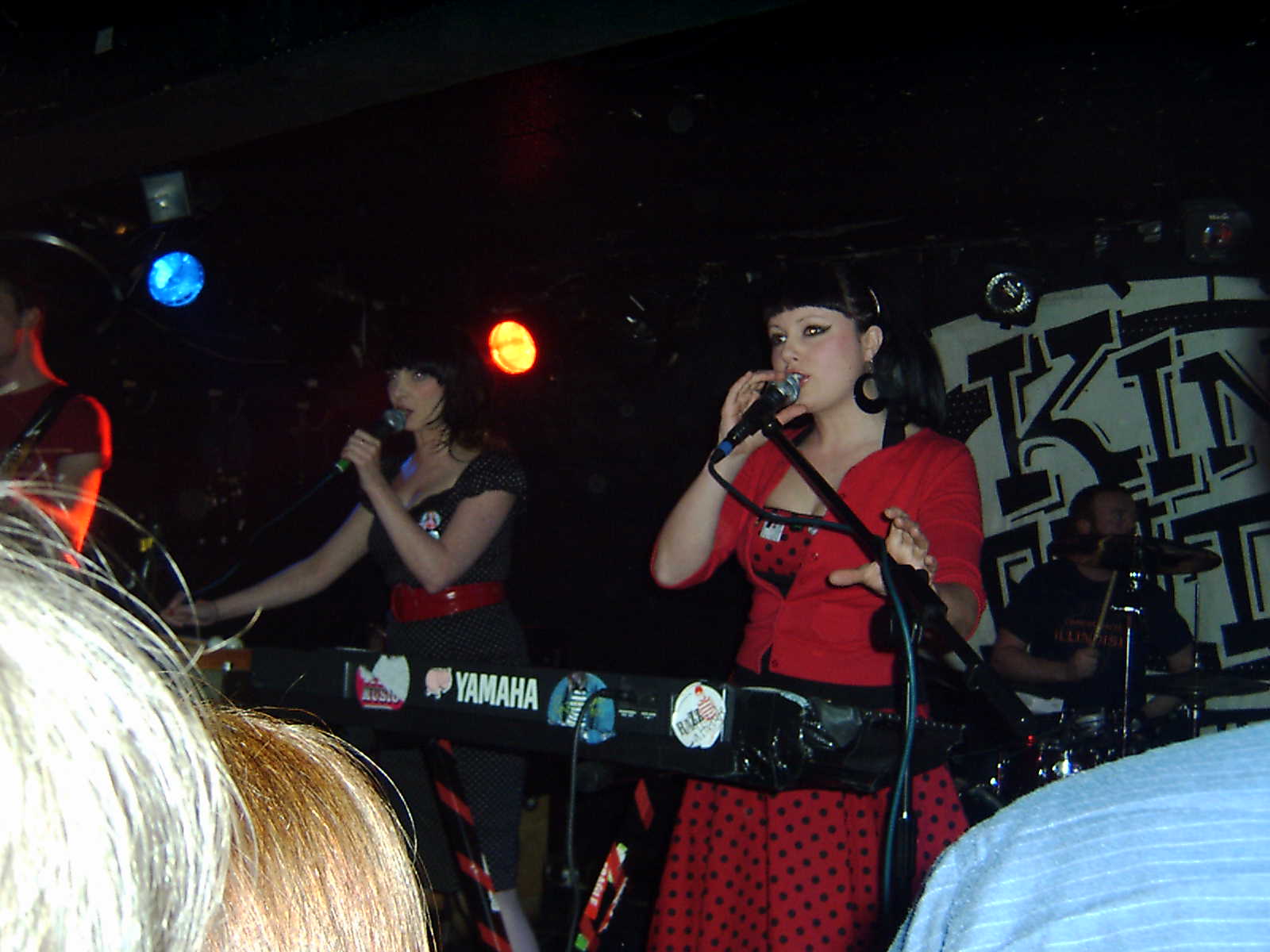
What the venue is like inside
The bar
The bar is the part of King Tut’s you can walk into without a ticket, and it is a proper pub rather than a foyer. It serves food, it is busy with people eating and drinking before shows, and it has the slightly worn, band-poster-covered look of a place that has hosted thirty-odd years of pre-gig pints. It is a good place for a burger and a drink before going up, and a decent place to hear what locals think of the band on that night.
The stairs
Between the bar and the gig room is the famous staircase, with band names and years painted on the steps. Some fans treat it as the main attraction and take photographs of their favourite band’s step. Be considerate — it is also the only way up and down on a busy night, and blocking it for a selfie at 8.40pm will not make you popular.
The gig room
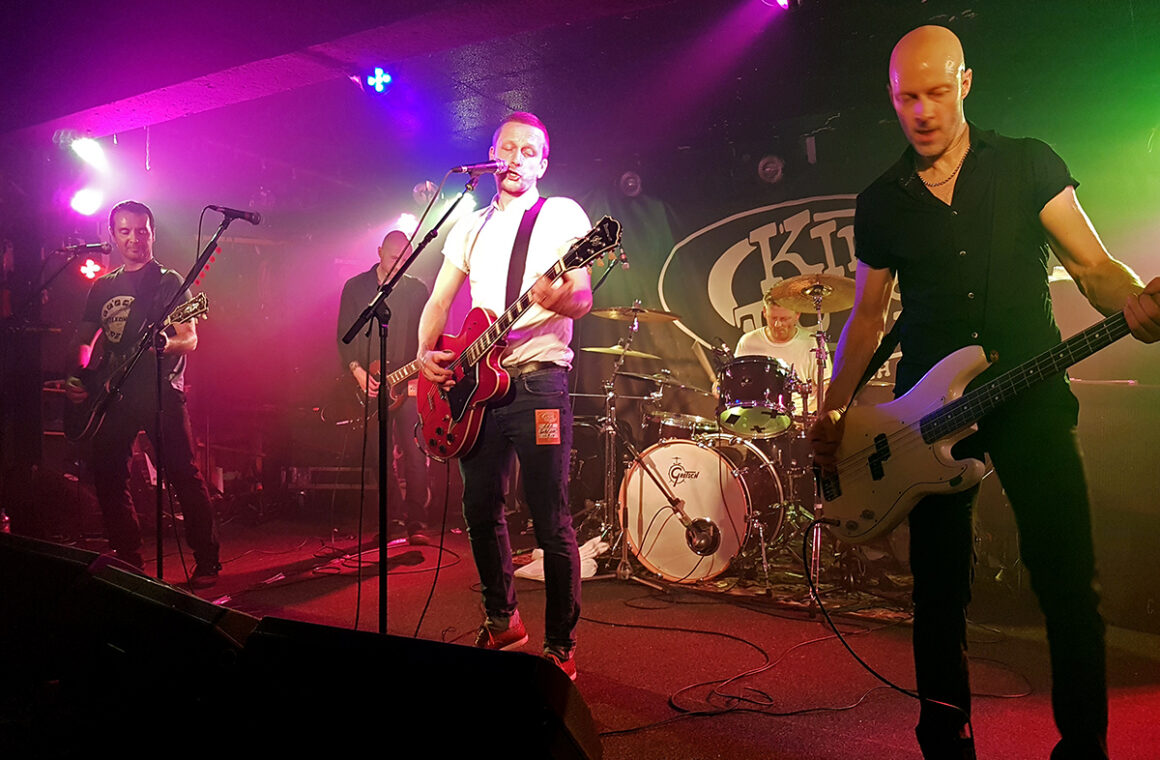
Upstairs is a single black room with a low stage, a small bar and space for about 300 people standing. It is dark, hot when full and loud. It is small enough that there is no truly bad spot, but tall people at the front will block sightlines, and near the stage it gets tightly packed during a sold-out show.
The sound is punchy rather than refined. Nobody is here for a pristine mix. They are here to be four metres from a band that might headline a festival in two years, and the room is very good at that.
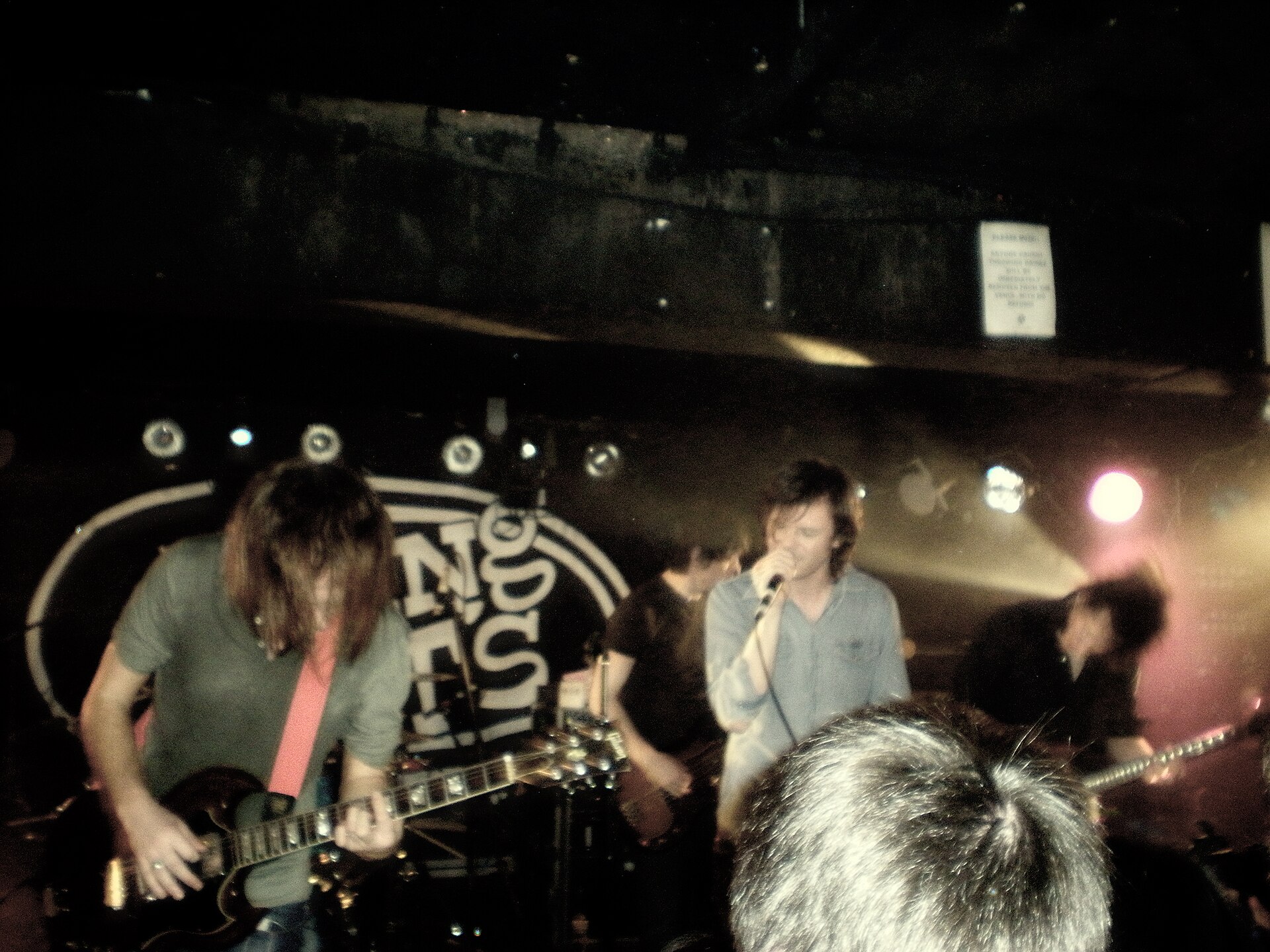
New Year’s Revolution and Summer Nights
King Tut’s runs two seasons that are worth planning around if your dates are flexible.
King Tut’s New Year’s Revolution takes over the whole of January, with new and up-and-coming bands on the stage almost every night of the month. It is designed to showcase emerging acts — many of them Scottish — and tickets are generally cheap. If you are in Glasgow in January you can pick a night more or less at random and see something worth hearing.
King Tut’s Summer Nights does something similar in the summer months, filling a period when touring usually slows down in the city. Check the venue’s listings for the dates each year.
January matters for a second reason. King Tut’s is also one of the venues used by Celtic Connections, the big folk and roots festival that runs across the city in the second half of the month. A January visit can easily combine a New Year’s Revolution night with a Celtic Connections show elsewhere, and our Glasgow music scene guide explains why January is the peak month for live music here.
Tickets: how to get in
- Use the venue’s own listings. The King Tut’s website lists every show and links to the authorised ticket agent. Because the venue is run by a promoter, the listings are reliable and up to date.
- Expect £10–20 for most gigs, plus a booking fee. New Year’s Revolution shows are often at the cheaper end. An established act playing a deliberately tiny date will cost more and sell out very fast.
- Book anything you really want to see. With only 300 places, a band with any buzz can sell out in minutes. For an unknown band on a Tuesday, you will often be able to buy on the night — ask at the bar.
- Avoid resale sites. For sold-out shows, check the official agent’s fan-to-fan resale, which sells at face value, rather than paying inflated prices on a secondary site.
- Check the age limit. King Tut’s is a licensed bar first. The age policy is set per show and printed on the listing; many shows are over-14 or over-18, and staff check ID.
A typical night at King Tut’s
Small-venue gigs in Glasgow run early and to a tight schedule. A common shape is doors around 8pm, one or two support acts, the headline band on at about 9.30pm and finished before 11pm. Stage times vary show to show, and the venue or the band often post them on the day, so check before you go rather than assuming.
Arrive for the support acts if you can. The whole point of King Tut’s is that you do not know which of these bands will matter, and the first act on is quite often the one people remember. Crowds here are enthusiastic and friendly, and even a half-full room makes plenty of noise.
Drinks are around £5–6 for a pint, roughly what you pay in any city-centre bar. Travel light — there is no real space for coats and bags in the gig room, and a winter jacket in a packed 300-capacity room is a mistake you only make once.
Getting there
King Tut’s sits at the western end of St Vincent Street, on the edge of the city centre towards Charing Cross and Finnieston. From Buchanan Street it is a walk of about fifteen to twenty minutes, mostly uphill and then along, and from Glasgow Central it is about fifteen minutes.
- Train: Anderston and Charing Cross stations are each roughly ten minutes on foot. Glasgow Central, with the widest range of services, is about fifteen.
- Subway: Not especially convenient — Buchanan Street and St Enoch are the nearest, both a fifteen-to-twenty-minute walk. Fares are £1.80 single with a £3.40 daily cap, and the Subway closes early, particularly on Sundays. Our Subway guide has the details.
- Taxi: St Vincent Street is on a busy grid and taxis are easy to find on the way home, especially heading towards Hope Street and the station.
- On foot: The simplest option for most city-centre hotels. The grid makes it hard to get lost.
Where to stay nearby
Anywhere in the city centre is within reach. Hotels around Glasgow Central are about fifteen minutes’ walk and put you close to the trains if you are travelling on after the gig — our hotels near Glasgow Central guide covers the options. If you prefer the West End, Charing Cross and Finnieston are the natural bridge between the two, and it is an easy walk or short taxi back from King Tut’s to either.
Before and after the show
The simplest pre-gig plan is to eat in the King Tut’s bar. If you want more choice, the city centre grid around Bath Street, West Regent Street and Hope Street is full of bars and restaurants within ten minutes’ walk — our cheap eats guide covers the budget end.
After the show, Finnieston is a fifteen-minute walk west along Argyle Street and has one of the best concentrations of late bars in the city; see our Finnieston and West End bars guide. If you would rather stay central, the Glasgow nightlife guide explains how the rest of the night is usually structured here.
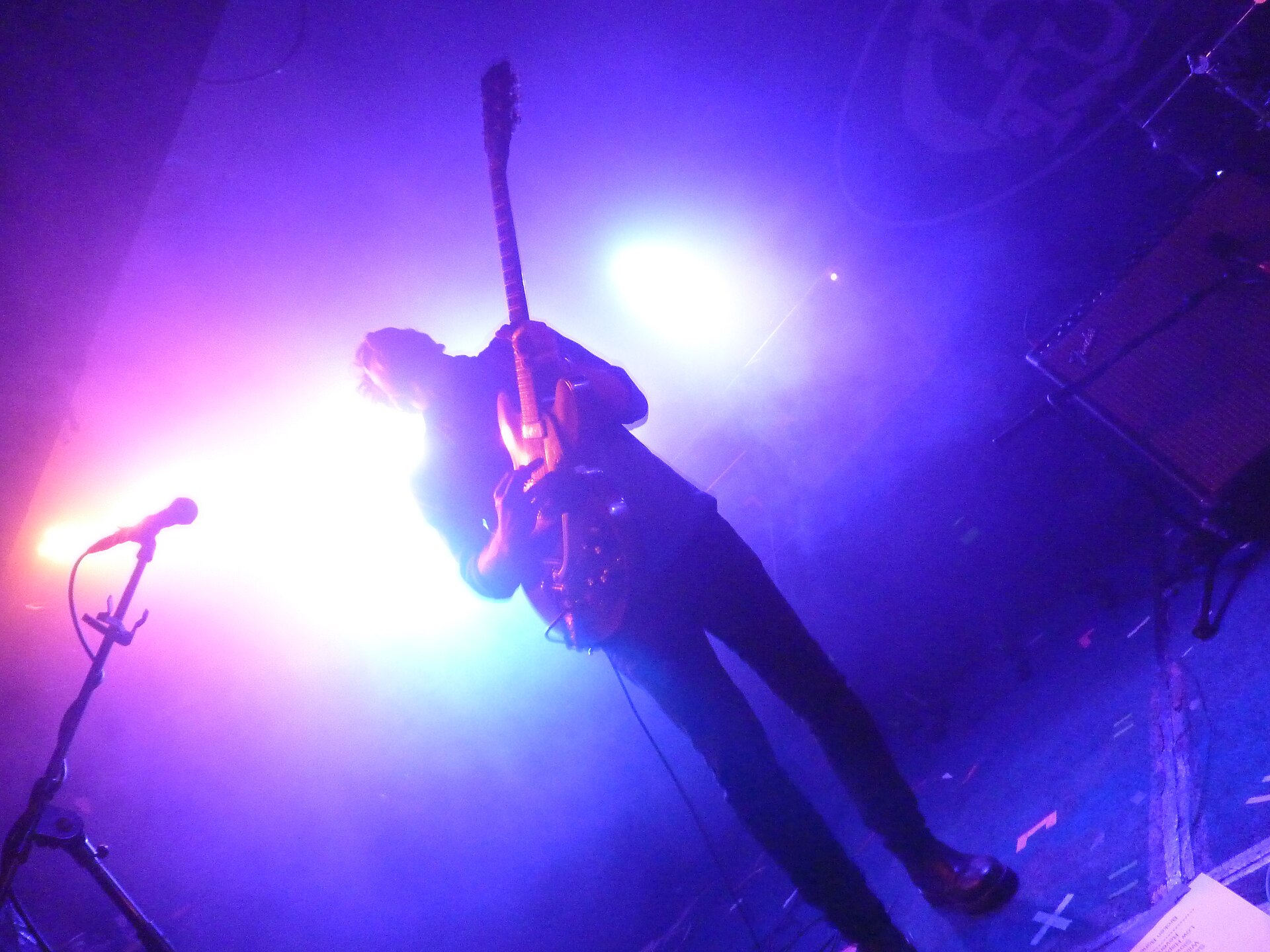
Building a music weekend around King Tut’s
King Tut’s works best as one part of a longer trip rather than the only gig. A good pattern is a small show here on a Thursday or Friday, a bigger night at the Barrowland Ballroom if anything is on, and a Saturday afternoon in the record shops and pub sessions. Our live music venues guide lists the other rooms at every size, so you can fill the gaps with whatever is on while you are here.
If you are a student or on a tight budget, King Tut’s is one of the best-value nights out in the city: cheap tickets, reasonable drinks, and the chance to say you saw someone before they were famous. Our Glasgow student guide has more on making the city affordable.
Accessibility
King Tut’s is an old building and the gig room is up a flight of stairs, so step-free access to the stage room is the obvious problem. The bar is more straightforward. Contact the venue before buying if you have access needs; small venues in Glasgow are generally honest about what they can and cannot do, and some shows may have arrangements available. Ask first rather than finding out on the night.
Is King Tut’s worth it?
For anyone who likes discovering bands, yes, and it is one of the cheapest good nights out in Glasgow. A £12 ticket to see a band you have never heard of in a room where Radiohead and Oasis once played is exactly what this city does best.
Where it is not worth it is as a sightseeing stop. Without a gig, King Tut’s is a pub with a famous staircase, and the staircase is upstairs. You can have a drink and a burger in the bar and soak up the posters, and plenty of fans do, but do not cross the city just to look at it. Pick a night, buy a ticket for whoever is playing and go up the stairs — that is the experience.
If big names at small prices is what you are after, and the band you want has sold out, do not give up on the evening. Look at what else is on in the city that night. In Glasgow there almost always is something.
Frequently asked questions
What is the capacity of King Tut’s?
About 300 people, standing. It is one of the smaller venues in Glasgow with a national reputation, which is why popular shows sell out quickly.
Is it true Oasis were discovered at King Tut’s?
Yes. In May 1993 Oasis talked their way onto the bill, played four songs, and were seen by Alan McGee of Creation Records, who went on to sign them. The details vary depending on who tells the story, but the essentials are not disputed.
Why is it called King Tut’s Wah Wah Hut?
The name is part of the venue’s charm rather than a clue to anything inside — there is nothing Egyptian about the place. Almost everyone in Glasgow just calls it King Tut’s, or simply Tut’s.
Can you visit King Tut’s without a ticket?
You can use the bar, which serves drinks and food, when it is open. The upstairs gig room is ticketed on show nights, and there are no public tours.
How much are tickets at King Tut’s?
Most shows cost roughly £10–20 plus a booking fee. New Year’s Revolution gigs in January tend to be at the cheaper end, and intimate shows by established acts cost more.
Are under-18s allowed at King Tut’s?
It depends on the show. The age limit is set per gig and shown on the listing, and ID is checked. Look before you buy if you are bringing a teenager.
What is King Tut’s New Year’s Revolution?
A month-long series that runs throughout January, putting new and rising bands on the stage almost every night. Tickets are typically cheap, and it is one of the best ways to see Glasgow’s next wave of bands.
What is the nearest station to King Tut’s?
Anderston and Charing Cross railway stations are each roughly ten minutes’ walk. Glasgow Central is about fifteen minutes, and the nearest Subway stations are around a fifteen-to-twenty-minute walk.
Related Glasgow Guides
- The Glasgow Music Scene — how the city’s venues, festivals and scenes fit together.
- Barrowland Ballroom — the bigger, older room at the other end of the city centre.
- Live Music Venues in Glasgow — the full venue-by-venue guide.
- Glasgow Nightlife — what happens after the gig.
- Celtic Connections — the January festival that uses King Tut’s among its venues.
- Finnieston and West End Bars — a short walk west for a late drink.
- Glasgow Student Guide — cheap nights out and getting by on a budget.
Photo Credits
Baby Chaos on the King Tut’s stage: Baby Chaos live at King Tuts in Glasgow by VPeck, CC0, via Wikimedia Commons.
The Chalets playing King Tut’s: Chalets gig glasgow, CC BY-SA 2.5, via Wikimedia Commons.
Idlewild at King Tut’s: Idlewildkingtuts by Egg_Creations, CC BY 3.0, via Wikimedia Commons.
Joel Stein on stage at King Tut’s: Joel Stein, King Tut’s, June 2014(2) by Peter Morrison, CC BY-SA 2.0, via Wikimedia Commons.