This article contains advertising. Our booking links are routed through a partner that adds commission tracking automatically, so if you book through one we earn a commission from the provider, at no extra cost to you. It never affects what we recommend. Affiliate disclosure
Stand on the footbridge over the motorway at Charing Cross and you are on the set of a Belle and Sebastian video. Walk up to a red sandstone church in Hyndland and you are outside the building where Stuart Murdoch lived as caretaker while writing the songs that made the band. Take the train to Mount Florida and you are in the streets where Bobby Gillespie grew up before Primal Scream. Very little of this is signposted. The story of Glasgow bands is written into ordinary streets, church halls, art schools and pubs — which makes finding it far more satisfying than walking round a museum.
This guide is a band-by-band pilgrimage: the Glasgow places connected with Belle and Sebastian, Franz Ferdinand, Simple Minds, Primal Scream, Orange Juice, Glasvegas, Mogwai, Chvrches and more, with what you can actually see at each, how to group them into sensible half-days, and a few honest warnings about places that are private or gone. For a single walking route through the city’s venues and landmarks, see our Glasgow music trail. Details were checked in September 2026; some buildings have changed name or use, so treat this as a guide to places rather than a list of attractions with opening hours.
Glasgow bands at a glance
| Band | Glasgow connection worth seeking out | Area |
|---|---|---|
| Belle and Sebastian | Hyndland Parish Church, Charing Cross footbridge, Botanic Gardens, Ashton Lane | West End |
| Franz Ferdinand | Glasgow School of Art connections; formed in the city in the early 2000s | Garnethill / city centre |
| Orange Juice, Josef K, Aztec Camera | Postcard Records, founded in a flat at 185 West Princes Street | Woodlands |
| Simple Minds | Filmed at the Barrowland in 1983, turning it into a gig venue | East End |
| Primal Scream | Bobby Gillespie grew up in Mount Florida | Southside |
| Glasvegas | From Dalmarnock | East End |
| Mogwai | Castle of Doom studio (private); Chemikal Underground label | Various |
| Deacon Blue | Raintown (1987), an album about Glasgow | Citywide |
| Chvrches | Formed in Glasgow in 2011 | Citywide |
Before you go: pilgrim etiquette
- Many of these places are private. Churches are working churches, studios are workplaces and flats are homes. Look and photograph from public space, and do not knock on doors.
- Names change. Several bars and cafés with band connections have been renamed or have changed hands. The building is still there; the sign may not be.
- Combine it with a gig. A pilgrimage day ends best with live music. Check who is playing the Barrowland or King Tut’s while you are in town.
- Bring a playlist. Walking through Hyndland with Belle and Sebastian in your headphones is the whole point.
Belle and Sebastian’s West End
No Glasgow band is as closely tied to specific streets as Belle and Sebastian. Their early songs are full of West End life, and their story is unusually easy to trace on foot. Allow half a day and start near Charing Cross.
Stow College and the first album
The band’s debut album, Tigermilk, was made in 1996 through the music business course at Stow College, where students ran a label called Electric Honey. Just 1,000 copies were pressed on vinyl and sold by mail order. Those original copies are now among the most sought-after records in British indie, and the story of a band being launched by a college project is part of Belle and Sebastian’s legend.
The Charing Cross footbridge
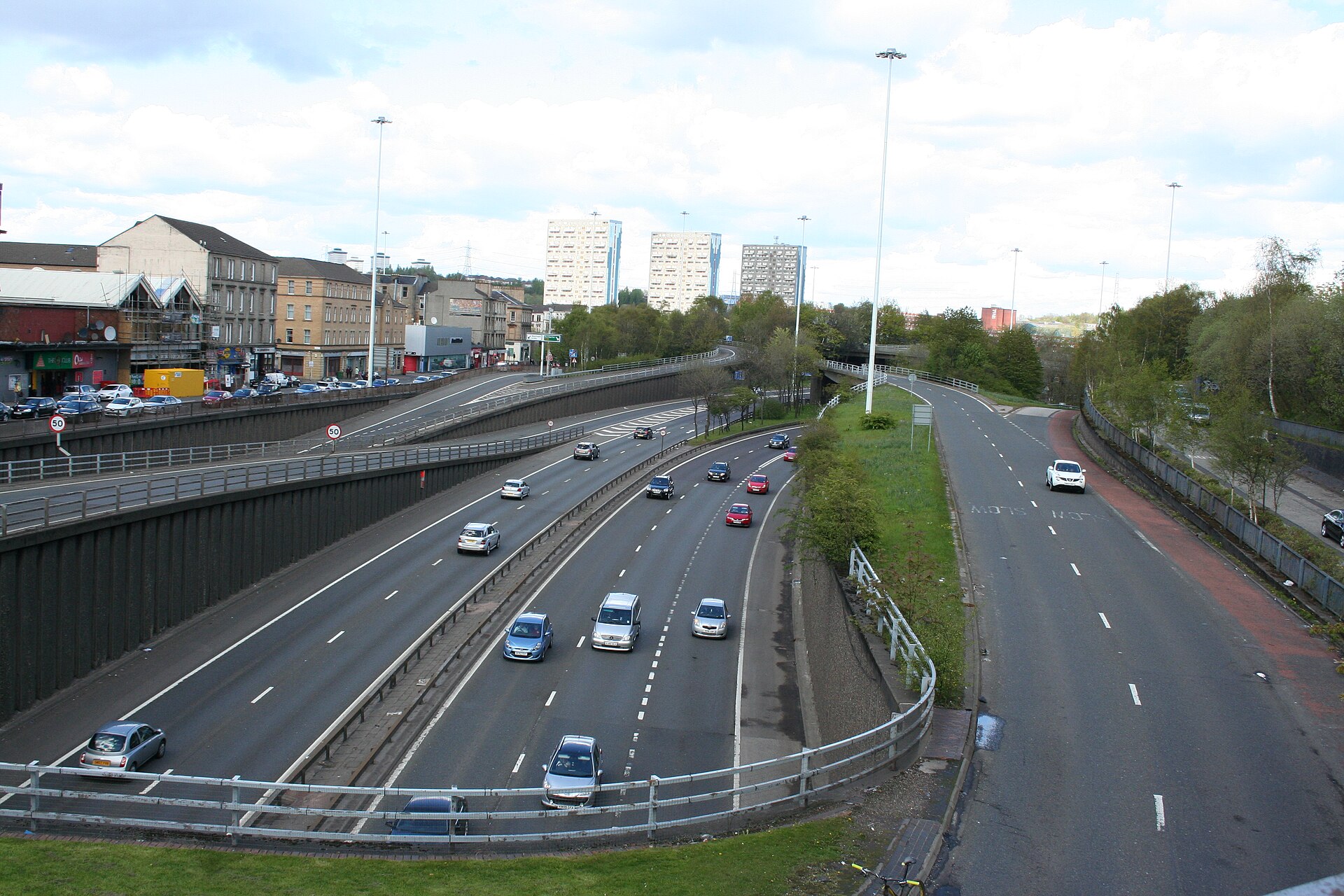
The pedestrian bridge over the M8 at Charing Cross appears in the video for “Dog on Wheels”. It is not a pretty spot — you are standing above a motorway — but it is very Glasgow, and there is something appealing about the band choosing it. It is also a natural gateway into the West End on foot.
Woodlands Road and the open mic nights
Stuart Murdoch and guitarist Stevie Jackson met at weekly open mic nights at The Halt Bar on Woodlands Road. The bar has since been renamed, but the street is still full of pubs and cafés, and it is an easy walk from Charing Cross towards Kelvingrove Park.
Hyndland Parish Church
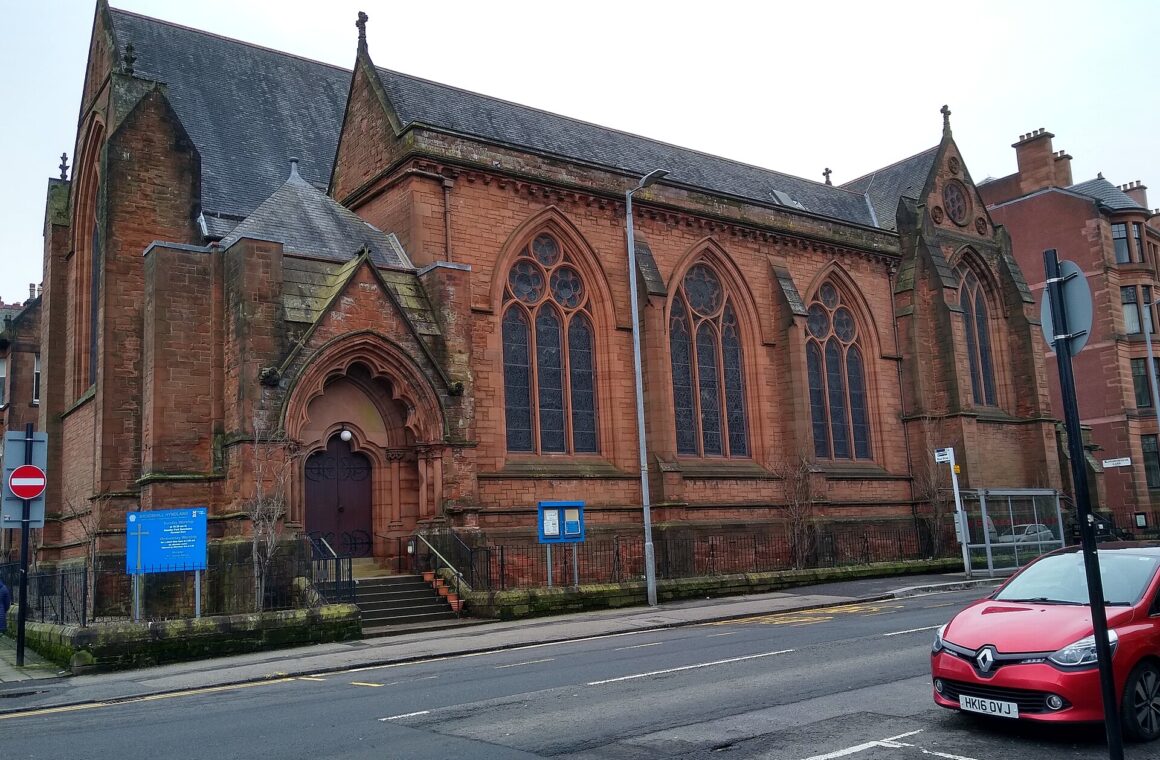
This is the most meaningful stop for fans. In the early 1990s, Hyndland Parish Church gave Stuart Murdoch a rent-free flat above its church hall in return for looking after the building. He lived there for more than five years, the band rehearsed in the hall, and the single “Lazy Line Painter Jane” was recorded there in early 1997. Murdoch has spoken warmly about how much the church’s support mattered at a fragile time in his life.
It is still a working church. Admire the red sandstone building from outside, respect services and events, and remember that for the congregation it is a place of worship rather than a music landmark.
The University, Ashton Lane and the Botanic Gardens
Several band members studied at the University of Glasgow, whose Gothic towers dominate the West End skyline. Down the hill, the cobbled Ashton Lane was home to the Grosvenor Café, a band hangout that gave its name to the Celestial Café in Stuart Murdoch’s book. The café is now a bar, but the lane is still one of the West End’s liveliest spots.
At the top of Byres Road, the Botanic Gardens hosted a big open-air Belle and Sebastian concert in 2004. It is a lovely place to finish this part of the pilgrimage, with the Kibble Palace glasshouse to shelter in if it rains.
Postcard Records and the sound of young Scotland
Before Belle and Sebastian, there was Postcard. In 1979 Alan Horne started Postcard Records from his tenement flat at 185 West Princes Street in Woodlands, releasing records by Orange Juice and Josef K, and soon Aztec Camera. Its slogan, “The Sound of Young Scotland”, was half joke and half manifesto, and the label’s short, brilliant run showed that a Glasgow band did not need London to matter.
Everything from Primal Scream and Teenage Fanclub to Franz Ferdinand owes something to that idea. There is nothing to visit — it is a private flat in an ordinary tenement — but West Princes Street is a short walk from Woodlands Road, so it fits easily into a West End day. Stand on the pavement, not the doorstep.
Franz Ferdinand and the art school
Franz Ferdinand formed in Glasgow in the early 2000s and became one of the defining British bands of the decade. Their early base was a derelict warehouse they called the Chateau, where they rehearsed and held parties that mixed music and art. Recordings made there in 2002 created a buzz that led to a deal with Domino Records in 2003.
The band had strong links with the Glasgow School of Art: bassist Bob Hardy graduated from it, and drummer Paul Thomson worked there as a life model. The art school has played a similar role for many Glasgow musicians, and its shows and parties have long been part of the city’s creative scene.
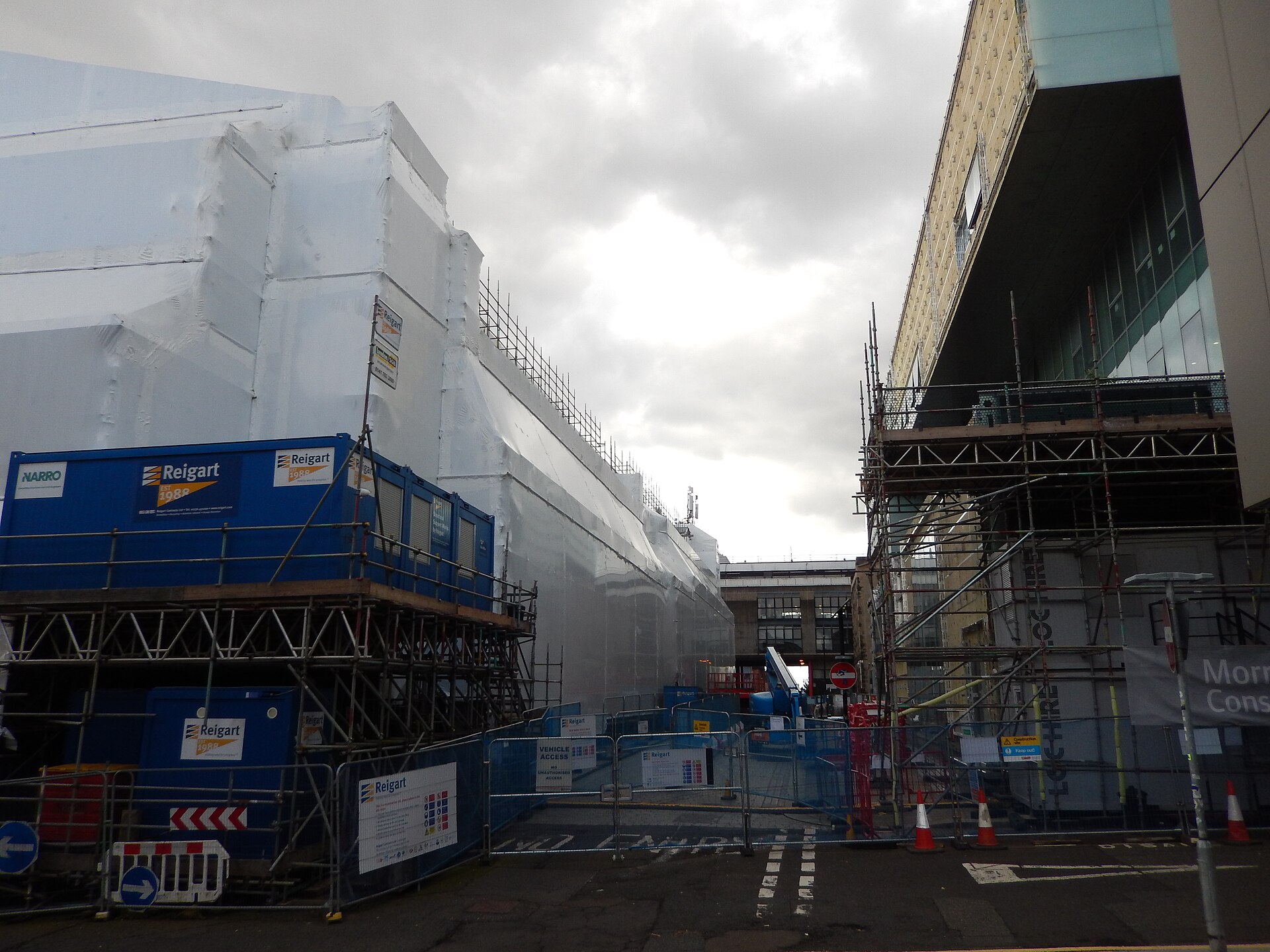
Charles Rennie Mackintosh’s famous art school building on Renfrew Street was badly damaged by fires in 2014 and 2018 and remains under restoration, so you will see scaffolding and wraps rather than the façade in its glory. The modern Reid Building opposite is part of the campus. Our Charles Rennie Mackintosh guide covers the building’s story.
Simple Minds and the Barrowland
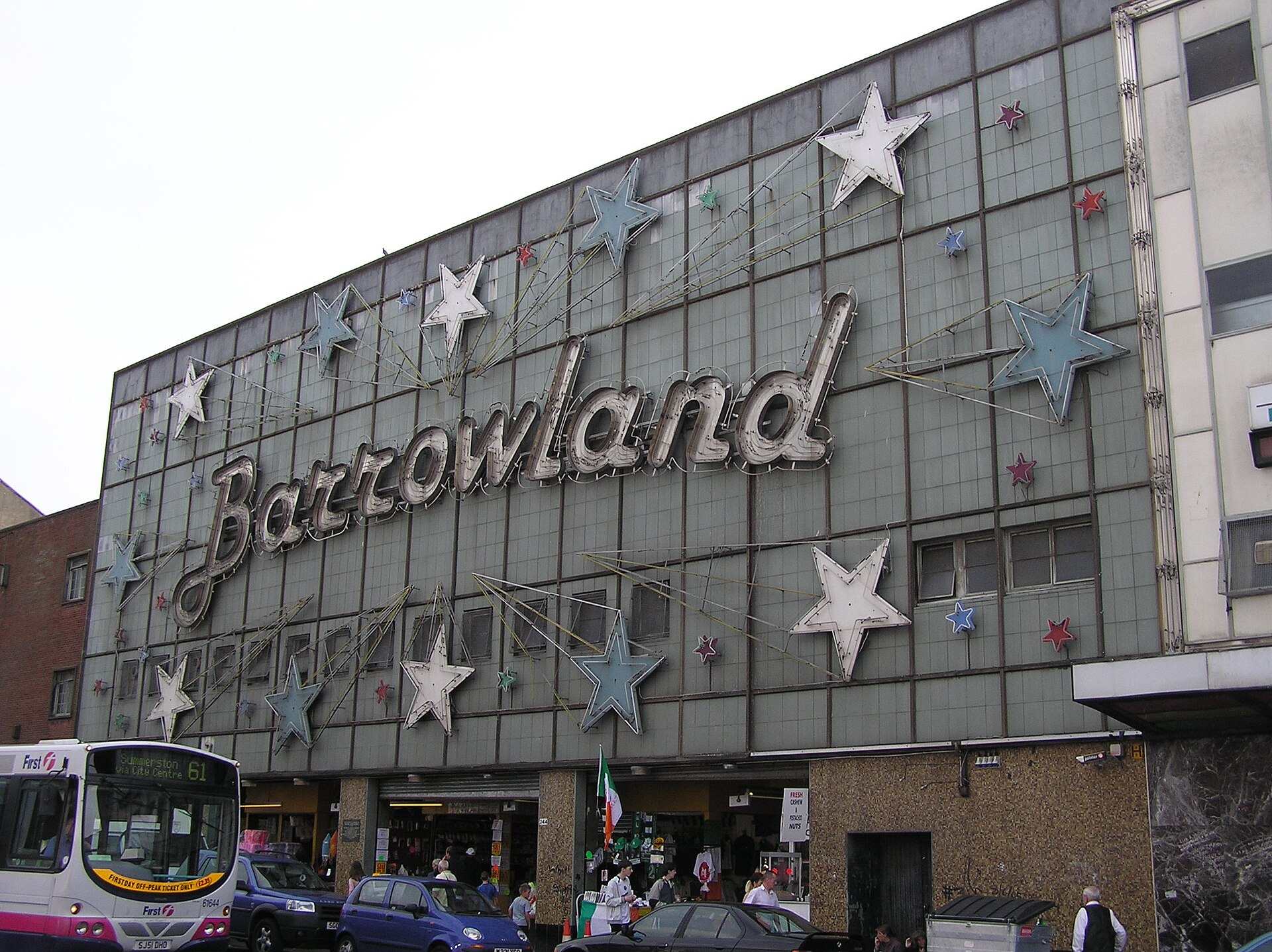
Simple Minds were one of the biggest bands to come out of Glasgow in the 1980s, and they have a very specific claim on the city’s music map. In 1983 they filmed a video at the Barrowland Ballroom, then still an old dance hall above the Barras market. The experience showed that the room worked brilliantly for rock gigs, and the Barrowland became a concert venue from that point.
Every band that has played there since owes them a small debt. Visit in daylight to see the sign and the album pathway in Barrowland Park opposite, or better still, buy a ticket for a show. Our Barrowland Ballroom guide has the history and practical details.
Primal Scream and the Southside
Primal Scream formed in Glasgow in 1982, led by Bobby Gillespie and Jim Beattie. Gillespie grew up in Mount Florida on the Southside and went to Kings Park Secondary School. He has often spoken about how the area and Glasgow’s working-class culture shaped him and the band.
Mount Florida is also where you will find Hampden Park, so a Primal Scream pilgrimage combines naturally with the Scottish Football Museum. Take the train to Mount Florida station, walk the streets and imagine a teenage Gillespie dreaming of escape through records.
The East End: Glasvegas
Glasvegas, formed in 2003 by cousins James and Rab Allan, are from Dalmarnock in the East End. Their songs are full of the emotions and situations of working-class Glasgow life, sung in a strong Glaswegian accent, and they captured something about the city that few bands have.
Dalmarnock has changed dramatically since the band’s early days, especially with regeneration around the 2014 Commonwealth Games. It is close to Celtic Park and the Emirates Arena, so it can be combined with a Celtic Park stadium tour or a walk along the river. Go to understand the context of the songs, not to find a landmark.
Other Glasgow bands and where to find them
Teenage Fanclub
Formed in Glasgow in 1989, Teenage Fanclub became one of the most loved guitar bands in Britain, with harmony-rich songs that won them fans far beyond Scotland. Their story is tied to the wider Glasgow indie scene of the late 1980s and 1990s, and to independent shops like Monorail Music, which have strong links to the band.
Mogwai and Chemikal Underground
Mogwai are one of Glasgow’s most internationally respected bands. In 2005 they built their own studio in the city with producer Tony Doogan, called Castle of Doom, and have recorded many albums there. It is a private working studio, so it is not a stop to visit. The band’s early records were released on Chemikal Underground, the Glasgow label founded by The Delgados, which was central to Scottish indie in the late 1990s.
Deacon Blue
Deacon Blue’s debut album, Raintown, released in May 1987, is essentially a portrait of Glasgow. Written largely by Ricky Ross, it deals with the struggles and hopes of urban life in the city. Walking around Glasgow on a wet day with it playing is its own kind of pilgrimage.
Chvrches
Formed in Glasgow in September 2011, Chvrches brought synth-pop from the city to arenas around the world. They are a reminder that Glasgow’s musical story is not only about guitar bands and that the city keeps producing new acts with international reach.
And many more
Travis, Texas, The Blue Nile, Del Amitri and many other acts have strong Glasgow connections. The best way to find their places is often to ask: record shop staff, bar staff and gig-goers in Glasgow love talking about their city’s bands.
Planning your pilgrimage
| Half-day | Stops | Getting around |
|---|---|---|
| West End: Belle and Sebastian and Postcard | Charing Cross footbridge, Woodlands Road, West Princes Street, University, Ashton Lane, Botanic Gardens, Hyndland Parish Church | On foot; Subway to Kelvinbridge or Hillhead |
| City centre: art school and venues | Glasgow School of Art, Sauchiehall Street, King Tut’s, record shops | On foot |
| East End: Simple Minds and Glasvegas | Barrowland Ballroom, Barrowland Park, the Barras, Dalmarnock | On foot and a short train or bus |
| Southside: Primal Scream | Mount Florida, Hampden Park | Train to Mount Florida |
Subway fares are £1.80 single with a £3.40 daily cap, which makes it easy to hop between the West End and the city centre. Our Subway guide has the details.
Is a Glasgow bands pilgrimage worth it?
For a real fan of any of these bands, absolutely. Standing outside Hyndland Parish Church or on West Princes Street connects you with the music in a way that no exhibition can, and it takes you into parts of Glasgow many visitors never see.
For a casual listener, be realistic. Most stops are ordinary buildings with no plaque, and some are simply streets where somebody once lived. The pleasure is in the story, not the sight. If that does not appeal, you would be better served by our Glasgow music trail, which focuses on famous venues, or by going to a gig. For more off-the-beaten-track ideas, see our Glasgow hidden gems guide.
Frequently asked questions
Which famous bands are from Glasgow?
Belle and Sebastian, Franz Ferdinand, Simple Minds, Primal Scream, Teenage Fanclub, Mogwai, Deacon Blue, Glasvegas, Chvrches, Travis, Texas, The Blue Nile and Orange Juice are among the best known.
Where did Belle and Sebastian start?
In Glasgow’s West End. Their first album was made through Stow College’s music business course in 1996, and Stuart Murdoch lived above the church hall at Hyndland Parish Church, where the band rehearsed.
Can I visit the Belle and Sebastian church in Glasgow?
Hyndland Parish Church is a working church. You can see it from the street; please respect services and do not treat it as a tourist attraction.
Where was Postcard Records based?
At Alan Horne’s tenement flat at 185 West Princes Street in Glasgow’s Woodlands area. It is a private residence.
Did Franz Ferdinand go to Glasgow School of Art?
Bassist Bob Hardy graduated from the Glasgow School of Art, and drummer Paul Thomson worked there as a life model. The band was closely linked to the city’s art school scene.
Where is Primal Scream’s Bobby Gillespie from?
He grew up in Mount Florida on Glasgow’s Southside, near Hampden Park, and went to Kings Park Secondary School.
Is there a Glasgow music tour?
Yes, guided music tours run in Glasgow. You can also follow our free self-guided Glasgow music trail and use this guide to add band-specific stops.
Related Glasgow Guides
- The Glasgow Music Scene — the venues and festivals behind the bands.
- The Glasgow Music Trail — a self-guided walk through the city’s music landmarks.
- Glasgow History and Architecture — the city the songs are about.
- Hidden Gems in Glasgow — more places most visitors miss.
- Record Shops in Glasgow — where to buy the records.
- West End and Byres Road — the heart of Belle and Sebastian’s Glasgow.
- Barrowland Ballroom — the venue Simple Minds helped create.
Photo Credits
Hyndland Parish Church: Hyndland Parish Church, Church of Scotland by Twospoonfuls, CC BY-SA 4.0, via Wikimedia Commons.
The M8 at Charing Cross from above: Glasgow Charing Cross Interchange by MSeses, CC BY-SA 4.0, via Wikimedia Commons.
The Glasgow School of Art under restoration: Glasgow City – Glasgow School of Art – 20230916153936 by AlasdairW, CC BY-SA 4.0, via Wikimedia Commons.
The Barrowland frontage by day: Wfm barrowland ballroom by user:Finlay McWalter, CC BY-SA 3.0, via Wikimedia Commons.