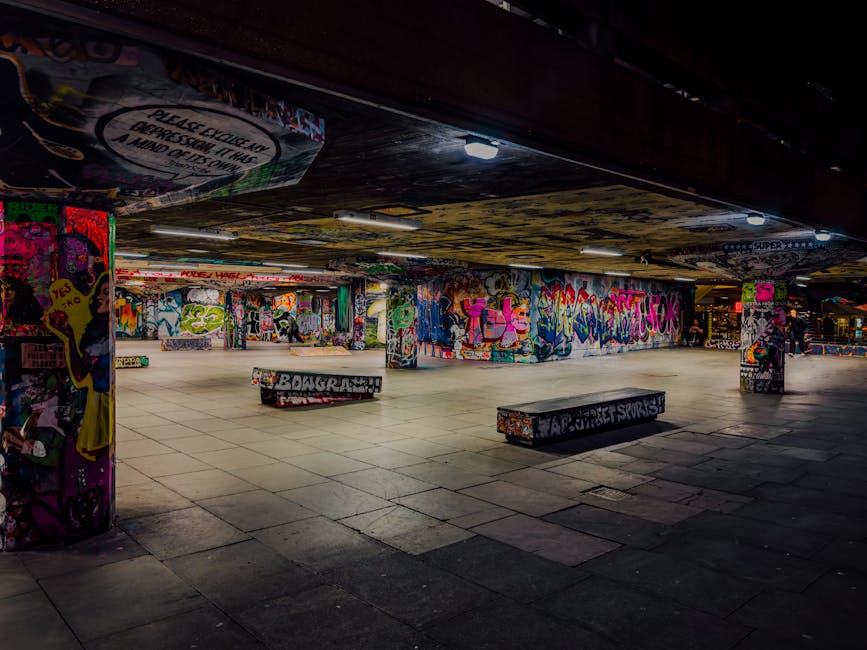
Glasgow’s Mural Trail has transformed the city into one of Europe’s most exciting open-air galleries, with over 200 large-scale murals spread across the city centre and beyond. Entirely free to explore and mostly concentrated in a walkable city-centre zone, the Glasgow Mural Trail is one of the most rewarding ways to spend a morning or afternoon in the city — combining world-class street art, fascinating history, and the pleasure of exploring Glasgow’s most characterful neighbourhoods on foot. Art enthusiast or just after a genuinely different way to see the city, this guide covers everything you need: the key murals, the best walking routes, practical information, and the stories behind the art.
Glasgow’s Street Art Story: How the City Became a Mural Capital
Glasgow’s transformation into a mural city didn’t happen overnight. The seeds were planted in the 1990s and early 2000s, when a small number of artists began using the city’s blank gable walls as canvases. But the real acceleration came in the 2010s, when Glasgow City Council began actively commissioning and supporting large-scale public art as part of a broader push to regenerate the city centre and celebrate local and international artistic talent.
The City Centre Mural Trail was officially established to map and promote the growing collection of works, and it has become one of Glasgow’s most popular tourist attractions — remarkable for something that is entirely free and entirely outdoors. The trail has also had a genuine economic impact on the areas it passes through: cafes, shops, and restaurants near major murals have reported increased footfall, and the art has become a source of genuine local pride.
Glasgow is now frequently mentioned alongside Bristol, Berlin, and Melbourne as one of the world’s great street art cities — a remarkable achievement for a Scottish city that, thirty years ago, was better known for post-industrial decline than cultural vibrancy. The murals are, in many ways, a physical expression of Glasgow’s extraordinary comeback.
The Official City Centre Mural Trail: What to Know
The Official Map and Resources
The official Glasgow City Centre Mural Trail is mapped and maintained at citycentremuraltrail.co.uk, which is your essential starting point for planning a visit. The website provides a detailed interactive map, information about each mural and its artist, and an audio trail that you can follow on your phone as you walk. Glasgow City Council also produces a downloadable PDF map that many visitors print out before their visit — useful if you don’t want to rely on mobile data.
The audio trail at citycentremuraltrail.co.uk is particularly worth using — it provides context and stories about each mural that significantly enrich the experience. Hearing about the commission process, the artist’s inspirations, and the community response to each work transforms a pleasant walk into a genuinely educational experience.
How Long Does the Trail Take?
The core city centre trail covers approximately 2–3 kilometres and takes between 2 and 4 hours depending on how much time you spend at each mural and how many diversions you take into cafes and shops along the way. The route passes through Merchant City, the High Street, Trongate, and the surrounding streets — all of which are interesting in their own right.
If you want to see the trail at a more leisurely pace — spending time photographing each work, reading the information panels, and using the audio guide — allow a full morning or afternoon. Many visitors combine the trail with lunch in Merchant City, making it a full day’s activity.
Guided Tours
Several companies and individuals offer guided tours of the Glasgow Mural Trail, ranging from free community walks to paid expert tours with professional art guides. The free tours (often run by volunteer guides through Visit Glasgow and local community organisations) are excellent value and provide fantastic context. Paid tours tend to offer smaller groups, more specialist knowledge, and sometimes access to lesser-known works not included on the official trail. Check the Visit Glasgow website and local tour operators for current availability.
The Must-See Murals on the Glasgow Trail
The St Mungo Mural — High Street
The St Mungo mural on the High Street is arguably the most famous work on the trail, and for good reason. St Mungo is Glasgow’s patron saint — the legendary figure who, according to tradition, founded the settlement that became Glasgow in the sixth century. The mural depicts him in vivid, monumental style, and its position on the High Street — the original spine of medieval Glasgow — gives it a powerful sense of historical resonance.
The symbols associated with St Mungo are woven through the image: the bird that never flew (a robin he restored to life), the tree that never grew (branches he used to rekindle a fire), the bell that never rang (which he used to call people to prayer), and the fish that never swam (in whose mouth the queen’s ring was found). These symbols also appear on Glasgow’s coat of arms, making the mural both an artwork and a piece of living heraldry.
The Man on the Telephone — Trongate
One of the trail’s most distinctive and quirky images, the man on the telephone is a hyperrealistic rendering of a figure making a phone call — rendered at such scale and with such detail that it creates a genuine double-take when encountered on the street. Works like this demonstrate the range of artistic approaches on the trail: from the mythological grandeur of St Mungo to the playful humour of everyday life blown up to building scale.
The Girl with the Pearl Earring — Merchant City
A bold reinterpretation of Vermeer’s famous painting, the Girl with the Pearl Earring mural in Merchant City is one of the trail’s most photographed works. Rendered in street art style while remaining recognisably faithful to the original, it’s a fascinating conversation between classical fine art and contemporary urban art — and a reminder that Glasgow’s street art scene is fully engaged with the wider history of visual culture.
Smug — Hyperrealism at Its Finest
Smug is an internationally acclaimed artist whose work appears on the trail and has made Glasgow a destination for street art enthusiasts from around the world. His style is hyperrealistic — figures and faces rendered with photographic precision at enormous scale, creating images that are startling in their detail and emotional power. Smug’s murals in Glasgow are among the finest examples of hyperrealistic street art anywhere in the world, and they consistently appear in global round-ups of the best street art of the year.
Several of Smug’s works are on or near the official trail — seek them out specifically and take your time with them. The detail rewards close inspection: step back for the overall impact, then move in close to appreciate the extraordinary technical skill involved.
Rogue One — Wildlife and Environment
Rogue One is another artist whose work has become closely associated with Glasgow’s mural scene. Their style is bold, graphic, and often politically engaged — particularly around themes of wildlife, the environment, and humanity’s relationship with the natural world. The works have a striking visual impact even from a distance, and up close they reveal intricate detail and powerful messaging. Rogue One’s murals are some of the most shared on social media, which has helped bring international attention to the Glasgow Mural Trail.
The City Halls Musicians Mural
Near the City Halls in Merchant City, a mural celebrating Glasgow’s rich musical heritage depicts a group of musicians in a style that bridges the figurative and the abstract. Glasgow has produced an extraordinary number of world-class musicians across multiple genres — from classical to indie to electronic — and this mural acknowledges that legacy in a way that feels genuinely celebratory rather than merely commemorative.
A few are unmissable. Smug’s photoreal St Mungo — a modern take on Glasgow’s patron saint — and his nearby St Enoch and Child are showstoppers; the ‘Fellow Glasgow Residents’ on Ingram Street fills a wall with the city’s wildlife; and the much-loved tribute murals to Billy Connolly turn a corner into a pilgrimage. Half the fun is rounding an ordinary street and finding a four-storey artwork staring back at you.
Beyond the Official Trail: Glasgow’s Wider Street Art Scene
Southside Murals
The official city centre trail represents only a fraction of Glasgow’s street art. The southside — particularly around Shawlands and the surrounding streets — has its own growing collection of murals, and exploring these areas rewards the adventurous visitor who’s willing to walk beyond the mapped trail. The southside murals tend to be more community-focused and neighbourhood-rooted than the official trail works, reflecting the character of the areas they’re in.
The East End
Glasgow’s East End has a long tradition of community art and political muralism that predates the current street art boom. Some of the most historically and politically significant public art in Glasgow is found here — murals that express community identity, political conviction, and historical memory in a very different register from the commissioned works on the official trail. Combining a visit to the East End murals with the official trail gives you a much fuller picture of Glasgow’s street art story.
New Works: The Trail Keeps Growing
One of the most exciting things about Glasgow’s street art scene is that it’s constantly evolving. New murals are commissioned and painted throughout the year; some older works are painted over to make way for new ones. This means that no two visits to the trail are identical, and Glasgow regulars are always discovering something new. Check the citycentremuraltrail.co.uk website for updates on new additions before your visit.
Practical Guide: Walking the Mural Trail
Best Time to Visit
For photography, the best time to walk the trail is in the morning — preferably before 10am when the light is soft and directional, and the streets are relatively quiet. The murals are at their most photogenic in golden-hour light, and without crowds of pedestrians in the foreground it’s much easier to capture clean images. Late afternoon light can also be beautiful, particularly in summer when Glasgow has long evenings.
Overcast days are actually excellent for mural photography — diffuse cloud light eliminates harsh shadows and shows the colours of the murals accurately and evenly. Don’t be put off by grey Glasgow skies; the images you capture on a bright overcast day can be exceptional.
What to Bring
- The official map: Download from citycentremuraltrail.co.uk or pick up a printed copy from the Glasgow tourist information centre on George Square
- Charged phone: For the audio trail and navigation — the route involves some backtracking and side-streets that are easier to navigate with a map app
- Comfortable shoes: The trail is 2–3km of walking on city-centre pavements
- A camera or phone with a good camera: Some of the murals are enormous — you’ll want a wide-angle lens or the ability to back up far enough to capture the full image
- Layers: Glasgow weather is changeable — a light waterproof layer is always sensible
Where to Start
Most visitors start the trail from Merchant City, which is easily accessible from Glasgow Queen Street station and the city centre. The St Enoch subway station is also a convenient starting point. From Merchant City, the trail flows naturally east towards the High Street and Trongate, then back through the Merchant City streets. The official map at citycentremuraltrail.co.uk provides a suggested route, but you can also wander more freely and tick off murals as you encounter them.
Combining the Trail with Other Activities
The Mural Trail passes through some of Glasgow’s best areas for food and drink, making it easy to combine with a food-focused itinerary. The following combinations work particularly well:
- Mural Trail + Merchant City Food Tour: Start with coffee at Wilson Street Pantry, walk the trail, then explore Merchant City’s restaurants and delis for lunch
- Mural Trail + Glasgow Cathedral: The High Street end of the trail is close to Glasgow Cathedral and the Necropolis — combine for a full morning of history and culture
- Mural Trail + Evening Ceilidh: Walk the trail during the day, then head to Sloans for the Friday night ceilidh in the evening — a perfect Glasgow day
Glasgow’s Street Art vs. the World’s Best
How does Glasgow compare to other cities with strong street art reputations? The comparison is instructive. Bristol has Banksy and a long tradition of politically engaged graffiti art; Berlin has the East Side Gallery and a raw, unfiltered urban art scene; Melbourne has Hosier Lane and a sophisticated culture of commissioned and illegal art coexisting in the same space. Glasgow’s approach is different from all of these — more organised and officially supported than Berlin or Bristol, but with more genuine community involvement and historical depth than many purely commercial street art programmes.
What distinguishes Glasgow’s trail is the quality of the commissioned work. The city has consistently attracted internationally renowned artists — like Smug — who have produced work here that ranks among their best. At the same time, the trail includes work by Glasgow-based artists that reflects specifically Scottish themes, histories, and communities. This combination of international excellence and local rootedness is what makes the Glasgow Mural Trail genuinely world-class.
The Art is Free — and That’s the Point
Perhaps the most important thing about the Glasgow Mural Trail is that it’s entirely free. There are no tickets, no timed entries, no reservations. The art is on public buildings in public space, accessible to everyone at any time of day or night. In a cultural landscape where museum entries and gallery tickets can eat significantly into a travel budget, this is genuinely remarkable — world-class art, freely available to all.
This accessibility is central to the trail’s philosophy and its success. The murals aren’t sequestered in a gallery for those willing and able to pay; they’re on the streets, visible to residents going about their daily lives, to tourists who stumble upon them unexpectedly, and to anyone who chooses to walk the official route. Public art at its most democratic and its most ambitious — this is what Glasgow does exceptionally well.
Conclusion: The Glasgow Mural Trail Belongs on Every Visitor’s Itinerary
The Glasgow Mural Trail is, quite simply, one of the best free experiences in the UK. It combines exceptional public art with a walkable city-centre route through some of Glasgow’s most interesting historic neighbourhoods, and it tells a story about a city that has used creativity as a tool for transformation and renewal. Visiting the trail gives you a window into contemporary Glasgow — its confidence, its pride, its artistic ambition, and its history — that no museum exhibit or guided tour can quite replicate.
Start at citycentremuraltrail.co.uk, download the official map, charge your phone for the audio guide, put on comfortable shoes, and give yourself at least a morning. The murals will do the rest.
Have you walked the Glasgow Mural Trail? We’d love to hear which murals were your favourites — leave a comment below, and let us know if there are any hidden gems we should add to this guide.