The People’s Palace is Glasgow’s social-history museum — a magnificent 1898 red sandstone building on Glasgow Green that was deliberately designed as a “cultural centre for the people” of the city’s working-class East End. The attached Winter Gardens conservatory was the city’s biggest indoor garden; the building was Glasgow’s answer to the bourgeois West End’s grand institutions.
The museum closed for major refurbishment in April 2024 and is due to reopen in 2027. This is the complete 2026 guide to the People’s Palace Glasgow — its history, what to see when it reopens, the Winter Gardens, the Doulton Fountain and how to spend a day on Glasgow Green.

The People’s Palace Glasgow at a glance
Address: Glasgow Green, Glasgow G40 1AT. Current status: closed for major refurbishment April 2024, reopening 2027. Entry (when reopened): free. Best entrance: the front facing Glasgow Green and the Doulton Fountain. Plan for: 90 minutes museum + Winter Gardens + 60 minutes wider Glasgow Green walk.
The history of The People’s Palace Glasgow
The People’s Palace was opened on 22 January 1898 by The 5th Earl of Rosebery. The East End of Glasgow at the time was one of the most overcrowded and unhealthy parts of the city — a deliberate political statement was made by building this lavish red-sandstone “cultural palace” specifically for working-class Glaswegians. The architect was Glasgow City Engineer Alexander B. McDonald.
From the 1940s onwards, the People’s Palace has been Glasgow’s social history museum — telling the story of the people and city of Glasgow from 1750 to today. Unlike Kelvingrove (fine art and natural history) or the Burrell (a private collection), the People’s Palace focuses on Glasgow’s everyday lives: tenements, work, leisure, politics and the cultural identity of a working city.
The People’s Palace opened in 1898 as a cultural centre and museum for the working people of Glasgow’s crowded East End — a remarkable Victorian idea that ordinary lives deserved a grand civic building of their own. Inside, it tells the social history of the city through the everyday: recreated single-end tenement homes, the communal wash-house known as ‘the Steamie’, and the stories of work, protest, dance halls and hard times that shaped Glasgow. It remains one of the most loved institutions in the city precisely because it is about the people, not the powerful.
What’s inside The People’s Palace Glasgow (when reopened)
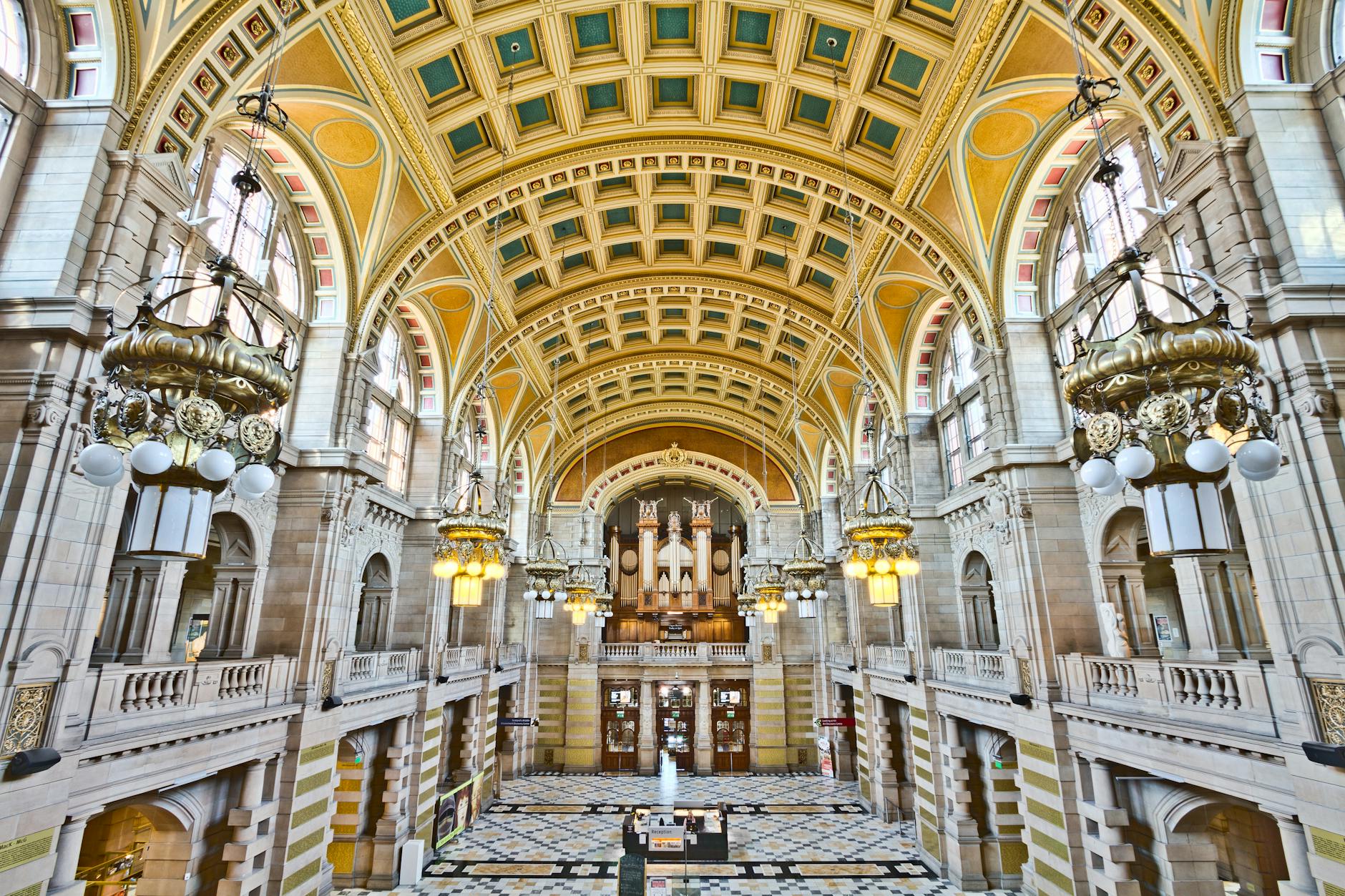
1. The Single End
A reconstructed Glasgow tenement single-end — the one-room flat that housed entire families in the 19th and 20th centuries. The most-photographed exhibit; brings home the reality of pre-war working-class Glasgow.
2. The Steamie
A reconstructed Glasgow public wash-house — the social hub where the city’s women did the family laundry, gossiped and held the city together. The Steamie is the subject of the famous Tony Roper play of the same name.
3. The Glasgow Style display
The “Glasgow Style” was the distinctive city-wide design movement that produced Charles Rennie Mackintosh, Margaret Macdonald and the Glasgow School of Art. The People’s Palace puts the broader social context behind the famous individuals.
4. Dancing at the Barrowland
An interactive multimedia exhibit on the city’s most-loved music venue. The Barrowland’s history as a dance hall, working men’s social space and rock venue is one of the most ambitious displays in the museum.
5. Politics in Glasgow
Glasgow’s reputation as a political city — Red Clydeside, the rent strikes of 1915, the suffragettes, the Anti-Apartheid movement — is told through original documents, posters and oral-history recordings.
6. The Tobacco Lords gallery
Glasgow’s wealth in the 18th century came from American tobacco, sugar and (significantly) slavery. The People’s Palace doesn’t shy away from this; the gallery is one of the most thoughtfully curated in any Glasgow museum.
7. Postwar Glasgow
The slum clearances, the building of high-rise flats, the changing skyline of the East End and the political shifts of the 1960s-90s.
8. Contemporary Glasgow
The post-1990 city — UNESCO City of Music, design and food. Stories from the 21st-century Glasgow that visitors will recognise.
When the museum reopens, its collection is what makes it special: a recreated single-end (the one-room tenement flat that whole families once lived in), the communal wash-house immortalised as ‘the Steamie’, hand-painted trade-union and political banners, and a thousand small objects from ordinary Glasgow lives — prams, dance cards, ration books and seaside souvenirs. It is history told from the bottom up, which is exactly why Glaswegians are so fond of it.
The Winter Gardens at The People’s Palace Glasgow
Attached to the back of the People’s Palace is the Winter Gardens — a 1898 cast-iron-and-glass conservatory housing tropical plants, palm trees and seasonal displays. Originally one of the largest glasshouses in Britain, the Winter Gardens has long been a refuge from Glasgow weather. The reopening in 2027 will return both the Winter Gardens and the museum at the same time.
Attached to the Palace is the Winter Gardens, a vast Victorian glasshouse that for over a century was a free indoor oasis of palms and tropical plants and a much-used events space. It is currently closed alongside the main building for structural repairs, so you can’t go inside for now — but its glazed bulk is still a striking sight from the Green, and its eventual reopening is one of the most anticipated in the city.
The Doulton Fountain at The People’s Palace Glasgow
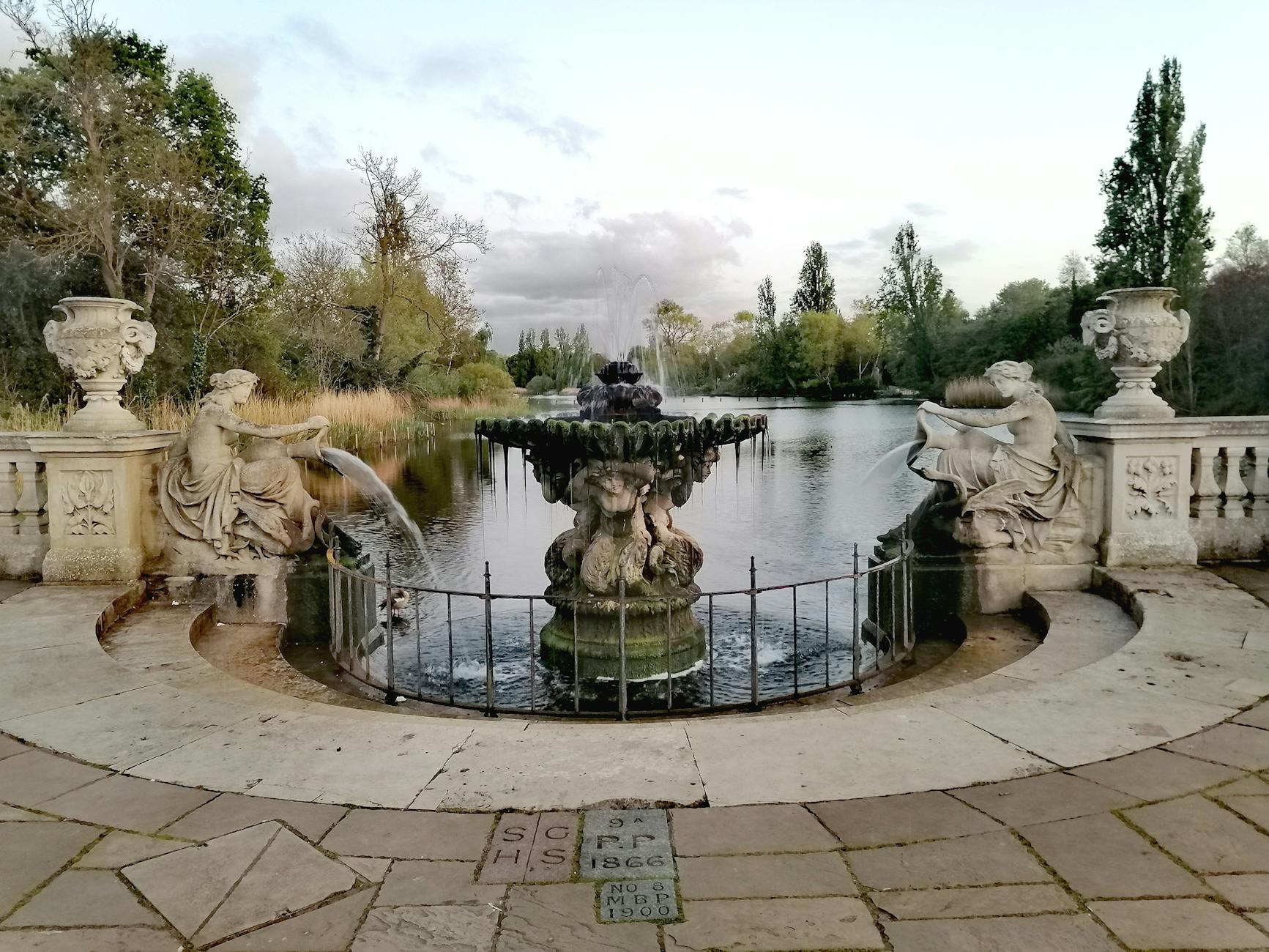
In front of the People’s Palace stands the Doulton Fountain — at 14 metres high and 21 metres across, the largest terracotta fountain in the world. It was gifted by Sir Henry Doulton in 1888 to commemorate Queen Victoria’s Golden Jubilee. The fountain was originally erected in Kelvingrove Park for the 1888 International Exhibition, then moved to Glasgow Green in 1890 and to its current position in front of the People’s Palace in 2004.
The fountain is decorated with figures representing the British Empire (Australia, Canada, India and South Africa) crowned by Queen Victoria. The carvings are extraordinarily detailed; the fountain is free to view 24 hours and well-lit at night.
Right outside stands the Doulton Fountain, the largest terracotta fountain in the world. It was made by the Doulton company for the 1888 Glasgow International Exhibition and later moved here to Glasgow Green, and after a careful restoration its tiers of figures — representing the corners of the British Empire around Queen Victoria at the top — are well worth circling even while the Palace itself is shut.
Glasgow Green: where The People’s Palace sits
The People’s Palace sits on Glasgow Green — Glasgow’s oldest park, granted to the city in 1450. Other things on Glasgow Green to combine with a People’s Palace visit:
- The Templeton Carpet Factory — Doge’s-Palace-of-Venice-style 1889 building, now home to WEST Brewery.
- The McLennan Arch — neoclassical 1796 arch at the Greendyke Street entrance.
- The Nelson Monument — 44-metre obelisk (1806), the first major Nelson monument in Britain.
- The James Watt Memorial — Watt is said to have conceived steam-engine improvements while walking on the Green.
- The renovated Glasgow Green play park — best central play park in the city. Read our best Glasgow playgrounds guide.
- The Saracen Head pub — 1755; one of Glasgow’s oldest. Read our traditional Glasgow pubs guide.
For the wider park see our Glasgow Green deep-dive.
The People’s Palace Glasgow refurbishment 2024-2027
The People’s Palace and Winter Gardens closed in April 2024 for a £15 million-plus refurbishment programme. The reopening is scheduled for 2027. The work includes:
- Repair and restoration of the original 1898 building.
- Full restoration of the Winter Gardens cast-iron-and-glass structure.
- New permanent exhibitions and improved accessibility.
- New cafe and shop.
- Sustainability and accessibility improvements.
Glasgow Life (the city’s cultural body) runs the project. Updates are posted at glasgowlife.org.uk.
Plan around the closure. The People’s Palace is shut for a major refurbishment and is not expected to reopen until around 2027, with the adjoining Winter Gardens glasshouse closed for structural repairs too. The building and the fountain are still worth seeing from outside, but check the latest before you make a special trip, and treat the surrounding park as the real draw for now.
What to do near The People’s Palace Glasgow during the closure
Until the People’s Palace reopens in 2027:
- Walk Glasgow Green and view the Doulton Fountain, McLennan Arch and Nelson Monument from outside (free).
- WEST Brewery and Bier Hall — German-style beer hall in the Templeton Carpet Factory; brewery tours run Friday-Sunday.
- The Barras Market — Saturday and Sunday only; 5-minute walk north. Read our Barras Market guide.
- The Saracen Head pub — 1755; one of Glasgow’s oldest pubs.
- The TRNSMT Festival — late June; held on Glasgow Green. See our TRNSMT Festival Glasgow guide.
- The Glasgow Mela — June; free South Asian cultural festival.
- The World Pipe Band Championships — August.
Alternatives to The People’s Palace Glasgow during the closure
For Glasgow’s social history while the museum is closed:
- The Tenement House (NTS, Garnethill) — single-end-style preserved 1900s flat. £8.50.
- The Riverside Museum — recreated Glasgow streets and the social history of transport. Free. Read our Riverside Museum guide.
- Kelvingrove Art Gallery and Museum — has Glasgow social-history galleries. Free. Read our Kelvingrove guide.
- The Britannia Panopticon — the world’s oldest surviving music hall, with an active social-history focus. Pay-what-you-can.
- Scotland Street School Museum — Mackintosh-designed building with the Scottish education system’s social history.
- The Mitchell Library — Glasgow’s reference library with social-history archives, free public access.
While the Palace is closed, Glasgow’s social story is told brilliantly elsewhere. The Riverside Museum on the Clyde covers the city’s transport and working life with a recreated old street, and the Cathedral and Necropolis a short walk north trace its medieval and Victorian past. The Barras Market nearby is pure living East End. Between them they more than fill the gap.
The People’s Palace Glasgow with kids
When reopened, the museum is brilliantly child-friendly — interactive exhibits, the Single End reconstruction (kids love the period rooms), the Steamie wash-house, and free family workshops on Saturday mornings. The play park behind the museum on Glasgow Green is the closest big play park to the city centre. See our Glasgow with kids guide.
When it reopens, the People’s Palace is a genuinely good museum for children — the recreated homes, the old toys and the everyday objects make history tangible in a way labels never do. For now, Glasgow Green itself does the job: wide open space to run, a play area, and the riverside to explore. Pair it with a nearby indoor option on a wet day from our Glasgow with kids guide. For a wet day with children, the Glasgow Science Centre at Pacific Quay is a paid but reliable alternative, with three floors of hands-on exhibits, a planetarium and an IMAX screen.
How to get to The People’s Palace and Glasgow Green
Walking: 10 minutes from George Square via Saltmarket — flat, pavemented.
Subway: Bridgeton or High Street — both about 10 minutes’ walk.
Train: Argyle Street and High Street rail stations are 5-10 minutes’ walk.
Bus: First Bus 18, 64 stop on Saltmarket and Glasgow Bridge.
Driving: Pay-and-display along Greendyke Street.
The Palace sits in the middle of Glasgow Green, the city’s oldest park, at the eastern edge of the centre. It’s about a 20-minute walk from George Square, a short bus or taxi, or a walk up from Bridgeton station. Combine it with a stroll across the Green to the Nelson Monument and the old Templeton carpet factory — a building dressed up as a Venetian palace — and you have an easy, free half-day in the East End. See our Glasgow Green guide for more.
Accessibility at The People’s Palace Glasgow
The pre-refurbishment People’s Palace was step-free with a lift to the upper floors. The 2027 reopening will include enhanced accessibility — fully step-free, audio guides, large-print labels, sensory-friendly opening sessions, and free wheelchair loan. Glasgow Life museums all have strong accessibility credentials.
Glasgow Green itself is flat, paved and easy to get around on wheels or with a buggy, and the paths to the Palace, the Doulton Fountain and the riverside are all step-free. When the building reopens, the museum is expected to retain lift access to its upper floors; check the latest accessibility details before a visit once a reopening date is confirmed.
The People’s Palace Glasgow vs the Riverside Museum
Both are free Glasgow Life social-history museums; both are family-friendly. Riverside Museum focuses on transport (the Tall Ship, Glasgow trams, recreated Edwardian streetscapes). The People’s Palace focuses on tenement life, work and politics. The two complement each other; many visitors do both in a single day. Read our Riverside Museum guide.
Visitors sometimes ask which to choose. The Riverside Museum tells Glasgow’s story through transport and industry in a spectacular modern building on the Clyde; the People’s Palace tells it through ordinary domestic life and protest in the East End. They’re complementary rather than competing — and with the Palace closed for now, the Riverside is the obvious stand-in for a dose of Glasgow social history.
Best month to visit Glasgow Green and The People’s Palace area
Spring and summer for outdoor exploration; June for the long daylight; July for festivals; October for the riverside autumn colour. Avoid mid-July TRNSMT weekend if you don’t have tickets — the park is fenced off. See our best time to visit Glasgow guide.
Glasgow Green comes alive in summer, when it hosts some of the city’s biggest events — the TRNSMT music festival in July and the World Pipe Band Championships in August both take over the park — so check the calendar before you go, as access can be restricted on event days. Late spring and early autumn give you the Green at its quiet, leafy best.
FAQs
Is The People’s Palace Glasgow free?
Yes — when reopened in 2027, entry to the museum and Winter Gardens will be free, like all Glasgow Life museums.
When does The People’s Palace Glasgow reopen?
Currently scheduled for 2027 after a major refurbishment programme that started in April 2024. Updates at glasgowlife.org.uk.
What is the People’s Palace Glasgow about?
Glasgow’s social-history museum — the story of the city and its people from 1750 to today, told through reconstructed tenements, the Steamie, the Glasgow Style and Red Clydeside political history.
Can I visit Glasgow Green while The People’s Palace is closed?
Yes — Glasgow Green is open 24 hours, year-round. The Doulton Fountain in front of the museum is fully visible and lit at night.
What’s the Doulton Fountain at the People’s Palace?
The largest terracotta fountain in the world — 14 metres high, 21 metres across. Gifted to Glasgow in 1888 to commemorate Queen Victoria’s Golden Jubilee. Free to view 24 hours.
What’s near The People’s Palace Glasgow?
Glasgow Green (the city’s oldest park), the Templeton Carpet Factory (now WEST Brewery), the Barras Market (weekends), the McLennan Arch and the Nelson Monument.
Plan more Glasgow museum days
This article is part of our complete Glasgow museums and galleries guide. Pair it with our Kelvingrove deep-dive, our Riverside Museum guide and our Burrell Collection overview.