The Burrell Collection is the most surprising museum in Britain — a single shipping magnate’s lifelong hoard of nine thousand objects, gifted to Glasgow in 1944 with the condition that it had to be displayed somewhere away from the dirty city air, and now housed in an award-winning glass-and-sandstone pavilion deep inside Pollok Country Park.
The £68 million refurbishment that reopened in March 2022 transformed the visitor experience. The Burrell Collection Glasgow won UK Museum of the Year in 2023, and it’s now one of the very best free museum visits in Europe. This is a complete 2026 visitor guide.
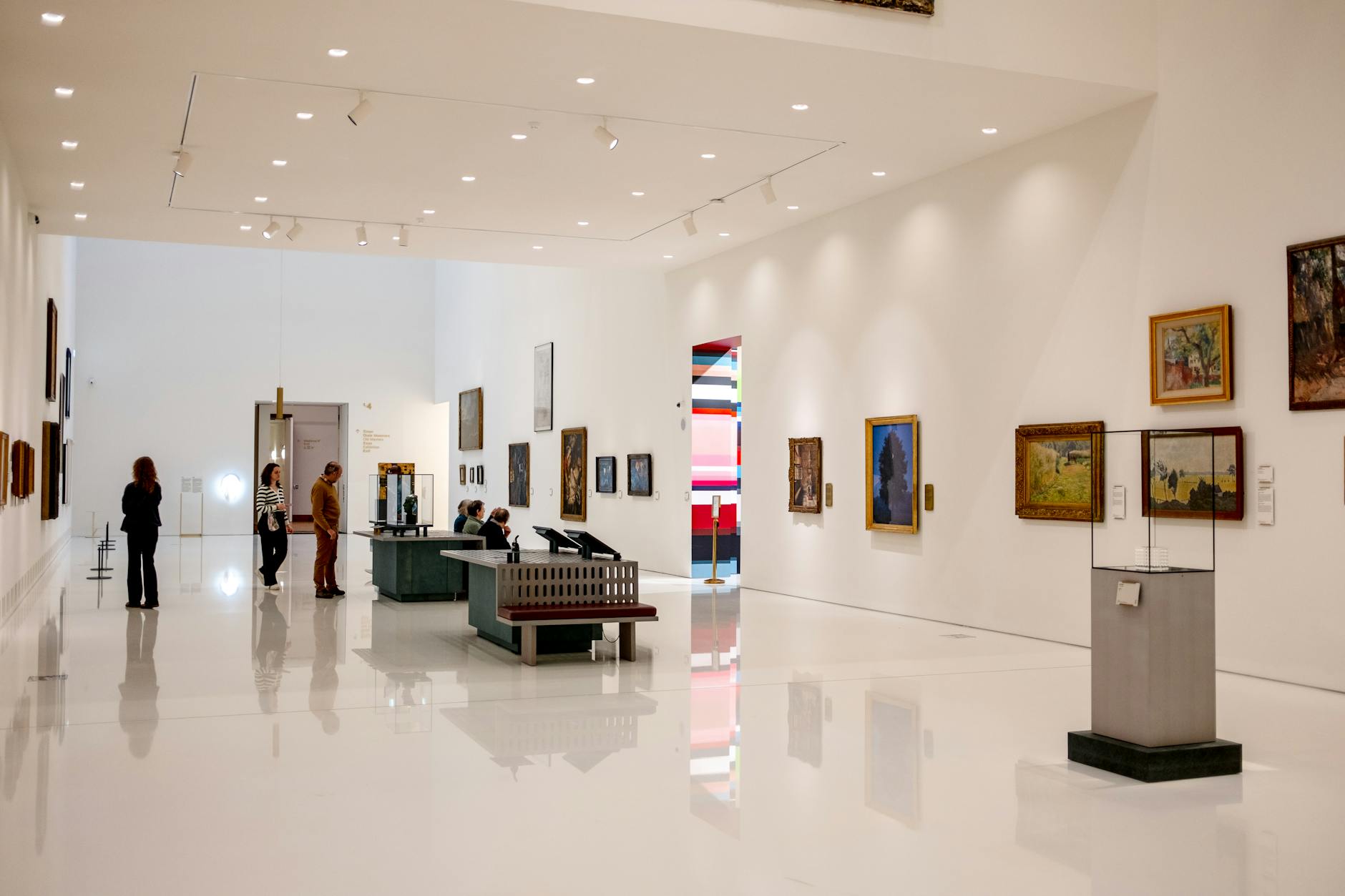
Burrell Collection at a glance
Address: 2060 Pollokshaws Road, Glasgow G43 1AT (inside Pollok Country Park). Opening hours (2026): Monday – Saturday 10am – 5pm; Sunday 11am – 5pm. Entry: Free. Estimated visit time: 2–3 hours minimum; a full half day if you also walk in Pollok Park. Best entrance: the gracious oak-and-glass main door facing the courtyard.
Two practical points the headline facts miss. First, the building is laid out across split levels, so the simplest way to see everything is to start on the upper floor and work down towards the cafe and the exit — you finish near a sit-down and a way out rather than doubling back. Second, leave bulky bags and big rucksacks in the cloakroom; the galleries are calm, generous spaces and you’ll move through them more easily unencumbered. There’s no charge to get in, no timed ticket and no need to book, so a short visit to see two or three galleries is a perfectly good use of an hour if that’s all you have.
If you’re building a wider Southside day around the visit, the Burrell pairs naturally with the surrounding Pollok Country Park and, a short train ride back towards town, the rest of the city’s free museums. For the bigger picture on those, see our Glasgow museums guide.
Who was Sir William Burrell?
Sir William Burrell (1861–1958) was a Glasgow shipping owner who started collecting at 14, made a fortune buying ships in slumps and selling them in booms, and used the proceeds to assemble one of the most personal art collections of the 20th century. He gifted the entire collection — 9,000+ objects — to the City of Glasgow in 1944, but the gift came with conditions: the building had to be at least 16 miles from the city centre, away from coal soot. Pollok was eventually chosen as the home, the original 1983 building won the Royal Institute of British Architects national award, and the entire complex was rebuilt and reopened in 2022.
Sir William Burrell (1861–1958) was a Glasgow shipping magnate who spent more than seventy years assembling one of the greatest art collections ever put together by a single person. He bought shrewdly and relentlessly, and in 1944 he gave the whole collection — around 9,000 objects — to the city of Glasgow, with strict conditions about how it should be housed.
The result is astonishing in its range. The collection sweeps from the ancient civilisations of Egypt, Greece and Rome, through medieval European tapestries and stained glass, to Chinese and Islamic art and French paintings by the likes of Degas and Cézanne. Few museums anywhere let you cross so many cultures and centuries under one roof.
What makes the collection so personal is that Burrell rarely bought to a fashion — he bought what moved him, often decades before the market caught up. He acquired French paintings in the 1920s when many British collectors still thought them a risk, snapped up medieval tapestries and stained glass when grand country houses were breaking them up, and pursued Chinese ceramics with the same eye he brought to a shipping deal. The result isn’t an encyclopaedic survey but a portrait of one man’s taste, which is exactly why crossing the galleries feels less like a textbook and more like walking through a lifetime of decisions.
What to see: The Burrell’s six headline highlights
1. The medieval tapestries (Galleries 16–18)
The Burrell holds 200+ tapestries — one of the world’s finest collections — including the 15th-century Hercules Initiating the Olympic Games and the elaborate Charity Overcoming Envy. The new lighting after the refurbishment finally lets you see these works in proper colour. Don’t miss the Devonshire Hunting Tapestries fragments.

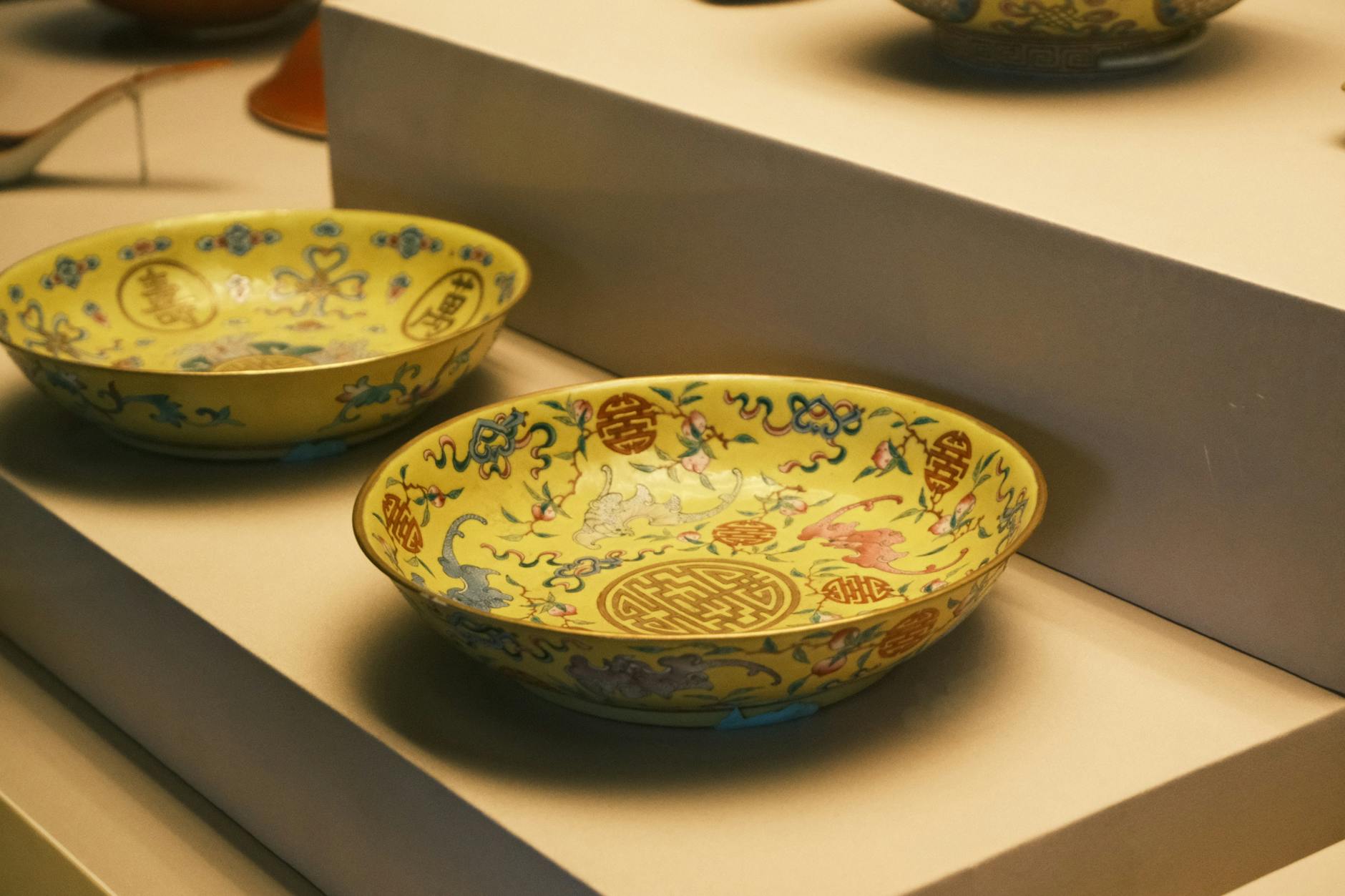
2. Chinese pottery and porcelain (Gallery 4)
Burrell amassed 1,800 pieces of Chinese ceramic — one of Europe’s most significant collections. The 7th-century Tang horse, the 14th-century blue-and-white Yuan jar and the Ming dynasty cobalt vases are the visitor favourites. Five thousand years of pottery in a single room.
3. The Impressionists (Gallery 12)
Manet, Cézanne, Degas, Pissarro and Sisley — Burrell bought French paintings in the 1920s when British buyers still considered them suspect. Highlights include Degas’ Jockeys in the Rain and Cézanne’s The Château de Médan. Small but seriously good. For the other end of the timeline, the city centre’s Gallery of Modern Art shows contemporary work across four floors and is also free.
4. Stained glass (across the building)
Burrell collected 700+ pieces of medieval stained glass and the architects of the rebuilt museum incorporated them into the very fabric of the building — windows backlit by Pollok Park’s daylight. Look up; some of the loveliest pieces are in the corridors rather than the formal galleries.
5. The Hutton Castle Rooms
Burrell rebuilt rooms from his own home, Hutton Castle near the Borders, inside the museum — a 1500s drawing room, a Tudor bedroom and the dining room. They’re disorienting and brilliant: domestic-scale spaces in the middle of a public museum.
6. The Egyptian gallery
200 pieces of ancient Egyptian art, including a 3,000-year-old sarcophagus, the wooden statue of Pa-di-Imen and the small but exquisite collection of mummified animals.
The building is huge, so head for the headline pieces first:
- The medieval tapestries — among the finest in the world.
- The stained glass — one of the great private collections of medieval glass anywhere.
- Chinese art — ceramics and bronzes spanning thousands of years.
- The Warwick Vase — a monumental Roman marble centrepiece.
- French paintings — including works by Degas.
- The Hutton Castle rooms — reconstructed interiors from Burrell’s own home.
If your time is tight, here’s the order that gives you the most for an hour. Start with the tapestries while your eyes are fresh, because the detail in them rewards a slow, close look more than anything else in the building. Then the Chinese ceramics, then the stained glass on your way between galleries — much of it is set into the walls and lit by the daylight off the park, so you catch it as you move rather than queuing for it. Save the Hutton Castle Rooms for last; stepping from a public gallery into a reconstructed private drawing room is a strange, memorable note to finish on.
A few looking tips that make the highlights land harder:
- Tapestries: stand back first for the whole scene, then step in close — the storytelling is in the small figures at the edges.
- Stained glass: the best pieces are often in the corridors and stairwells, not the formal galleries, so look up as you walk between rooms.
- Chinese ceramics: use the touch tables beside the cases to zoom in on glazes and marks you can’t see with the naked eye.
- The Warwick Vase: walk a full circle around it — the carving runs the whole way round and reads differently from each side.
What’s new since the 2022 reopening
Gallery space increased by 35%, allowing 225 displays across 24 galleries — many objects are on permanent display for the first time. There are 90+ digital displays integrating context and short films. New touch tables in every gallery let you zoom in on the objects. The reopened museum won UK Museum of the Year 2023.
The Burrell closed in 2016 for the biggest project in its history and reopened in March 2022 after a major refurbishment. The headline change for visitors is how much more you can see: far more of the 9,000-object collection is now on display across completely redesigned galleries, where before only a fraction was shown.
The celebrated 1983 building — designed so that the surrounding woodland of Pollok Country Park seems to flow through the galleries — was sympathetically restored, with new learning spaces, better accessibility and an improved café. It is once again one of Glasgow’s must-see museums, and entry is free.
For returning visitors who knew the old building, the single biggest change is daylight and sightlines. The restoration reopened the long glazed walls so the woodland of Pollok genuinely reads as part of the galleries, and reorganised the route so the collection now flows rather than dead-ends. The digital touch tables in every gallery are worth using rather than skipping: they let you zoom into the surface of a pot or the weave of a tapestry, and they carry the context that the old building never had room to show. Together it means far more of the 9,000 objects are out, and you understand more of what you’re looking at.
Free guided tours
Volunteer-led free guided tours run twice daily Tuesday–Sunday (typically 11am and 2pm) and last about an hour. They’re the best way to make sense of a sprawling collection on a first visit. Sign up at the front desk on arrival; first-come first-served.
The volunteer guides are the best free thing here after the collection itself. They tend to know the back-stories the labels can’t fit — why Burrell chased a particular tapestry, how a window ended up built into a corridor wall — and they pace a sprawling collection so you don’t drift. If the next tour doesn’t suit your timing, ask at the desk whether a gallery talk or a short film is running instead; there’s usually something on. Sign up when you arrive rather than later, as the morning slot in particular can fill on a busy day. The Riverside Museum runs its free volunteer tours on the same twice-daily pattern, so a second museum day works much the same way.
Where to eat at the Burrell
The on-site Burrell Café on the ground floor is a lovely glass-walled space looking out at the woodland — soups, sandwiches, stronger lunch options around £10–£15, decent kid-friendly options, and a child-portion menu. There are also five indoor picnic spaces if you want to bring your own — a generous policy for a museum.
A few honest notes on eating here. The cafe is genuinely pleasant — the glass wall onto the trees is the draw — but it’s a single room and it gets busy in the standard lunch window, so either eat early, around noon, or push it to mid-afternoon. The five indoor picnic spaces are the smart move with children or on a budget: bring your own lunch, claim a table out of the weather, and you’ve spent nothing on a full half-day out. If you’d rather a proper sit-down meal, you’re better walking the short distance to Pollok House’s courtyard tearoom in the same park, or saving lunch for back in town.
Combine with Pollok Country Park
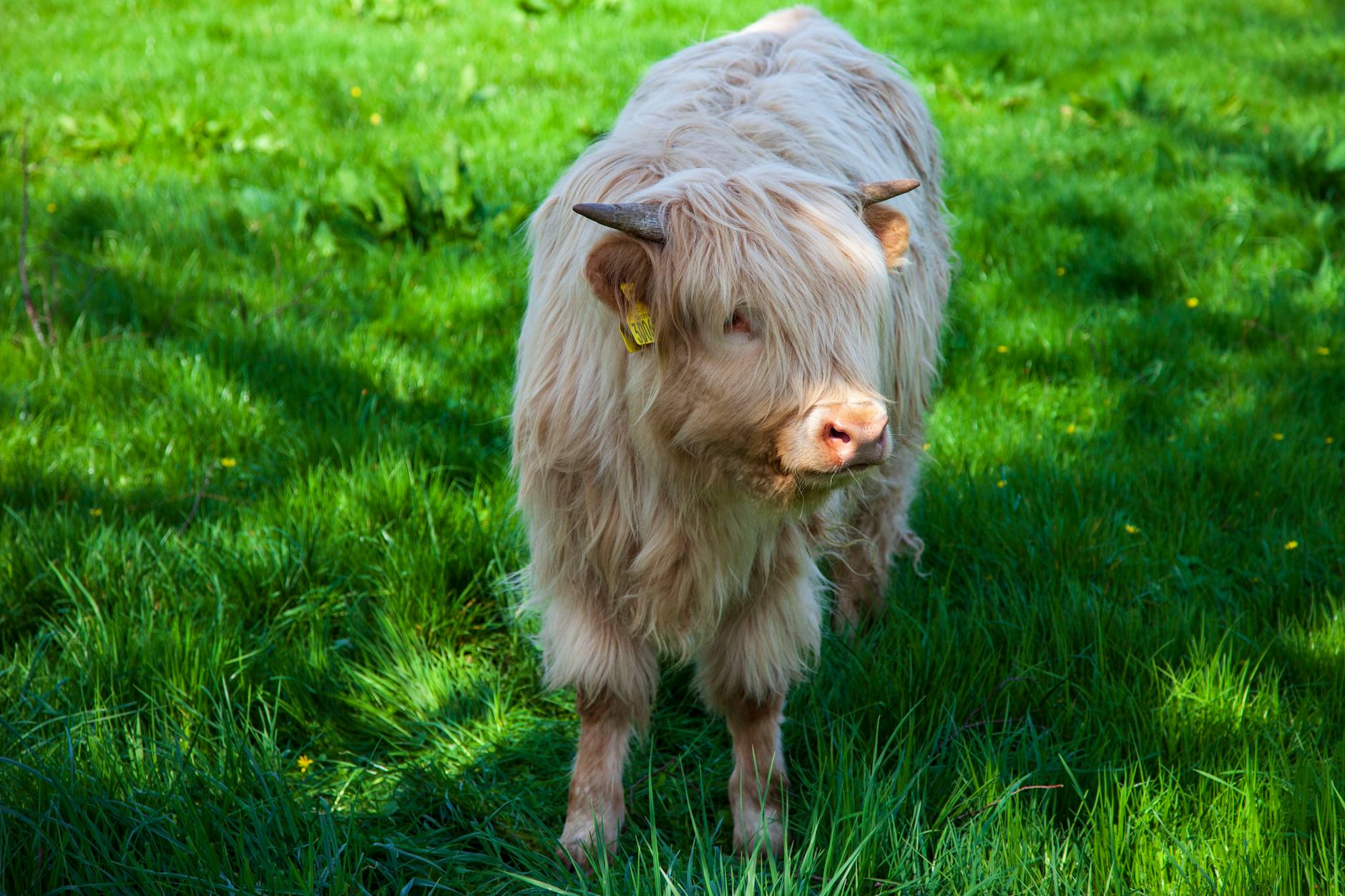
The Burrell sits in the middle of Pollok Country Park, the largest park in Glasgow at 361 acres. Any Burrell visit is worth combining with at least an hour outside. Don’t miss:
- The Highland cattle — Glasgow’s famous Pollok Fold of “hairy coos” graze fields a five-minute walk from the museum.
- Pollok House — the Maxwell family’s 1750s neoclassical mansion with one of Britain’s best Spanish art collections; small entry fee.
- The walled garden & the Riverside Walk — both within easy walking distance.
- The play park for families — see our companion best Glasgow playgrounds guide.
The park around the museum is the reason a Burrell visit can stretch to a relaxed half or full day for nothing. Pollok is the largest park in Glasgow, with miles of flat, mostly paved trails along the White Cart Water, a fold of Highland cattle a few minutes’ walk from the museum doors, and Pollok House — the National Trust for Scotland mansion with its Spanish art — a little further on. The natural rhythm is the free galleries first, lunch in the middle, then a loop outside to the coos and the river before the train home. Our full Pollok Country Park guide maps the trails and timings.
How to get to the Burrell Collection
Train: Pollokshaws West (10 minutes from Glasgow Central, every 30 minutes) — then a 5–10 minute walk through the park. Cheapest and simplest option for visitors without a car.
Bus: First Bus 57 from Argyle Street drops you at the Pollok Park entrance.
Driving: Free parking at the Pollok Country Park car park; 10-minute walk from there to the museum.
Subway: Shields Road is the closest Subway station, then a 20-minute walk or a £10 taxi.
The Burrell sits in Pollok Country Park on Glasgow’s Southside. The easiest public-transport route is a train to Pollokshaws West, then a 10–15 minute walk through the park, or a bus from the city centre. There is free parking if you drive.
Because it’s in the park, pair it with Pollok Country Park itself — the gardens, the woodland trails and the famous fold of Highland cattle — and with Pollok House nearby. It makes a relaxed half-day away from the city bustle.
To make the train option foolproof: take a Glasgow Central service to Pollokshaws West (it’s a short hop, roughly every half hour), and from the station it’s a flat ten-minute walk into the park and up to the museum, signposted most of the way. It works out the cheapest and least stressful route by far, with no parking to think about. If you do drive, aim to arrive before late morning on a Saturday or Sunday, because the car parks closest to the museum fill first and you’ll end up walking further from an overflow. Either way the last stretch is on foot through the park, so wear something you don’t mind walking in.
For the wider picture — airport transfers, day passes and how the trains, Subway and buses fit together — see our getting around Glasgow guide, and our Glasgow on a budget guide for keeping the whole trip cheap.
Accessibility
The Burrell is exceptionally accessible: step-free throughout, with two Changing Places toilets (Scotland’s first museum to install them), nine accessible toilets, free wheelchair loan, large-print labels, and a dementia-friendly tour offering. Hearing loops in lecture spaces; assistance dogs welcome.
Best time to visit the Burrell
Weekday mornings (Tuesday–Friday, 10am–11.30am) are noticeably quieter. Sundays are the busiest — locals visit for the café and the park. Avoid school-holiday Saturdays if you want a quiet wander.
If a quiet, contemplative visit is what you’re after, a weekday morning shortly after the 10am opening is unbeatable — you’ll often have the tapestry galleries almost to yourself, and the daylight through the glass walls is at its best earlier in the day. Sundays are the busiest because locals fold the museum into a park-and-cafe outing, and school-holiday Saturdays are the one time the galleries can feel full. The collection is large enough to absorb a crowd, though, so even at its busiest it never feels like a scrum; the trade-off is simply how much room you have to stand and look.
Burrell with kids
Surprisingly child-friendly. The new digital touch tables, the Egyptian sarcophagus and the medieval armour gallery are all instant hits. The free family-trail booklets at the front desk turn the collection into a treasure hunt. Pram-friendly throughout. Combine with the playpark and the Highland coos for a full day. See our wider Glasgow with kids guide.
A little planning turns the Burrell into a genuinely good day with children rather than a quiet-museum slog. Pick up the free family-trail booklet at the desk to turn the galleries into a hunt, head for the medieval armour and the Egyptian sarcophagus first while attention is high, and let them loose on the digital touch tables, which are built to be prodded. Then break the visit with the park: the playpark and the Highland cattle are a few minutes away, so the deal of museum-then-outside-time keeps everyone happy. For more family days built the same way, see our Glasgow with kids guide. Children who want buttons to press rather than galleries to walk get more out of the Science Centre at Pacific Quay, which charges for entry but is built entirely around hands-on exhibits.
FAQs
Is the Burrell Collection free?
Yes — entry to all galleries, the temporary exhibitions and the free guided tours is free. Donations (£5 suggested) are welcome but not required.
How long should I spend at the Burrell?
2–3 hours is enough for a focused visit covering the medieval tapestries, Chinese pottery, Impressionists and the Hutton Castle rooms. A full half day if you take the free guided tour and have lunch at the café.
Is the Burrell Collection worth visiting?
Genuinely yes — it won UK Museum of the Year in 2023 for good reason, and the post-2022 redisplay finally does justice to one of the most personal art collections in Europe. Combined with the surrounding park, it’s a brilliant free half-day.
Can I take photos at the Burrell?
Yes, in almost all galleries (no flash). A few lender exhibits prohibit photography — clear signage indicates which.
How do I get to the Burrell from central Glasgow without a car?
Train from Glasgow Central to Pollokshaws West (10 minutes) — then walk. Total journey under 30 minutes.
Is the Burrell Collection good for kids?
Yes — digital interactives, family trails, the dramatic medieval armour gallery and an excellent café make it one of the most child-friendly museums in the city.
Plan more Glasgow museum days
The Burrell is the jewel of the Southside but the city has a stack of other free museums. Read our companion deep-dive on Kelvingrove Art Gallery and Museum and our complete Glasgow museums and galleries guide for the full list. For Glasgow’s own story rather than world art, the People's Palace on Glasgow Green is the counterpart, though it is shut for refurbishment until around 2027.