Glasgow Cathedral is the most complete medieval cathedral on the Scottish mainland — almost the only Scottish cathedral to have survived the Reformation intact, and the original reason Glasgow exists. It’s free to enter, open most days, and one of the most atmospheric historic spaces in the United Kingdom.
This is a complete 2026 visitor guide to Glasgow Cathedral: the long history that shaped it, the medieval features still visible inside, opening hours, tour options, and how to combine your visit with the Necropolis behind it.
Glasgow Cathedral at a glance
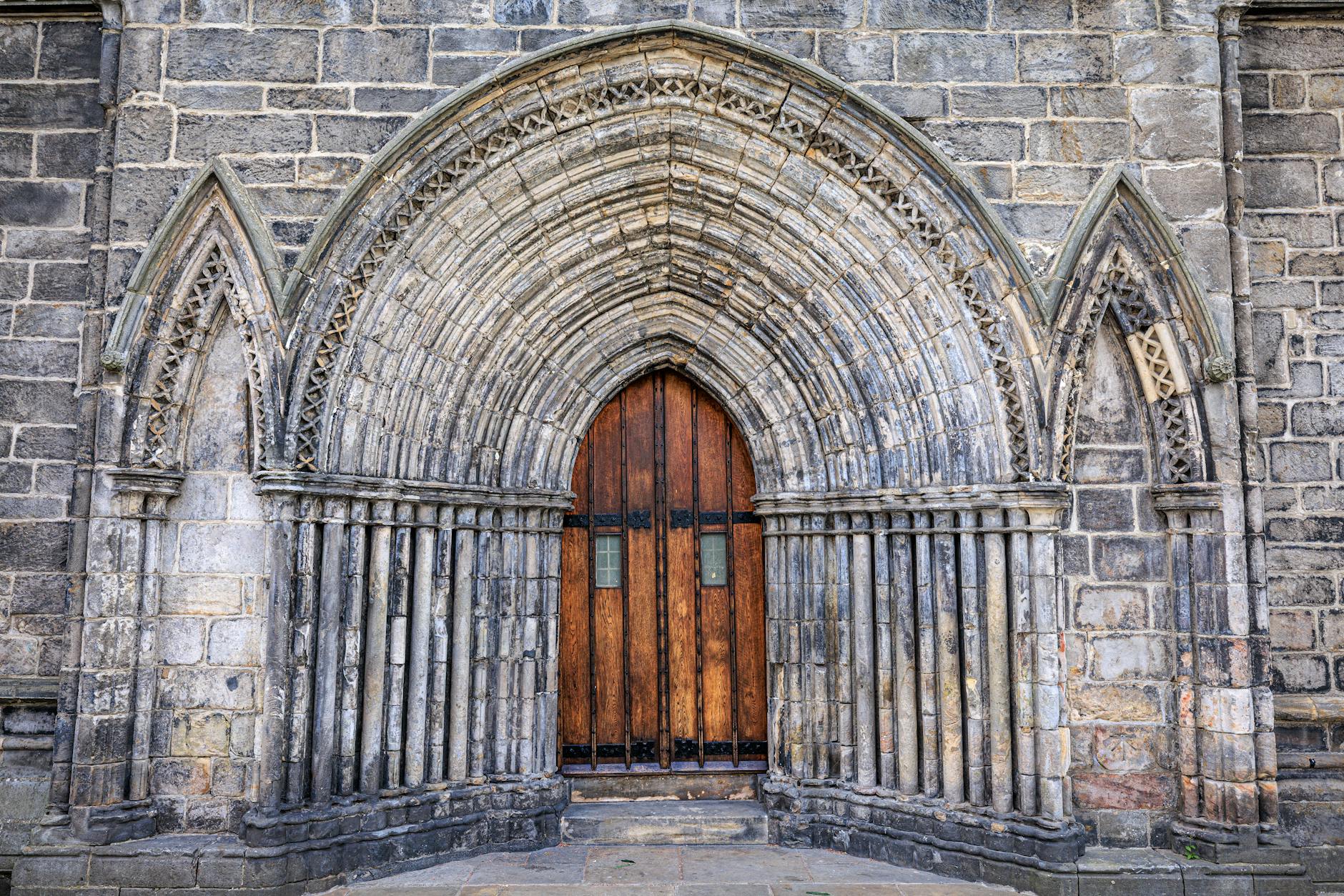
Address: Castle Street, Glasgow G4 0QZ. Opening hours (2026): Mon–Sat 10am–4pm (5pm in summer); Sunday 1pm–4pm; closed for Sunday morning service. Entry: Free; donations welcome. Estimated visit time: 45 minutes inside; allow 90 minutes if you’re climbing up to the Necropolis afterwards. Best entrance: the great west door on Castle Street.
Why Glasgow Cathedral matters
Glasgow Cathedral marks the spot where Glasgow began. According to legend, Saint Mungo (also known as Kentigern) — a 6th-century Christian missionary — set up a wooden church on this hill above the Molendinar Burn around AD 543. The first stone cathedral was consecrated here in 1136 in front of King David I. The current building dates mostly from the 13th and 15th centuries.
The cathedral matters historically for two big reasons. First, it’s the only medieval Scottish cathedral on the mainland to survive the Protestant Reformation almost intact — the city’s craft guilds famously refused to let it be torn down. Second, it was a major pilgrimage centre: in 1451 the Pope ruled that a pilgrimage to Glasgow Cathedral carried the same religious merit as one to Rome.
Glasgow Cathedral is the most important medieval building in the city and one of the most significant in Scotland. It is the only cathedral on the Scottish mainland to have survived the Reformation of 1560 complete and roofed — most of Scotland’s great churches were stripped, ruined or pulled down, but Glasgow’s was spared, reputedly protected by the city’s trade guilds. What you walk into today was built largely between the 13th and 15th centuries on a site linked to Saint Mungo for some 1,500 years.
It is a textbook of Scottish Gothic architecture, and unusually it is built on two levels because of the sloping ground — an upper church and a remarkable lower church below. Entry is free, it remains an active Church of Scotland congregation, and it is cared for by Historic Environment Scotland, so your visit helps keep one of Scotland’s national treasures open.
Who was Saint Mungo?
Saint Mungo (also Kentigern) is the patron saint of Glasgow. Born in around AD 518, he founded a Christian community on the hill where the cathedral now stands and is buried in the lower church. The four miracles attributed to him are commemorated on Glasgow’s coat of arms — the bird that never flew, the tree that never grew, the bell that never rang, the fish that never swam — and you’ll see this rhyme echoed in stone, glass and brass throughout the cathedral.
Top things to see inside Glasgow Cathedral
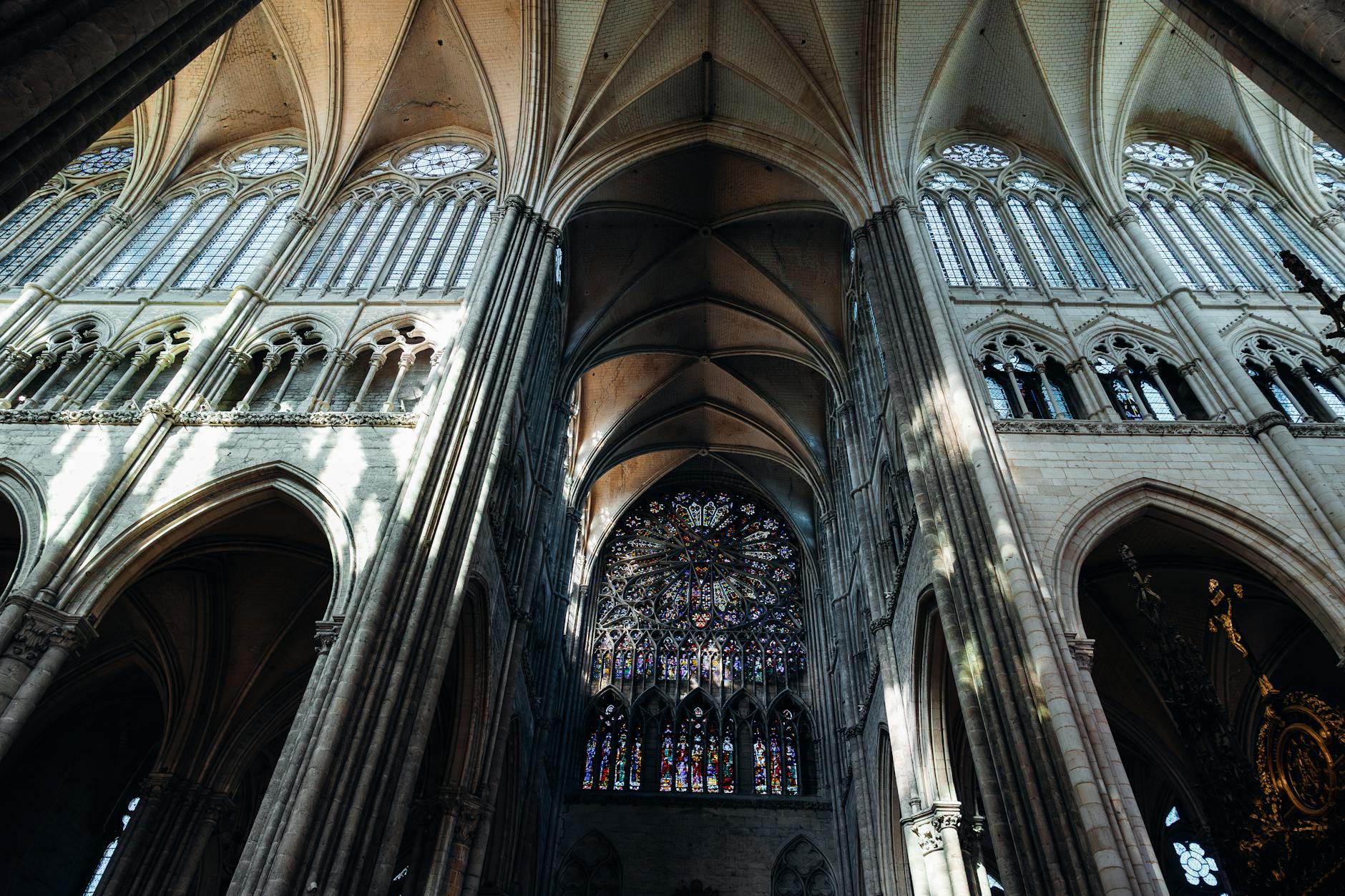
1. The medieval nave (high choir)
The first space you enter — soaring 13th-century gothic architecture, narrow lancet windows and a wooden hammer-beam roof. The pulpitum (a richly carved stone screen) added in the early 1400s separates the nave from the choir.
2. The Crypt / Lower Church (St Mungo’s tomb)
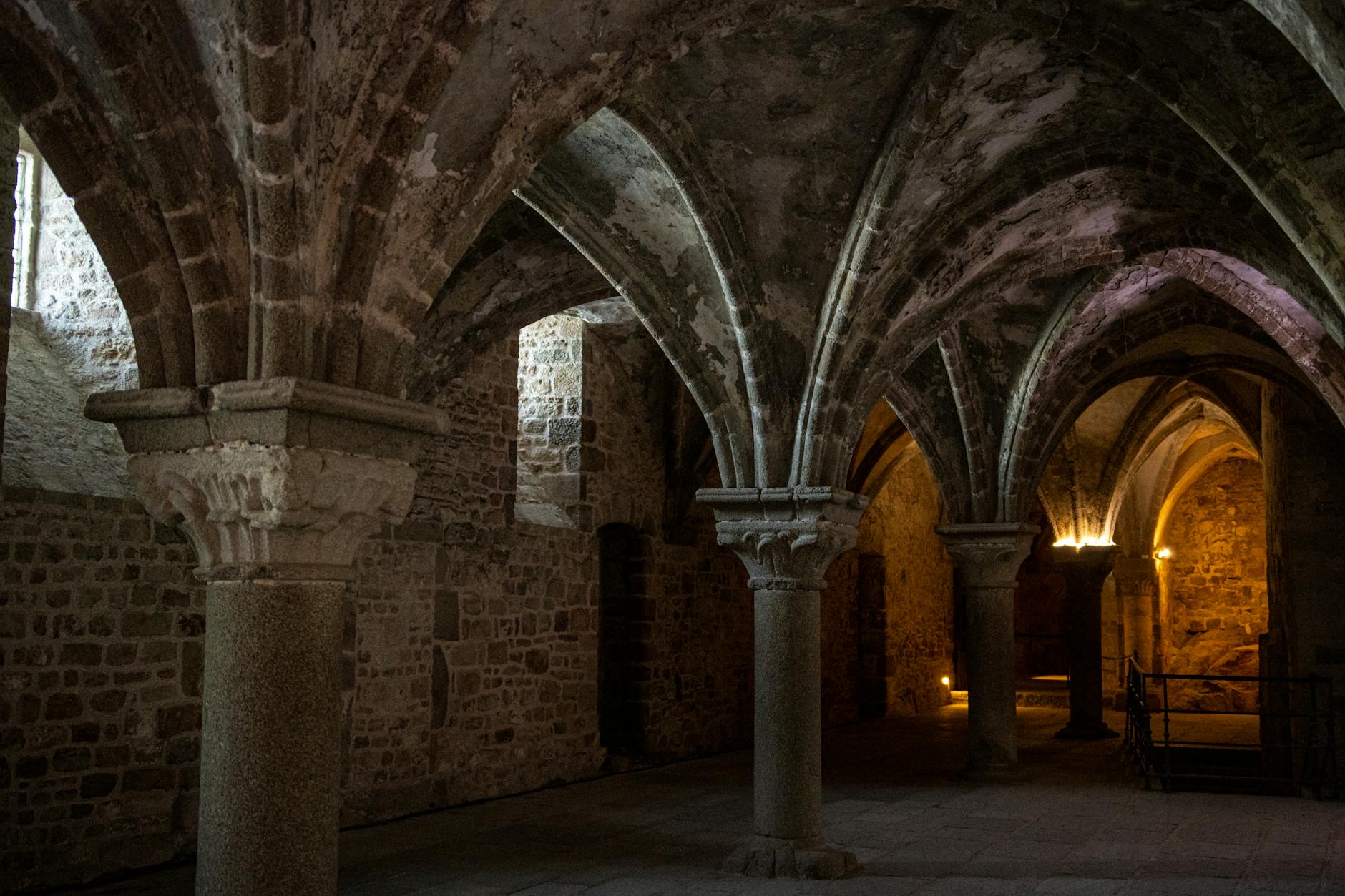
Built in the mid-13th century to house Saint Mungo’s tomb, the crypt is a forest of gothic columns and was the centre of medieval pilgrimage. Stand at the centre of the crypt and you’re standing in the very oldest fabric of the city.
3. The post-war stained glass
The original medieval stained glass was largely destroyed at the Reformation; Glasgow Cathedral now has one of the finest collections of 20th-century stained glass in Britain. Don’t miss the Francis Spear “Creation” window in the south transept and the unusual abstract Crear McCartney designs in the apse.
4. The Blackadder Aisle (Lower Church chapel)
Begun in the late 15th century by Archbishop Robert Blackadder and never completed — its vaulted ceiling stops short. A beautiful liminal space; you can usually get the room to yourself.
5. The Pre-Reformation rood screen
The ornately carved 15th-century stone screen separating the nave and choir is one of only two pre-Reformation rood screens to survive in Scotland. Look up at the carved bosses — green men, angels, fantastical beasts.
Give yourself at least 45 minutes — the cathedral rewards slow looking. Don’t miss:
- The Lower Church (the crypt) — a forest of stone pillars around the tomb of Saint Mungo, and arguably the finest medieval interior in Scotland.
- The Blackadder Aisle — a serene, white-vaulted chamber with carved bosses.
- The stone quire screen (pulpitum) — a rare survivor of a feature removed from most Scottish churches.
- The post-war stained glass — one of the most important collections of 20th-century glass in Britain, replacing windows lost over the centuries.
- The timber roof and the medieval nave — look up for the original carpentry.
A few details reward the patient looker. The carved stone bosses high in the nave roof are easy to miss from the floor — bring a phone camera, zoom in, and you will find faces, foliage and the odd grotesque looking back down at you. Down in the lower church, notice how the builders worked the awkward slope of the hill into the design rather than against it: the floor steps down with the ground, so the crypt is not a basement dug out of nothing but a genuine lower storey that the upper church sits on. It is one of the cleverest pieces of medieval engineering you can stand inside in Scotland.
The cathedral is also a quiet record of Glasgow itself. Look for the regimental colours and war memorials in the side aisles, the merchants’ and trade-incorporation plaques, and the slabs underfoot worn smooth by 800 years of feet. Many windows carry the names of the Victorian families who paid for them when the medieval glass was long gone — the same tobacco, cotton and shipbuilding money that built the grand city you see today. For the full story of that wealth and the buildings it funded, see our guide to Glasgow’s history and architecture.
Tours
The cathedral runs free guided tours by knowledgeable volunteers — typically twice a day Tuesday to Saturday, no booking required. Specialist tours (Cathedral Stained Glass, Scottish Medieval Saints, French/German language tours) require pre-booking through the cathedral office. Tours last around 45 minutes.
Glasgow Cathedral services
The cathedral is a working Church of Scotland (Presbyterian) place of worship. The main Sunday service is at 11am — visitors are welcome. Evensong at 6pm Sundays during term time; choral services on major feast days. Visitors are welcome to attend; the dress code is informal.
The Necropolis behind the cathedral
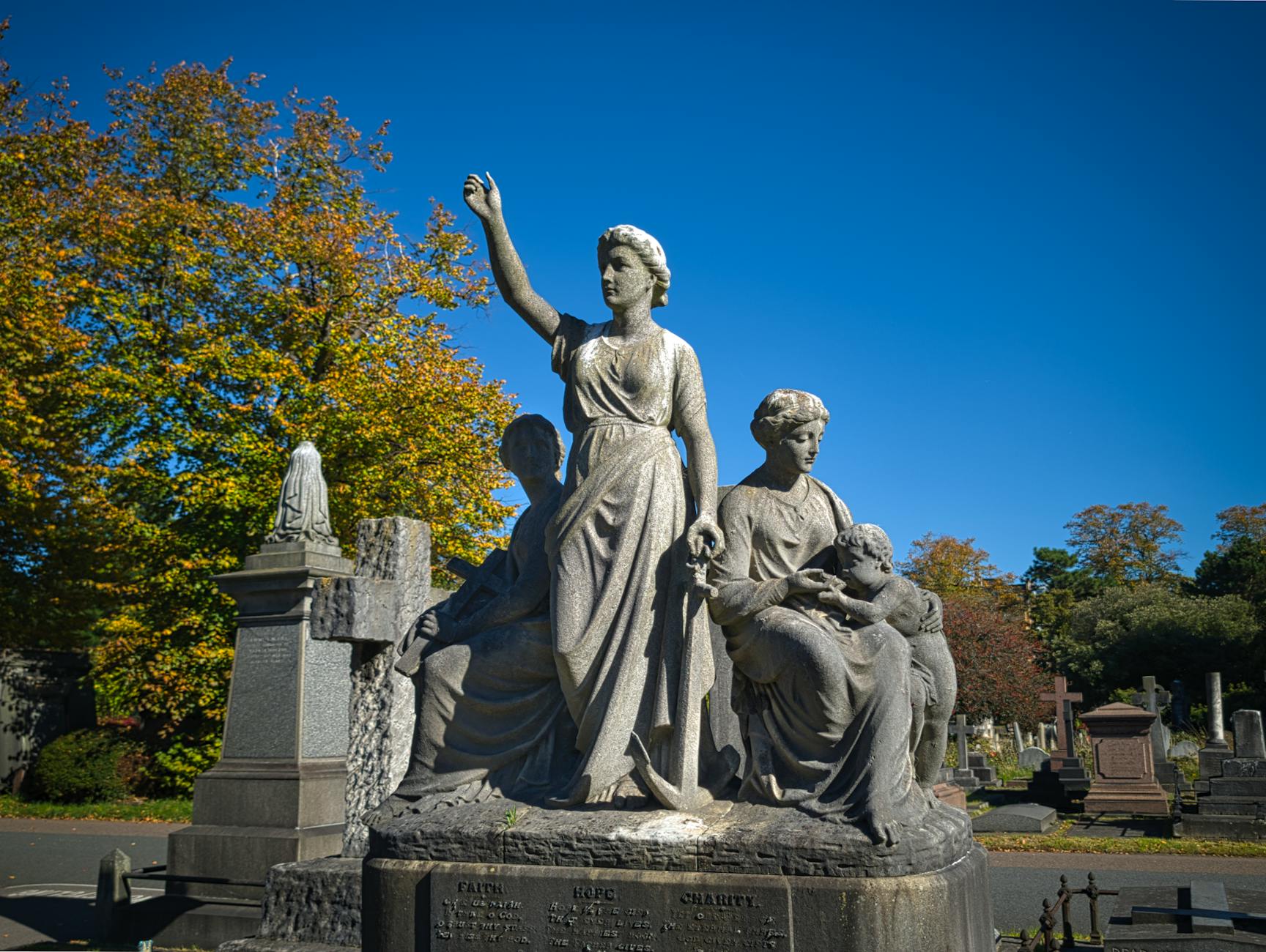
Behind the cathedral stretches the Necropolis, Glasgow’s most famous cemetery — a Victorian “garden of the dead” with 3,500 monuments climbing the hillside. The “Bridge of Sighs” leads up from the Cathedral. At the summit is one of the best skyline views in Glasgow and a Celtic cross designed by Charles Rennie Mackintosh. Free, open daylight hours.
The climb is gentler than it looks. Cross the Bridge of Sighs, bear left and follow the looping carriage drives rather than scrambling straight up — the gradient eases and you pass the grandest monuments on the way. The column at the summit is John Knox, the Reformation firebrand, planted there in 1825 before the cemetery proper even opened. From the top you get one of the best free skyline views in the city: the cathedral roof below you, the East End rooftops, and the hills beyond. Allow 30 to 45 minutes for a proper wander.
A few practical notes before you go up:
- Wear something with grip — the paths are old, uneven and slick after rain.
- There is no cafe or toilet on the hill, so sort that at the cathedral first.
- It is open during daylight hours and free; gates are locked around dusk.
- Our full Glasgow Necropolis guide maps out the notable graves and the best route up.
The St Mungo Museum of Religious Life and Art
Across the courtyard from the Cathedral, the St Mungo Museum houses Salvador Dali’s Christ of Saint John of the Cross… wait — that one’s at Kelvingrove. The St Mungo Museum has Britain’s only Zen garden, the Dalai Lama’s medal, and a thoughtful tour through six world religions. Free entry. Allow 30–45 minutes.
Provand’s Lordship — the oldest house in Glasgow
Across Castle Street stands Provand’s Lordship, built in 1471 — the only surviving medieval house in Glasgow. Free entry, run by Glasgow Life. Combined with the Cathedral and St Mungo Museum, all three are within 100 metres and make up the city’s oldest precinct.
How to get to Glasgow Cathedral
On foot: 15 minutes’ walk from George Square via High Street.
Subway: Buchanan Street is the closest Subway station — 15 minutes’ walk.
Bus: First Bus 38, 38A, 57 stop on Castle Street outside the Cathedral.
Train: Glasgow Queen Street is 12 minutes’ walk; Glasgow Central is 20 minutes.
The cathedral stands at the top of High Street and Castle Street, at the eastern edge of the city centre — this is the oldest part of Glasgow, where the medieval town began. It is about a 15-minute walk from George Square along High Street, or a few minutes from High Street railway station. Many city bus routes pass nearby.
The real bonus is how much sits within a few yards: the cathedral, the dramatic Victorian Necropolis on the hill behind, the St Mungo Museum of Religious Life and Art, and Provand’s Lordship — the oldest house in Glasgow, built around 1471. You can comfortably see all four in a half-day and trace the whole history of the city in one compact corner.
Glasgow Cathedral with kids
The crypt and the medieval architecture often surprise children — the bridge of sighs is a hit, and the pulpitum carvings (look for the green men) make a free game out of the visit. Allow 30–40 minutes for a child-paced visit. There are no formal family activities but the volunteer tour guides are usually delighted to have curious kids.
Turn the visit into a hunt. The four miracles of Saint Mungo — the bird, the tree, the bell and the fish — appear again and again in glass, stone and brass, and finding all four keeps younger children moving through a building they might otherwise rush. The lower church, dim and forested with pillars, lands somewhere between spooky and thrilling for most kids, and the Bridge of Sighs into the Necropolis feels like the start of an adventure. Keep an eye on small hands near the older monuments on the hill.
Practically, the cathedral has no entry fee and no ticket queue, so there is nothing lost if a visit is cut short. A child-paced loop of the cathedral runs about 30 to 40 minutes; add the Necropolis and you have a free morning out. If the weather turns, the nearby St Mungo Museum and the city’s other free galleries are an easy fallback, and our Glasgow with kids guide has more rainy-day options within reach.
Best time to visit
Quietest times: weekday mornings (10–11.30am Mon–Fri) and Saturday afternoons after 3pm. Avoid Sundays before 1pm (closed for service) and the immediate hour after big tour buses arrive. The Cathedral is at its most atmospheric on a misty morning.
Light matters more than most people expect. The post-war stained glass is the cathedral’s signature, and it is at its best when the sun is up and angling through the south windows — late morning on a bright day floods the nave with colour. On a grey Glasgow afternoon the interior is darker and more sombre, which has its own atmosphere but shows the glass less well. If photography is the point of your visit, aim for a clear morning.
What to combine with a Cathedral visit
You can do the entire historic precinct in a half-day: Glasgow Cathedral (1 hour) → Necropolis walk (45 min) → St Mungo Museum (40 min) → Provand’s Lordship (15 min) → lunch on High Street. Total: 3.5 hours. For more on this corner of the city, see our deep-dive on Glasgow’s history and architecture.
If you have a full day rather than a half, the cathedral pairs naturally with the East End. From High Street you are a short walk from the Barras market, Glasgow Green and the People’s Palace, or a 15-minute walk back into the Merchant City for lunch and the city’s oddest corners. Some of those — Sharmanka, the Britannia Panopticon, the Saint Valentine relic in the Gorbals — are gathered in our things to do in Glasgow round-up, and several sit on the same route you would walk from the cathedral.
Free tours and audio
The cathedral provides free printed leaflets in eight languages and an audio guide via the Smartify app (free download). The Smartify guide takes about 35 minutes and is the best self-guided tour.
Accessibility
Step-free access through the south door (signposted from Castle Street); the high choir is fully step-free. The crypt has a handful of steps; ask at the welcome desk for the step-free route. There’s a wheelchair available to borrow free of charge. Accessible toilet is in the Cathedral office.
If steps are a concern, plan the order of your visit. The high choir and nave are reached step-free through the south door and give you the cathedral’s grandest space without a single stair. The lower church and the Necropolis are the harder parts: the crypt has a short flight, and the Necropolis is a hill of uneven paths with no step-free route to the summit. The welcome desk can point you to the easiest way down into the crypt and will lend a wheelchair free of charge — worth asking about on arrival rather than mid-visit.
FAQs
Is Glasgow Cathedral free to enter?
Yes — entirely free. Donations of £5 are suggested at the welcome desk but are not required.
What time does Glasgow Cathedral open?
Monday–Saturday 10am–4pm (5pm in summer). Sunday 1pm–4pm. Closed for the Sunday morning service.
How long does it take to see Glasgow Cathedral?
45 minutes for the cathedral itself; allow 90 minutes if you’re climbing the Necropolis afterwards, and a half day for the full Cathedral + St Mungo Museum + Provand’s Lordship + Necropolis loop.
Is Glasgow Cathedral the same as the Necropolis?
No — the Necropolis is a Victorian cemetery on the hill behind the Cathedral, separated by the “Bridge of Sighs.” Both are free to visit and worth combining.
Are there services at Glasgow Cathedral?
Yes — Glasgow Cathedral is a working Church of Scotland congregation. Sunday morning services are at 11am; choral evensong at 6pm during term time.
Can I take photos in Glasgow Cathedral?
Yes — non-flash photography is allowed throughout the cathedral except during services.
Plan more of historic Glasgow
Glasgow Cathedral is one of three free historic landmarks within 100 metres. See our wider Glasgow history and architecture guide for the surrounding precinct, our museums and galleries guide for nearby free attractions, and our deep-dive on the Charles Rennie Mackintosh trail for the city’s other architectural icon.