The Barras is the most authentically Glaswegian thing in Glasgow. A weekend-only market in the East End that’s been running for over a century, it’s the largest second-hand and antique market in Scotland, the original home of the Barrowland Ballroom, and one of the city’s last unspoilt working-class shopping experiences.
This is the complete 2026 visitor guide to The Barras Market in Glasgow — opening hours, what’s actually worth buying, the food, the music venue upstairs, and how to do it like a local.
The Barras at a glance
Address: Gallowgate, Glasgow G1 5AS (the East End, off the Trongate). Opening hours: Saturday and Sunday only, 10am–4pm (some stalls open earlier and stay later). Entry: Free. Bring cash: recommended; many stalls now also accept cards. Best time to arrive: 10am on Saturday for the best vintage finds.
A short history of The Barras
The Barras was founded in the early 1920s by James and Maggie McIver, originally as a pitch where street traders could rent space from a barrow (“barra” in Scots). The trading post grew into Glasgow’s most famous public market, with iconic red-and-yellow archways still standing across Gallowgate. The market is now over 100 years old and although it has shrunk from its 1970s peak (when 250+ stalls operated daily), it remains the soul of east-end Glasgow.
The McIvers also built the Barrowland Ballroom upstairs — opened in 1934, lost to fire in 1958, rebuilt in 1960 and now one of the most-revered live music venues in Britain.
The Barras takes its name from the barrows — handcarts — that traders once wheeled through Glasgow’s East End. The market was formalised in the 1920s by Margaret McIver, who built permanent stalls and, later, the famous Barrowland Ballroom above. For a century it has been one of the most characterful corners of the city: equal parts flea market, street theatre and living social history, threaded through the streets around the Gallowgate and London Road.
To understand why the Barras feels different from a tidy farmers’ market, it helps to know what it grew out of. For most of the twentieth century this was a working market for a working district — the place east-end families came for cheap clothes, household goods and a Saturday’s entertainment they could actually afford. The patter of the traders, the showmanship, the sense of theatre: that’s not a heritage performance laid on for visitors, it’s the residue of generations of people making a living by being more entertaining than the stall next door.
That history is why the market rewards a slower, more curious visit than a normal shopping trip. The old hand-painted signage, the red-and-yellow arches over the Gallowgate, the indoor sheds that have barely changed in decades — these are the bones of pre-war Glasgow, still standing and still in use. You’re not walking through a museum; you’re walking through a piece of the city that simply never got knocked down and rebuilt. Treat it as social history you can rummage in, and the whole place opens up.
What you can buy at The Barras
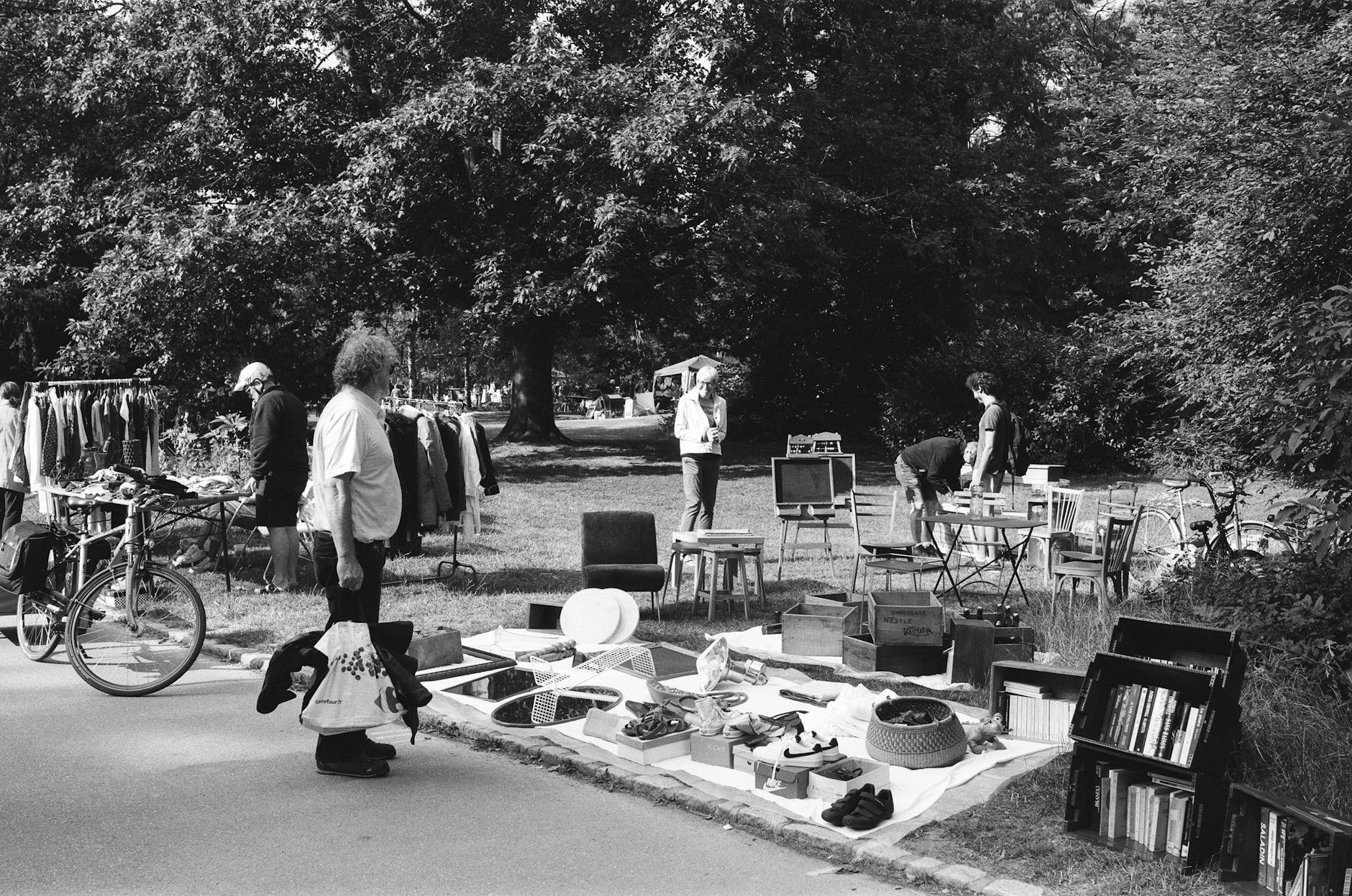
The Barras is officially “Scotland’s largest second-hand and antique market” and the modern market reflects that — most of what you’ll buy here, you’ll buy used. Categories include:
- Vintage clothes — denim, leather, retro sportswear, kilts. Strong on 1970s and 1980s.
- Vinyl and music memorabilia — multiple stalls selling LPs, 7-inches, gig posters, band T-shirts. Glasgow vinyl shops have grown around the Barras culture.
- Antiques and bric-à-brac — Victorian glassware, tarnished silver, old prints, postcards.
- Books — second-hand book sellers in the indoor sheds.
- Tools, hardware and DIY — almost forgotten elsewhere; the Barras still has it.
- Tat, novelty and dodgy DVDs — yes, there’s still some of that. Part of the experience.
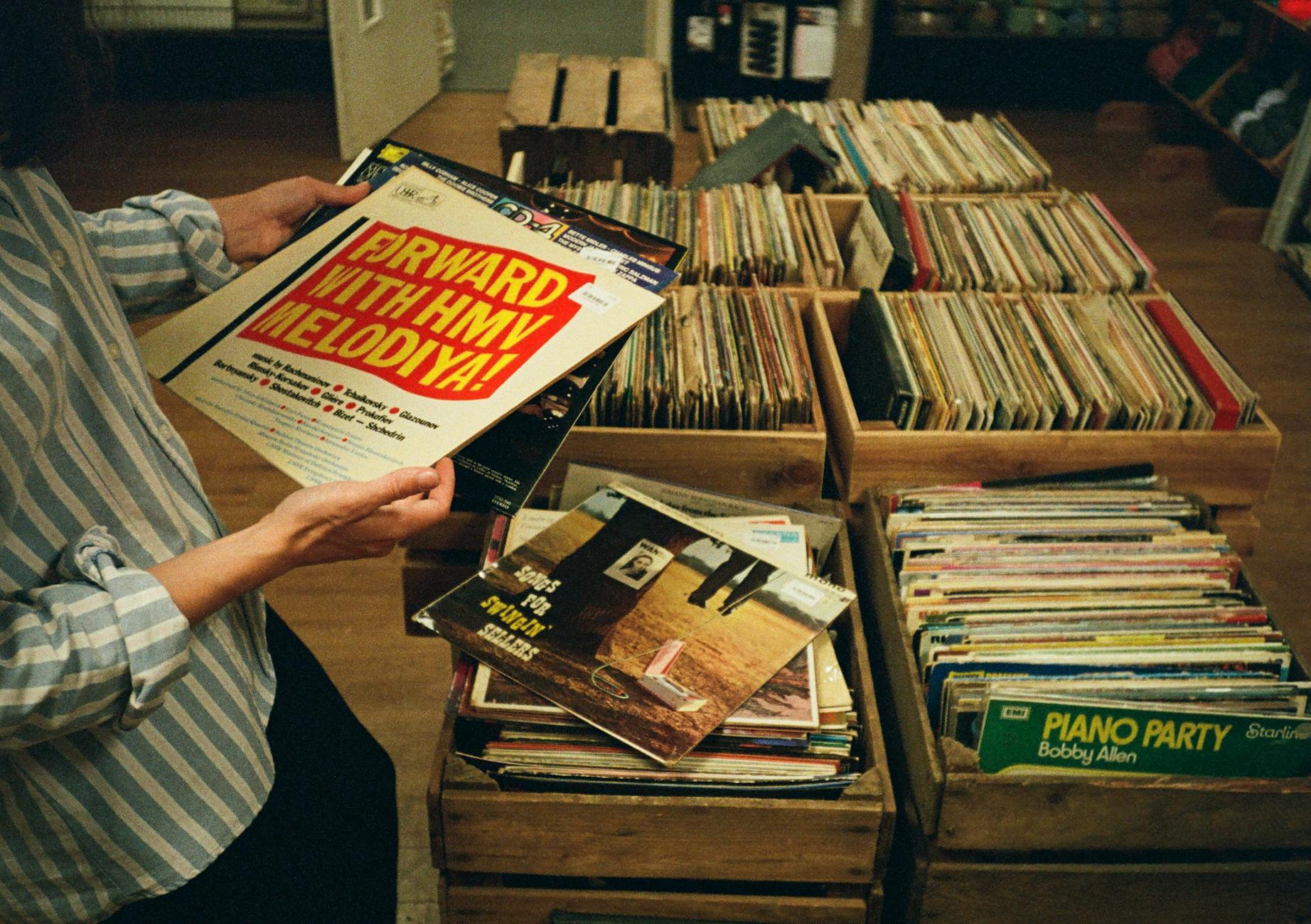
The honest answer is a bit of everything. The Barras is at its best for vintage clothing, vinyl records, retro homeware, tools, books and bric-a-brac, with a growing number of independent makers, street-food traders and design studios moving in alongside the old-school stalls. Bring cash, haggle politely, and treat it as a treasure hunt rather than a shopping list — the joy is in what you stumble on.
A practical note on how the stock actually moves, because it’s nothing like a high street. The Barras is a treasure hunt precisely because there’s no inventory — what’s on a stall this Saturday may be gone next week and replaced by something completely unrelated. That randomness is the appeal: the regulars who find the best things are the ones who go often, walk the whole site, and buy the thing in front of them rather than holding out for a better version that may never appear. If you see something you love and the price is fair, that’s the moment.
To shop it well rather than just wander it:
- Do a full lap first before buying anything — prices and quality on the same kind of item can vary wildly from one stall to the next, and you only learn that by looking.
- Check condition in daylight — the indoor sheds can be dim, so carry questionable items toward the light before you commit.
- Bundle to bargain — sellers will almost always do a better price on two or three things from the same stall than on one.
- Know roughly what the thing is worth before you haggle — a confident, friendly offer based on a real number lands far better than a lowball.
- If it’s vintage clothing or vinyl you’re chasing specifically, our vintage shopping in Glasgow guide maps the dedicated shops that complement a Barras dig.
The Barras Market food scene
The Barras has been quietly reborn as a Glasgow street-food destination over the last decade. The renovated indoor “Barras Market” hall on Moncur Street hosts a curated cluster of food stalls every weekend — Caribbean, Mexican, Korean, Pakistani, Italian — usually £8–£12 a plate. Excellent espresso bars too. Combine your shopping with a long, lazy lunch.
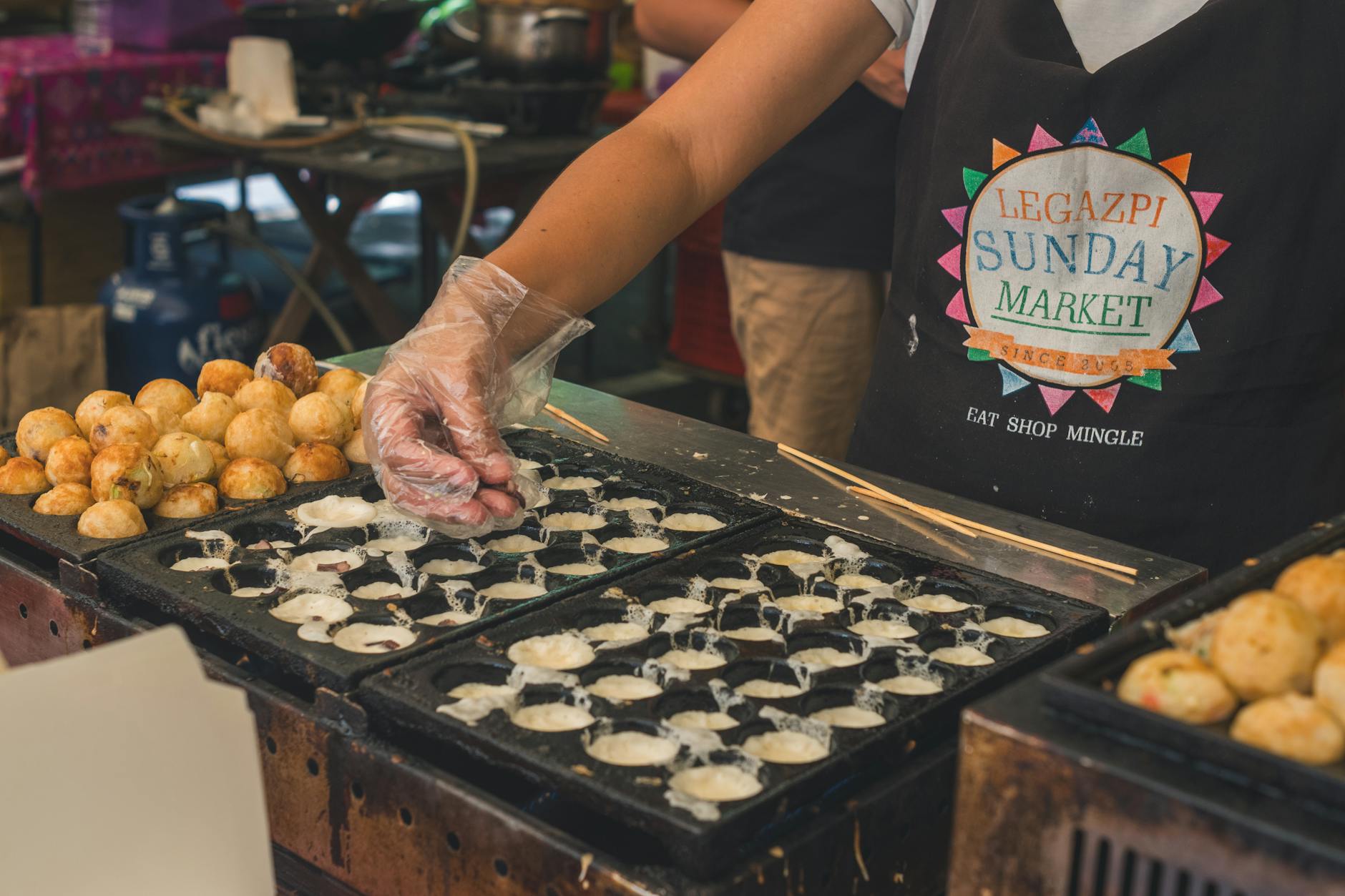
The food at the Barras has gone from an afterthought to a genuine reason to visit in its own right, and the smart move is to build your day around it rather than treating lunch as a pit stop. The renovated indoor hall is where the curated street-food traders cluster, and because the line-up rotates, two visits a month apart can offer completely different cooking. It’s busiest and best in the middle of the day; come a little before the lunch peak and you’ll get a seat and a shorter wait at the stalls you want.
It’s also a properly cheap way to eat well, which fits the spirit of the place. A plate from the food hall costs a fraction of a sit-down city-centre lunch, and the quality from the better traders genuinely competes. If you’re putting together a low-cost day out in the city, a morning rummaging the stalls and a long, cheap lunch in the food hall is one of the best-value afternoons going — our Glasgow on a budget guide is full of days built around exactly this kind of thing.
The Barrowland Ballroom
The Barrowland is the upstairs music hall that built half the great Glasgow bands. David Bowie, Oasis, U2, Foo Fighters, Travis, Snow Patrol, the Stone Roses and dozens more have played the Barrowland’s distinctively springy wooden dance floor. The neon-lit star-shape sign on the front of the building is one of the most photographed shots in Glasgow.
Tickets to a Barrowland gig (typically £25–£50) are the best night out in Glasgow. The capacity of 2,100 means a sweaty, intimate gig with brilliant sightlines from the balcony. Check the gig calendar at glasgow-barrowland.com.
Upstairs sits one of Britain’s most loved live-music venues. The Barrowland Ballroom, with its sprung dance floor, star-spangled ceiling and legendary neon sign, has hosted everyone from Iggy Pop to modern headliners, and bands routinely name it their favourite room in the country for its raucous acoustics and atmosphere. Even if you’re not at a gig, the exterior and its neon are an East End landmark worth seeing after dark.
If you possibly can, line up your Barras visit with a gig in the Ballroom upstairs — it turns a daytime market trip into one of the best nights out in Britain. The room is the reason so many touring bands name Glasgow as their favourite city to play: the sprung floor bounces, the star-spangled ceiling is unmistakable, and a Glasgow crowd at full voice in a 2,100-capacity hall is an experience bands talk about for years afterwards. Tickets move fast for the bigger names, so check the listings well ahead and book when you see something you want.
Even without a ticket, the Barrowland is worth seeing after dark for the sign alone. The neon star out front is one of the most photographed pieces of Glasgow at night, and it reads completely differently lit up against the East End sky than it does in daylight above a closed-up market. If you’re spending an evening exploring this side of the city, our things to do in Glasgow at night guide has more on the East End after the stalls have packed up.
Pro-tips for shopping at the Barras
- Arrive at 10am Saturday for the freshest stock of vintage clothes and antiques.
- Haggle politely — most prices have 10–20% movement on them; be friendly, not aggressive.
- Bring cash — though most stalls now accept cards, smaller cash purchases are quicker and warmer with sellers.
- Don’t expect a uniform experience — the Barras is a mix of curated indoor sheds and old-school outdoor stalls. Wander.
- Be street-aware — the East End is safe but the Barras attracts pickpockets. Wear a cross-body bag.
- Sunday is quieter — same stalls, half the crowd. Better for a relaxed wander.
How to get to The Barras
Walking: 10 minutes’ walk from Glasgow Cross / Trongate; 20 minutes from George Square via Saltmarket. The walk through the East End is part of the experience.
Subway: Buchanan Street, then walk 15 minutes east — or High Street rail station which is closer.
Train: Argyle Street or High Street stations are 5 minutes’ walk.
Bus: First Bus 18 and 64 stop on Gallowgate.
The Barras is a 15-minute walk east of Glasgow Cross, just off the Gallowgate and London Road. It’s an easy stroll from the city centre or a short bus or taxi; the nearest rail stop is Argyle Street. Crucially, it is a weekend market — most stalls trade Saturday and Sunday, roughly 10am to 5pm — so don’t make a special trip midweek. Combine it with a wider East End wander toward Glasgow Green and the People’s Palace.
The single most important planning fact bears repeating because people still get caught out: the Barras is a weekend market. Saturday and Sunday, roughly 10am to 4pm, and that’s it — turn up on a Tuesday and you’ll find shuttered units and quiet streets. If you’ve travelled to Glasgow specifically to see it, build your trip around a Saturday or Sunday, and lean toward Saturday morning if vintage and the best stock are your priority, because that’s when stalls are freshest and the choice is widest.
Getting there is genuinely easy, which is part of the charm — it’s a flat fifteen-minute walk east from the heart of the city centre, so most people simply stroll over rather than bothering with transport. If you’d rather not walk, plenty of buses pass close and the nearest rail stations are only a few minutes away on foot. For the full picture of trains, Subway, buses and how the city’s transport fits together, our getting around Glasgow guide has you covered.
The Barras is part of a wider East End walk
The Barras pairs naturally with other East End stops: Glasgow Green (a 5-minute walk), the People’s Palace, the Doulton Fountain, the Saracen Head pub and the working-class Calton neighbourhood. A great half-day East End loop.
What’s NOT at The Barras
If you’re looking for designer fashion, polished boutiques, or chain coffee, you’re in the wrong place — head to Buchanan Street or Glasgow’s Style Mile. The Barras is for vintage hunters, antique collectors, vinyl diggers and people who want to see the real, working-class East End rather than the polished West End.
Safety and atmosphere
The Barras has a reputation it has long outgrown. The market is busy, family-friendly during the day and well-supervised. Petty pickpocketing is the only realistic risk — wear a bag in front, don’t flash phones in narrower lanes. After 4pm the market shuts and the surrounding streets get quieter; we’d recommend leaving before 5pm if you’re not heading to a Barrowland gig.
Let’s be straight about the Barras’ reputation, because it puts some visitors off needlessly. For decades the market carried a rough, slightly edgy name, and that image has long outlived the reality. On a Saturday or Sunday it’s busy, family-friendly and well-populated — you’ll see grandparents, kids, students and tourists all rummaging the same stalls. The only realistic thing to watch is petty pickpocketing in the tighter, busier lanes, which is true of any crowded market anywhere; a bag worn across your front handles it completely.
The one piece of timing advice that matters: the atmosphere changes when the market closes. While the stalls are trading, the streets are lively and feel entirely comfortable. Once it shuts in the late afternoon, the immediate area quietens down quickly, so unless you’re staying on for a gig at the Barrowland, the natural rhythm is to do your shopping, have your lunch, and drift back toward the centre before things wind down. Do that and the Barras is one of the warmest, most characterful afternoons Glasgow has to offer.
The Barras with kids
Kids love the spectacle — the noise, the bright colours, the variety of food, the toy stalls. Allow 90 minutes for a focused family visit. The food court has high chairs and child-friendly options. Don’t bring a buggy if you can avoid it; some of the indoor sheds are tight.
Vegan, vegetarian and dietary needs
The Barras Market food hall has 6+ vegan and vegetarian options on any given weekend. The wider Glasgow vegan scene is well-developed — see our best brunch in Glasgow guide for the Southside vegan corner.
FAQs
When is The Barras Market open?
Saturdays and Sundays only, 10am–4pm. Some stalls open from 9am or stay open until 5pm; the indoor Barras Market food hall runs slightly later.
Is The Barras Market free to enter?
Yes — completely free entry. You only pay for what you buy.
Is The Barras safe?
Yes during market hours. It’s busy and family-friendly during the day. Standard travel-safety advice (cross-body bag, watch for pickpockets) applies.
What’s the best thing to buy at The Barras?
Vintage clothing, second-hand vinyl, antiques and old prints are the strongest categories. The Barras is also brilliant for unusual hardware, kitchenware and books.
Is the Barrowland Ballroom the same as The Barras?
The Barrowland is the famous music venue upstairs at the Barras Market site — same building, same ownership history, but separate operations. The market is daytime; the gigs are evening.
Can I haggle at The Barras?
Yes — politely. Most listed prices have 10–20% movement. Cash helps; bundled purchases (multiple items from one stall) get better discounts.
How long should I spend at The Barras?
90 minutes for a focused visit; 3 hours if you’re combining with the food hall and a wander through the wider East End.
Plan the rest of your Glasgow shopping trip
The Barras is the polar opposite of Glasgow’s polished Style Mile — both are essential to understanding the city’s shopping scene. See our complete shopping in Glasgow guide and our deep-dives on Buchanan Street and things to do in Glasgow for the wider city.