This article contains advertising. Our booking links are routed through a partner that adds commission tracking automatically, so if you book through one we earn a commission from the provider, at no extra cost to you. It never affects what we recommend. Affiliate disclosure
The first thing everyone learns about Partick is that its football club doesn’t play there. Partick Thistle left for Firhill, in Maryhill, in 1909, and the name has been confusing visitors ever since. The second thing is that Partick doesn’t much care what you think of it. Squeezed between the polish of Byres Road and the Clyde, it’s a busy, unglamorous, good-humoured neighbourhood of tenements, charity shops, bakeries and old pubs, with one of the best free museums in Britain at the bottom of the hill and some of the city’s grandest tenements at the top. This is the Partick Glasgow keeps for itself, and it’s the part of the West End where you’re most likely to hear a local accent at the next table.
This guide covers what Partick and its neighbour Hyndland are like, how Partick grew, Dumbarton Road and its pubs, the riverside from the Riverside Museum to the new bridge to Govan, Hyndland’s tenements and church, where to eat and drink, a one-day plan and how to get there. For the rest of the area, from Kelvingrove to the Botanic Gardens, see our Glasgow West End guide. Details were checked in October 2026; treat prices as the right order of magnitude and check before you travel.
Partick and Hyndland at a glance
| Partick and Hyndland | The essentials |
|---|---|
| Where | The western end of the West End, between Byres Road and the Clyde, with Hyndland on the hill to the north |
| Main streets | Dumbarton Road in Partick; Hyndland Road and Clarence Drive in Hyndland |
| Partick station | One of the city’s main interchanges: Subway, trains and buses in one place |
| Other stations | Kelvinhall Subway; Hyndland rail station |
| Big free sights | The Riverside Museum, Kelvingrove Art Gallery and Museum, the Kelvin Hall film archive |
| Best for | Families, budget eating, proper pubs, a local feel |
| Time needed | A full day with the museums; half a day without |
What things cost
| Item | Price | Notes |
|---|---|---|
| Riverside Museum | Free | On Pointhouse Quay, with the tall ship Glenlee moored alongside |
| Kelvingrove Art Gallery and Museum | Free | 10am–5pm Monday to Thursday and Saturday; 11am–5pm Friday and Sunday |
| Moving Image Archive, Kelvin Hall | Free | Drop-in access to the National Library of Scotland’s films of Scottish life |
| Partick Farmers’ Market | Free entry | Mansfield Park, second and fourth Saturdays of the month |
| The Govan Stones | Free | Across the river by the new bridge; open daily in season, roughly April to October |
| Subway single / all-day cap | £1.80 / £3.40 | Contactless or Smartcard; a paper single is £1.85 |
Partick is one of the best-value corners of the West End. The big museums are free, and food and drink on Dumbarton Road cost noticeably less than on Byres Road, ten minutes’ walk away. If you’re watching the budget, see our guides to Glasgow on a budget and cheap eats in Glasgow.
How Partick grew
Partick is older than most of the West End. It grew up as a village of mills on the River Kelvin, close to where it meets the Clyde, and in the nineteenth century it became an industrial burgh in its own right, with shipyards, engine works and docks along the river and rows of tenements climbing the hill behind them for the people who worked there. Many of them came from the Highlands and Islands, and from Ireland, and Partick kept a strong Highland connection long after the yards closed.
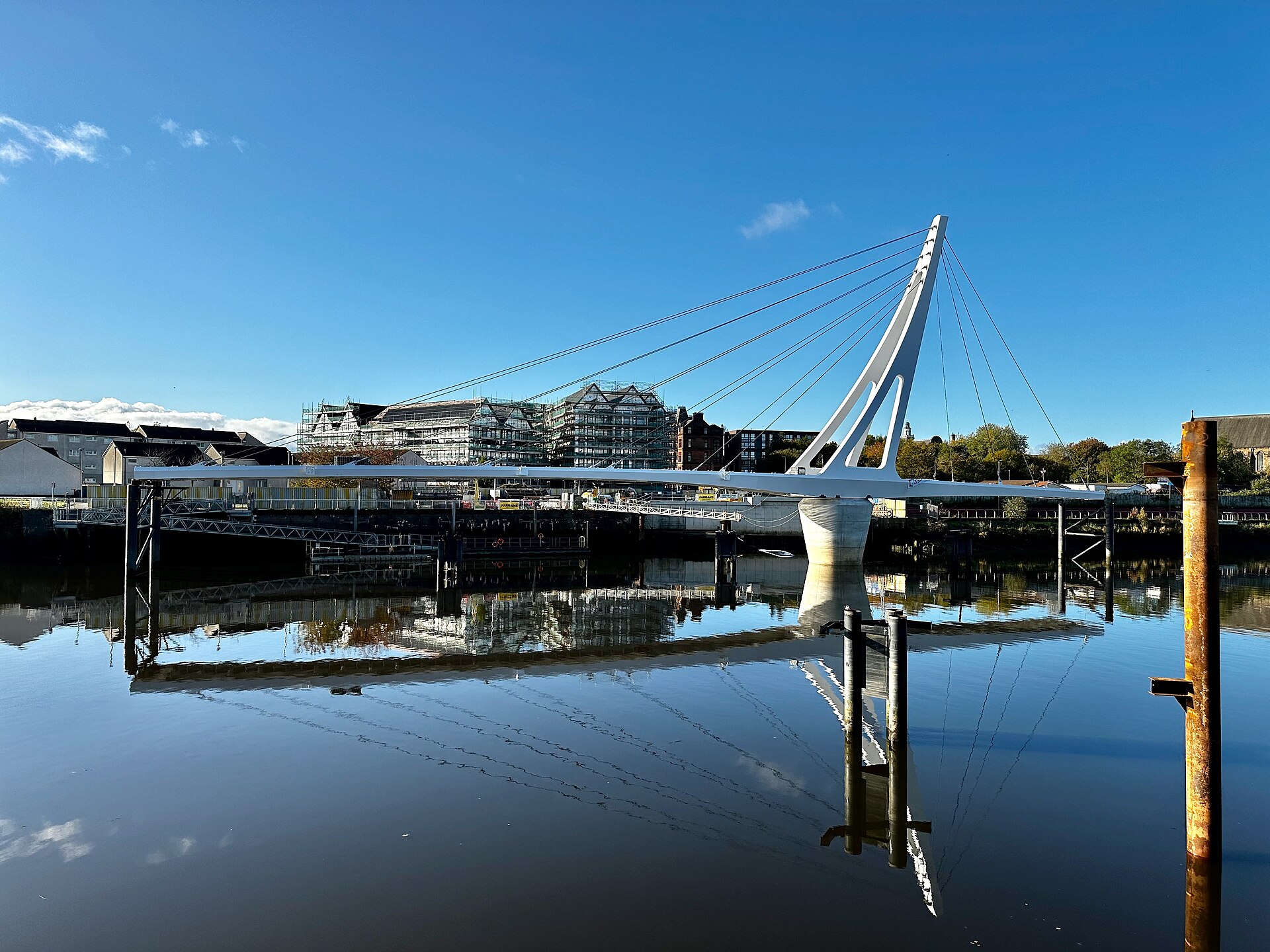
The burgh fought hard to stay independent, but Glasgow absorbed it in 1912. One of its riverside yards, A. & J. Inglis at Pointhouse, built the paddle steamer Waverley in 1946, and the Riverside Museum now stands close to where the yard was. Since then Partick has lost most of its industry, gained an expressway along its southern edge and a major transport interchange at its heart, and, since 2024, a new bridge back across the river to its old neighbour, Govan.
Dumbarton Road: Partick’s main street
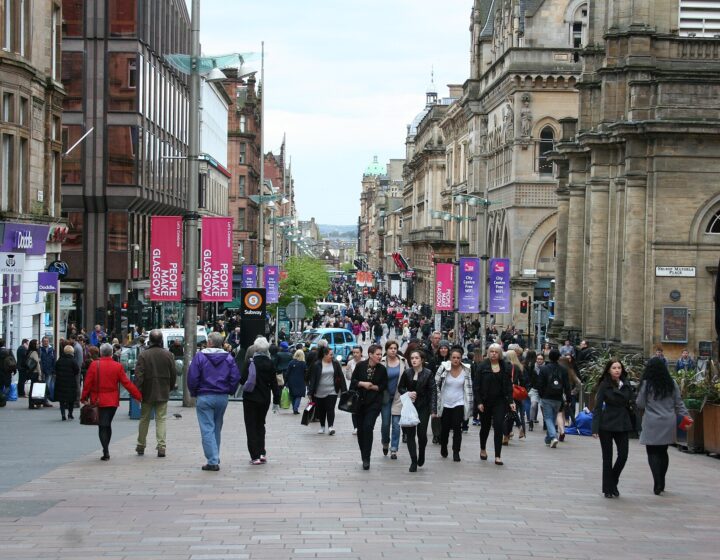
Dumbarton Road is Partick in one long street. It runs west from the foot of Byres Road past Partick Cross and on towards Whiteinch, lined with sandstone tenements whose ground floors hold charity shops, bakers, butchers, cafés, takeaways from half the world, bookmakers, hairdressers and pubs. It isn’t pretty and it doesn’t try to be, but it’s lively at almost any hour and refreshingly free of pretension.
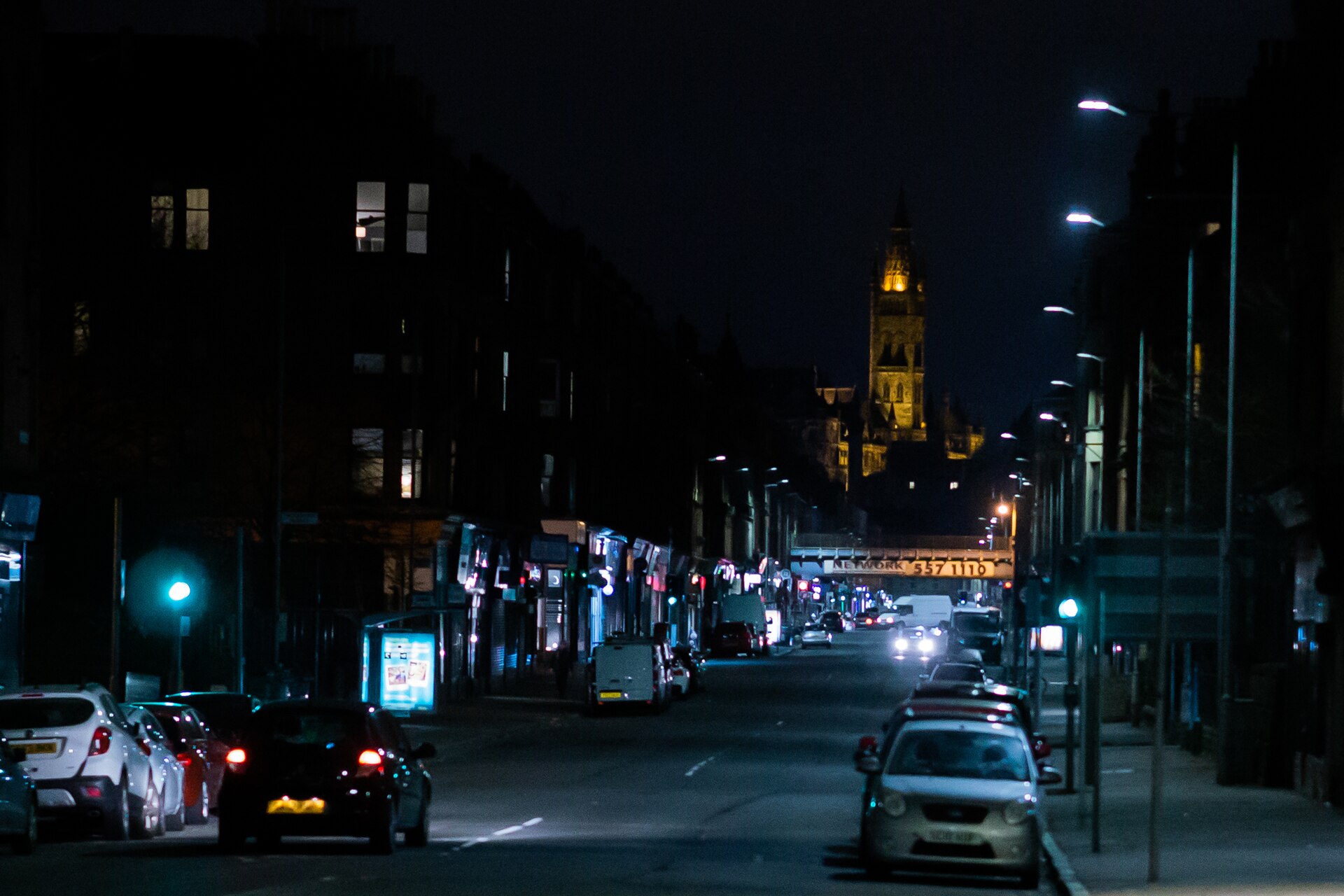
It’s also one of the best streets in the city for a proper pub. The Three Judges, at 141 Dumbarton Road by Partick Cross, is a real-ale bar with a long run of handpulls and a shelf of CAMRA awards. The Lismore, at 206, has been flying the Highland flag since 1996, with stained-glass windows depicting the Highland Clearances, a good whisky list and regular folk sessions. Our guides to traditional pubs in Glasgow and the best whisky bars have more.
On the second and fourth Saturdays of the month, the Partick Farmers’ Market fills Mansfield Park, just off Dumbarton Road, with more than 40 local producers, from bakers and cheesemakers to street food, and it’s free to wander in.
Partick station: the hub
Partick station is the reason many Glaswegians know Partick at all. It’s one of the city’s main interchanges, combining a Subway station, a busy suburban rail station on the lines through both Central and Queen Street, and a bus station, all in one place. For visitors, that makes Partick unusually well connected. The Subway runs to the city centre in 10 to 15 minutes; trains run through the city centre and out west to Dalmuir, Balloch and Helensburgh, which makes Partick a handy starting point for a day trip to Loch Lomond; and buses fan out across the West End and beyond.
The riverside: the Riverside Museum and the bridge to Govan
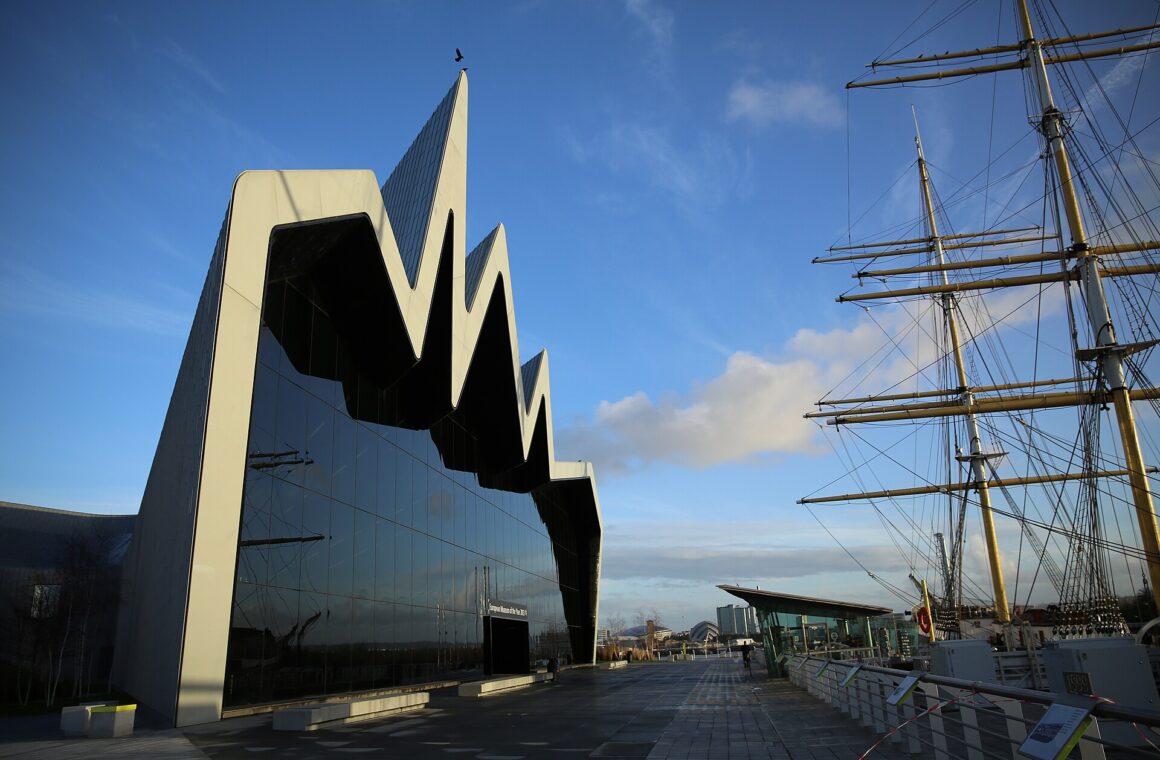
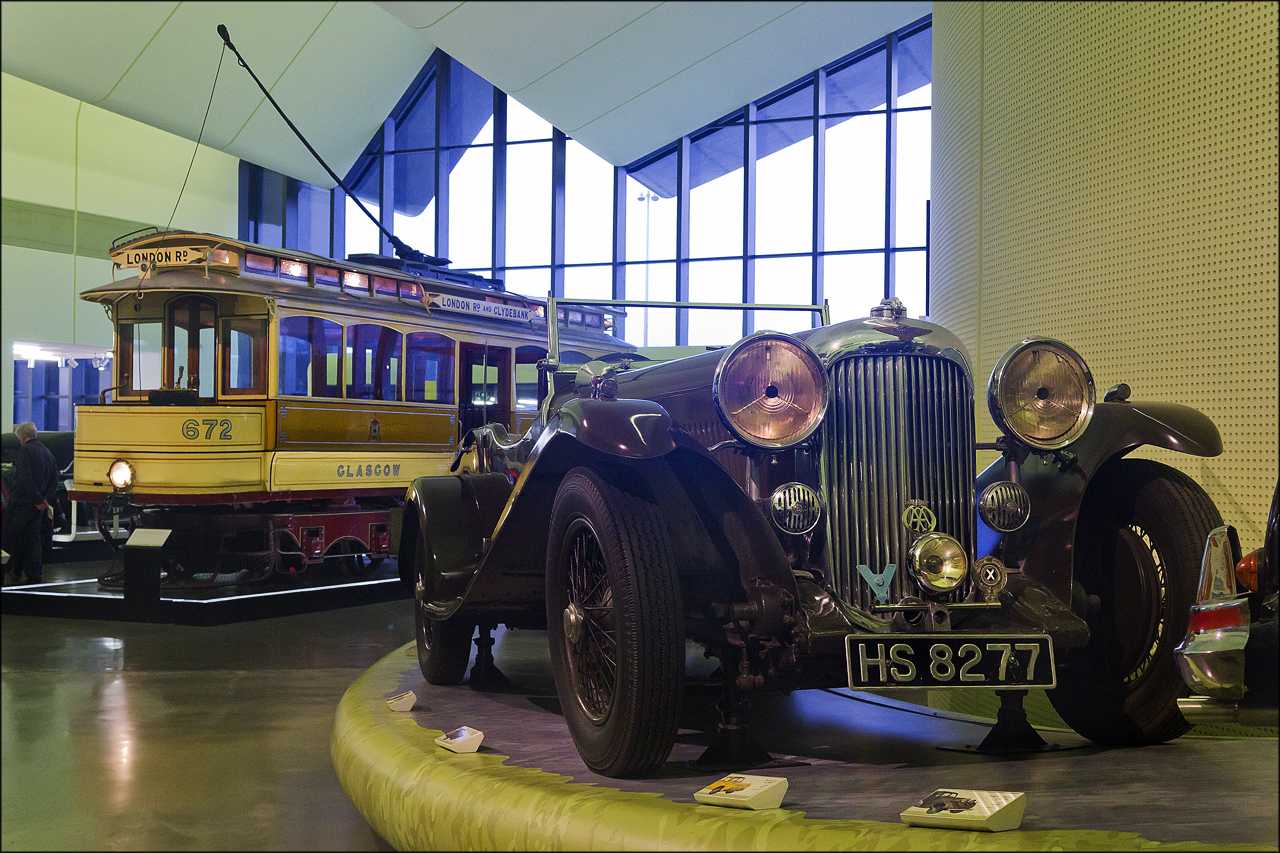
At the bottom of Partick, where the Kelvin meets the Clyde, the Riverside Museum is the area’s big draw. Designed by Zaha Hadid and opened in 2011, it’s Glasgow’s museum of transport and travel, and it was named European Museum of the Year in 2013. Inside, under the zigzag roof, are trams, steam locomotives, Glasgow-built cars, bicycles, prams, a wall of model ships and a recreated Glasgow street of shops and a Subway station, all free. Outside, the tall ship Glenlee, built in Port Glasgow in 1896, is moored alongside and open to visit.
Beside the museum, the Govan–Partick Bridge has carried walkers and cyclists across the Clyde since September 2024, reconnecting two old burghs that were once linked by ferry. On the far side, Govan Old Church holds the Govan Stones, a remarkable collection of early medieval carved stones including five Viking-era hogbacks, free to see in season. Museum, bridge and stones together make one of the best half-days in the city.
Kelvin Hall and Kelvingrove
At the eastern end of Partick, where Dumbarton Road meets Argyle Street, the red sandstone Kelvin Hall faces Kelvingrove Art Gallery and Museum across the road. The old exhibition hall has been redeveloped as a cultural and sports centre, and the part most worth a visitor’s time is the National Library of Scotland’s Moving Image Archive, which you can drop in to for free to watch films of Scottish life going back to the 1890s. The Hunterian’s collections are stored here too, but you need an appointment to see them. Kelvinhall Subway station is right outside.
Hyndland: the grand tenements on the hill
Walk uphill from Partick and the streets change completely. Hyndland, a conservation area built mostly around the turn of the twentieth century, is a neighbourhood of handsome red sandstone tenements with deep bay windows, stained-glass stair windows and tiled closes, laid out along quiet, tree-lined streets such as Hyndland Road and Clarence Drive. It was built for the professional classes, and it still has a settled, prosperous air, with a couple of cafés and delis rather than a busy high street. Hyndland station, on the suburban rail network, is at its southern edge.
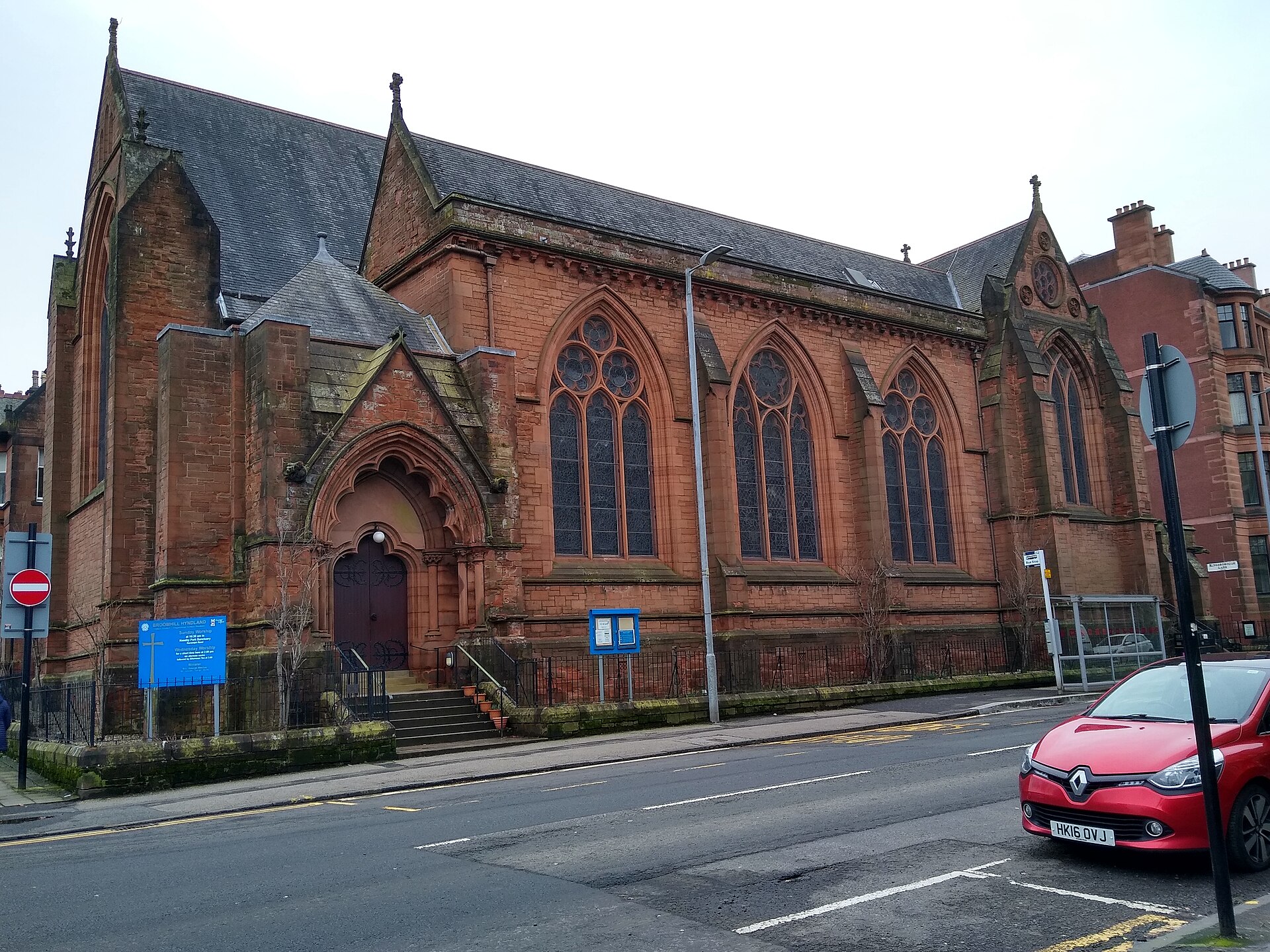
Music fans come for Hyndland Parish Church. In the 1990s Belle and Sebastian’s Stuart Murdoch lived rent-free in the flat above the church hall as its caretaker, the band rehearsed there, and they recorded “Lazy Line Painter Jane” there in early 1997. Our guide to Glasgow’s bands and music landmarks has the whole story. Nearby, Cottiers, a theatre and bar in a converted church, hosts gigs, including Celtic Connections shows, and makes a lovely place for a drink in its garden in summer.
Partick with kids
Partick is one of the best bases in Glasgow for a family day. The Riverside Museum is the star: children can climb aboard old trams and a Subway carriage, wander the recreated street and its shops, and stare at the locomotives, and it costs nothing. Kelvingrove, across the road from the Kelvin Hall, has its Spitfire, its stuffed animals and plenty of space, and Kelvingrove Park has a big playground. On a dry day, the walk across the Govan–Partick Bridge is a small adventure in itself. Our guides to Glasgow with kids and rainy-day activities for kids have more ideas.
Beyond Partick: Partickhill, Broomhill and Whiteinch
North of Dumbarton Road, Partickhill climbs steeply in streets of villas and terraces, and Broomhill, further west, is quiet, leafy and residential. Neither has much for visitors beyond a pleasant walk. West along Dumbarton Road, though, Whiteinch has one of Glasgow’s strangest sights: the Fossil Grove in Victoria Park, a group of fossilised tree stumps around 330 million years old, discovered when the park was being laid out in the 1880s and preserved where they stood under a Victorian shelter. It opens seasonally, so check before you go, but if it’s open it’s well worth the short bus ride.
Eating and drinking in Partick and Hyndland
Partick is where you eat when you want good food without West End prices. Dumbarton Road and the streets off it have bakeries, cafés, fish and chip shops, curry houses and takeaways covering a fair slice of the world, and most are aimed at locals rather than visitors, which keeps the quality up and the prices down. Hyndland is quieter, with a handful of cafés and delis, and Byres Road, with its restaurants and brunch spots, is only a short walk east. For the pubs, Dumbarton Road is hard to beat; Cottiers is the pick for a summer evening.
For citywide recommendations, see our Glasgow food guide.
A day in Partick and Hyndland
- 10am: Start at Kelvingrove Art Gallery and Museum (11am on Fridays and Sundays), then cross the road to the Kelvin Hall to browse the Moving Image Archive.
- 12.30pm: Lunch on Dumbarton Road, or at the Partick Farmers’ Market if it’s the second or fourth Saturday.
- 2pm: Walk down to the Riverside Museum and the Glenlee.
- 4pm: Cross the Govan–Partick Bridge to Govan Old Church for the Govan Stones (in season), or walk up to Hyndland to see the tenements and Hyndland Parish Church.
- Evening: A pint at the Three Judges, a folk session at the Lismore, or a gig at Cottiers.
Getting to Partick and Hyndland
Partick is one of the easiest neighbourhoods in Glasgow to reach. The Subway stops at Partick and Kelvinhall, 10 to 15 minutes from the city centre, and with contactless you won’t pay more than £3.40 in a day. Partick and Hyndland stations are on the suburban rail network, with frequent trains from Glasgow Central and Queen Street; our ScotRail guide explains the lines. Buses run along Dumbarton Road from the city centre.
On foot, Partick Cross is about five to ten minutes from the bottom of Byres Road and about 40 minutes from the city centre. For the Riverside Museum, allow 10 to 15 minutes’ walk from Partick station. If you’re driving, Partick is outside the Low Emission Zone, and the Riverside Museum has its own car park.
Is Partick worth visiting?
Yes, especially if you’re travelling with children, watching your budget or tired of being surrounded by other visitors. The Riverside Museum alone is worth the trip, Kelvingrove is across the road, the bridge to Govan has opened up a whole new walk, and Dumbarton Road’s pubs and cafés are some of the most authentic in the West End. Hyndland adds a quiet, handsome stroll and a stop for music fans.
The honest caveat: Partick isn’t beautiful, its main road is busy, and away from the museums there’s little to “do” in the sightseeing sense. Treat it as the West End’s down-to-earth neighbour rather than a destination in itself. Our guide to Glasgow neighbourhoods shows how it fits with the rest of the city.
Partick and Hyndland: frequently asked questions
Where is Partick in Glasgow?
At the western end of the West End, between Byres Road and the River Clyde, about two miles west of the city centre. Dumbarton Road is its main street, and Partick station is its transport hub.
Is Partick part of the West End?
Yes, broadly, though Partick was a separate burgh until 1912 and still has its own identity. Most Glaswegians would call it the West End’s working-class neighbour.
Do Partick Thistle play in Partick?
No. Partick Thistle have played at Firhill, in Maryhill, since 1909. The name comes from the club’s origins in Partick.
How do I get from Partick to the Riverside Museum?
Walk: it’s about 10 to 15 minutes from Partick station, heading south towards the river. Buses also stop nearby.
What is Hyndland like?
Quiet, leafy and residential, with some of Glasgow’s grandest red sandstone tenements, Hyndland Parish Church and Cottiers. It has its own rail station and is a short walk from Byres Road.
Is Partick cheaper than the rest of the West End?
Generally, yes. Cafés, takeaways and pubs on Dumbarton Road are noticeably cheaper than on Byres Road or in Finnieston, and the nearby museums are free.
Related Glasgow Guides
- Glasgow neighbourhoods: an area-by-area guide
- Glasgow West End guide
- The Riverside Museum
- Kelvingrove Art Gallery and Museum
- Traditional pubs in Glasgow
- Glasgow’s bands and music landmarks
- Cheap eats in Glasgow
- Loch Lomond day trip from Glasgow
Photo Credits
The Riverside Museum and the Glenlee: Glasgow Riverside Museum (11538004223) by Ronnie Macdonald from Chelmsford and Largs, United Kingdom, CC BY 2.0, via Wikimedia Commons.
Dumbarton Road at night: Dumbarton Road by James Jack, CC0, via Wikimedia Commons.
Inside the Riverside Museum: Riverside Museum, Glasgow (6853481216) by dun_deagh, CC BY-SA 2.0, via Wikimedia Commons.