This article contains advertising. Our booking links are routed through a partner that adds commission tracking automatically, so if you book through one we earn a commission from the provider, at no extra cost to you. It never affects what we recommend. Affiliate disclosure
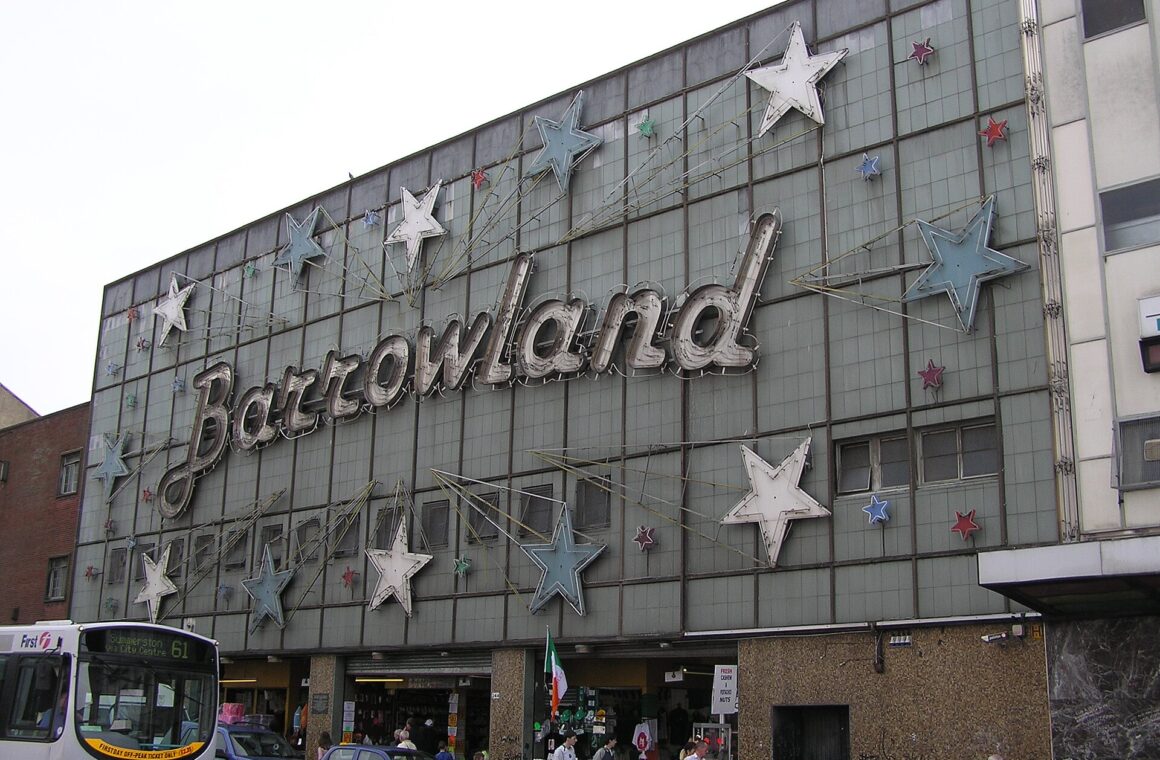
Walk east from Glasgow Cross on a Saturday morning and the city changes within a few hundred yards. The shopfronts get plainer, the Gallowgate opens out, and then the Barrowland’s script sign and painted stars come into view over a street of market stalls. This is the Glasgow East End: the old weaving villages of Calton and Bridgeton, the Barras market, Glasgow Green, Celtic Park and the Commonwealth Games venues at Dalmarnock. Most visitors only pass through on the way to a gig or a match. It deserves longer than that, though it helps to know what you’re getting.
This guide covers where the East End starts and stops, a short history, the Barras and the Barrowland, Calton, Glasgow Green, Bridgeton Cross, Dalmarnock and Parkhead, where to eat and drink, a half-day route and how to get there. Hours and prices were checked in November 2026 against the operators’ own sites; treat them as the right order of magnitude and check before you travel.
The East End at a glance
| Glasgow East End | The essentials |
|---|---|
| Where | East of Glasgow Cross, between the Merchant City and Parkhead, with the Clyde to the south |
| Main roads | The Gallowgate and London Road |
| Districts | Calton, Bridgeton, Dalmarnock and Parkhead; Dennistoun lies to the north |
| Rail | Bridgeton and Dalmarnock on the Argyle Line |
| Buses | First 18/18A through Bridgeton and Dalmarnock; 61 and 64 to Parkhead |
| Subway | None: the Subway doesn’t reach the East End |
| Best for | The weekend market, gigs, football, Victorian buildings, a working-city feel |
| Time needed | A Saturday or Sunday morning, longer with a brewery tour or a match |
What things cost
| Item | Price | Notes |
|---|---|---|
| The Barras market | Free to browse | Saturday and Sunday, 10am–4pm |
| Glasgow Green | Free | Open every day |
| WEST brewery tour | £15 | 45 minutes, three beers; the longer WEST Experience is £48 |
| Sir Chris Hoy Velodrome taster | Glasgow Club rates | Book through free Glasgow Club membership; check the current price when you book |
| Celtic Park stadium tour | Ticketed | Check prices and times on the club’s site; see our Celtic Park stadium tour guide |
| People’s Palace | Closed | Refurbishment; reopening planned for December 2029 |
The East End is cheap. The market, the park and the streets cost nothing, and a pint in a Calton pub tends to cost less than one in Finnieston. Your main spend will be a gig, a match or a brewery tour.
Where the East End begins and ends
Ask three Glaswegians where the East End starts and you’ll get three answers, but Glasgow Cross is a fair line to draw. West of it are the restored warehouses and cocktail bars of the Merchant City. East of it, the Gallowgate and London Road run out across the old industrial districts towards Parkhead. Calton comes first, wrapped around the Barras. Bridgeton sits south-east of it, its main square at Bridgeton Cross. Dalmarnock runs down to the river, and Parkhead, home of Celtic, is further out. North of the Gallowgate is Dennistoun, which has its own guide and its own café scene.
For a visitor, two stretches matter most: the walk from Glasgow Cross through Calton to the Barras and Glasgow Green, which takes a morning, and the Bridgeton–Dalmarnock–Parkhead corridor along London Road, which you’ll visit for the velodrome or the football. If you’re getting your bearings across the whole city first, our Glasgow neighbourhoods guide shows how the East End fits with the rest.
Weavers, factories and a long decline
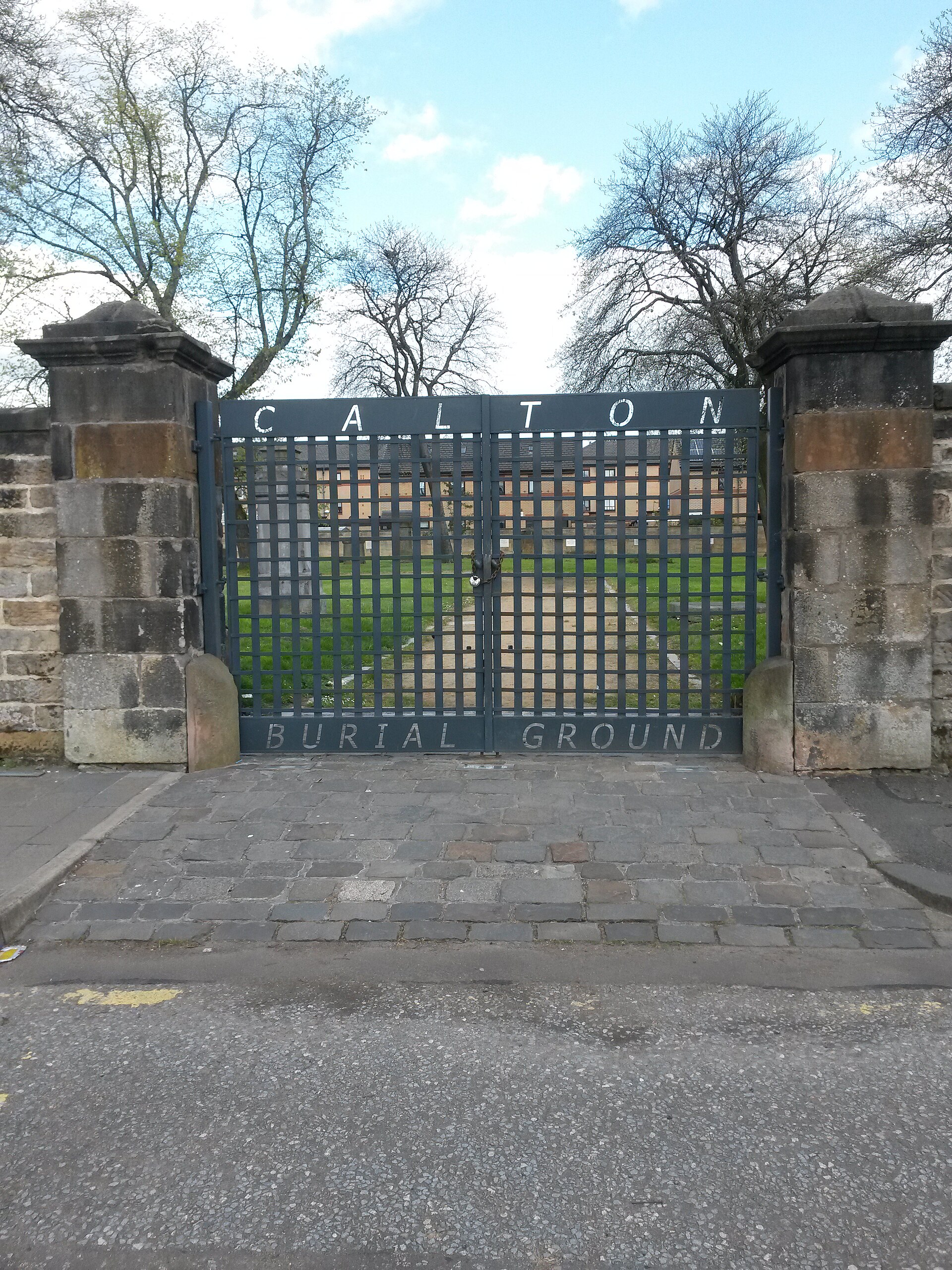
The East End’s story starts with weaving. In the eighteenth century Calton was a village of handloom weavers outside the city boundary, and in September 1787 its weavers struck over cuts in the rates they were paid for cloth. On 3 September troops fired on the strikers and six men were killed. The Calton weavers’ strike is often described as Scotland’s first major industrial dispute, and three of the dead lie in the Calton Burial Ground on Abercromby Street.
Calton was absorbed into Glasgow in 1846, by which time the handlooms were giving way to mills, dye works, engineering shops and the Templeton carpet factory. The East End became one of the most crowded industrial districts in the city, and when that industry closed in the second half of the twentieth century, it took the jobs with it. Large parts of Bridgeton and Dalmarnock were left as empty ground.
What you see now is the slow work of putting it back together. Clyde Gateway, a regeneration partnership of Glasgow City Council, South Lanarkshire Council and Scottish Enterprise, has been rebuilding the riverside districts, and the 2014 Commonwealth Games gave the area its biggest push: the athletes’ village was built at Dalmarnock, and the indoor arena and velodrome went up on London Road. The result is patchy. New housing and sports halls sit beside derelict plots and tired tenements, and that unevenness is part of what makes the East End feel honest.
The Barras and the Barrowland
The Barras is the reason most visitors come. James and Maggie McIver started the Barrows Market in 1921 after running a barrow-hire business. Maggie put up a covered market in Moncur Street in 1926, fully enclosed by 1928, and later built a function hall above it that became the Barrowland Ballroom. The market still trades every Saturday and Sunday, 10am to 4pm, with some traders arriving early or staying late and the occasional special event or late-night weekday market.
It’s a mix of the genuinely old and the new. You’ll find secondhand furniture, tools, vinyl, vintage clothes and a lot of things you didn’t know you needed, alongside street-food vendors and newer independent units. Visit Glasgow’s own food guide to the market recommends Fellalli Cafe for vegetarian and vegan food. Bring cash as a back-up and a bit of patience; the best stalls reward rummaging. Our Barras market guide goes stall by stall.
Above it all, the Barrowland opened as a dance hall in 1934. It burned down in 1958, reopened in December 1960, and has since become one of the best-loved gig venues in the country: Time Out has named it the UK’s best music venue, as chosen by artists who have played there. The sprung floor and the low ceiling are why bands love it. See our Barrowland Ballroom guide for tickets, history and what a gig night is like.
Calton: churches turned bars, and a quiet graveyard
A few steps from the Barras, on Bain Street, Saint Luke’s is a converted church that now runs as a bar, restaurant and music venue, with The Winged Ox as its bar. It’s open seven days a week, and on a market weekend it’s the easiest place in Calton for lunch or a drink. On gig nights it fills with people heading on to the Barrowland.
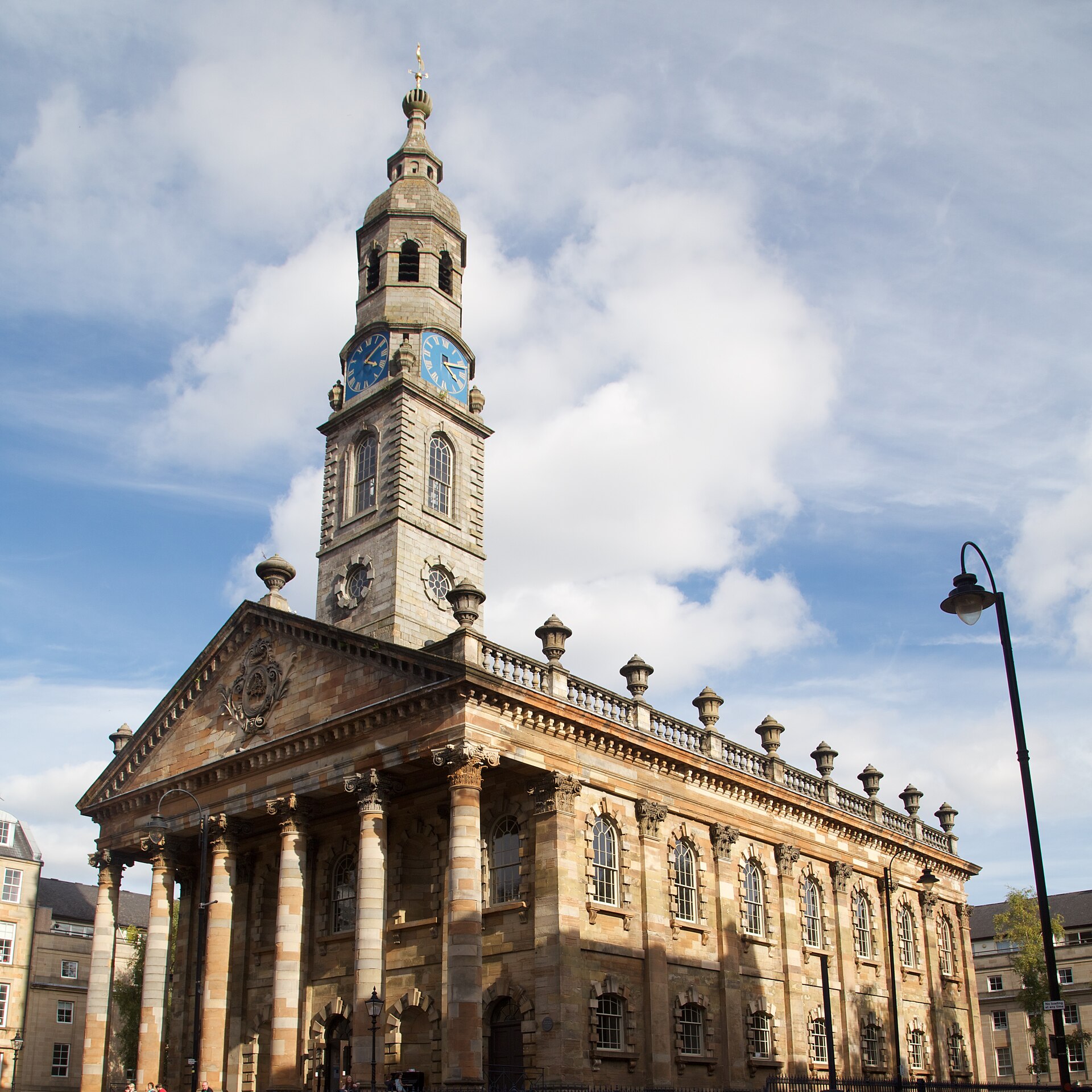
Walk west towards Glasgow Cross and you’ll come to St Andrew’s in the Square, a Georgian church with a pillared portico and clock tower standing in its own small square of stone-built flats. It’s one of the most handsome buildings in the East End and a reminder that this was once a well-off edge of the city, before the factories arrived.
The Calton Burial Ground on Abercromby Street, south-east of the Barras, is small and often locked, but you can look through the gates. University of Glasgow researchers and campaigners have called it neglected, which makes it a sobering stop for anyone interested in the weavers.
Glasgow Green and the Templeton Building
South of Calton the streets open on to Glasgow Green, the city’s oldest park. Its history as public land goes back to 1450, when James II granted the land to Bishop William Turnbull and the people of Glasgow, and for centuries it was used for grazing, washing and bleaching linen and drying fishing nets. Today it has riverside walks, playparks, the Doulton Fountain and the Nelson Monument, and hosts big events such as TRNSMT. Our Glasgow Green guide covers it properly.
The red sandstone People’s Palace and its Winter Gardens glasshouse stand in the middle of the park, but don’t plan around them: the museum has been closed since April 2024 for a refurbishment, with reopening planned for December 2029. Our People’s Palace guide explains what’s planned.
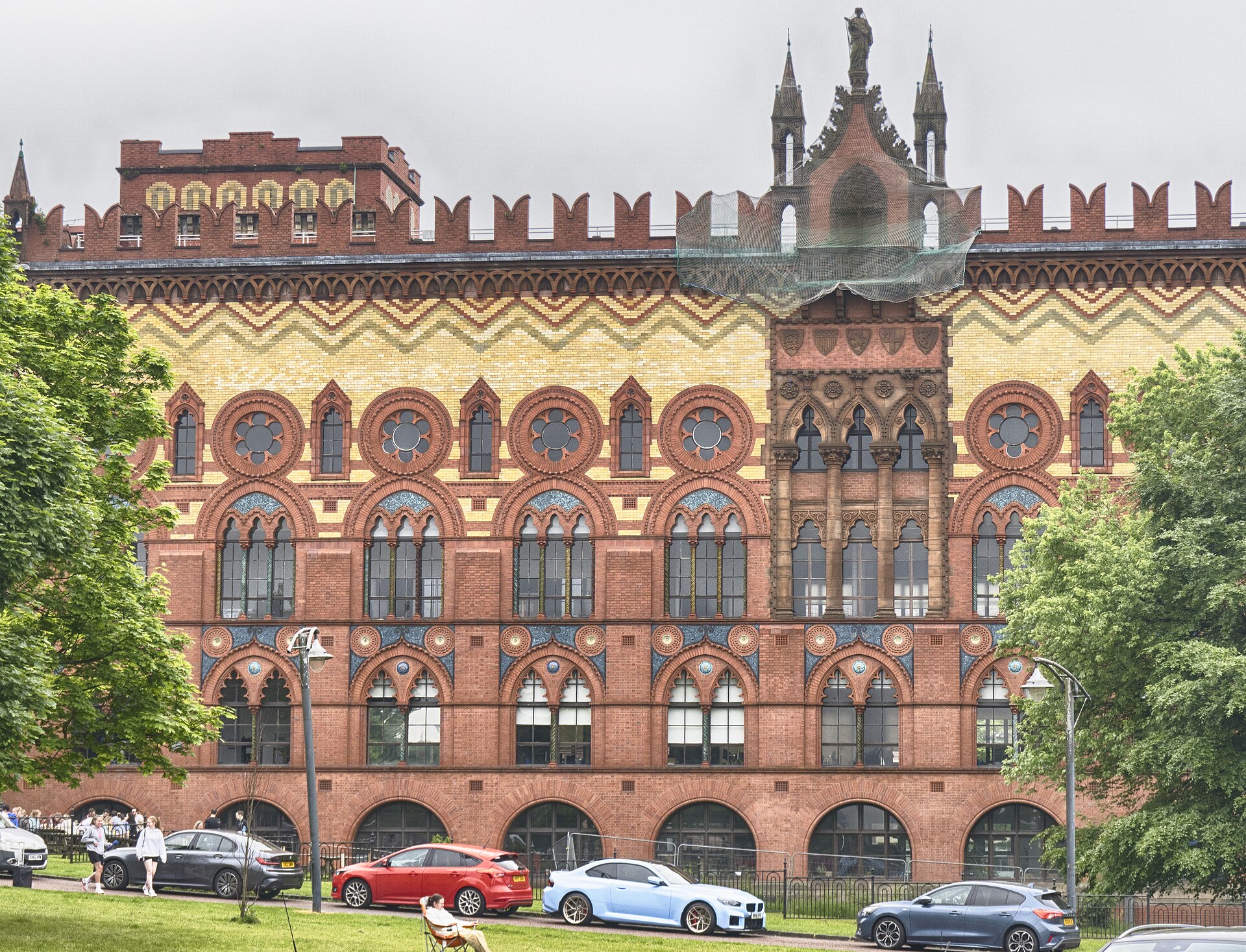
The building everyone photographs is on the eastern edge of the Green: the Templeton Building, the former carpet factory, with its riot of coloured brick. It now houses WEST, a brewery and bar that brews on the premises. Brewery tours run on Friday at 6pm, Saturday at 12pm, 2pm, 4pm and 6pm, and Sunday at 2pm; the 45-minute Original tour is £15 with three beers, and the longer WEST Experience is £48. Even without a tour, a beer outside on a sunny afternoon, looking across the Green, is one of the East End’s best simple pleasures. For more on the city’s beer scene, see our Glasgow brewery tours guide.
Bridgeton Cross
Follow London Road east from the Green and you reach Bridgeton Cross, the square at the heart of Bridgeton. Its centrepiece is the Bridgeton Umbrella, a cast-iron bandstand and clock tower from 1875, Category A listed and painted in blue, red and gold. Behind it stands the Olympia, a red sandstone theatre building of 1911 with a domed corner tower, which reopened in 2012 as a library and community building after years of decay.
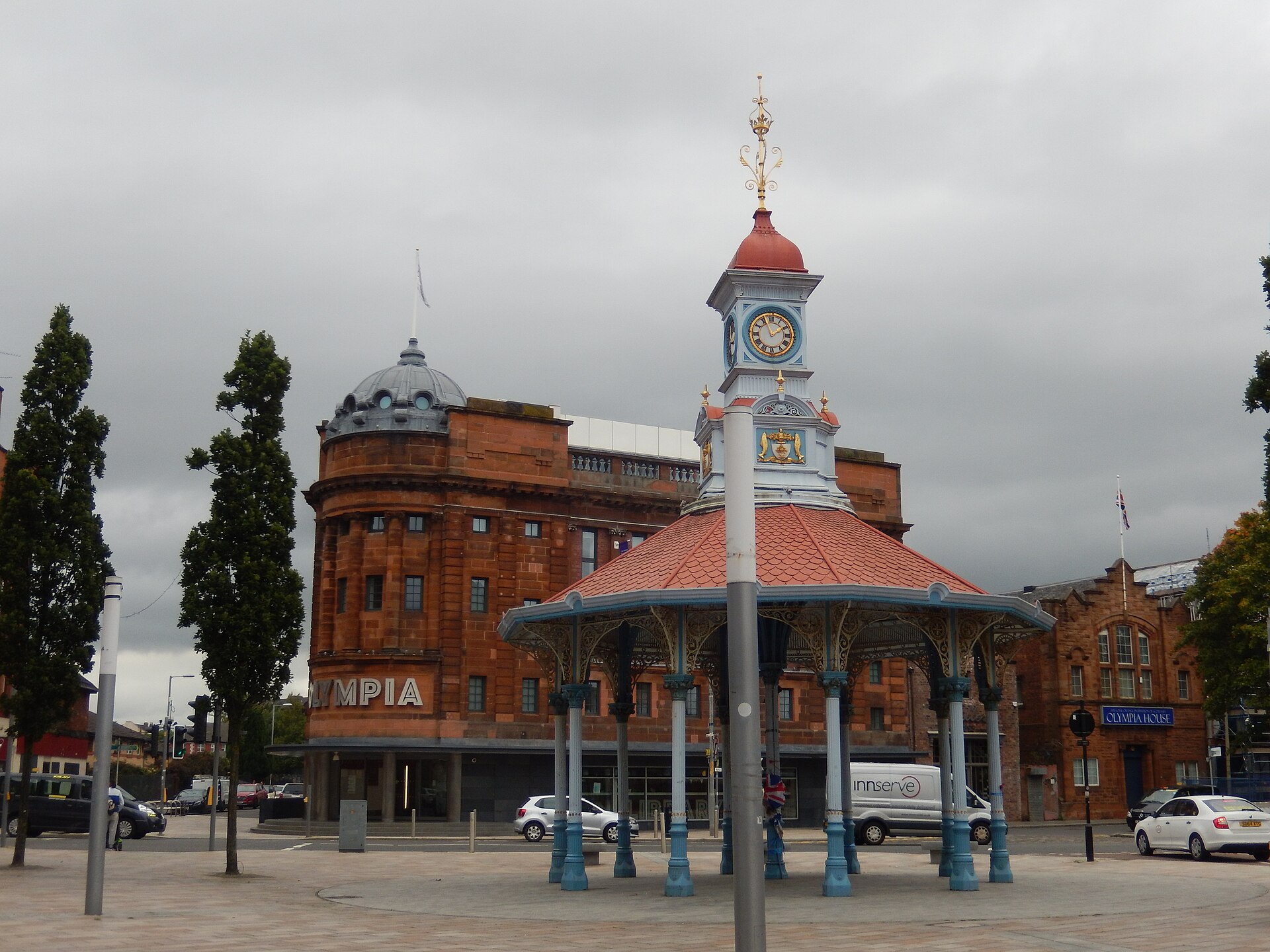
There isn’t much to do at Bridgeton Cross beyond looking, but it’s worth the walk. It’s the clearest picture in the East End of an old working-class town centre, with tenements, a few pubs and shops and that bandstand, and Bridgeton station on the Argyle Line is right beside it.
Dalmarnock: the Commonwealth Games legacy
Further east along London Road, Dalmarnock is where the 2014 Commonwealth Games left their mark. The athletes’ village became housing, and the indoor arena, opened as the Emirates Arena, is now Glasgow International Arena, run by Glasgow Life as part of Glasgow Club. It’s open to the public Monday to Friday 6am–10pm, Saturday 8am–6pm and Sunday 8am–8pm.
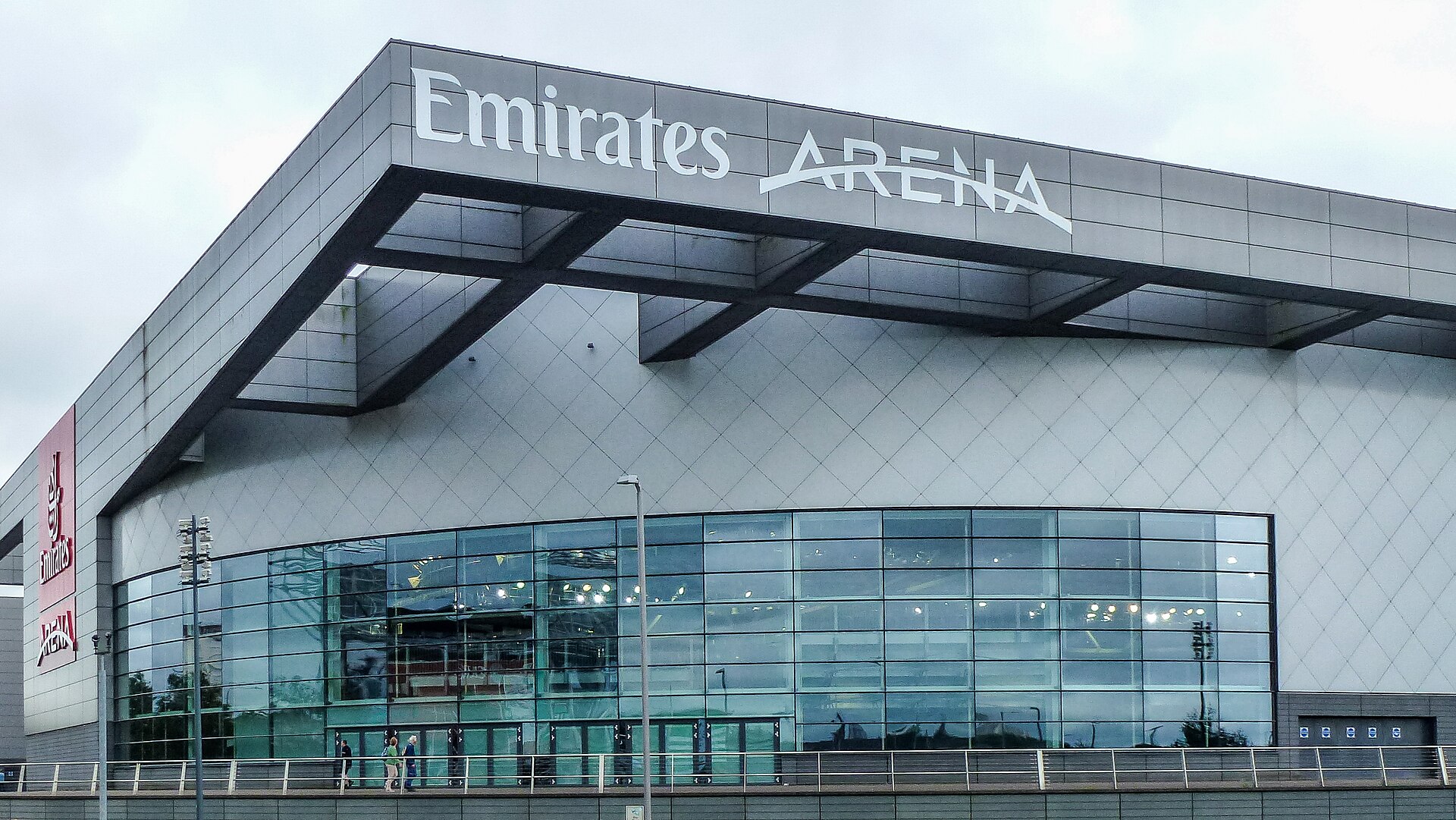
Inside is the Sir Chris Hoy Velodrome, built in 2012 with a 250m indoor timber track. The good news for visitors is that you don’t need to be a racer to ride it. Glasgow Club runs taster sessions for adults (16+) and juniors (8–15) for anyone who can ride a bike confidently; you book through free Glasgow Club membership online, on the app, at reception or on 0141 287 7000, and the timetable and prices are on the Glasgow Club site. It’s an unusual thing to tell people you did on a trip to Glasgow.
Parkhead and Celtic Park
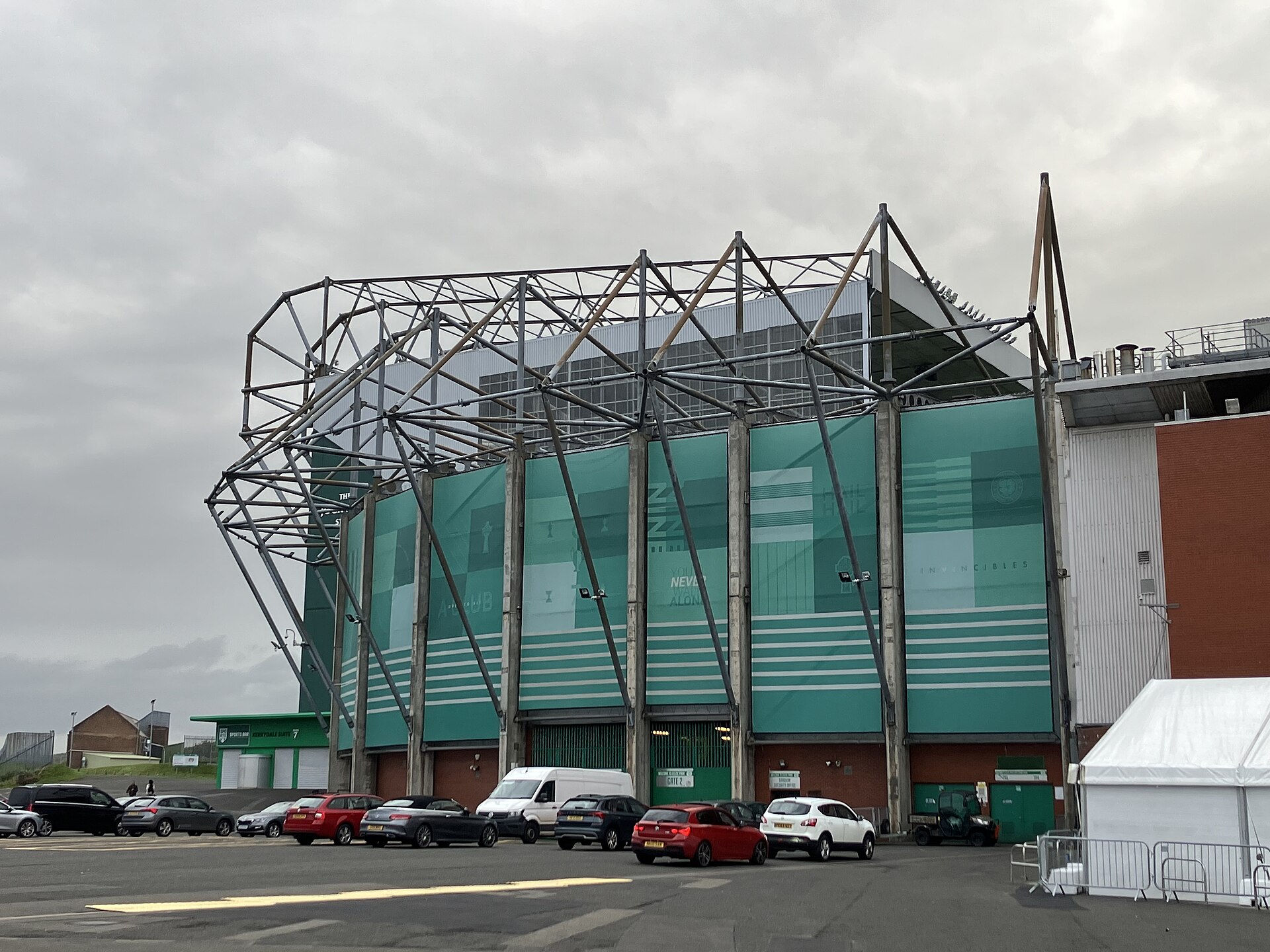
At the far end of London Road is Parkhead, and Celtic Park, the club’s home since 1892 and rebuilt between 1994 and 1998. It holds just over 60,000, and on match days the whole East End turns green and white, with crowds walking out along London Road and the Gallowgate from the city centre. On other days, the stadium tour takes you through the dressing rooms and down the tunnel; check the club’s site for current times and prices, and see our guides to the Celtic Park tour and Celtic match tickets.
If you’re out this far on a quiet day, Tollcross Park is a short bus ride further east, with a rose garden, a nature walk, a secret garden and a children’s farm.
Eating and drinking in the East End
Be realistic: the East End is not a dining destination. There are good places, but they are spread out and most of the area’s cafés and restaurants are neighbourhood places rather than somewhere to cross town for. The best options for a visitor are:
- The Barras on a weekend for street food, and Fellalli Cafe for vegetarian and vegan dishes.
- Saint Luke’s on Bain Street for a sit-down lunch or dinner and a drink in a converted church.
- WEST at the Templeton Building for beer brewed on site, with the Green on the doorstep.
- The Saracen Head, the “Sarry Heid”, at 209 Gallowgate, for history rather than comfort. The present pub dates from 1904, across the road from the old Saracen’s Head inn, where Samuel Johnson and James Boswell stayed in 1773. Check it’s open before making a special trip.
For more choice, walk north to Duke Street in Dennistoun for cafés and brunch, or west into the Merchant City for restaurants of every kind. Our Glasgow food guide covers the whole city.
A half day in the East End
This works best on a Saturday or Sunday, when the market is open.
- 10am, Glasgow Cross. Start at the Tolbooth Steeple, have a look at St Andrew’s in the Square, and walk east along the Gallowgate.
- 10.30am, the Barras. Give it an hour or more. Look up at the Barrowland sign on the way in.
- 12pm, Calton. Walk past the Calton Burial Ground gates on Abercromby Street, then double back for lunch at Saint Luke’s.
- 1.30pm, Glasgow Green. Cross to the Green, see the Doulton Fountain and the outside of the People’s Palace, and walk to the Templeton Building.
- 2pm, WEST. On a Saturday you can join a brewery tour; otherwise have a beer in the bar.
- 3.30pm, Bridgeton Cross. Walk along London Road to the Umbrella and the Olympia, and catch a train back from Bridgeton.
Add Celtic Park or a velodrome taster if you have a full day, or finish with a gig at the Barrowland in the evening.
Getting to the East End
The Subway doesn’t serve the East End, so you’ll walk, take the train or use the bus.
- Walking: Visit Glasgow puts the Barras about 20 minutes on foot from both Queen Street and Central stations. Glasgow Cross and Glasgow Green are closer still.
- Train: Bridgeton and Dalmarnock stations are on ScotRail’s Argyle Line, which runs through Argyle Street and Central Low Level. Use the ScotRail journey planner for times. See our guide to trains in Glasgow.
- Bus: First’s 18 and 18A run through Bridgeton and Dalmarnock; the 61 and 64 go out to Parkhead. Check First Bus for timetables, and see our Glasgow bus guide for tickets.
Who the East End suits, and who it doesn’t
The East End rewards visitors who like a city with its working clothes on: market browsers, music fans, football fans, people interested in industrial and social history, and anyone who has already done the West End and wants to see a different Glasgow. It is the least polished part of central Glasgow, and that is its appeal.
It’s less good if you want a neat café-and-boutique district or a museum day: with the People’s Palace shut until 2029, there’s no big indoor attraction, and on a weekday with the Barras closed parts of it can feel quiet. If you have only a day in Glasgow, the East End is a weekend morning, not a whole day. On safety, use normal city sense: stick to main roads late at night, and expect large crowds around Parkhead on match days. Our Glasgow safety tips has more.
East End: frequently asked questions
Is Glasgow’s East End worth visiting?
Yes, on a weekend. The Barras, the Barrowland, Glasgow Green and the Templeton Building make a good morning, and Celtic Park and the velodrome are worth the trip for sports fans. On a weekday, with the market closed, there’s less to see.
When is the Barras market open?
Saturday and Sunday, 10am to 4pm. Some traders open earlier or stay later, and there are occasional special events and late-night weekday markets.
How do I get to Bridgeton?
Take a ScotRail train on the Argyle Line to Bridgeton station, beside Bridgeton Cross, or First bus 18 or 18A.
Can the public ride the Sir Chris Hoy Velodrome?
Yes. Glasgow Club runs taster sessions for adults and juniors aged 8 and over who can ride a bike confidently. Join Glasgow Club for free and book a session online, on the app or by phone.
Is the People’s Palace open?
No. It has been closed since April 2024 for refurbishment, with reopening planned for December 2029. You can still walk around the outside and the rest of Glasgow Green.
Related Glasgow Guides
- Glasgow neighbourhoods: an area-by-area guide
- The Barras market
- The Barrowland Ballroom
- Glasgow Green
- The People’s Palace
- Dennistoun
- The Merchant City
- Celtic Park stadium tour
Photo Credits
The Barrowland frontage by day: Wfm barrowland ballroom by user:Finlay McWalter, CC BY-SA 3.0, via Wikimedia Commons.
The gates of the Calton Burial Ground: Glasgow City – Burial Ground, 309-341 Abercromby Street, Glasgow – 20150507170637 by Crowsus, CC BY-SA 4.0, via Wikimedia Commons.
St Andrew’s in the Square: St Andrew’s in the Square – view from W by Tom Parnell, CC BY-SA 4.0, via Wikimedia Commons.
The Templeton Building on Glasgow Green: Glasgow City – Templeton On The Green – 20240519034550 by Gillfoto, CC BY-SA 4.0, via Wikimedia Commons.
The Bridgeton Umbrella and the Olympia: Bridgeton Umbrella and Olympia Building DSCN1829 by AlasdairW, CC BY-SA 4.0, via Wikimedia Commons.
The arena at Dalmarnock: Emirates Arena – Glasgow by Cutkiller2018, CC BY-SA 4.0, via Wikimedia Commons.
Celtic Park on a non-match day: Celtic Park September 2023 11 by DaHuzyBru, CC BY-SA 4.0, via Wikimedia Commons.