This article contains advertising. Our booking links are routed through a partner that adds commission tracking automatically, so if you book through one we earn a commission from the provider, at no extra cost to you. It never affects what we recommend. Affiliate disclosure
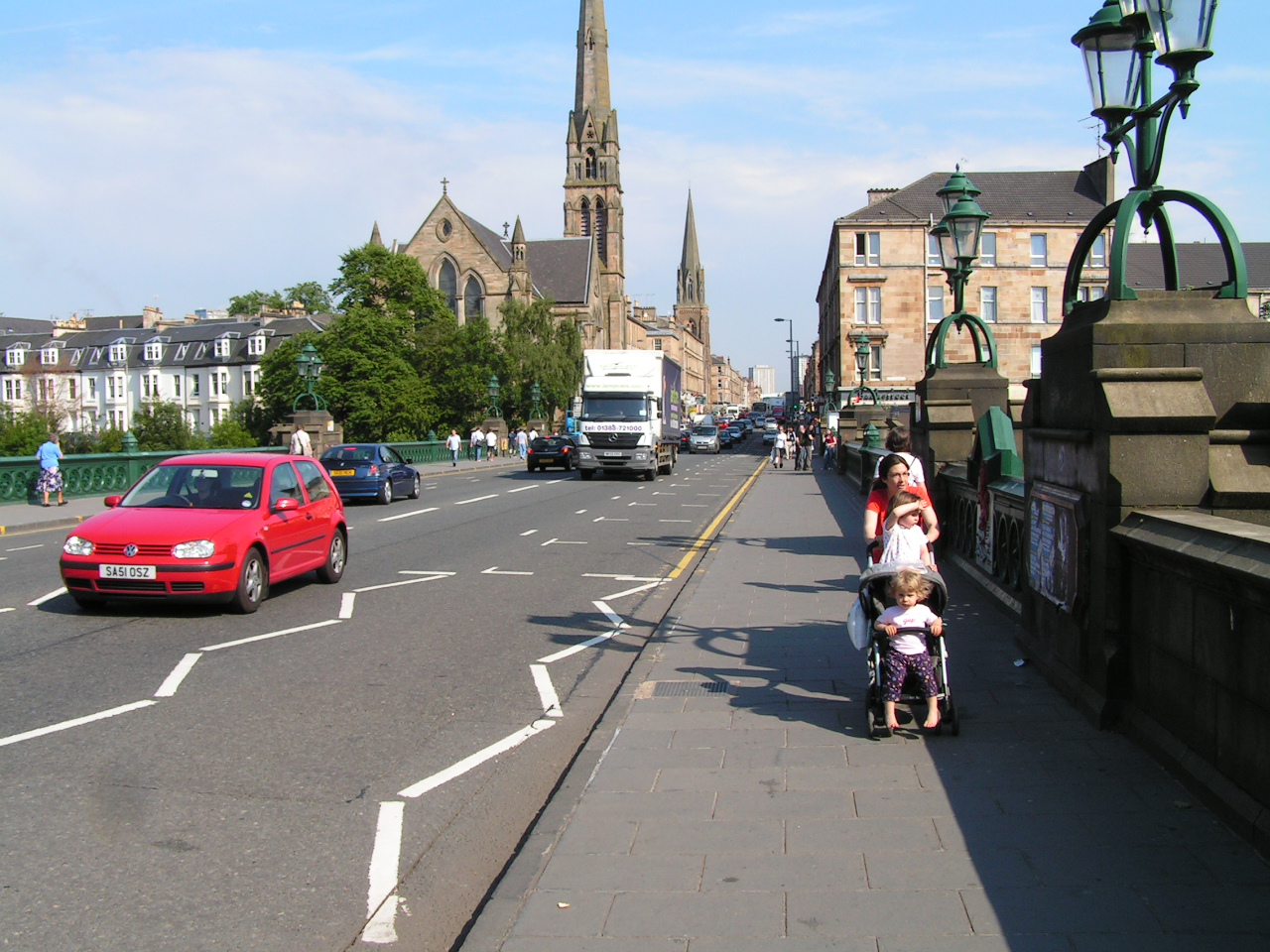
The West End’s front door is a bridge. Cross the River Kelvin on Great Western Road at Kelvinbridge and the city changes around you: the traffic is the same, but the terraces get grander, the cafés multiply, and the balance of people on the pavement tips from office workers towards students with tote bags and retired professors with dogs. The Glasgow West End is the city’s Victorian garden suburb turned university quarter, a mile or two of sandstone, parks and side streets wrapped around the Kelvin, and it holds more of Glasgow’s best free sights than any other part of the city.
This guide covers what the West End is like, how it came to be, its sub-neighbourhoods from Hillhead and Ashton Lane to Park Circus and Kelvinbridge, the best things to do, where to eat and drink, a one-day plan, when to go and how to get there. It’s about the neighbourhood rather than its shops or hotels: for those, see our guides to shopping on Byres Road and where to stay in the West End. Prices and opening hours were checked in October 2026; treat prices as the right order of magnitude and confirm before you go.
The West End at a glance
| West End | The essentials |
|---|---|
| Where | West of the M8 and Charing Cross, north of Finnieston, either side of the River Kelvin |
| Subway | Kelvinbridge, Hillhead and Kelvinhall, about 10 minutes from the city centre |
| Rail | Partick and Hyndland on the north-west edge; Exhibition Centre for the southern end |
| Main streets | Byres Road, Great Western Road, Gibson Street, Woodlands Road |
| Big free sights | Kelvingrove Art Gallery and Museum, the Hunterian, the University of Glasgow, the Botanic Gardens |
| Best for | Museums, parks, cafés, a slower pace |
| Busiest | Weekends, WestFest in June and freshers’ week in mid-September |
| Time needed | A full day at least; two if you love museums |
What things cost in the West End
| Item | Price | Notes |
|---|---|---|
| Kelvingrove Art Gallery and Museum | Free | 10am–5pm Monday to Thursday and Saturday; 11am–5pm Friday and Sunday |
| Kelvingrove organ recital | Free | 1pm Monday to Saturday, 3pm on Sunday |
| Hunterian Museum and Hunterian Art Gallery | Free | No booking needed |
| The Mackintosh House | £12 adults, £8 concessions | Under-18s free; Tuesday to Sunday, 10am–5pm, last entry 4.15pm |
| Botanic Gardens and the Kibble Palace | Free | The glasshouses keep shorter hours than the gardens |
| A Play, A Pie and A Pint at Òran Mór | One ticket covers all three | 1pm, about an hour, new writing |
| Subway single / all-day cap | £1.80 / £3.40 | Contactless or Smartcard; a paper single is £1.85 |
The West End can be a very cheap day out. The four big sights cost nothing, and the most expensive thing on the list, the Mackintosh House, is the one most worth paying for. Where the money goes is food and drink: Byres Road and Ashton Lane charge West End prices, and our guide to Glasgow on a budget has ways round that.
How the West End happened
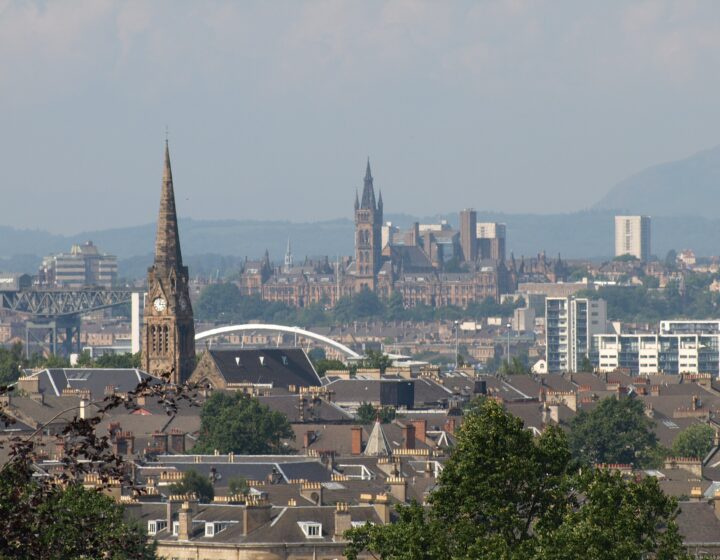
In the nineteenth century, as Glasgow’s centre filled with factories, smoke and people, the families making money from it moved west, upwind of the chimneys. Great Western Road was laid out as a turnpike in the 1830s and 1840s, and the land either side filled with terraces and villas. The West End Park, now Kelvingrove Park, was laid out in the 1850s, and in 1870 the University of Glasgow left its cramped old home off the High Street for Gilmorehill, where Sir George Gilbert Scott gave it the Gothic main building and tower you can see from all over the city. Kelvingrove Art Gallery and Museum followed in 1901. Hillhead was a burgh in its own right from 1869 until the city absorbed it in 1891.
The bones of that Victorian suburb are still everywhere: the terraces and crescents curving round private gardens, the tenements with their bay windows and tiled closes, the churches, several of them now bars, theatres or flats. What changed in the twentieth century was the university’s growth, which gave the West End its student population, its bookshops and second-hand shops, and its reputation as the city’s bohemian quarter.
The West End, neighbourhood by neighbourhood
Hillhead and Byres Road
Byres Road is the West End’s high street, running from Dumbarton Road up to Great Western Road, with Hillhead Subway station halfway along. It’s a mix of cafés, delis, charity shops, bakeries and pubs. At the top, Òran Mór fills a converted church with a bar, a brasserie and a performance space, and its lunchtime A Play, A Pie and A Pint – a new hour-long play with a pie and a pint included in the ticket – is one of the most Glaswegian things you can do. The record shops, vintage stores and charity-shop circuit are covered in our Byres Road shopping guide.
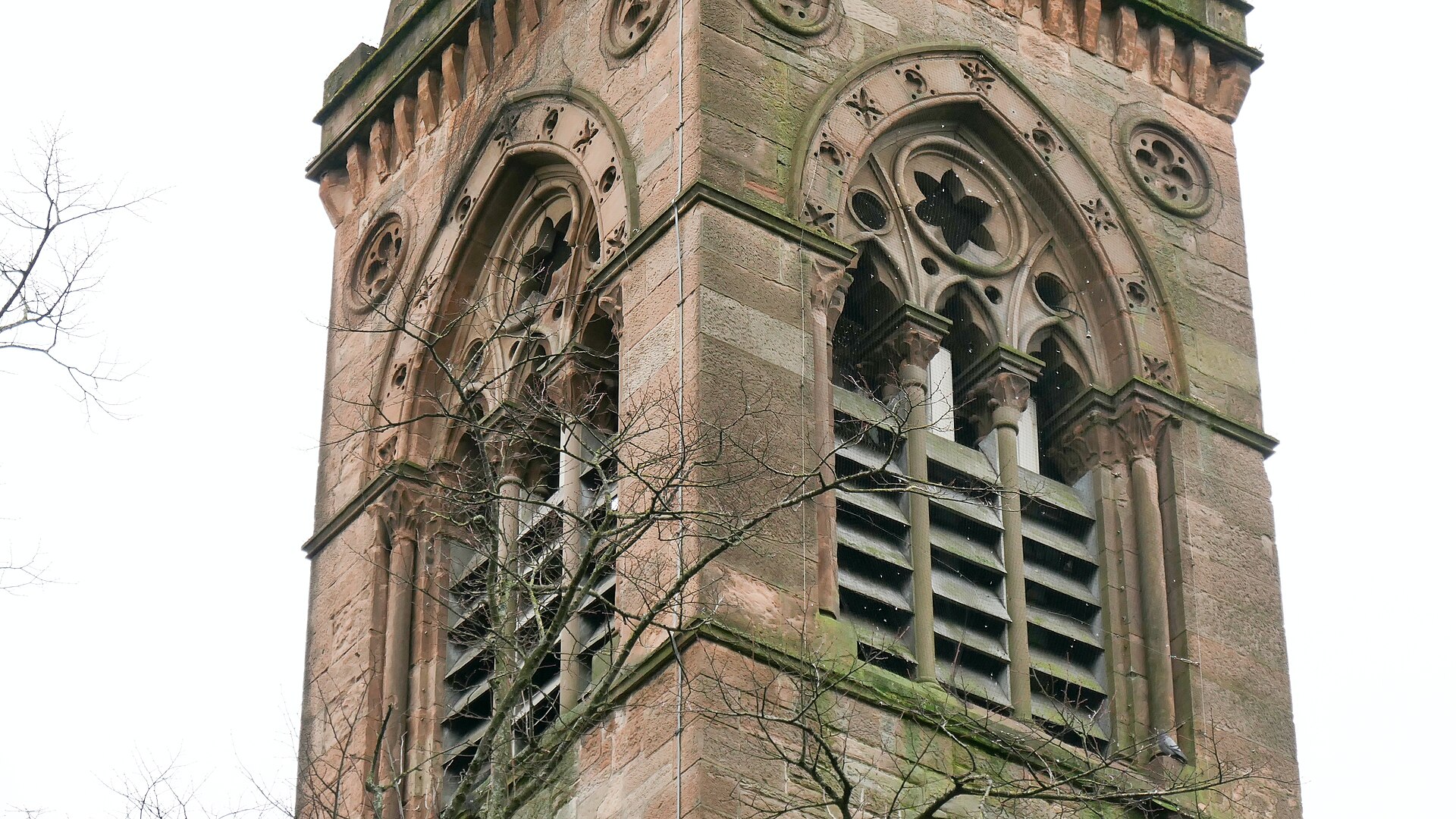
Ashton Lane
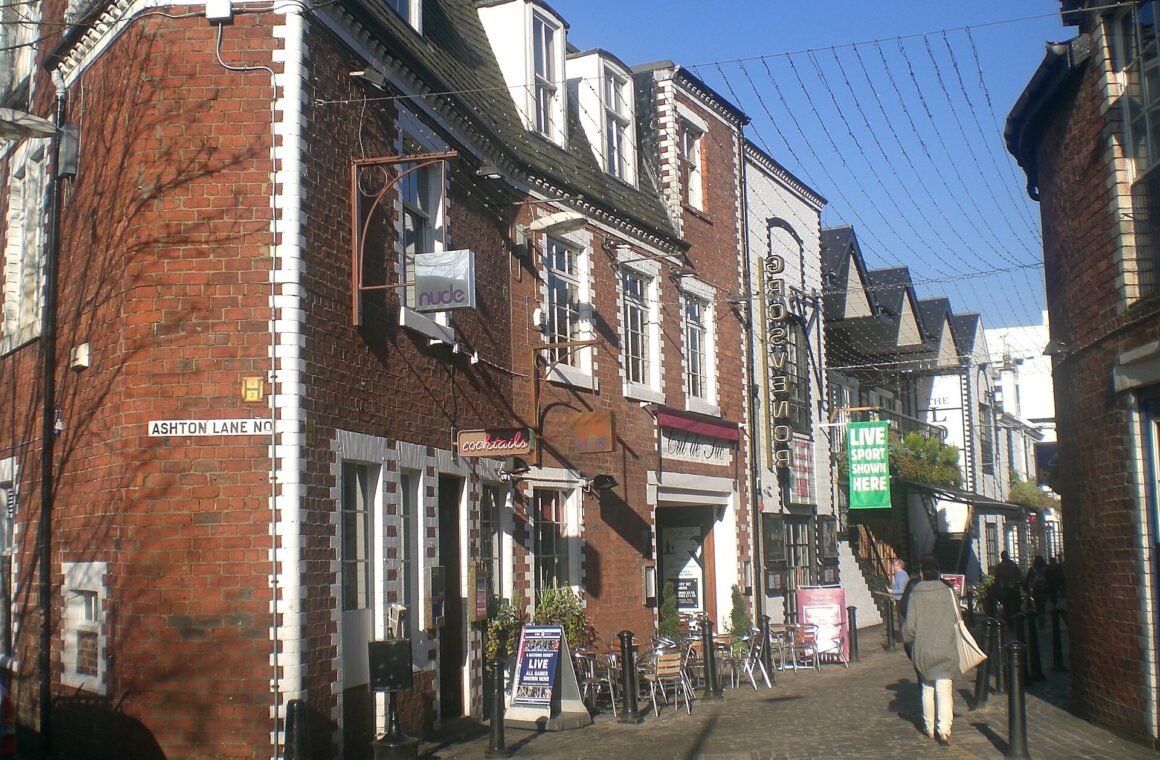
Ashton Lane is the cobbled lane behind Hillhead Subway station, lined with bars and restaurants and strung with lights, with a small cinema, the Grosvenor, halfway along. The Ubiquitous Chip has been here since 1976, in what used to be an undertaker’s stables, and it’s still the lane’s anchor for Scottish cooking and a long drinks list. On a sunny afternoon, with the outdoor tables full, Ashton Lane is a lovely place to be. On a Saturday night it’s loud, crowded and more about the drinking than the charm, and at Hogmanay it hosts a ticketed street party for a few thousand people. Cresswell Lane and Ruthven Lane, its neighbours, are quieter and better for browsing.
Kelvinbridge, Gibson Street and Otago Lane
At the eastern end of the West End, Kelvinbridge Subway station sits beside the bridge on Great Western Road, with steps down to the riverside path. Gibson Street, running west from the river towards the university, is a short, studenty street of cafés and cheap restaurants, and Otago Lane, off it, hides Mixed Up Records and a scatter of second-hand shops by the river. It’s a good place to start a day if you’re coming from the city centre.
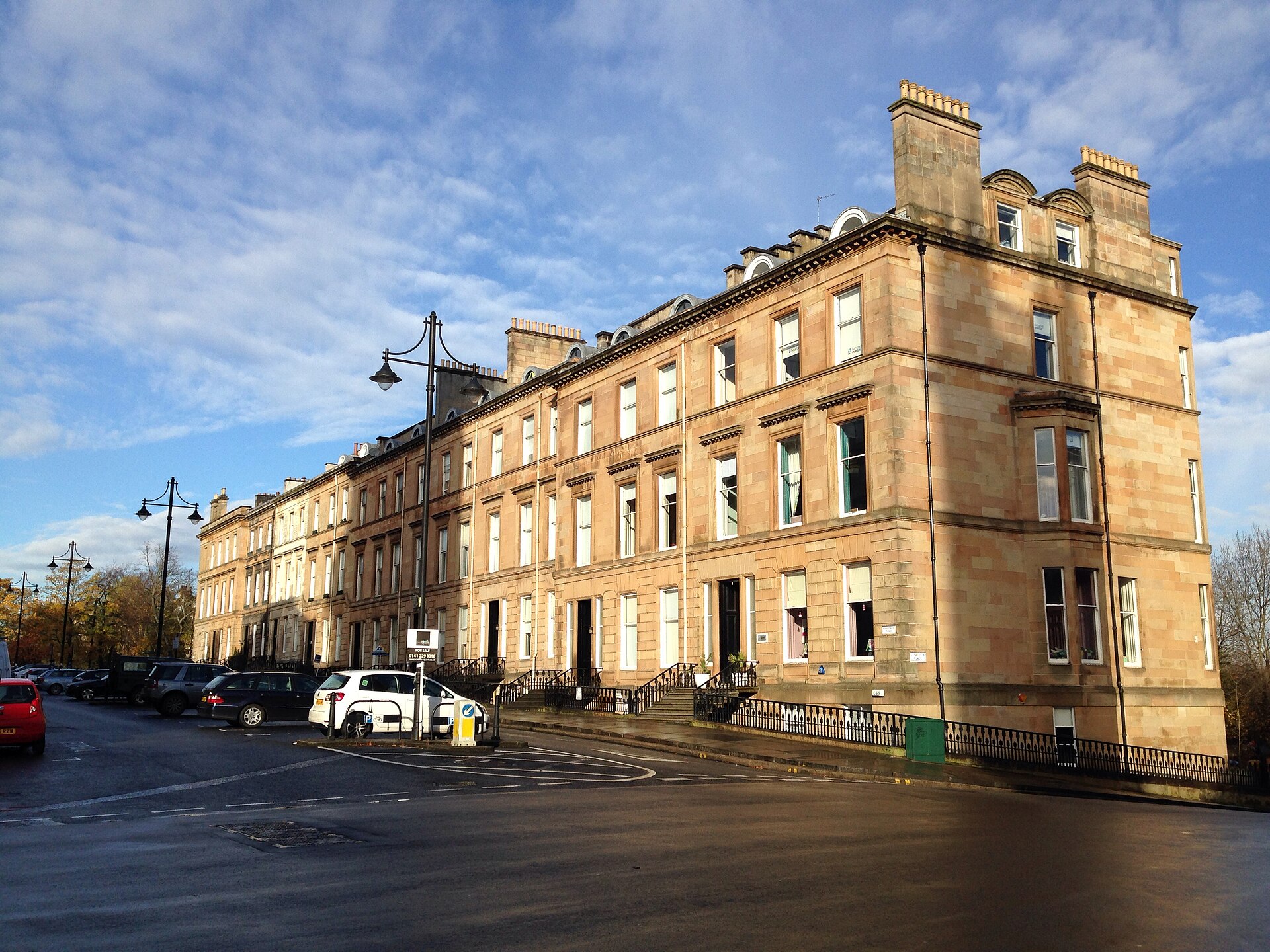
Woodlands and Park
East of Kelvingrove Park, Woodlands Road and the streets around it are a little scruffier and a lot cheaper, with neighbourhood pubs and cafés; it was at open-mic nights in a Woodlands Road bar that two of Belle and Sebastian’s original members first met. Uphill, Park Circus and Park Terrace are the West End at its most grand: sweeping terraces built in the 1850s on the hill above the park, with one of the best views in the city from the edge of Park Terrace across Kelvingrove to the university tower.
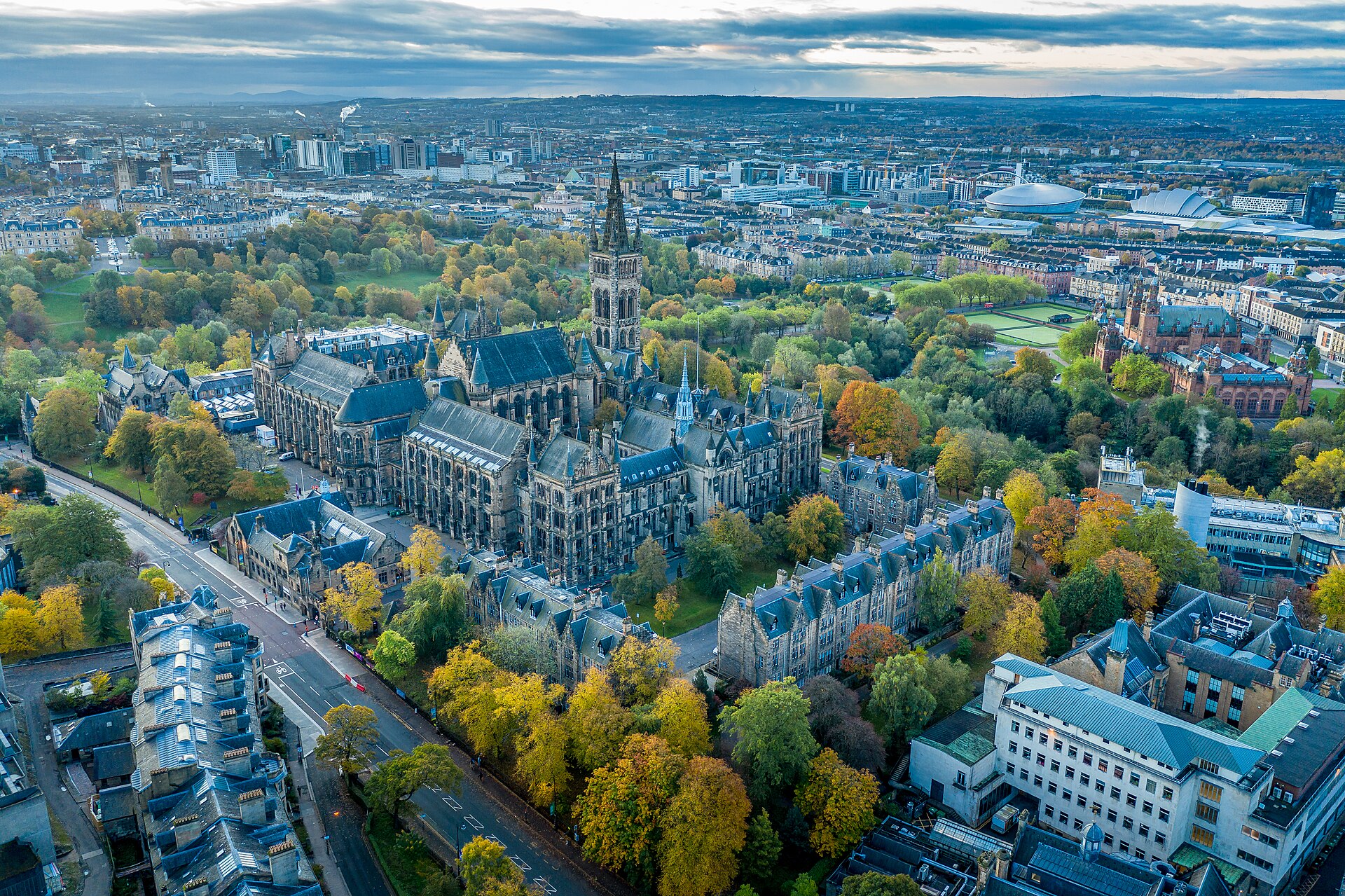
Kelvingrove and the university
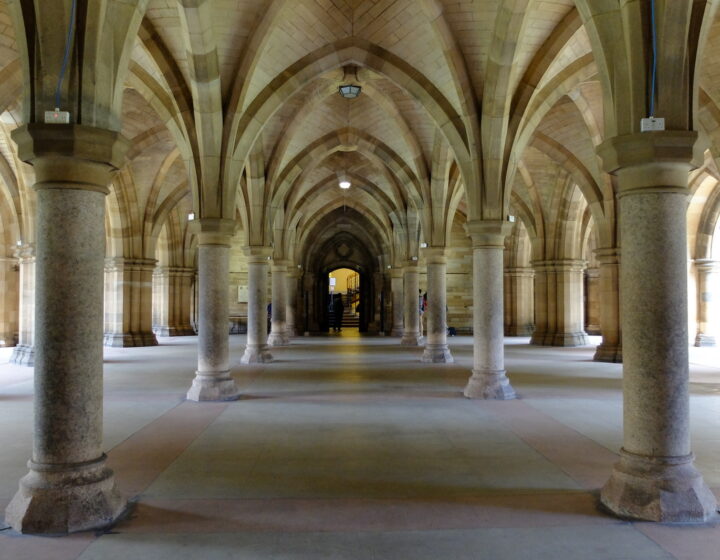
The cultural heart of the West End sits in the valley of the Kelvin. On one side is Kelvingrove Art Gallery and Museum, free and enormous; on the other, up the hill, the university, with its two quadrangles, the vaulted cloisters underneath, and the Hunterian, Scotland’s oldest public museum. Between them, Kelvingrove Park slopes down to the river. You can easily spend a whole day in these few hundred yards.
Dowanhill, Kelvinside and Hyndland
North and west of Byres Road, the streets become quieter and leafier: villas and big terraces in Dowanhill and Kelvinside, and in Hyndland, a conservation area of red sandstone tenements with deep bay windows and stained glass. There’s little to “do” here, but a wander from the Botanic Gardens through Kelvinside to Hyndland shows you how well the Victorian middle classes lived. Cottiers, a theatre and bar in a converted church on the edge of Hyndland, is a lovely place for a drink or a gig.
The best things to do in the West End
- Kelvingrove Art Gallery and Museum. Free and one of the great museums of Britain: Dalí’s Christ of St John of the Cross, the Spitfire hanging over the West Court, the Scottish Colourists, natural history, and the 1901 organ in the Centre Hall. Time your visit for the 1pm recital (3pm on Sunday).
- The Hunterian Museum. In the university’s main building and free, it grew from the collections of the eighteenth-century anatomist William Hunter and opened in 1807. The coins, Roman finds from the Antonine Wall and anatomical specimens are the highlights.
- The Mackintosh House. Part of the Hunterian Art Gallery on Hillhead Street, it reassembles the interiors of the Glasgow home of Charles Rennie Mackintosh and Margaret Macdonald, with their own furniture. At £12 it’s one of the best Mackintosh experiences in the city; see our Charles Rennie Mackintosh guide for the rest.
- The university cloisters and quadrangles. Walk in off University Avenue and through the cloisters under the main building, among the most photographed spots in the city.
- The Botanic Gardens. Free, at the top of Byres Road, with the Kibble Palace, a Victorian glasshouse moved here from the Clyde coast in the 1870s, full of tree ferns and statues.
- The Kelvin Walkway. The riverside path through the West End, from Kelvingrove Park past Kelvinbridge to the Botanic Gardens and beyond. Follow it north far enough and it links up with paths to Milngavie, where the West Highland Way begins.
- A Play, A Pie and A Pint. Lunchtime theatre at Òran Mór, 1pm.
- An afternoon on Ashton Lane. Best on a sunny weekday, at an outdoor table.
- Records, books and vintage. Otago Lane, the Byres Road charity shops and Oxfam Music at 171 Byres Road; our guides to vintage shopping and record shops have more.
- A walk down to the Riverside Museum. Follow the Kelvin downstream from Kelvingrove to where it meets the Clyde, about half an hour’s walk, for the city’s free transport museum.
Eating and drinking in the West End
The West End eats well and drinks well, and it isn’t shy about charging for either. Byres Road and its lanes have everything from student cafés to serious restaurants; Gibson Street and Great Western Road add cheaper curries, pizza and vegetarian places; and Finnieston, down the hill, is where much of the city’s most talked-about cooking now happens. For a classic West End meal, the Ubiquitous Chip on Ashton Lane has been doing Scottish produce well for half a century, and Òran Mór has a bar and brasserie in the old church, whose auditorium ceiling was painted by Alasdair Gray.
For pubs, the West End has proper old ones, student bars and cocktail places in about equal measure. Our guides to Finnieston and West End bars, the best brunch in Glasgow, Glasgow’s best cafés and vegan and vegetarian restaurants will narrow it down, and the Glasgow food guide covers the whole city.
A day in the West End
- 10am: Take the Subway to Kelvinbridge, walk down Gibson Street and into Kelvingrove Park, and be at Kelvingrove Art Gallery for opening (11am on Fridays and Sundays).
- 1pm: Catch the organ recital in the Centre Hall, or head up to Òran Mór for A Play, A Pie and A Pint.
- 2pm: Cross the park and climb Gilmorehill to the university: the cloisters, the quadrangles and the Hunterian, then the Mackintosh House on Hillhead Street (closed on Mondays).
- 4pm: Walk down to Byres Road for coffee and a browse, then up to the Botanic Gardens and the Kibble Palace before the glasshouses close.
- Evening: Dinner on Ashton Lane or the lanes nearby, or walk down to Finnieston, 20 minutes away, for the restaurant strip.
For more ideas across the city, see our guide to things to do in Glasgow.
When to go
The West End is good all year, but a few dates are worth knowing. June brings WestFest, the successor to the old West End Festival, with a month of street parties, concerts and community events, including the Vinicombe Street Gala at the top of Byres Road. From late July to mid-August, Summer Nights at the Bandstand puts on outdoor concerts in Kelvingrove Park. Mid-September brings freshers’ week, when the pubs fill with new students. October is the best month for autumn colour in Kelvingrove Park and along the Kelvin, and in December the Botanic Gardens run a winter light trail. Weekday mornings are the quietest time at the museums all year round.
Getting to and around the West End
The Subway is the easy way in: Kelvinbridge for Gibson Street and the east of the area, Hillhead for Byres Road and Ashton Lane, and Kelvinhall for Kelvingrove and the bottom of Byres Road. From Buchanan Street in the city centre it’s about 10 minutes, and with contactless you won’t pay more than £3.40 in a day. Partick and Hyndland stations are on the suburban rail network, and Exhibition Centre station is a short walk from the southern edge of Kelvingrove Park.
On foot, the city centre to Kelvingrove is about half an hour, along Sauchiehall Street and over the motorway at Charing Cross. Within the West End, everything is walkable, though the hills between the park, the university and Park Circus are steeper than they look. If you’re driving, the West End is outside the Low Emission Zone, but parking on its residential streets is controlled and hard to find, so the Subway is usually less hassle.
Is the West End worth it?
Yes, and for most first-time visitors it should be the first neighbourhood they explore after the city centre. Nowhere else in Glasgow puts so many free, world-class sights within a short walk of each other, and the parks, the river and the cafés make it a pleasant place simply to wander.
The honest caveat is that the West End is Glasgow’s comfort zone. It’s prosperous, pretty and studenty, and it isn’t the whole story of the city. Pair it with a day in the East End or on the Southside and you’ll understand Glasgow far better. Our guide to Glasgow neighbourhoods explains how all the areas fit together.
Glasgow West End: frequently asked questions
What is the West End of Glasgow known for?
Kelvingrove Art Gallery and Museum, the University of Glasgow, the Botanic Gardens, Byres Road and Ashton Lane, Victorian terraces and a student, bohemian atmosphere. It’s the part of the city with the most free museums and parks close together.
How do I get to the West End from Glasgow city centre?
Take the Subway from Buchanan Street or St Enoch to Kelvinbridge, Hillhead or Kelvinhall, about 10 minutes. Walking takes about half an hour from the city centre to Kelvingrove via Sauchiehall Street.
What is Ashton Lane?
A cobbled lane behind Hillhead Subway station, lined with bars, restaurants and a small cinema, and strung with lights. It’s lovely on a sunny afternoon and busy and loud on weekend nights.
Is Byres Road expensive?
For food and drink, it’s one of the pricier parts of Glasgow. The museums, parks and the university are free, though, and the charity shops are some of the best in the city.
Where does the West End start and end?
Roughly from the M8 at Charing Cross west to Hyndland and Partick, and from Finnieston north to the Botanic Gardens and Kelvinside. Locals argue about the edges, especially Partick and Finnieston.
Is the West End a good area to stay in?
Yes, especially for a slower trip built around museums and parks, with the Subway for getting into town. Our guide to where to stay in the West End compares the options.
Related Glasgow Guides
- Glasgow neighbourhoods: an area-by-area guide
- Byres Road and West End shopping
- Where to stay in the West End
- Kelvingrove Art Gallery and Museum
- Kelvingrove Park
- The University of Glasgow
- Glasgow Botanic Gardens
- Finnieston and West End bars
Photo Credits
Ashton Lane on a sunny day: Glasgow westend (31) by Whancam (author assumed by Wikimedia Commons), CC BY 3.0, via Wikimedia Commons.
Great Western Road at Kelvinbridge: Kelvinbridge – panoramio by Olof Lagerkvist, CC BY 3.0, via Wikimedia Commons.