This article contains advertising. Our booking links are routed through a partner that adds commission tracking automatically, so if you book through one we earn a commission from the provider, at no extra cost to you. It never affects what we recommend. Affiliate disclosure
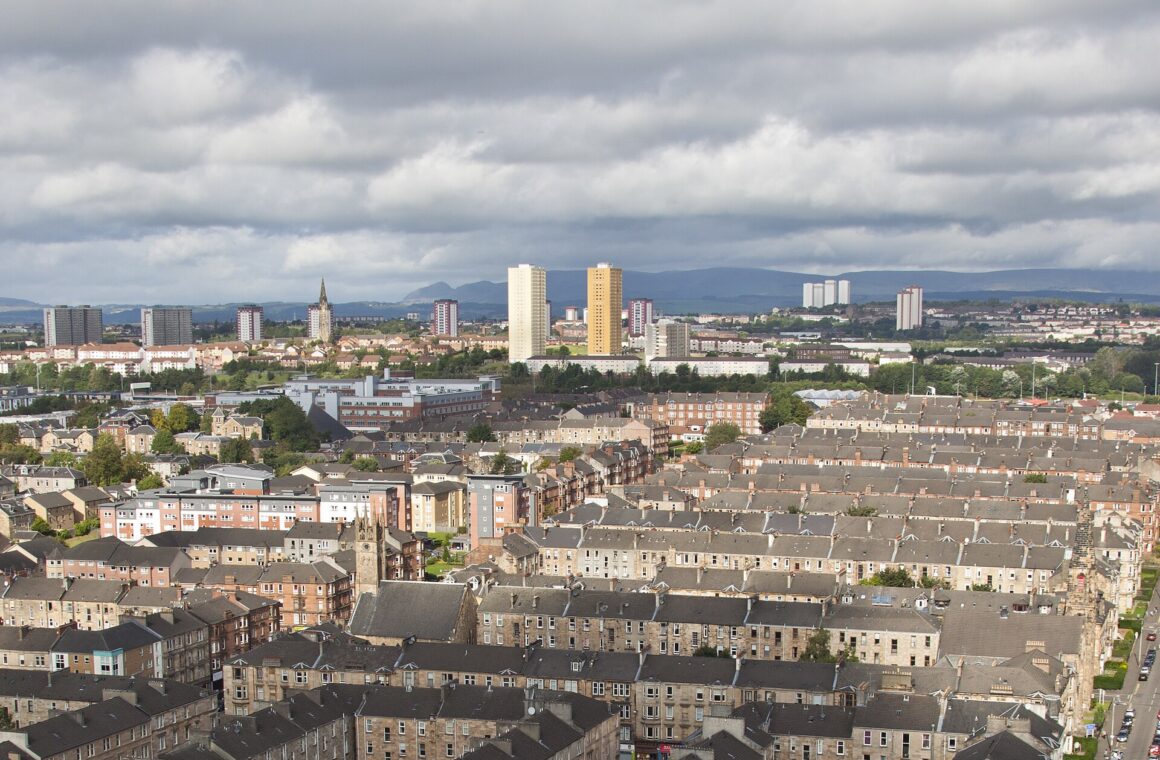
Stand at the top of the Necropolis and look east, past the chimneys of the Tennent’s brewery, and you’ll see a neat grid of sandstone tenements running off towards Alexandra Park. For most of its life the rest of the city barely gave that grid a second glance. Then Time Out ranked it the eighth coolest neighbourhood in the world, the only one in the UK to make its global top 20 that year, and this is the Dennistoun Glasgow has been talking about ever since: a Victorian tenement suburb with an old Italian café, a run of good bakeries, coffee shops and bars along Duke Street, a brewery at one end and a Victorian park at the other. Locals will tell you nothing much has changed except the price of a flat. They’re only half joking.
This guide covers what Dennistoun is like, how it was built, the best of Duke Street and its cafés, Alexandra Park, the Cathedral and Necropolis on its doorstep, the brewery, where to eat and drink, a half-day plan and how to get there. Details were checked in October 2026; cafés and bars change hands, so check before you make a special trip.
Dennistoun at a glance
| Dennistoun | The essentials |
|---|---|
| Where | The East End, about a mile east of George Square, between the Necropolis and Parkhead |
| Main streets | Duke Street and Alexandra Parade |
| Rail | Bellgrove, Duke Street and Alexandra Parade stations |
| Subway | None: the Subway doesn’t serve the East End |
| On the doorstep | Glasgow Cathedral, the Necropolis, Provand’s Lordship, Tennent’s Wellpark Brewery, Drygate |
| Best for | Cafés, brunch, neighbourhood bars, a local feel |
| Time needed | Half a day, or a full day with the Cathedral and Necropolis |
What things cost in and around Dennistoun
| Item | Price | Notes |
|---|---|---|
| Glasgow Cathedral | Free | Donations welcome |
| The Necropolis | Free | Volunteer-led tours run on selected dates |
| Provand’s Lordship | Free | The oldest house in Glasgow, built in 1471 |
| Alexandra Park | Free | Open every day |
| Tennent’s brewery tour | Ticketed | Book ahead; see our Glasgow brewery tours guide |
| Celtic Park stadium tour | From about £20 | In Parkhead, the next neighbourhood east |
Dennistoun is good value. The big sights nearby are free, and Duke Street’s cafés and bars are noticeably cheaper than their equivalents in the West End or Finnieston. You can have a very good day here for the price of lunch, a coffee and a couple of drinks.
How Dennistoun was built
Dennistoun is named after the man who built it. Alexander Dennistoun was a Glasgow merchant, a director of the Union Bank of Scotland and, briefly, a Member of Parliament. His father had bought the Golfhill estate on the city’s eastern edge in 1814, and Alexander added the neighbouring estates one by one. In 1854 he hired the Glasgow architect James Salmon to lay the land out in streets, terraces and drives, and the first plots were sold from 1861.
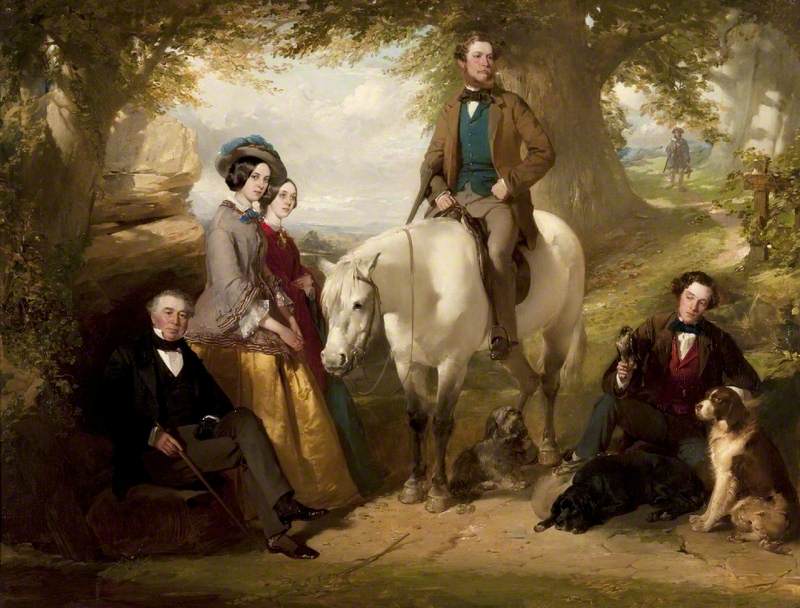
What grew up over the next half-century was a respectable tenement suburb for the clerks, tradesmen and skilled workers of the East End, with a few grander terraces and villas, churches on the corners and Alexandra Park at the eastern end. It never had the money of the West End, and through the twentieth century, as the East End’s industries closed, it settled into being a quiet, ordinary, slightly shabby part of the city. The thing that saved it was the tenements themselves: solid, roomy, sandstone flats a short walk from the city centre and far cheaper than anything comparable across town. Over the past couple of decades, young families, artists, students and first-time buyers have moved in, and the cafés and bars followed.
Reading the tenements
Dennistoun is one of the best places in Glasgow to understand the tenement, the building type that houses a huge share of the city. Most of the streets are lined with four-storey sandstone blocks, red or honey-coloured depending on the quarry, with shops on the ground floor of the main roads and flats above. Each block is entered through a close, the shared stairwell and passage that runs from the street to the back court. In the better-off tenements the close walls were lined with glazed tiles, and Glaswegians call those “wally closes”; peer through an open door on a side street and you may spot one.
Behind the blocks are the back courts, the shared yards where washing was hung and children played, which you can see laid out like a chessboard in aerial photographs of the area. Look up as you walk, too: bay windows, carved door surrounds and the occasional stained-glass stair window show that these were built to impress, not just to house. Please remember that the closes and back courts are private, so admire from the pavement.
Duke Street: the main street
Duke Street runs from the High Street, at the foot of the Cathedral precinct, out east through Dennistoun towards Parkhead. Locals like to tell you it’s the longest street in Britain, a claim the BBC’s The Secret History of Our Streets repeated when it made an episode about it, and which anyone with a map is welcome to argue with. What’s beyond argument is that the stretch through Dennistoun is one of the best neighbourhood high streets in Glasgow.
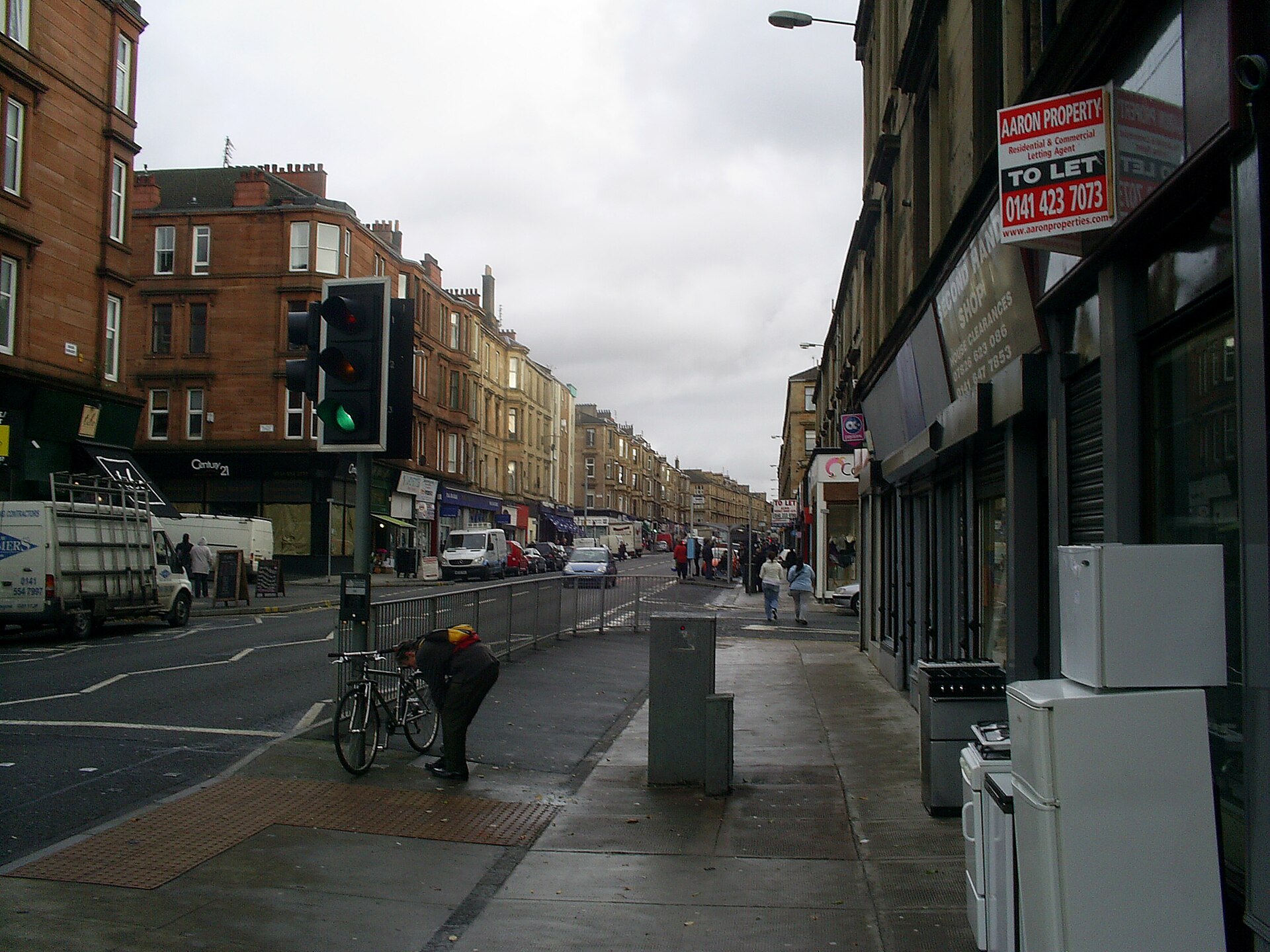
It’s a proper mixed street rather than a curated one. Independent cafés and bakeries sit between newsagents, takeaways, charity shops, hairdressers, a few traditional pubs and the odd empty unit. That mix is a large part of the appeal: Dennistoun hasn’t been tidied up, and the people sitting in the cafés are mostly people who live there.
Dennistoun cafés and where to eat
- Coia’s Café, 473–477 Duke Street: the Coia family opened their first café in Dennistoun in 1928, and it’s been the neighbourhood’s meeting place ever since, with Italian-Scottish café cooking, ice cream and, since 2006, a deli and takeaway next door. If you only go to one place, make it this one.
- Tibo, 443 Duke Street: a relaxed café-bistro that has done breakfast, lunch and dinner since 2006, and one of the first of the new wave of Duke Street cafés.
- Redmond’s, 304 Duke Street: a bright café-bar by day and a snug bar by night, with an ever-changing line-up of craft beers and an internationally minded menu.
Around them you’ll find independent bakeries, coffee shops, brunch spots and neighbourhood restaurants, and the line-up shifts every year. Walk the length of Duke Street from Bellgrove to Alexandra Park and you’ll have seen most of them. For the citywide picture, see our Glasgow food guide and our guides to Glasgow’s best cafés and the best brunch in Glasgow.
The brewery end: Tennent’s and Drygate
At the western end of Dennistoun, the Wellpark Brewery has been brewing Tennent’s lager for generations, and Tennent’s says beer has been brewed on the site since 1556. You’ll smell it before you see it on a brewing day. The brewery runs tours with a tasting at the end, and next door, Drygate is a modern craft brewery with a bar and a beer hall that makes an easy lunch or evening stop. Our guides to Glasgow brewery tours and craft beer and breweries have the details.
The Cathedral and the Necropolis
Dennistoun’s western edge runs up against the oldest part of Glasgow. A few minutes’ walk from Duke Street are Glasgow Cathedral, the only medieval cathedral on the Scottish mainland to come through the Reformation with its roof intact, and Provand’s Lordship, the city’s oldest house. Behind the Cathedral, across the Bridge of Sighs, the Necropolis climbs its hill in tiers of Victorian monuments, obelisks and mausoleums, with the best view over the East End from the top.
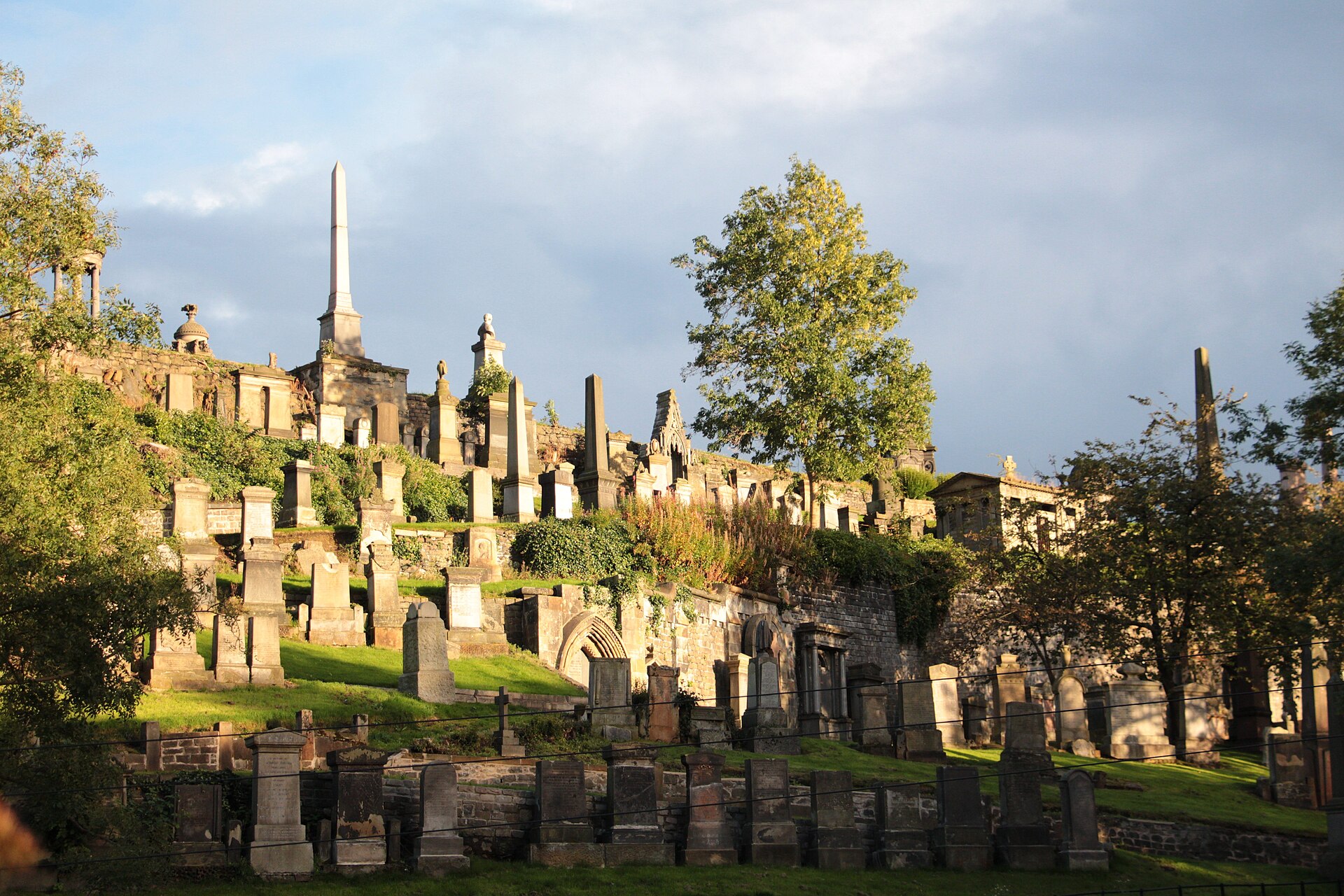
Most visitors do the Cathedral and Necropolis and head straight back into town. Walk east instead: Duke Street is right there, and a coffee in Dennistoun is the perfect end to a morning among the monuments.
Alexandra Parade and Alexandra Park
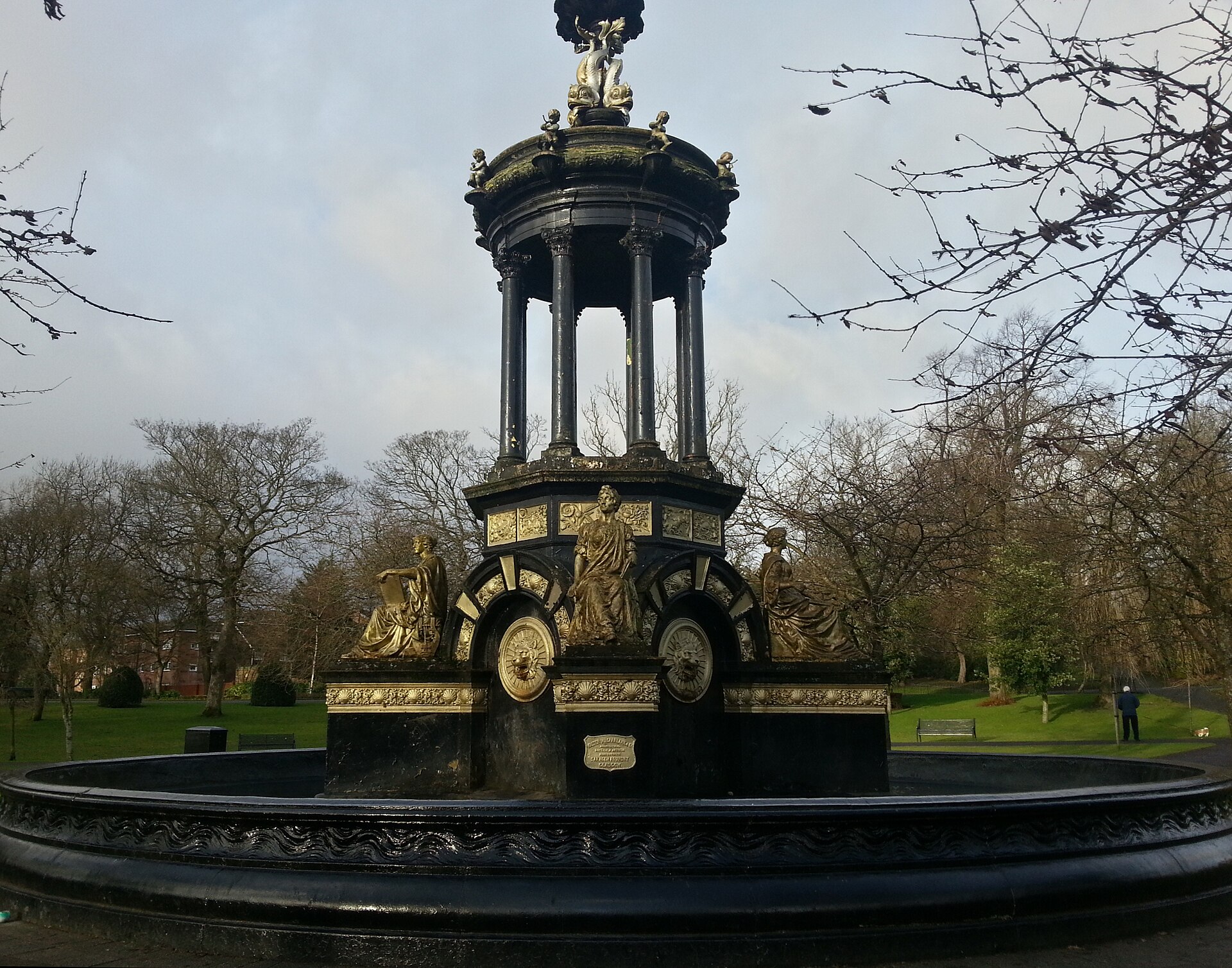
North of Duke Street, Alexandra Parade runs parallel to it, quieter and more residential, with its own station. At its eastern end is Alexandra Park, a Victorian park with mature trees, wide lawns and one of the city’s finest pieces of cast iron: the Saracen Fountain, made at Walter Macfarlane’s Saracen Foundry for the 1901 Glasgow International Exhibition in Kelvingrove Park and moved here afterwards. It’s not on most visitors’ lists, which is reason enough to go.
Dennistoun’s neighbours
Dennistoun is a good base for exploring the rest of the East End. To the south, about 15 minutes’ walk away, Calton has the Barras, the weekend market, and the Barrowland Ballroom, the city’s best-loved gig venue. To the east, Parkhead is home to Celtic Park, and on match days the local pubs fill with green and white. To the west, beyond the Cathedral, is the Merchant City and the city centre.
Dennistoun on a Celtic match day
Celtic Park is a short walk east, and that changes the neighbourhood when there’s a home game. Expect the pubs on and around Duke Street and the Gallowgate to be full of supporters from well before kick-off, buses and trains to be busy, and roads close to the stadium to be closed around the match. None of this is a problem if you’re going to the game, and it’s a lively few hours if you enjoy the atmosphere. If you’d rather a quiet coffee and a wander, check the fixture list and pick another day. Our Glasgow football guide explains tickets, tours and where to watch.
Who Dennistoun suits
- Repeat visitors who’ve done the West End and want to see where Glaswegians actually live.
- Food and coffee lovers who prefer neighbourhood places to destination restaurants.
- History fans combining the Cathedral, Provand’s Lordship and the Necropolis with lunch.
- Football fans on their way to Celtic Park.
- Not ideal for a first, short trip, or for anyone expecting polished streets and big sights.
A half day in Dennistoun
- 10am: Start at Glasgow Cathedral, then visit Provand’s Lordship across the road.
- 11.30am: Cross the Bridge of Sighs and climb through the Necropolis to the top for the view over Dennistoun.
- 12.30pm: Walk down to Duke Street for lunch, at Coia’s or one of the cafés further east.
- 2pm: Walk the length of Duke Street, browse the shops and bakeries, and cut up to Alexandra Park to see the Saracen Fountain.
- Later: A brewery tour at Tennent’s or a drink at Drygate, or, if there’s a gig on, dinner in Dennistoun and a walk down to the Barrowland.
For a wider East End day, see our guide to Glasgow neighbourhoods, which links Dennistoun with the Barras, Glasgow Green and the old city.
Getting to Dennistoun
The Subway doesn’t go east, so it’s trains, buses or your feet. Bellgrove station, at the western end of Duke Street, and Duke Street and Alexandra Parade stations further east are all on the suburban rail network through the city centre; our ScotRail guide explains the lines. Several bus routes run along Duke Street and Alexandra Parade from the city centre; see our Glasgow bus guide.
On foot, Duke Street is about 20 minutes from George Square, via the High Street or past the Cathedral, and the walk through the Necropolis is the most memorable way in. Parking on Dennistoun’s residential streets is controlled, so public transport is easier.
Is Dennistoun worth visiting?
Yes, if you know what you’re getting. Dennistoun is a neighbourhood rather than an attraction: there’s no single big sight, the main street is a working one with gaps and rough edges, and the “coolest neighbourhood in the world” label sets expectations no tenement street could meet. What you get instead is a real, friendly, good-value part of Glasgow with excellent cafés and bars, a century-old Italian café, a fine Victorian park and the Cathedral and Necropolis next door.
The best way to do it is as part of an East End day: the old city in the morning, Dennistoun for lunch and an afternoon wander, and the Barras or a gig in the evening. If you only have one day in Glasgow, the West End and the city centre will serve you better. If you have three, give Dennistoun a few hours.
Dennistoun: frequently asked questions
Where is Dennistoun in Glasgow?
In the East End, about a mile east of George Square, between the Necropolis and Glasgow Cathedral to the west and Parkhead to the east. Duke Street and Alexandra Parade are its main roads.
Why is Dennistoun so popular?
Its independent cafés, bakeries and bars, its good-value tenement flats, and its location next to the Cathedral and Necropolis. Time Out ranking it the eighth coolest neighbourhood in the world also put it on the map for visitors.
What is Duke Street known for?
It’s often described as the longest street in Britain, running from the High Street out through Dennistoun towards Parkhead. In Dennistoun it’s the main shopping street, with Coia’s Café, Tibo, Redmond’s and plenty of independent shops.
How do I get to Dennistoun from the city centre?
Take a train to Bellgrove, Duke Street or Alexandra Parade, catch a bus along Duke Street, or walk: Duke Street is about 20 minutes from George Square on foot.
Is Dennistoun safe?
Yes, with the usual city sense. Duke Street is busy and friendly by day; as anywhere in Glasgow, stick to main roads late at night. See our Glasgow safety tips.
Is Dennistoun near Celtic Park?
Yes. Celtic Park is in Parkhead, the next neighbourhood east along Duke Street and London Road, and Dennistoun’s pubs and cafés are busy on match days.
Related Glasgow Guides
- Glasgow neighbourhoods: an area-by-area guide
- The Glasgow Necropolis
- Glasgow Cathedral
- Glasgow food guide
- The Barras market
- Glasgow brewery tours
- Celtic Park stadium tour
- Glasgow’s best cafés
Photo Credits
Dennistoun’s tenement grid from Whitevale: Dennistoun from whitevale (cropped) by Graeme Maclean, CC BY 2.0, via Wikimedia Commons.
Alexander Dennistoun of Golfhill and his family: Thomas Faed – Alexander Dennistoun of Golfhill and Family by Thomas Faed, Public domain, via Wikimedia Commons.
Duke Street: Duke Street – panoramio by cyna, CC BY 3.0, via Wikimedia Commons.
The Saracen Fountain in Alexandra Park: Alexandra Park Fountain by CraigIW, CC BY-SA 3.0, via Wikimedia Commons.