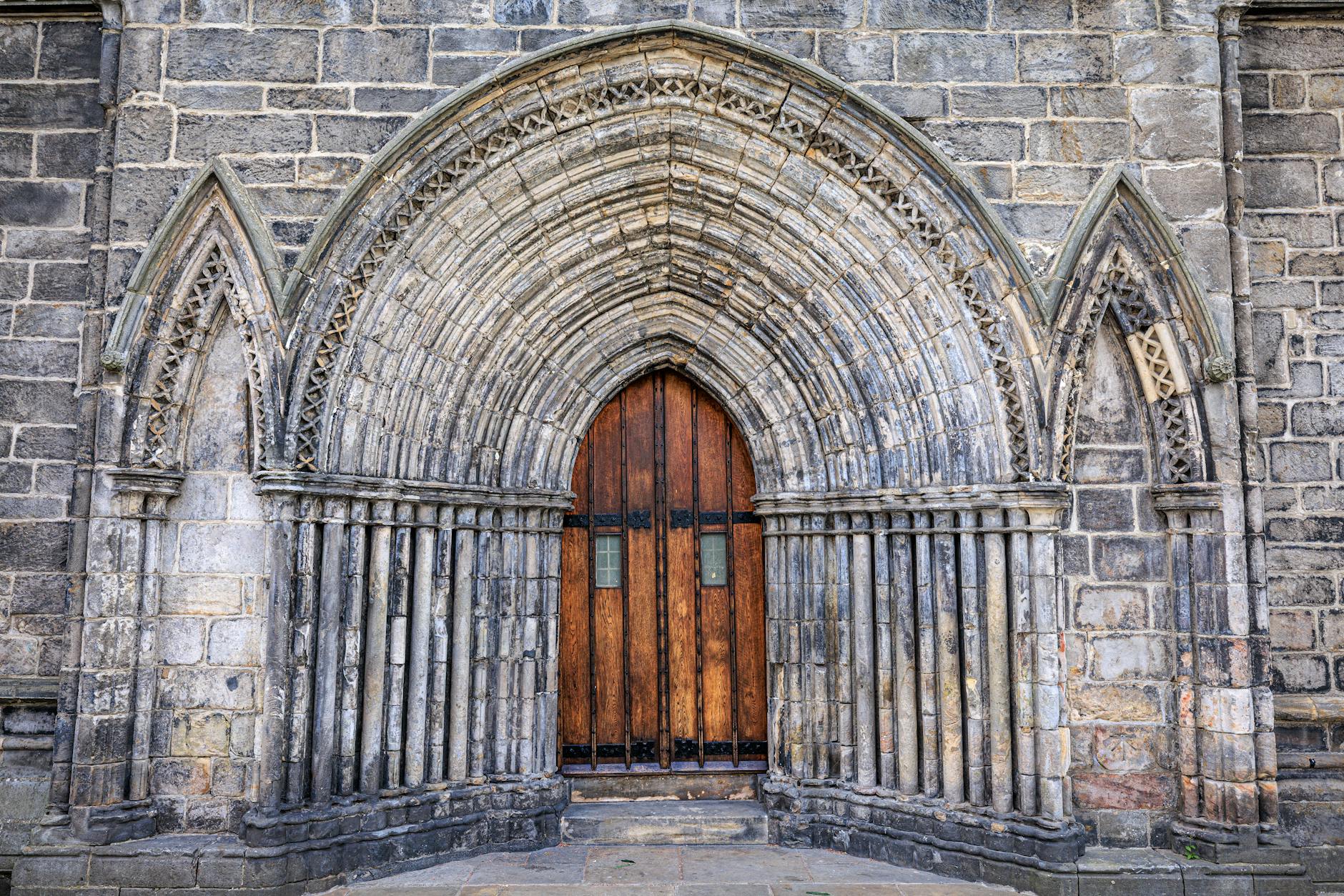
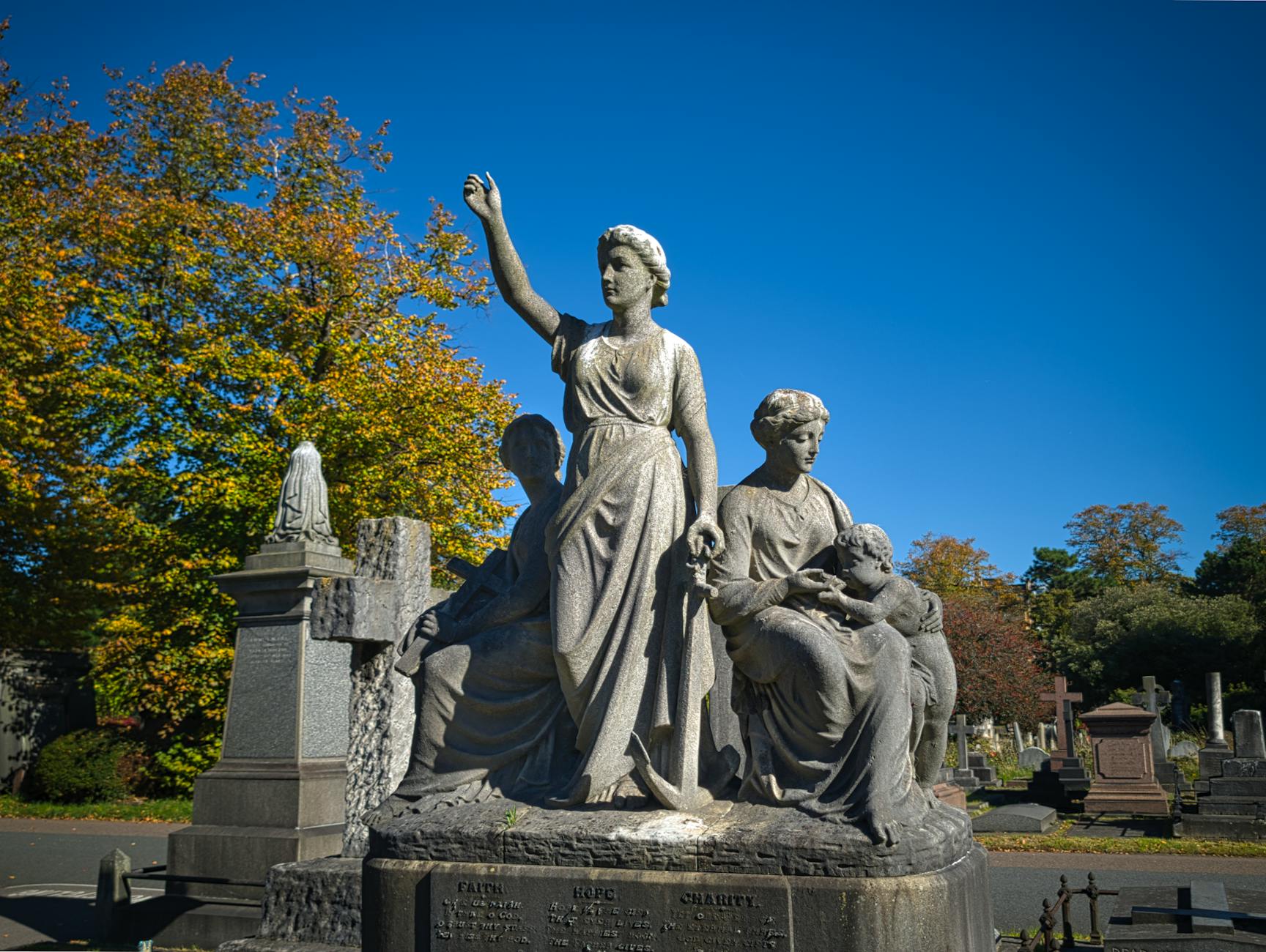
The Glasgow Necropolis is the city’s “city of the dead” — a hilltop Victorian cemetery of 3,500 monuments overlooking Glasgow Cathedral, modelled on the Père Lachaise in Paris and home to a Mackintosh Celtic cross, the largest John Knox monument in Scotland and the best free skyline view in the city.
This is a complete 2026 visitor guide to the Glasgow Necropolis — its history, the Bridge of Sighs, the most important monuments, free guided tours and how to combine with Glasgow Cathedral.
Glasgow Necropolis at a glance
Address: Castle Street, Glasgow G4 0QZ (behind Glasgow Cathedral). Opening hours: daylight hours, year-round (typically 7am-7pm summer; 7am-4pm winter). Entry: Free. Estimated visit time: 45 minutes for a focused walk; 90 minutes including a guided tour. Best entrance: the Bridge of Sighs from Cathedral Square.
The history of the Glasgow Necropolis
The Glasgow Necropolis was inspired by the Père Lachaise in Paris (1804) — the world’s first dedicated landscape cemetery. Glasgow’s businessmen, led by John Strang, suggested converting the hilltop “Fir Park” near Glasgow Cathedral into a similar resting place for the city’s elite. The Glasgow Necropolis officially opened in 1833 as the first inter-denominational burial ground in the world — a deliberate statement of religious tolerance from a city built on the wealth of multiple denominations.
Around 50,000 people are buried here, with approximately 3,500 monuments still in existence. The site is technically still a working cemetery — burials have continued in family plots into the 21st century — although new plots are no longer sold.
It helps to picture the Glasgow this cemetery was built to celebrate. By the 1830s the city was getting rich fast on tobacco, cotton, chemicals and shipbuilding, and the men who ran those industries wanted a resting place that matched their ambition — somewhere that read as civic confidence rather than a humble kirkyard. The Necropolis is essentially that wealth carved in stone: every Egyptian mausoleum and Greek-temple tomb is a Victorian merchant dynasty announcing it had arrived. Walking it is one of the clearest ways to read what nineteenth-century Glasgow thought of itself.
The interdenominational point is worth dwelling on too, because it was genuinely radical for its time. Opening in 1833 as a burial ground open to all faiths — Protestant, Catholic, Jewish — was a deliberate statement from a trading city that depended on people of every background. The first burial here was in fact a Jewish jeweller, Joseph Levi, and a separate Jewish enclosure was laid out from the start. For the wider story of how this fits into the city’s built history, our Glasgow history and architecture guide sets the scene.
The Bridge of Sighs
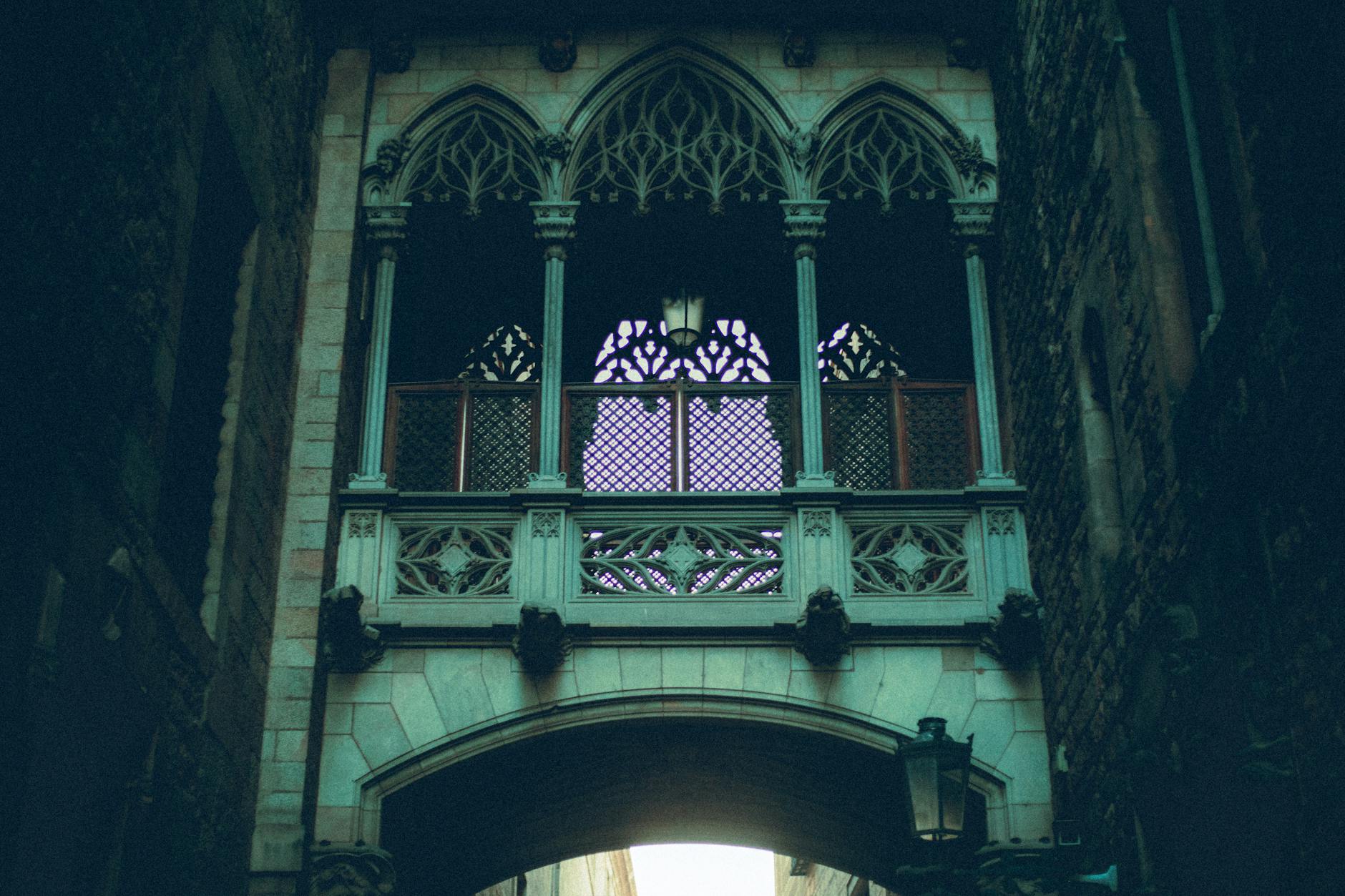
The ornate stone entrance and bridge — known as the Bridge of Sighs — was completed in 1836 by architect James Hamilton. It crosses what was once the Molendinar Burn (now culverted) between Cathedral Square and the Necropolis. The bridge was nicknamed the “Bridge of Sighs” because mourning processions passed over it in tears; a 19th-century writer described it as “the separation between time and eternity.” The decorative wrought-iron gates and the carved Celtic-Christian motifs are original.
Just before crossing the bridge, three modern memorials stand between the gates: a memorial to stillborn children, a memorial to the Korean War, and a memorial to Glaswegian recipients of the Victoria Cross.
Key monuments at the Glasgow Necropolis
1. The John Knox Monument
The 23-metre column at the summit of the Necropolis is the largest John Knox monument in Scotland — built in 1825 (eight years before the cemetery itself), the column predates the burial ground. The statue at the top depicts the Calvinist leader of the Scottish Reformation. The view from the base of the column is the best in the cemetery.
2. The Mackintosh Celtic Cross
Charles Rennie Mackintosh designed the Celtic cross marking the grave of Glasgow architectural rival Alexander “Greek” Thomson — a generous touch from the city’s most famous later architect honouring its earlier hero. Find it on the southern slope below the John Knox column.
3. The William Miller monument
The author of the children’s poem Wee Willie Winkie is buried here, with an unusual circular monument carved with scenes from the poem.
4. The William Rae Wilson monument
The most flamboyant Egyptian-style mausoleum in the cemetery — designed by John Bryce in 1849 for the Glasgow merchant William Rae Wilson, with carved sphinxes and a pyramid roof.
5. The Aiken/Forrester family vault
One of the largest family vaults — carved with thistles and the Glasgow coat of arms.
6. The Charles Tennant family monument
The Tennants were the chemical-industry pioneers who funded much of Glasgow’s Victorian wealth. Their monument near the Knox column reflects that civic significance.
7. The “Disturber of the Peace” gravestone
A famous Glasgow Necropolis curiosity — the small gravestone of journalist James Hedderwick, controversial Victorian newspaper editor.
Do not rush straight to the famous names — some of the most affecting monuments here belong to people history has forgotten. Look for the smaller, weathered stones tucked along the lower paths: a ship’s captain lost at sea, a young family taken by one of the cholera epidemics that swept the crowded city, a stonemason commemorated by his own guild. The Necropolis is a roll-call of how Victorian Glaswegians actually lived and died, and the human-scale graves often say more than the grand mausoleums.
If your eye is drawn to the design rather than the dead, the cemetery doubles as an open-air catalogue of nineteenth-century architectural fashion. You will spot Egyptian Revival (the sphinxes and pyramids of the Rae Wilson tomb), Greek Revival from the followers of Alexander “Greek” Thomson, Gothic spires, Celtic crosses and the occasional stark Modernist slab from later burials. Many of the same architects who shaped the city centre designed these tombs as private commissions, so the Necropolis is, in effect, a Who’s Who of Glasgow architecture in miniature.
The view from the Glasgow Necropolis
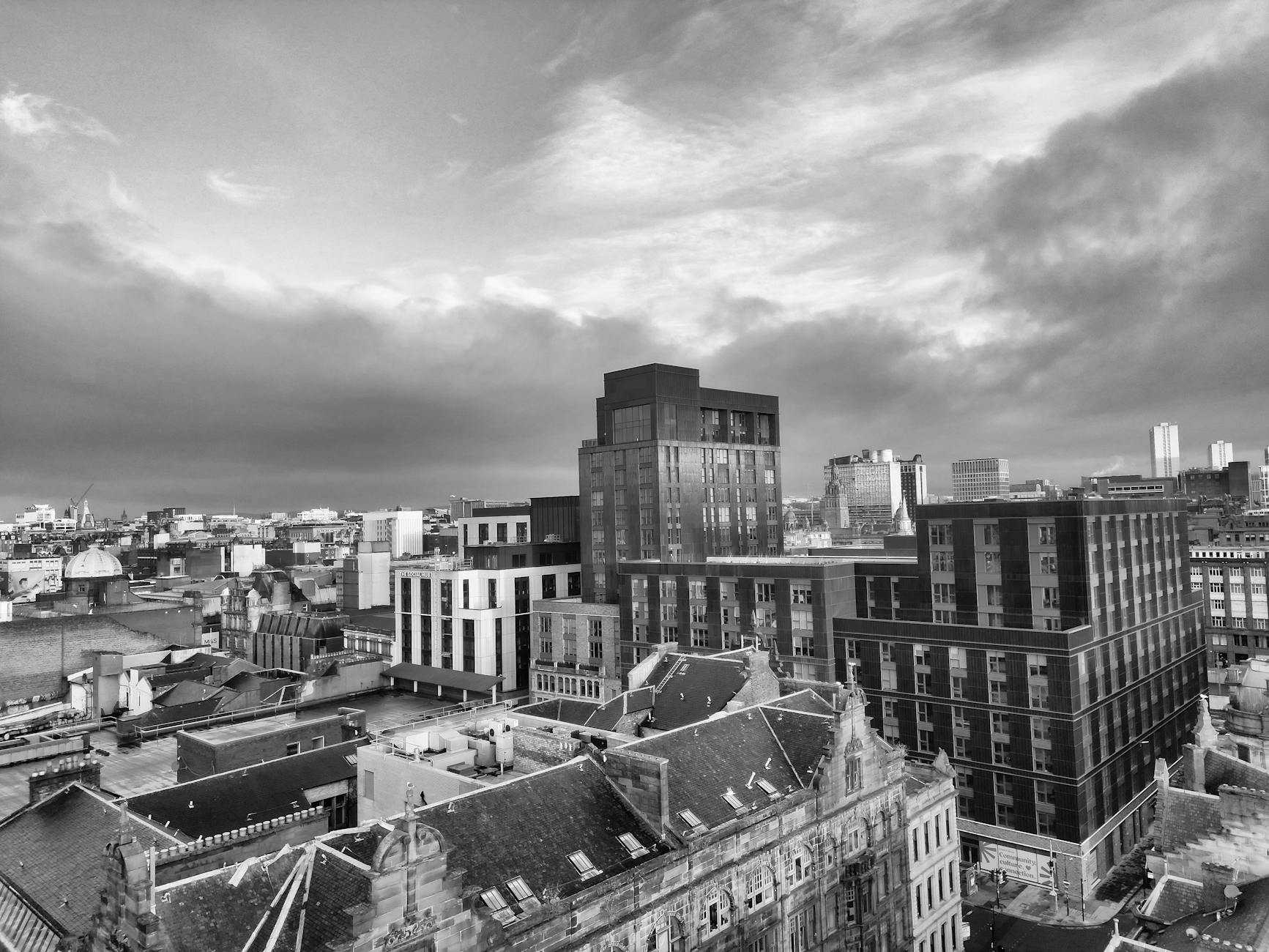
From the top of the hill (around the John Knox column), the Glasgow Necropolis offers the best free skyline view of the city. You can see:
- Glasgow Cathedral immediately below — the medieval city’s heart.
- The Tennent’s Brewery and the East End beyond.
- The Castle Street rooftops and Townhead.
- Glasgow Cathedral Square and Provand’s Lordship — the oldest house in Glasgow.
- The high-rise blocks at Tradeston and the Squinty Bridge over the Clyde (clear days).
- The Campsie Fells on a really clear day, 15 miles north.
Best at golden hour — typically 30-45 minutes before sunset.
Free guided tours of the Glasgow Necropolis
The Friends of Glasgow Necropolis volunteer organisation runs free 2-hour guided walking tours throughout the year. The volunteer guides are deeply knowledgeable and the tours are donation-based (typical donation £5-£10, optional). Tours run Saturday afternoons from spring to autumn; check the friendsofglasgownecropolis.org website for the current schedule.
Themed evening tours (e.g. “Witches and Witch Hunts of the Necropolis,” “Ghost Stories of the Necropolis,” “Famous Scots”) run several times a year, also free or donation-based.
Glasgow Necropolis self-guided walking route
If you’d rather explore alone, here’s a 45-minute route covering the strongest monuments:
- Start at the Bridge of Sighs (Cathedral Square entrance).
- Take the main path uphill past the modern memorials (Korean War, Victoria Cross).
- Pause at the William Miller monument on your left for the children’s-poem-themed carvings.
- Continue uphill to the John Knox column at the summit (the best view).
- Walk the upper path west to find the Egyptian-style William Rae Wilson mausoleum.
- Descend to the southern slope for the Mackintosh Celtic cross marking Alexander “Greek” Thomson’s grave.
- Return via the southern paths to the Bridge of Sighs.
Wear sturdy shoes — paths are uneven and steep in places.
Two things will make the self-guided route far better. First, go up the way the Victorians intended — over the Bridge of Sighs and up the main carriage drive — rather than scrambling up a side path, because the whole place was landscaped as a slow processional climb and it reveals itself best on foot at that pace. Second, look back often. The view of the Cathedral framed by tombs gets better the higher you go, and most people miss it because they are watching their feet on the uneven setts.
Allow more time than you think if the weather is kind. Forty-five minutes covers the headline monuments, but the Necropolis rewards aimless wandering — reading inscriptions, finding the half-hidden vaults, sitting at the Knox column with the city laid out below. It pairs naturally with the medieval precinct at the bottom of the hill, so build it into a half-day rather than treating it as a quick tick-box. Our things to do in Glasgow guide has more ideas for filling out the day around it.
The Glasgow Necropolis with kids
Surprisingly engaging for kids 8+ (Wee Willie Winkie’s grave is a hit), but probably too much steep walking for under-6s. The Friends of Glasgow Necropolis sometimes run dedicated children’s history events; check the events page. The cemetery is on the National Curriculum for Glasgow primary schools — kids who’ve studied Victorian Glasgow will recognise the names.
The Glasgow Necropolis after dark
The Necropolis officially closes at dusk, although the gates aren’t locked — visitors are gently encouraged not to linger after sunset. Several tour operators run paid evening “ghost tours” of the Necropolis, typically 90 minutes for £15-£20 per person, focusing on Glasgow folklore and the cemetery’s most atmospheric monuments.
How to get to the Glasgow Necropolis
Walking: 15 minutes from George Square via Cathedral Square. The most pleasant approach.
Subway: Buchanan Street is the closest stop — 15 minutes’ walk via the Cathedral.
Train: High Street rail station is 5 minutes’ walk; Glasgow Queen Street is 12 minutes.
Bus: First Bus 38, 38A and 57 stop on Castle Street outside the Cathedral.
Driving: No on-site parking; pay-and-display on Castle Street and surrounding streets.
What to combine with a Glasgow Necropolis visit
The Necropolis sits in Glasgow’s medieval precinct, so combine with:
- Glasgow Cathedral — the most complete medieval cathedral on mainland Scotland; free. See our Glasgow Cathedral guide.
- The St Mungo Museum of Religious Life and Art — Britain’s only Zen garden, free.
- Provand’s Lordship — the oldest house in Glasgow (1471), free.
- Glasgow Royal Infirmary — the magnificent 1907 Edwardian hospital building; viewable from the street.
The full historic-precinct walk takes about 3 hours including the Necropolis climb.
The single best pairing is the obvious one — the Glasgow Cathedral sits directly below the Bridge of Sighs, and the two together tell the story of Glasgow from its medieval saint to its Victorian merchant princes in the space of a couple of hours. Do the Cathedral first while you have the energy for its dim, atmospheric lower church and the tomb of St Mungo, then climb the Necropolis for the daylight and the view. They share a square, so there is no transport to think about.
Round it out with the quieter neighbours most visitors walk straight past. Provand’s Lordship, across Castle Street, is the oldest house in Glasgow (1471) and free; the St Mungo Museum of Religious Life and Art next to it is free too, with one of the few Zen gardens in the country tucked out the back. Together with the Cathedral and the Necropolis, the four make a compact, almost entirely free morning in the city’s medieval heart — a side of Glasgow that the West End and the shopping streets give no hint of.
Glasgow Necropolis safety
The Necropolis is generally safe in daylight hours. Petty pickpocketing is rare but possible — wear a cross-body bag. Paths are uneven and steep; sturdy walking shoes are essential. Don’t visit alone after sunset. The cemetery’s perimeter wall has multiple gates; if a gate is locked, walk around to the main Bridge of Sighs entrance.
Famous people buried at the Glasgow Necropolis
- John Henry Alexander — Glasgow theatre impresario.
- William Miller — author of the nursery rhyme “Wee Willie Winkie.”
- Charles Tennant — chemical industrialist.
- Major Archibald Douglas Monteath — explorer.
- Alexander “Greek” Thomson — Glasgow’s greatest Victorian architect (memorialised by the Mackintosh Celtic cross).
- James Beaumont Neilson — inventor of the hot blast iron-smelting process.
- Andrew Ure — chemist and political economist.
Photography at the Glasgow Necropolis
One of Glasgow’s most-photographed locations. Best light: golden hour, an hour before sunset. Best season: October for autumn colour against the Victorian stone. Tripods are permitted (be considerate of mourners and other visitors); drones are NOT permitted without prior council permission. Wedding photography (technically permitted but rare in practice) requires advance booking.
For the serious photographer, timing beats kit here. The stone is at its best in low, raking light — the hour after sunrise or before sunset — when the carving throws shadows and the sandstone warms up; flat midday light makes the whole hill look grey. Autumn is the standout season, when the trees turn against the blackened Victorian stone, and a day after rain gives you reflective setts and dramatic skies that suit the subject far better than blue-sky sunshine. Mist, which Glasgow supplies generously, is a gift if you can catch it.
Be mindful that this is a working cemetery and people do still visit family graves, so keep a respectful distance, do not climb on monuments for an angle, and pack a tripod away if a funeral or mourner is nearby. Drones need prior council permission and are otherwise a firm no. Handled with a bit of tact, the Necropolis is the most rewarding free photo location in Glasgow — the city’s skyline, its history and its weather all in a single frame.
FAQs
Is the Glasgow Necropolis free to visit?
Yes — completely free, every day, daylight hours. Donations to the Friends of Glasgow Necropolis are welcome.
What time does the Glasgow Necropolis open?
Daylight hours, year-round. Approximately 7am-7pm in summer; 7am-4pm in winter. Gates are usually still accessible after dusk but visitors are gently encouraged to leave by then.
How long does it take to walk around the Glasgow Necropolis?
45 minutes for a focused walk covering the main monuments and the John Knox view. 90 minutes for a thorough exploration including the Friends’ guided tour.
Is the Glasgow Necropolis safe?
Yes, in daylight hours. Standard urban-cemetery precautions apply: sturdy shoes, daylight visit, watch for pickpockets, don’t go alone after dusk.
How do you get to the Glasgow Necropolis from Glasgow Central?
15-minute walk via Glasgow Cross and the Cathedral. Or take the High Street train station (5 minutes from Central via 1 stop) and walk 5 minutes more.
Are dogs allowed in the Glasgow Necropolis?
Yes — on lead. Owners are asked to clean up after their dogs.
Can I climb to the John Knox column at the Glasgow Necropolis?
You can walk to the base of the column (the highest point of the Necropolis); the column itself is not climbable. The view from the base is excellent.
Plan more historic Glasgow days
This article is part of our wider Glasgow history and architecture guide. Pair it with our Glasgow Cathedral deep-dive (immediately adjacent), our Victorian Glasgow architecture walking tour and our wider things to do in Glasgow overview.