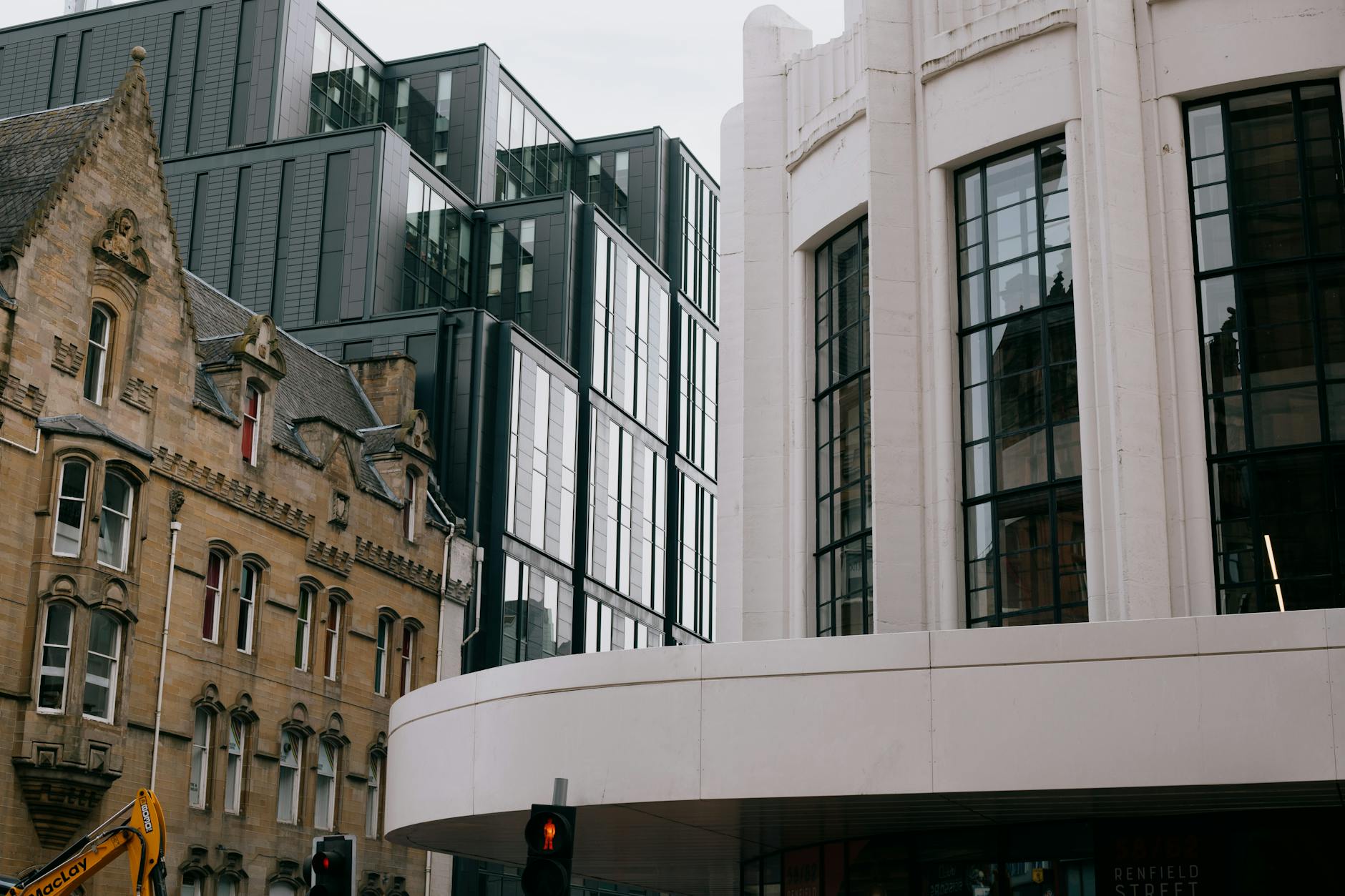
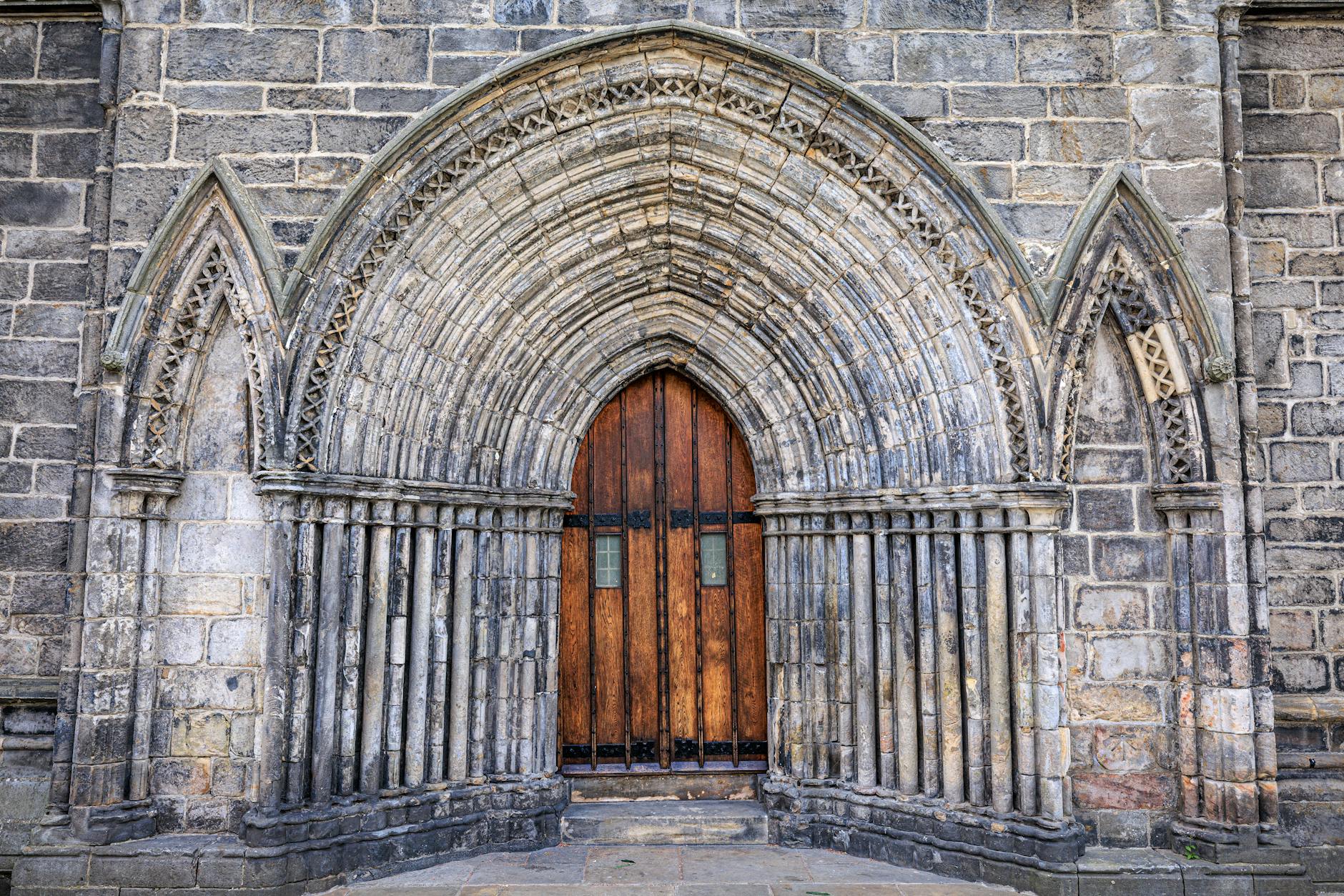
Glasgow is the greatest Victorian city in Britain. Industrial wealth from shipbuilding, tobacco, cotton and chemicals funded a 70-year building boom that left the city with more grand Victorian streetscapes than any other in the country — the legacy of architects who treated the city like a Greek temple complex and built it in red and blonde sandstone instead of marble.
This guide is a self-led tour of Victorian Glasgow architecture: the buildings to find, the architects to know (especially Alexander “Greek” Thomson and Charles Wilson), the best walking route to see them and the contemporary highlights still standing in 2026.
How Victorian Glasgow architecture happened
By 1850 Glasgow was the second city of the British Empire and the world’s leading shipbuilder. Wealth on a near-American scale needed somewhere to go: insurance offices, exchanges, banks, theatres, churches and the great middle-class terraces of the West End. The city’s Victorian architects worked in a peculiar local idiom — sandstone (mostly from local quarries), Greek and Egyptian classical forms (especially under Alexander Thomson), and a willingness to be flamboyant that even London Victorians found startling.
Glasgow’s grandeur is no accident: in the 19th century this was the “Second City of the Empire”, grown rich on tobacco, cotton, heavy engineering and the shipyards of the Clyde. That wealth was poured into stone, and because the city expanded fastest during Victoria’s reign, it was built almost wholesale in confident Victorian styles — row upon row of blonde and red sandstone, a gridded city centre, and civic buildings designed to show the world exactly how prosperous Glasgow had become.
The material itself shaped the look of the city. Glasgow built first in blonde sandstone from quarries to the south and west, then — as those ran out late in the century — in the warmer red sandstone you see across the West End tenements. A century of coal smoke darkened both to near-black, which is how Victorian visitors knew the place and why old photographs look so sooty; the stone-cleaning of recent decades has returned much of it to honey and rust, closer to how the architects first imagined it.
Speed mattered too. Because Glasgow’s population exploded during Victoria’s reign, whole districts went up almost at once and to a consistent grid, which is why the centre reads as a single confident sweep rather than a patchwork. That uniformity of scale and material — four-storey tenements, gridded streets, grand civic set-pieces — is part of what makes it the most complete Victorian city in Britain. The money behind it came from tobacco, cotton and the Clyde shipyards, a story told in full in our Glasgow history and architecture guide.
The two great architects of Victorian Glasgow
Alexander “Greek” Thomson (1817–1875)
Alexander Thomson was the pre-eminent architect of Victorian Glasgow and the city’s only architect of European-rank importance besides Mackintosh. Self-taught, he never travelled outside Britain, but designed in a personal idiom drawing on Greek temples, Egyptian tomb fronts and Hindu temples — sometimes in the same building. The Dictionary of Scottish Architects lists 200+ projects designed by Thomson, mostly in Glasgow.
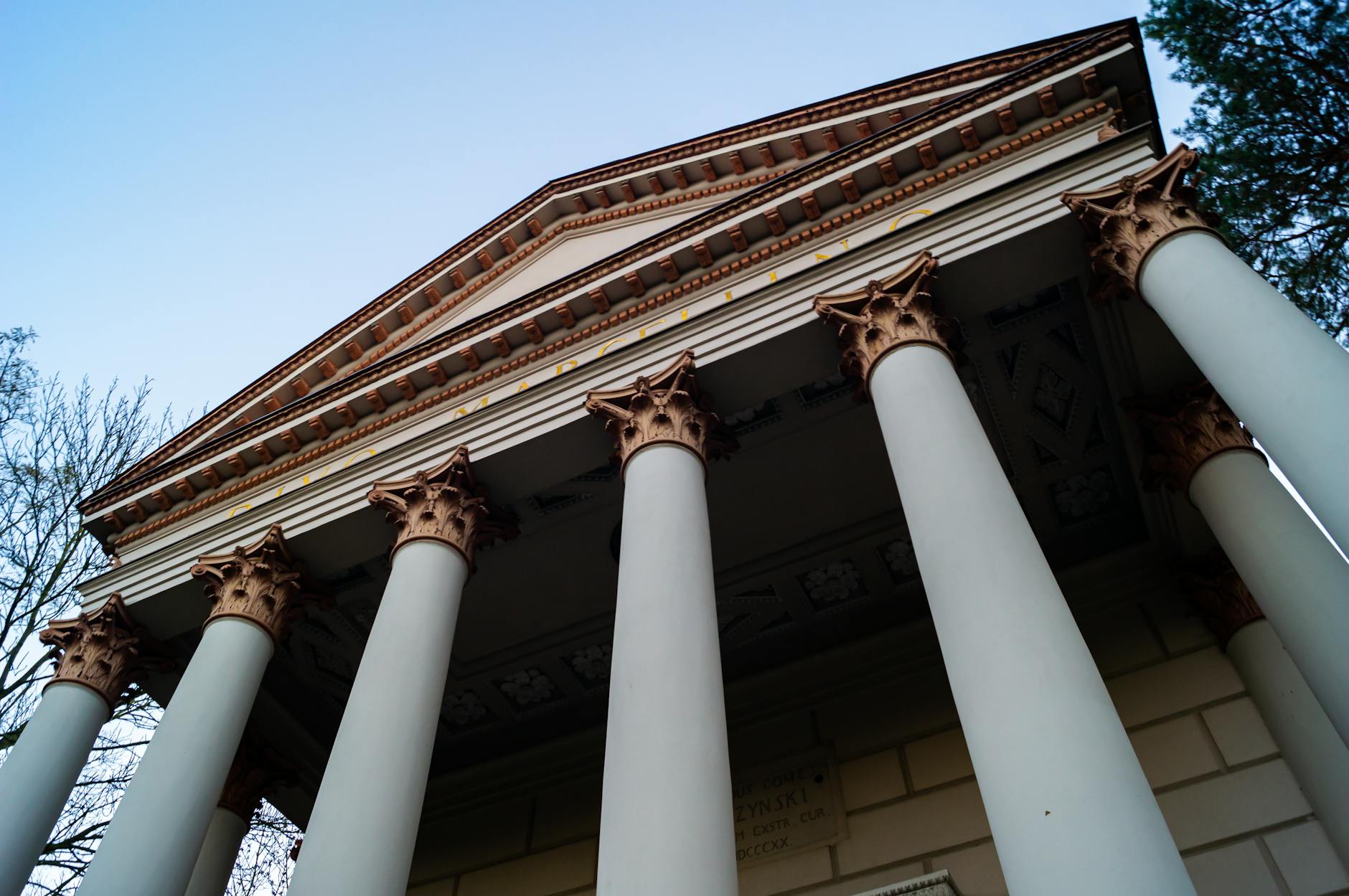
Look for: Holmwood House (his finest residential work, NTS-managed in Cathcart), St Vincent Street Church (the most extraordinary religious building in Glasgow), Egyptian Halls (Union Street), Caledonia Road Church (a roofless ruin but still spectacular), and Walmer Crescent (Govan).
Charles Wilson (1810–1863)
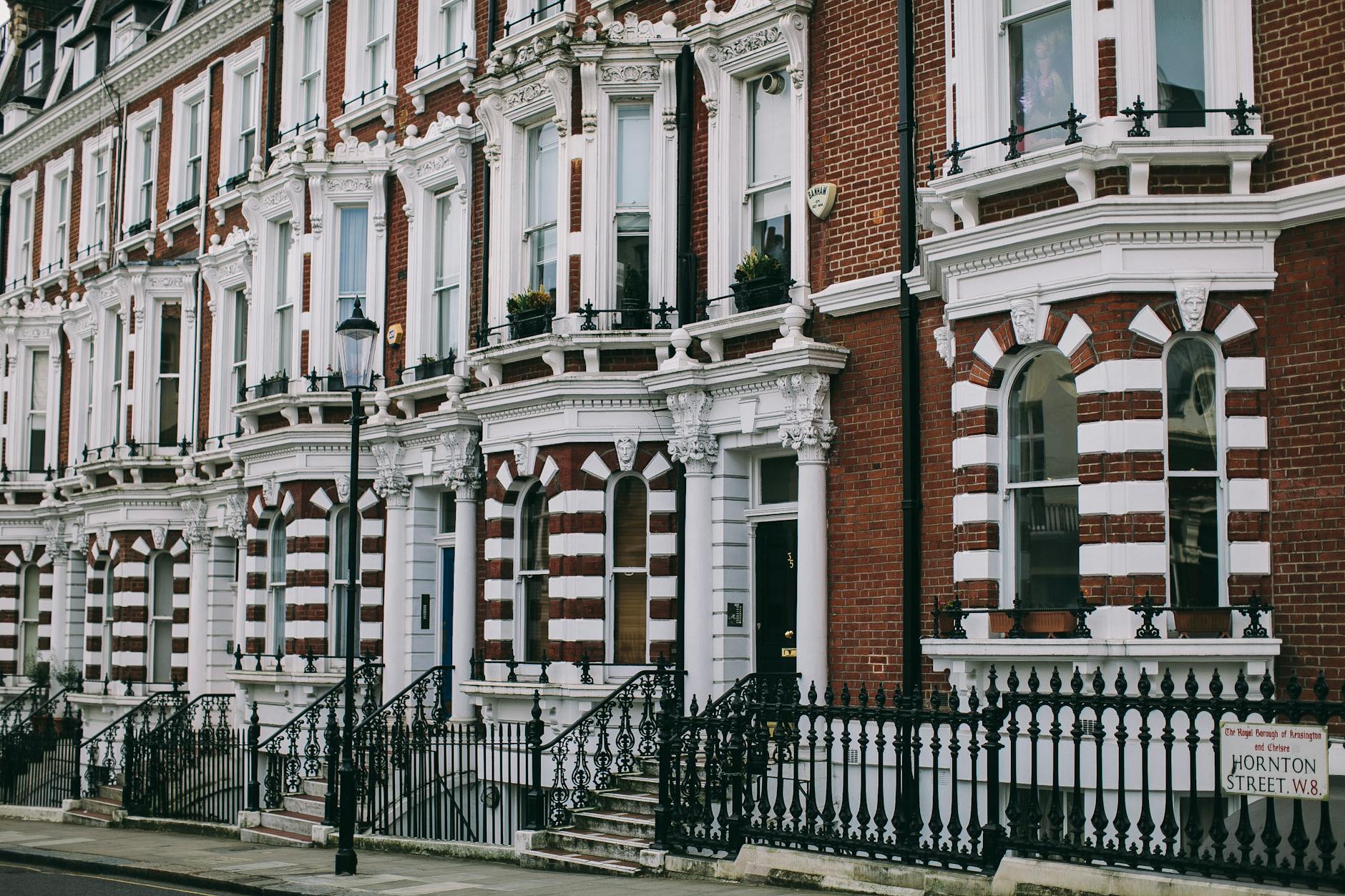
Wilson designed Glasgow’s most desirable Victorian neighbourhood — the concentric Italianate Park Circus and the flamboyant French-style Park Terrace, perched on a hill above Kelvingrove Park. He also designed the Free Church College (now part of the University of Strathclyde), with its three campanile-like towers, and the Queen’s Rooms (later home to the BBC). Wilson worked with Sir Joseph Paxton on Kelvingrove Park itself.
Other Victorian Glasgow architects to know
Sir John James Burnet — designed the Athenaeum (now part of the Royal Conservatoire) and the British Linen Bank. James Sellars — Stewart Memorial Fountain in Kelvingrove Park; the Anderston Free Church. Honeyman & Keppie — early commissions where a young Charles Rennie Mackintosh learned the trade. William Young — designed the City Chambers in 1888.
Two names tower over the city’s architecture. Alexander “Greek” Thomson (1817–1875) reimagined classical Greek forms in soot-black sandstone — see his St Vincent Street Church and the villa of Holmwood House — and remains shamefully underrated outside Scotland. A generation later came Charles Rennie Mackintosh (1868–1928), whose Glasgow Style fused Art Nouveau with Scottish tradition at the Glasgow School of Art, the Mackintosh at the Willow tearooms and Scotland Street School. Our dedicated Charles Rennie Mackintosh guide goes deeper on his work.
Self-guided Victorian Glasgow architecture walking tour
This is a 2.5-hour, 3-mile walk that hits the strongest Victorian Glasgow architecture in the city centre. Start at George Square.
Stop 1: Glasgow City Chambers (George Square)
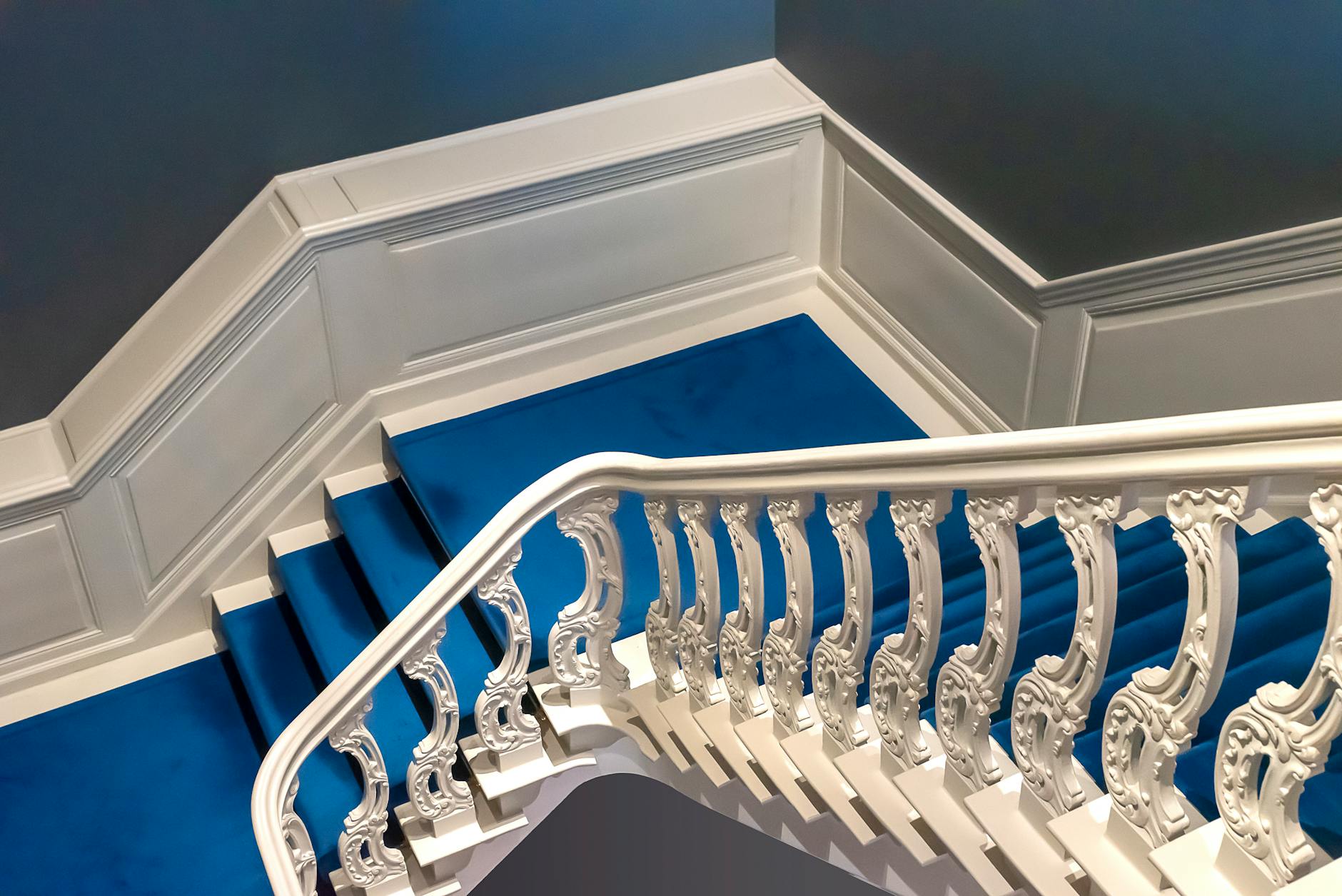
The civic statement of Victorian Glasgow’s confidence. Designed by William Young and opened in 1888, the marble-clad interior with its sweeping staircase is one of the most ambitious municipal buildings in the UK. Free guided tours typically run Mon-Fri 10.30am and 2.30pm — book ahead. The exterior alone is worth a 10-minute pause.
Stop 2: Royal Exchange Square & the Gallery of Modern Art
From George Square, walk west into Royal Exchange Square. The columned building at the heart of the square (now GoMA) was originally Cunninghame Mansion (1780) and remodelled in 1827. The columned portico is a perfect Greek Revival statement — and the bronze Duke of Wellington statue out front is Glasgow’s most famous photograph (the traffic cone is unofficial).
Stop 3: Buchanan Street & the Victorian shopping arcades
Walk south down Buchanan Street. The Victorian arcades — Argyll Arcade (1827, Glasgow’s oldest covered shopping arcade) and Princes Square (a 1980s remodelling of an 1841 building) — show how Glasgow’s Victorians built for the new middle-class shopping experience.
Stop 4: Stock Exchange & Buck’s Head Building (Argyle / Buchanan)
The Glasgow Stock Exchange building (1875) by John Burnet senior is one of the city’s most muscular Venetian Gothic facades. Around the corner on Argyle Street stands Alexander Thomson’s Buck’s Head Building (1862) — note the Egyptian columns and Indian-temple silhouette.
Stop 5: Egyptian Halls (Union Street)
One of Thomson’s most extraordinary buildings — a four-storey commercial palace with Egyptian pylons, flat columns and a “Greek-meets-Mughal” front. Currently undergoing restoration; viewable from the street.
Stop 6: St Vincent Street Church (St Vincent Street)
The most important Thomson building still standing. A pagan Greek temple on a tower base, with Egyptian and Hindu motifs in the carving. Free entry on summer Sundays for services and occasional open days; otherwise viewable from the outside.
Stop 7: Mitchell Library & the Mitchell Theatre (North Street)
Walk west to the Mitchell Library — Scotland’s largest reference library, completed 1911 in the late-Victorian “Beaux-Arts” classical idiom by William Whitie. The green dome is one of the city’s instantly recognisable silhouettes.
Stop 8: Park Circus & Park Terrace (Charles Wilson, 1855)
Up the hill to Charles Wilson’s masterpiece — the concentric Italianate Park Circus and the French Park Terrace overlooking Kelvingrove Park. The most ambitious piece of Victorian town planning in Britain. Walk all the way around the circus to see the layered effect.
Stop 9: Glasgow University (West End)
Sir George Gilbert Scott’s gothic-revival main building (1870) sits on Gilmorehill above the West End — the second-largest gothic-revival building in Britain (after the Houses of Parliament). The cloisters under the main tower are open to the public daily, free.
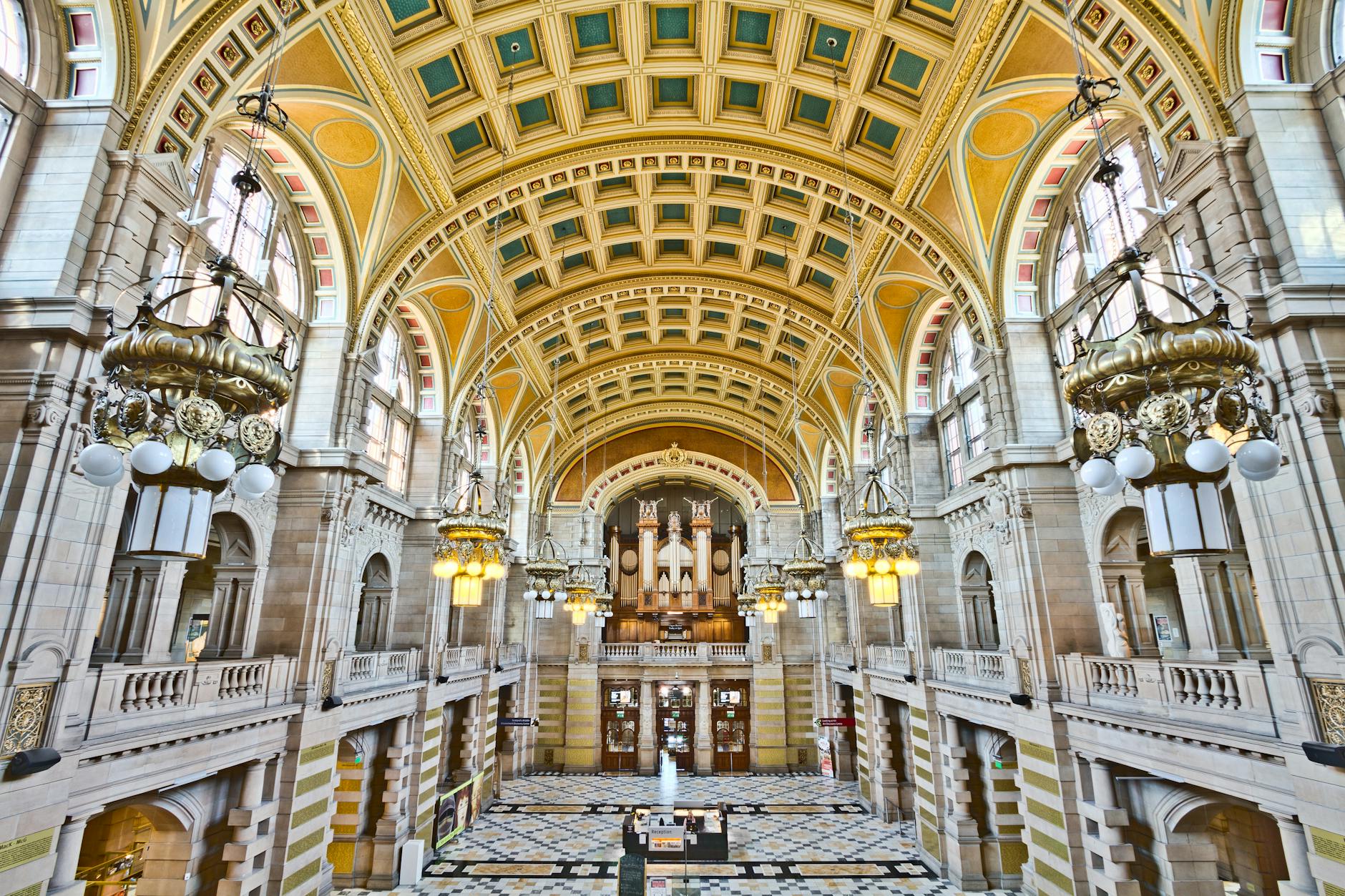
Stop 10: Kelvingrove Art Gallery and Museum (1901)
Strictly Edwardian rather than Victorian (opened 1901), but built with Victorian wealth and a Victorian sensibility. The red sandstone palace at the entrance to Kelvingrove Park is the city’s grandest single building. Free.
A self-guided loop takes in the best of it:
- George Square — the lavish City Chambers, a temple to Victorian civic pride.
- The Gallery of Modern Art — a former tobacco lord’s mansion turned exchange.
- St Vincent Street Church — Thomson’s masterpiece.
- The Templeton building on Glasgow Green — a carpet factory disguised as a Venetian palace.
- The University of Glasgow — Gilbert Scott’s soaring Gothic Revival tower over the West End.
Other Victorian Glasgow architecture worth a detour
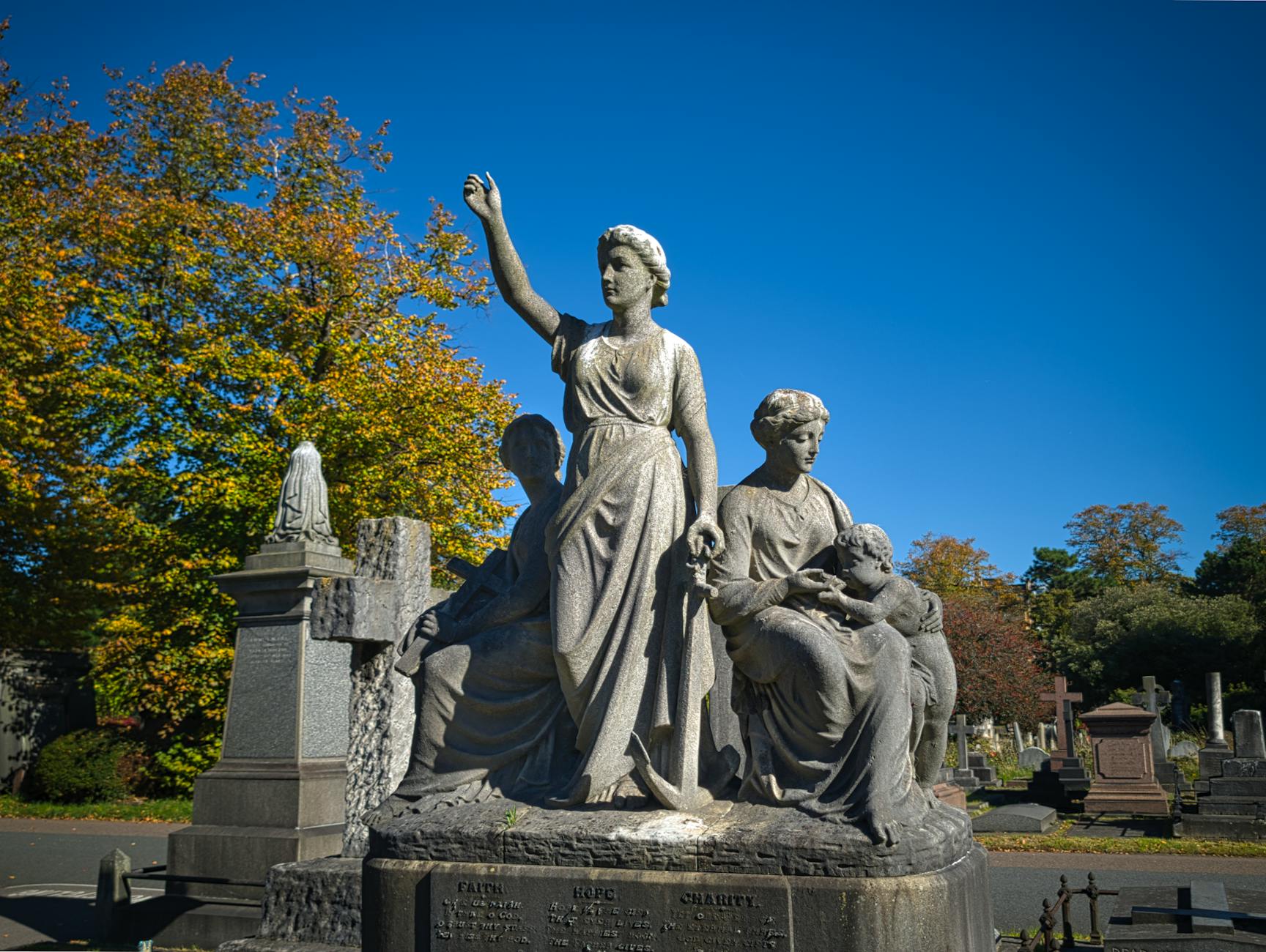
The Necropolis
The Victorian “city of the dead” behind the Cathedral, with 3,500 monuments — a Victorian sculpture park as much as a cemetery. Free, daylight hours.
Holmwood House (Cathcart, south side)
Alexander Thomson’s finest residential work, owned by the National Trust for Scotland. Open to visitors April-October; £8.50 entry. Worth the 25-minute Subway+walk.
Caledonia Road Church (Gorbals)
The Thomson church burned in 1965 and stands roofless — but it’s one of the most photographable ruined buildings in Britain. Free, viewable from the street.
Templeton Carpet Factory (Glasgow Green)
Designed by William Leiper in 1889, this Doge’s-Palace-Venice-meets-Glasgow factory is one of the city’s most extraordinary industrial buildings. Now houses bars and offices.
The People’s Palace and Winter Gardens (Glasgow Green)
Built 1898 as a “cultural centre for the people” — Glasgow’s working-class answer to the bourgeois West End museums. Currently undergoing major refurbishment; check current opening status.
If you only add one detour to the central walk, make it the river. The Templeton Carpet Factory on Glasgow Green is the city’s most enjoyable architectural joke — a working factory dressed as a Venetian palace, all coloured brick and pointed arches, built in 1889 because the city would not approve an ordinary industrial shed beside its park. Across the green, the People’s Palace was raised in 1898 as culture for the working East End, a deliberate counterweight to the bourgeois museums of the West End.
A few more are worth the extra travel if you have the time:
- Holmwood House (Cathcart) — Thomson’s finest villa, open seasonally, a short Subway-and-walk to the south.
- Caledonia Road Church (Gorbals) — a roofless Thomson ruin, free and viewable from the street.
- The Necropolis — a Victorian hillside of monuments behind the cathedral, as much sculpture park as cemetery.
- Glasgow Green’s Doulton Fountain — the largest terracotta fountain in the world, made for the 1888 Exhibition.
Practical tips for the Victorian Glasgow architecture walking tour
Time: 2.5 hours minimum for the central walk; allow 4 hours if you want to add Holmwood House or detour to the Necropolis.
Best time: sunny morning for the sandstone glow; golden hour for photographs.
Comfort: Glasgow streets are mostly flat downtown; the climb up to Park Circus is steep.
What to wear: walking shoes; a waterproof — see our Glasgow weather guide.
Free guides: the Alexander Thomson Society (alexanderthomsonsociety.org.uk) runs occasional free walking tours; check the events page.
Two things will make or break the walk: the weather and your neck. Sandstone looks its best in low, raking sun, so a bright morning or the golden hour late in the day rewards you with glowing facades and deep shadow in the carving; a flat grey day mutes everything. And much of Glasgow’s best Victorian detail is above first-floor level — carved heads, domes, statuary and the silhouettes against the sky — so this is a walk where you spend a lot of time looking up. Cross the road for the wider view rather than craning from directly beneath.
Plan around opening hours for the few interiors worth entering. The City Chambers runs free guided tours on weekday mornings and afternoons but they book up, and Holmwood House is seasonal. Everything else on the route is viewable free from the pavement at any time. Wear proper shoes — the centre is flat but the climb to Park Circus is steep — and carry a waterproof, as our history and architecture guide also advises for any walking day here.
Reading further on Victorian Glasgow architecture
The two key books are Glasgow at a Walk (Architecture & Design Scotland) and Alexander Thomson: The Unknown Genius (Gavin Stamp). Both are stocked at Aye-Aye Books in the Mitchell Library shop. The Glasgow Story website (theglasgowstory.com) has free image archives of every Victorian building in the city.
How Victorian Glasgow architecture compares to Edinburgh
Edinburgh is famously a Georgian city (the New Town); Glasgow is famously a Victorian city. Edinburgh has the more uniform 18th-century streetscape; Glasgow has the more dramatic 19th-century architecture. Both make excellent walking-architecture cities. For the New Town in Edinburgh, see our Edinburgh day trip from Glasgow guide.
Visitors often pit the two cities’ architecture against each other. Edinburgh is Georgian elegance and medieval Old Town; Glasgow is bolder, grander and more Victorian — a muscular industrial city that built on a vast scale and experimented hard, from Thomson’s Greek temples to Mackintosh’s modernism. If Edinburgh is a beautiful museum piece, Glasgow is a working masterclass in 19th-century confidence. Pair this with a day trip to Edinburgh to compare for yourself.
The contrast comes down to a single generation gap in their golden ages. Edinburgh did its great building in the Georgian eighteenth century, which is why the New Town reads as calm, uniform and restrained — classical good manners in stone. Glasgow’s boom came a hundred years later, in the Victorian nineteenth, when architects were richer, more confident and far more willing to experiment, so the city swings from Greek temples to Venetian palaces to gothic towers, sometimes on the same street.
Seen together they make the best architecture double-bill in Britain: the elegant museum piece an hour to the east, the muscular working masterclass at home. The train makes the comparison easy — our Edinburgh day trip from Glasgow guide covers the 50-minute hop — and walking the New Town the same week you have walked Park Circus throws both cities into sharp relief.
FAQs
What is Victorian Glasgow architecture?
The buildings constructed during Queen Victoria’s reign (1837–1901) — Glasgow’s industrial-wealth peak. Recognisable by sandstone, classical or gothic-revival forms, and grand civic ambition.
Who was Alexander “Greek” Thomson?
Alexander Thomson (1817–1875) was the pre-eminent Glasgow architect of the mid-Victorian era. Self-taught, his designs draw on Greek, Egyptian and Hindu temple architecture. Major surviving works: St Vincent Street Church, Egyptian Halls, Buck’s Head Building, Holmwood House.
What’s the best Victorian building to visit in Glasgow?
Glasgow City Chambers for free guided tours of the marble interior; Holmwood House for the most personal Thomson residential work; Park Circus for the most ambitious Victorian town-planning.
Can you tour Glasgow City Chambers?
Yes — free guided tours typically run Mon–Fri at 10.30am and 2.30pm. Book ahead via the Glasgow Life website.
How long does a Victorian Glasgow architecture walking tour take?
2.5 hours for a focused city-centre walk; 4 hours including Park Circus and the Necropolis; a full day if adding Holmwood House (south side).
Is the Victorian Glasgow architecture walk free?
Yes — every stop on the recommended route except Holmwood House and the City Chambers tour is viewable free from the street. The City Chambers tour itself is free; Holmwood House charges £8.50.
Plan more Glasgow architecture days
This article is part of our wider history and architecture of Glasgow guide. Pair it with our Charles Rennie Mackintosh trail for the city’s other architectural superstar and our Glasgow Cathedral guide for the medieval precinct.