Glasgow history stretches back over 1,500 years, from a small religious settlement to Scotland’s largest city. Glasgow’s story is written in stone — quite literally. From a humble 6th-century religious settlement on the banks of the Molendinar Burn to the ‘Second City of the British Empire’ that launched a quarter of the world’s ships, Glasgow has reinvented itself more dramatically than almost any city in Europe. Its architecture tells that story at every turn: medieval cathedral stone gives way to Georgian elegance, Victorian industrial grandeur yields to Art Nouveau innovation, and postwar brutalism sits alongside 21st-century regeneration.
This is a city where you can stand inside a medieval cathedral that has survived 800 years of Scottish history, walk through streets laid out by tobacco merchants who grew richer than kings, climb a Victorian necropolis modelled on Père Lachaise in Paris, tour civic chambers with more marble than the Vatican, and trace the revolutionary designs of Charles Rennie Mackintosh — all in a single day. Glasgow history highlights include glasgow’s heritage is not preserved behind velvet ropes; it’s lived in, worked in, and celebrated by a city that has always looked forward while honouring its past.
This guide traces Glasgow’s history from its founding by St Mungo to the present day, exploring the landmarks, architecture, and stories that make it one of the most historically rich cities in Britain. Glasgow history highlights include combine it with our guides to Glasgow museums, things to do, and getting around the city for a complete visit.
Glasgow History: Table of Contents
- Medieval Glasgow: St Mungo and the Cathedral
- The Tobacco Lords and the Merchant City
- Industrial Glasgow: Shipbuilding and the Second City
- Victorian Architecture: The Grand City
- Charles Rennie Mackintosh and the Glasgow Style
- Alexander Greek Thomson: Glasgow’s Other Genius
- Glasgow Cathedral: 800 Years of History
- The Glasgow Necropolis
- George Square and the City Chambers
- The Merchant City Quarter
- The University of Glasgow
- Modern Glasgow: Reinvention and Regeneration
- Heritage Walking Routes
- Glasgow History: Frequently Asked Questions
Glasgow History: Medieval Glasgow: St Mungo and the Cathedral
Glasgow’s origins lie in the story of St Mungo — also known as Kentigern — a 6th-century Christian missionary who established a church and community beside the Molendinar Burn, a tributary of the River Clyde. Glasgow history highlights include the name ‘Glasgow’ is commonly believed to derive from the Brittonic words for ‘dear green place,’ a description that still resonates in a city renowned for its parks and green spaces.
In 1175, King William the Lion granted Glasgow its royal burgh charter, giving the settlement the right to hold markets and govern its own affairs. This was a pivotal moment — it transformed Glasgow from a small religious community into a medieval trading town with growing economic ambitions. The great Glasgow Cathedral, begun in the 12th century and completed in its present form by the late 15th century, became the focus of pilgrimages to St Mungo’s shrine and the spiritual heart of the growing town.
In 1451, the University of Glasgow was founded by papal bull, making it the fourth-oldest university in the English-speaking world. For centuries, Glasgow remained a modest cathedral town, overshadowed by Edinburgh’s political importance. It would take the age of Atlantic trade to transform it into one of the wealthiest cities on Earth.
Glasgow History: The Tobacco Lords and the Merchant City
Glasgow’s first great transformation came in the 18th century, driven by transatlantic trade. The city’s position on Scotland’s west coast gave it a geographical advantage for trade with the American colonies, and by the mid-1700s, Glasgow had become the tobacco capital of Britain. By the late 18th century, more than half of all British tobacco imports — over 47 million pounds annually — passed through Glasgow’s docks.
The men who controlled this trade, known as the Tobacco Lords, became fabulously wealthy and used their fortunes to reshape the city. They built grand mansions, laid out new streets on a grid pattern (which the city centre still follows today), and invested in the infrastructure that would support Glasgow’s future industrial expansion. The area they developed — east of the medieval High Street — became known as the Merchant City, and many of their warehouses, counting houses, and townhouses survive today as restaurants, galleries, and boutique hotels.
The most notable surviving Tobacco Lord residence is the Cunninghame Mansion on Royal Exchange Square, built in 1778 for William Cunninghame of Lainshaw and now housing the Gallery of Modern Art (GoMA). Its neoclassical grandeur — complete with the famously cone-topped Duke of Wellington statue outside — speaks to the extraordinary wealth that flowed through Glasgow during this era. The American War of Independence disrupted the tobacco trade, but Glasgow’s merchants pivoted to cotton, sugar, and eventually heavy industry, laying the foundations for the city’s next great chapter.
Glasgow History: Industrial Glasgow: Shipbuilding and the Second City
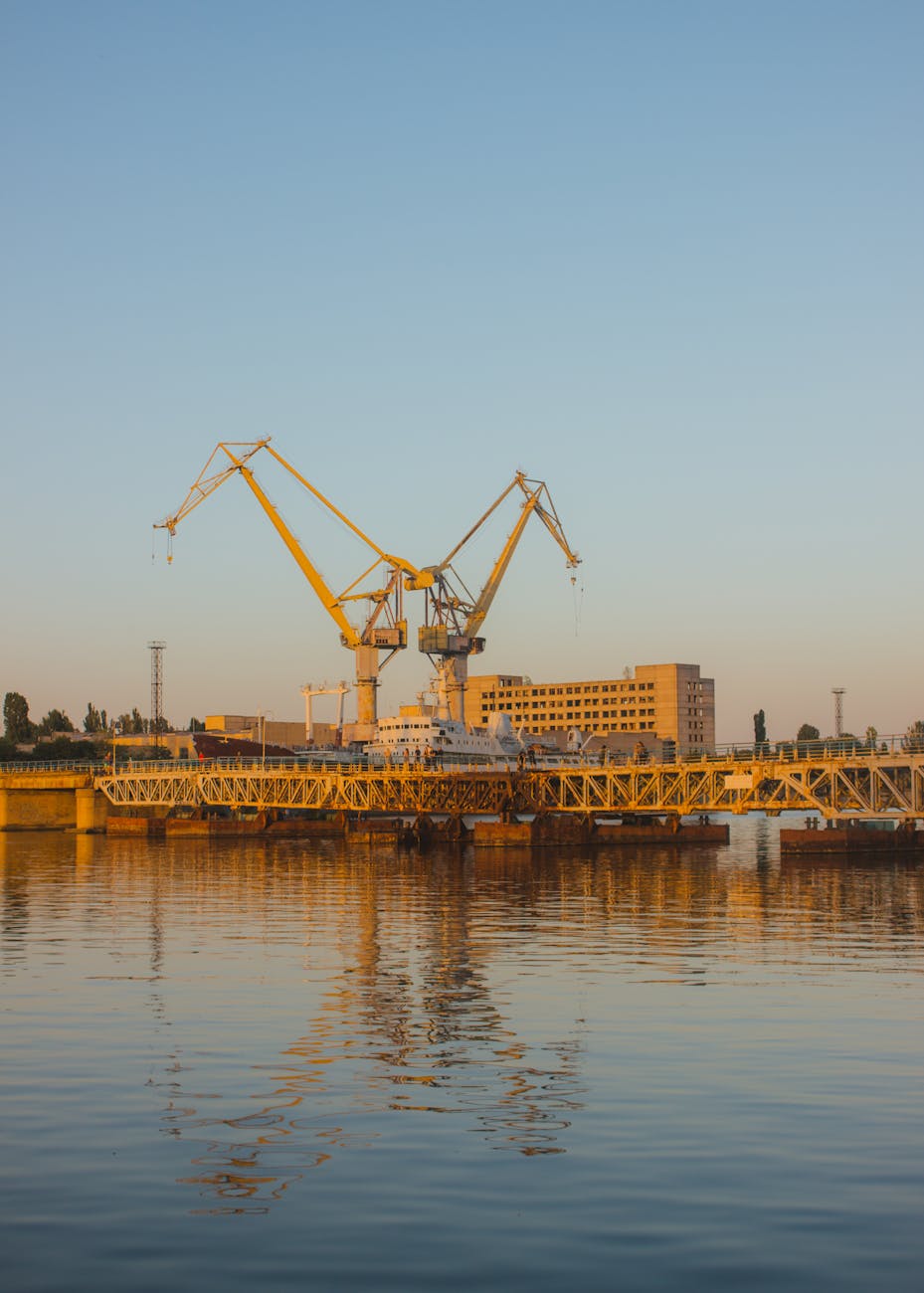
The 19th century transformed Glasgow from a prosperous trading city into an industrial powerhouse of global significance. The deepening of the River Clyde in the 1770s — a monumental engineering project that transformed a shallow salmon river into a navigable waterway — opened the door to large-scale shipbuilding, and Glasgow seized the opportunity with characteristic ambition.
By the 1860s, more than twenty shipyards lined the Clyde, and by 1870, half of Britain’s entire shipbuilding workforce was based in Glasgow. At its peak, the Clyde yards launched around a quarter of the world’s shipping tonnage. The ships built here ranged from cargo vessels and warships to some of the most famous ocean liners ever constructed — the Lusitania, launched from John Brown’s yard in Clydebank in 1906, was the largest ship in the world at the time. Glasgow earned the title ‘Second City of the British Empire,’ a description that reflected not just its industrial output but its cultural confidence, civic pride, and global trading connections.
Alongside shipbuilding, Glasgow became a centre for locomotive engineering, steel production, textile manufacturing, and chemical works. The city’s population exploded — from around 77,000 in 1801 to over one million by 1912 — bringing both extraordinary prosperity and severe social problems. The overcrowded tenements of the East End became notorious for their poverty and poor health, while the wealthy West End and the commercial city centre displayed the grandeur of a city that believed itself the workshop of the world.
Today, the shipbuilding heritage is powerfully preserved at the Riverside Museum, where Zaha Hadid’s award-winning building houses over 3,000 transport objects, and the Tall Ship Glenlee — one of only five Clyde-built sailing ships still afloat — is moored alongside.
Victorian Architecture: The Grand City
Glasgow’s industrial wealth in the 19th century produced an architectural legacy that rivals any city in Britain. The vast majority of the city centre as seen today dates from the Victorian and Edwardian eras, and the quality and ambition of the buildings reflect a city that saw itself as a world capital.
Glasgow City Chambers
The City Chambers on George Square is the supreme expression of Glasgow’s Victorian civic confidence. Designed by William Young in an opulent Beaux-Arts style and opened by Queen Victoria in 1888, the building’s interior is breathtaking: Carrara marble staircases (the largest in Western Europe — one storey taller than the Vatican’s), mosaic ceilings, elaborate murals by Glasgow artists, and a banqueting hall that can seat 300. Free guided tours run twice daily at 10:30am and 2:30pm, Monday to Friday — they are one of Glasgow’s great hidden gems.
The University of Glasgow
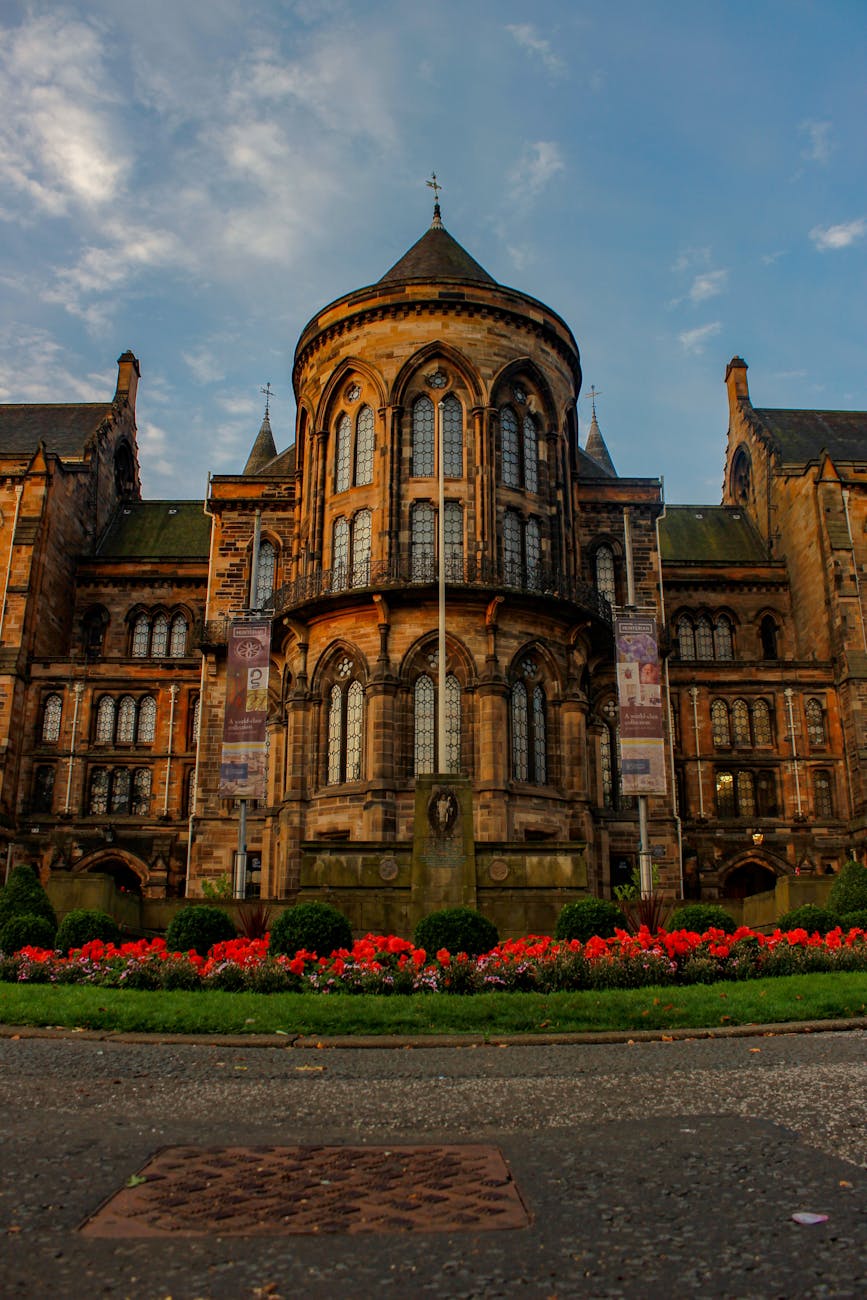
When the University of Glasgow moved from its cramped medieval quarters in the High Street to the West End in 1870, it commissioned Sir George Gilbert Scott to design a new main building. The result is one of the grandest Gothic Revival buildings in Britain — a soaring complex of towers, cloisters, and quadrangles that regularly appears in lists of the world’s most beautiful universities and frequently doubles as a film location (it has stood in for Hogwarts in promotional material). The university grounds are open to visitors, and the Hunterian Museum and Art Gallery within the campus is one of Glasgow’s finest cultural attractions.
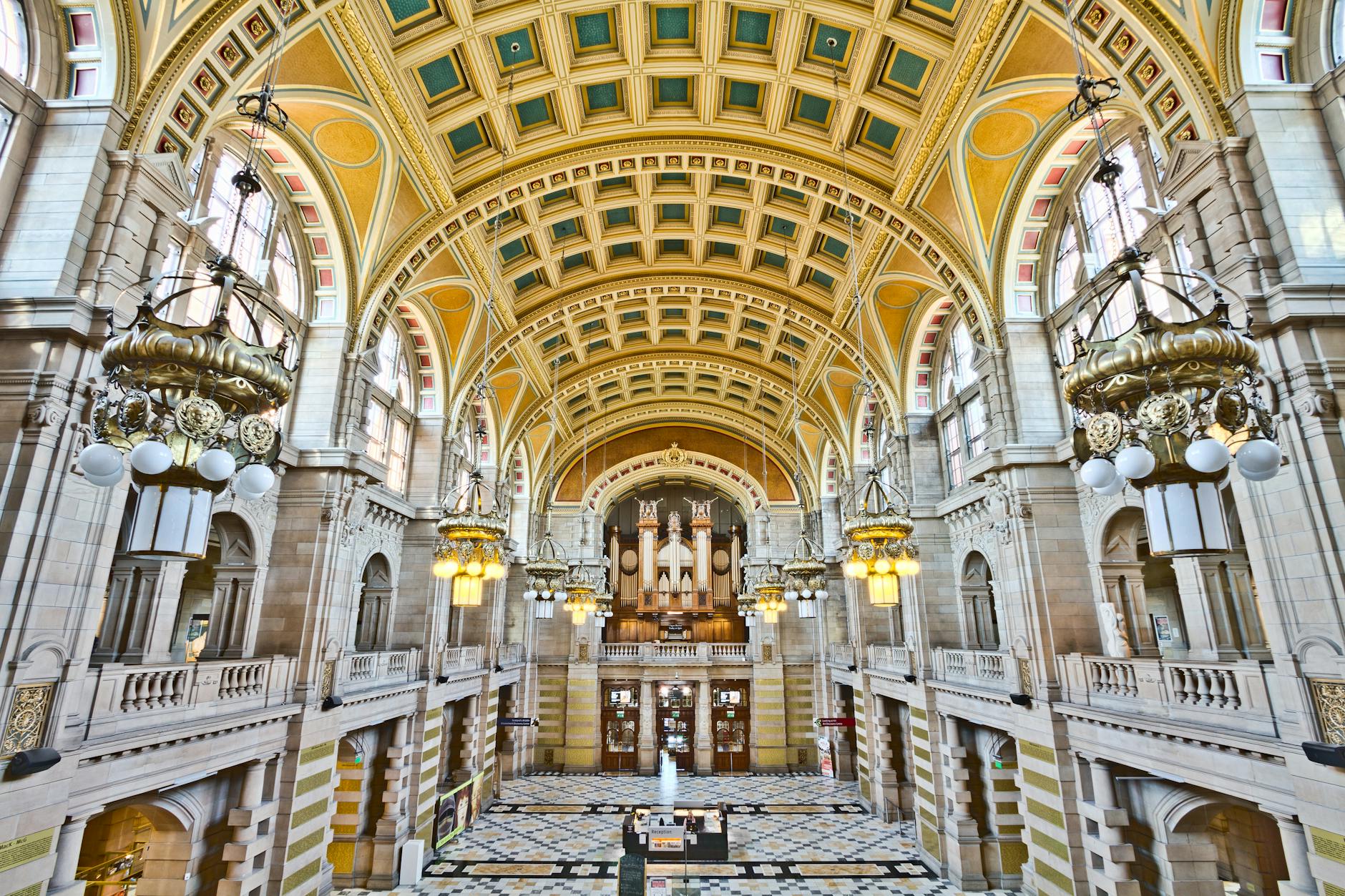
Kelvingrove Art Gallery and Museum
Built for Glasgow’s International Exhibition of 1901, Kelvingrove’s red sandstone Spanish Baroque facade is one of the most recognisable buildings in Scotland. There’s a popular myth that the building was constructed back-to-front by mistake — it wasn’t, but the story persists because the grand entrance on the Argyle Street side faces away from the park. Whether approaching from the park or the street, Kelvingrove is architectural spectacle.
Other Victorian Highlights
The Templeton Building on Glasgow Green — modelled on the Doge’s Palace in Venice — was originally a carpet factory and is now a business centre, its polychrome brick and tile facade one of the most extraordinary industrial buildings in Britain. The Kibble Palace in the Botanic Gardens is a magnificent Victorian iron and glass conservatory housing a collection of tree ferns and exotic plants. St Vincent Street Church and the Egyptian Halls on Union Street showcase the genius of Alexander Thomson, while the Mitchell Library — Europe’s largest public reference library — dominates the skyline west of the M8 motorway with its vast green copper dome.
Charles Rennie Mackintosh and the Glasgow Style
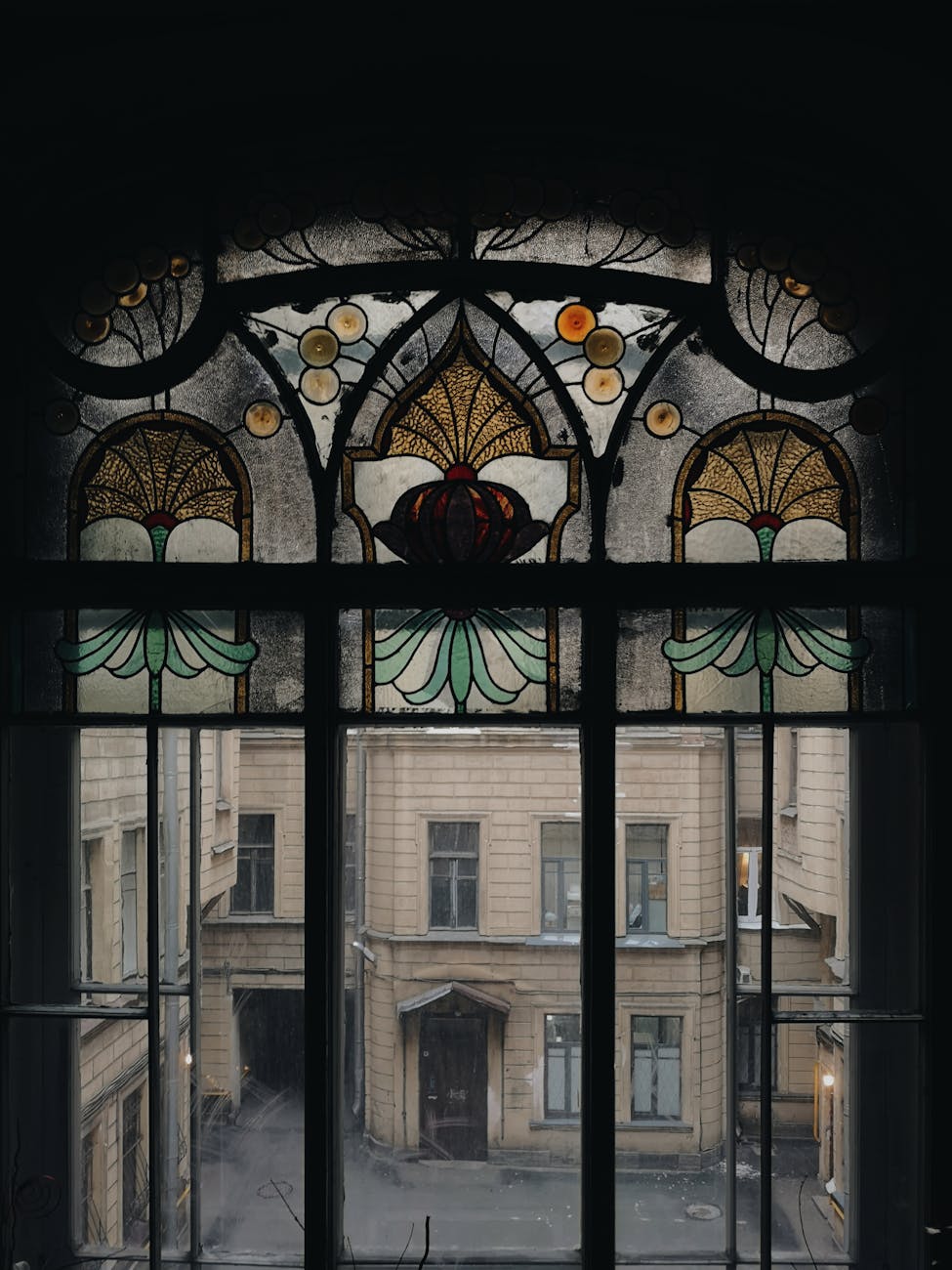
Charles Rennie Mackintosh (1868–1928) is Glasgow’s most celebrated architect and designer, and arguably the most important British architect of the early 20th century. Working alongside his wife Margaret Macdonald, Mackintosh developed a distinctive style that fused Art Nouveau organic forms with clean geometric lines — creating buildings and interiors that were decades ahead of their time and profoundly influenced modernist design across Europe.
Key Mackintosh Buildings
The Glasgow School of Art (1897–1909) is widely considered Mackintosh’s masterwork — a building that the architectural critic Nikolaus Pevsner called ‘the most significant work of architecture produced in the British Isles since the Middle Ages.’ Tragically, fires in 2014 and 2018 caused devastating damage, and restoration work continues. Check for the latest updates before visiting.
Other essential Mackintosh sites include: The Lighthouse on Mitchell Lane, his first public commission (the Glasgow Herald building, 1895), now Scotland’s Centre for Design and Architecture with a permanent Mackintosh Interpretation Centre and rooftop viewing platform. Scotland Street School (1903–06), now a museum of education, featuring his trademark leaded-glass stair towers. House for an Art Lover in Bellahouston Park, designed in 1901 but not built until 1989–96. The Willow Tea Rooms on Buchanan Street, a faithful recreation of his original 1903 design. Queens Cross Church, the only church Mackintosh designed, now the headquarters of the CRM Society. The Mackintosh House at the Hunterian recreates his own Glasgow home with original furniture.
The Glasgow Style Movement
Mackintosh was part of a broader creative movement known as the Glasgow Style, which flourished between the 1890s and 1920s. Centred on the Glasgow School of Art, the movement encompassed architecture, interior design, metalwork, textiles, and graphic art, and included artists like Margaret Macdonald, Frances Macdonald, and Herbert McNair — collectively known as ‘The Four.’ The Glasgow Style influenced the Vienna Secession, Jugendstil, and other European modernist movements, establishing Glasgow as one of the creative capitals of its era.
Alexander Greek Thomson: Glasgow’s Other Genius
If Mackintosh is Glasgow’s most famous architect, Alexander ‘Greek’ Thomson (1817–1875) is its most underappreciated. Thomson developed an extraordinary personal style that drew on ancient Greek, Egyptian, and Assyrian architecture to create buildings unlike anything else in the world. His churches, terraced houses, and commercial buildings gave Glasgow a distinctive character that set it apart from any other Victorian city.
Thomson’s St Vincent Street Church (1859) is a masterpiece — an extraordinary fusion of Greek temple forms, Egyptian-inspired columns, and Italianate towers that defies easy categorisation. His Holmwood House in Cathcart, now managed by the National Trust for Scotland, is considered the finest Greek Revival domestic villa in Britain. The Egyptian Halls on Union Street (1871–73), with their distinctive pilastered facade, are perhaps his most recognisable commercial work, though they have suffered from neglect and remain a conservation concern. The biennial Alexander Thomson Travelling Scholarship supports the study of his work and helps keep his legacy alive.
Glasgow Cathedral: 800 Years of History
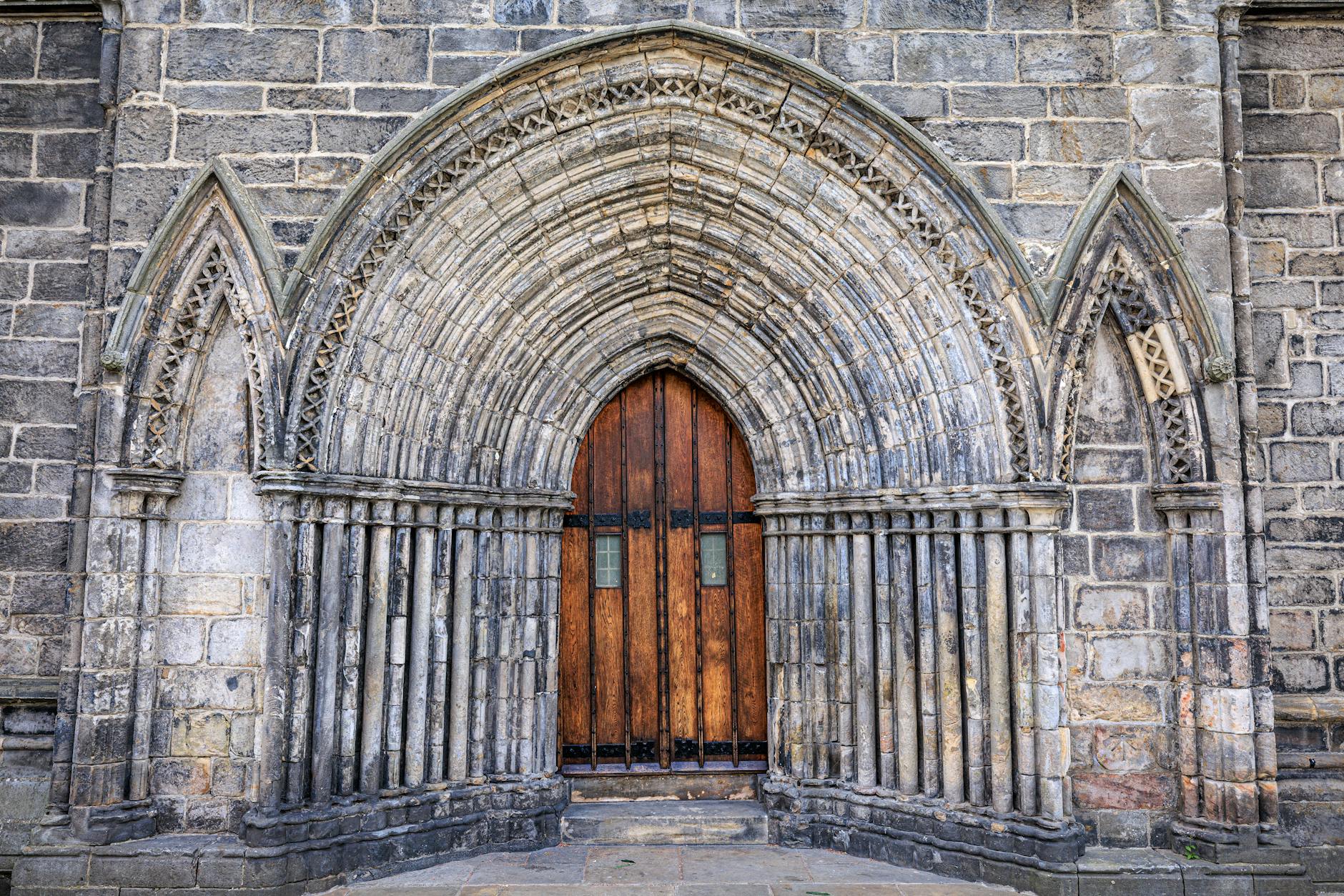
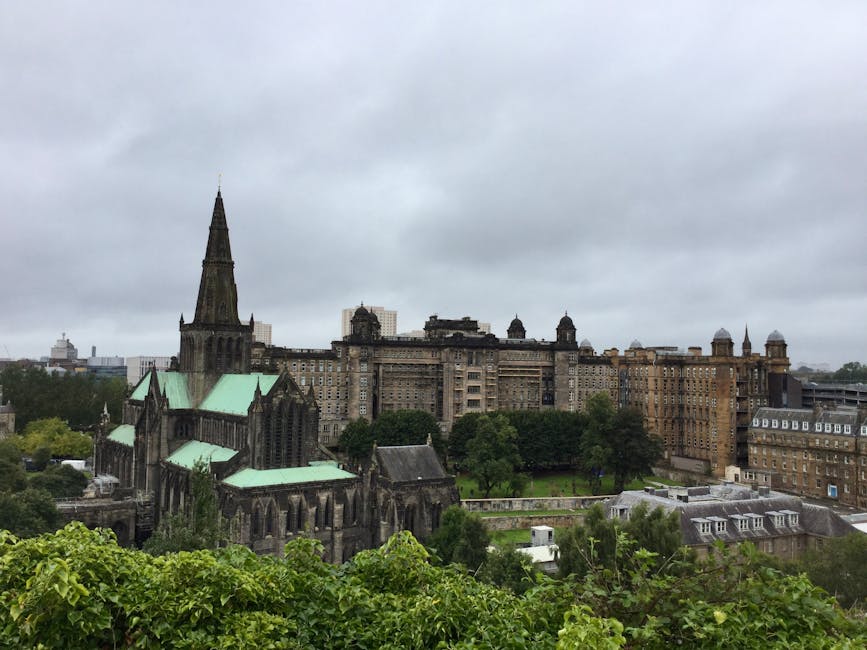
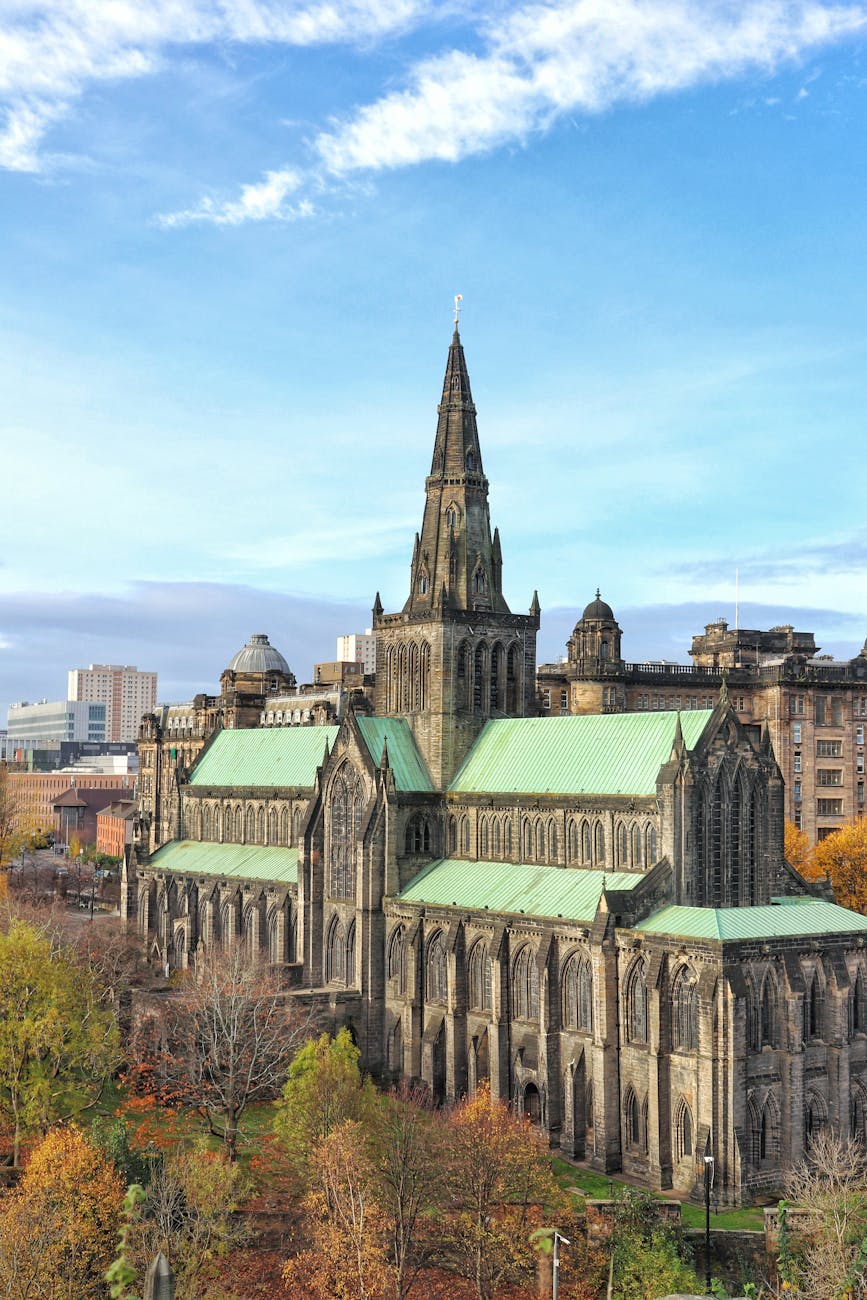
Glasgow Cathedral is the city’s most important historic building and one of the few Scottish medieval cathedrals to have survived the Reformation virtually intact. Founded on the site of St Mungo’s 6th-century church, the current building dates primarily from the 13th to 15th centuries, with the lower church — built around the tomb of St Mungo — featuring a remarkable forest of stone columns and ribbed vaulting that is among the finest medieval architecture in Scotland.
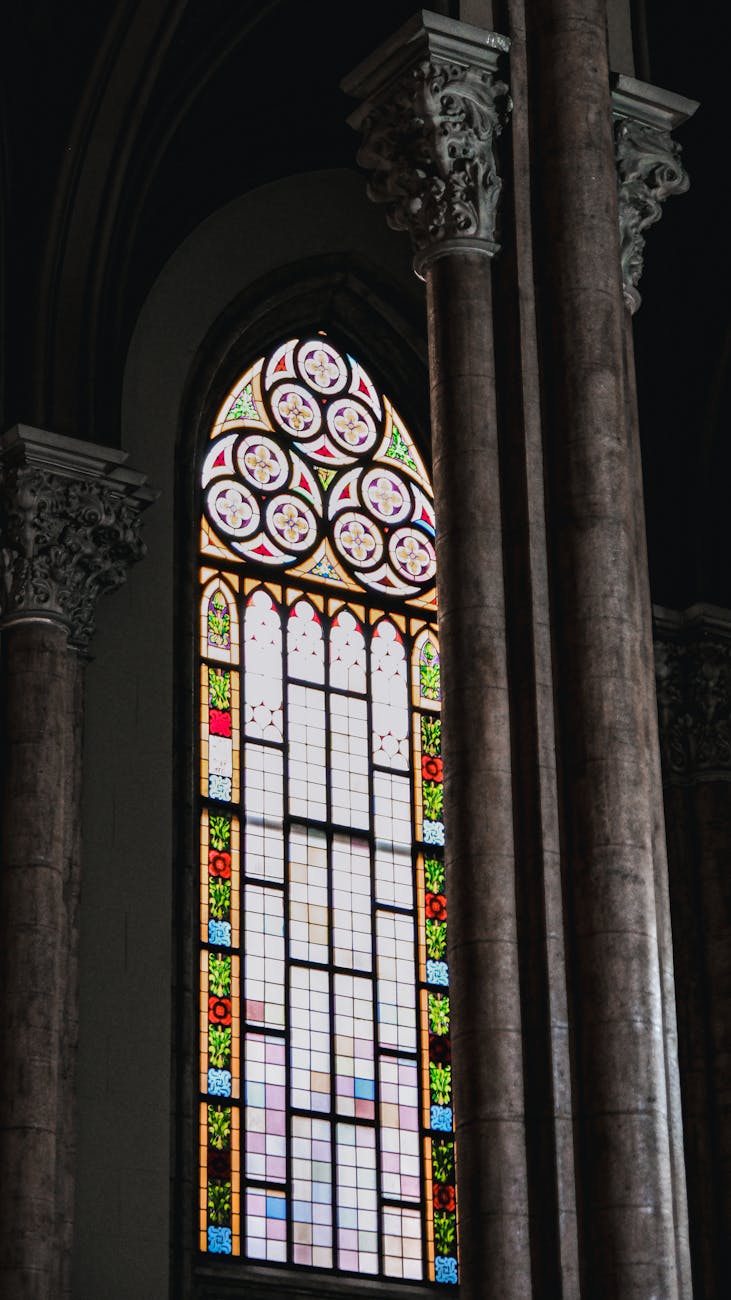
The cathedral’s post-war stained glass windows, designed by artists including Douglas Strachan, are exceptional. The building is managed by Historic Environment Scotland and is free to visit, with guided tours available. The atmospheric lower church, the Blackadder Aisle, and the medieval chapter house are highlights. Allow at least an hour for a thorough visit, and combine it with the adjacent Necropolis for one of Glasgow’s most rewarding heritage experiences.
The Glasgow Necropolis
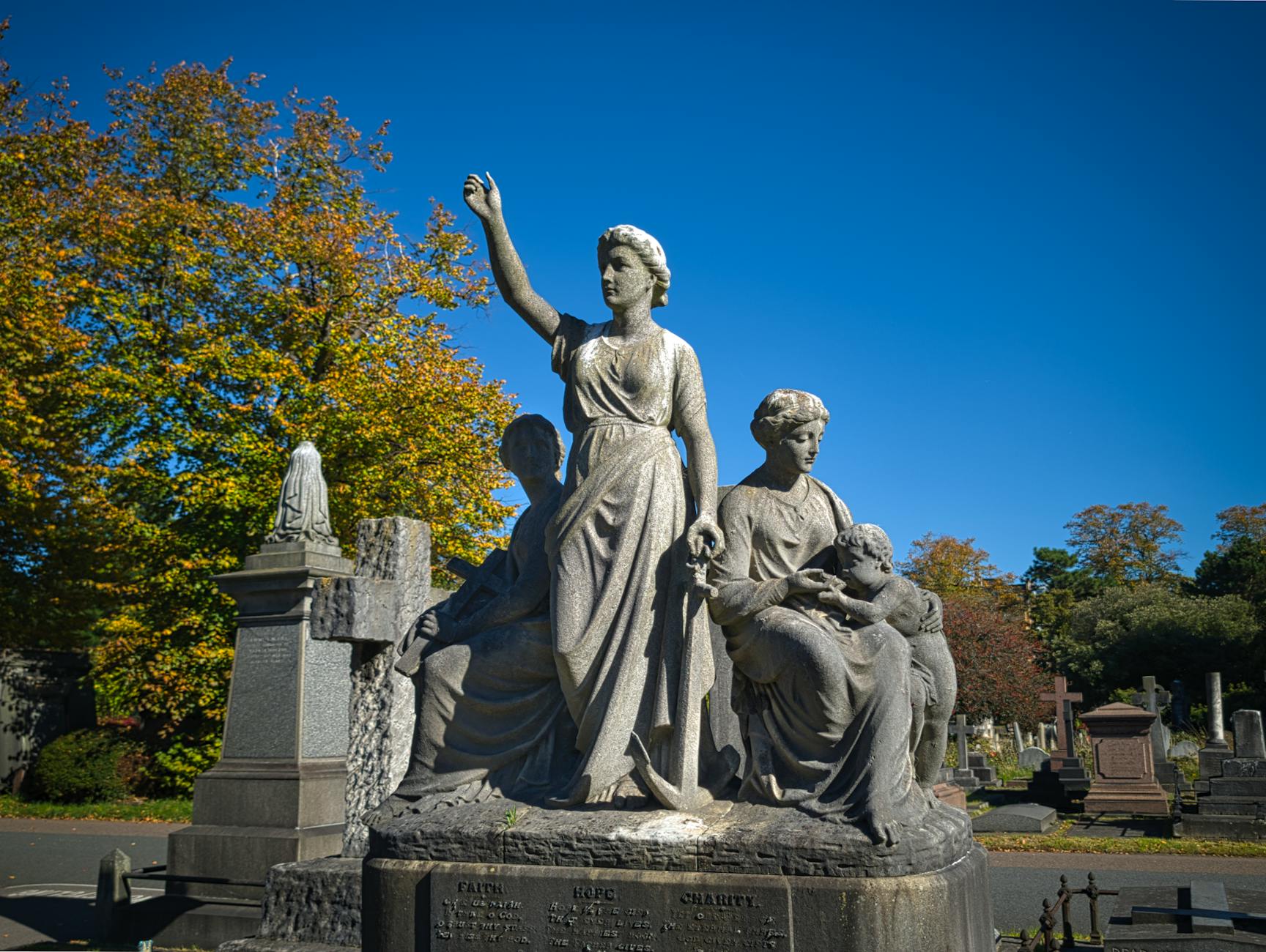
Rising on a hill directly behind Glasgow Cathedral, the Necropolis is one of the most striking Victorian cemeteries in Europe. Inspired by Père Lachaise in Paris, it was established by the Merchants’ House of Glasgow in 1831 as a grand, non-denominational burial ground. An estimated 50,000 people are buried here, with around 3,500 monuments and tombs — many of them extraordinary examples of Victorian funerary art, designed by leading architects of the day.
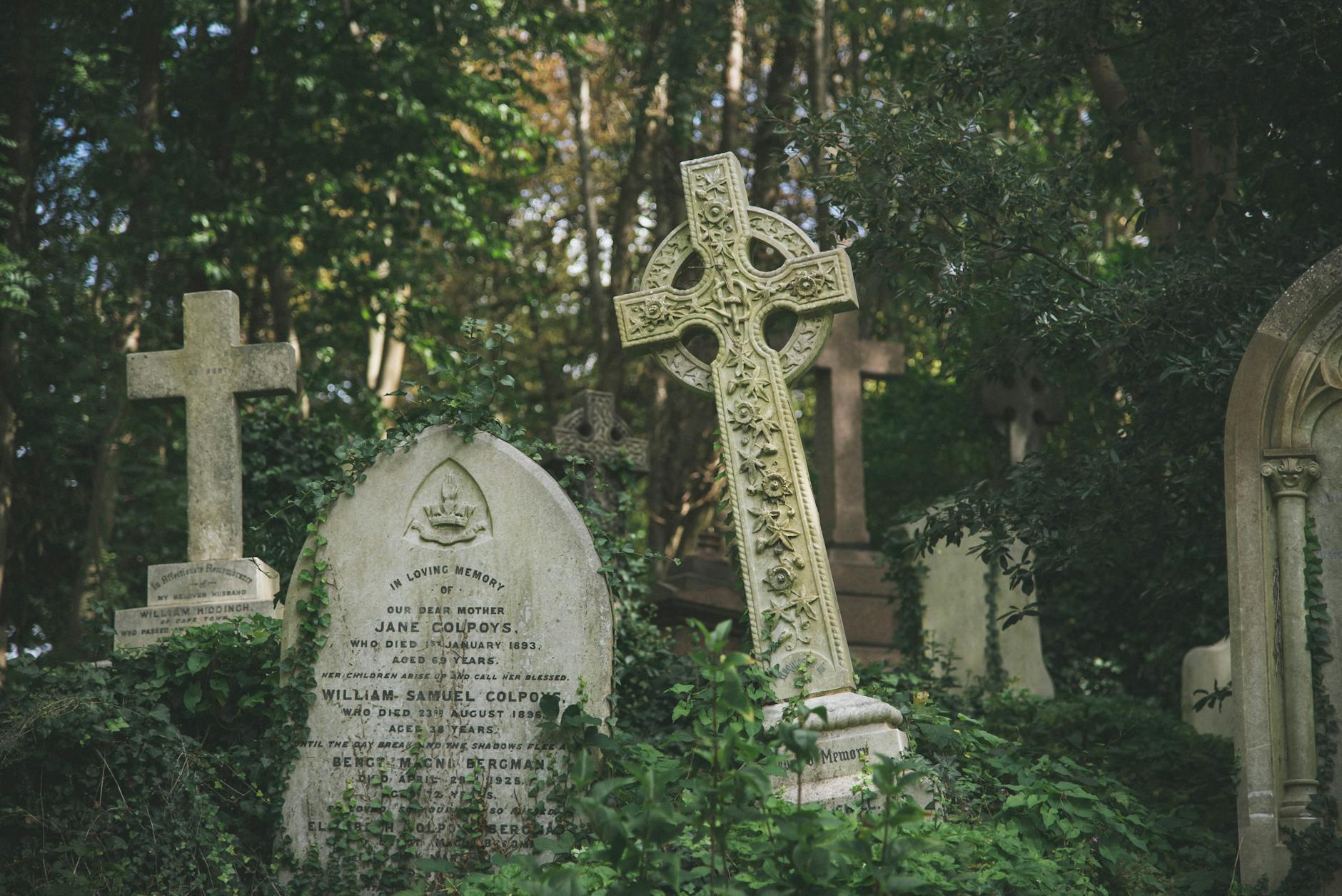
A monument to the Protestant reformer John Knox, erected in 1825, dominates the hilltop and provides one of the finest panoramic views in Glasgow — sweeping from the cathedral below across the city centre to the distant Campsie Fells. The Necropolis is free to visit and open during daylight hours. Guided walks run regularly through the Friends of Glasgow Necropolis, or you can explore independently — the combination of architecture, sculpture, and city views makes this one of Glasgow’s most atmospheric places. It’s a 20-minute walk from George Square or a 10-minute walk from the cathedral.
Among the notable monuments, look for the tombs of John Henry Alexander (an elaborate Gothic spire), the Monteath Mausoleum (a full-scale replica of a Doric temple), and the ornate Celtic cross of the Buchanan family. The architectural range is extraordinary — Greek Revival, Egyptian, Gothic, and Romanesque styles compete for attention across the hillside. Many of the monuments were designed by leading Glasgow architects, including Charles Wilson and J.T. Rochead, making the Necropolis an outdoor gallery of 19th-century architectural ambition.
George Square and the City Chambers
George Square is Glasgow’s principal civic square and the beating heart of the city centre. Laid out in 1781 and named after King George III, the square is surrounded by grand Victorian buildings and filled with statues of famous Scots and British figures — including Robert Burns, James Watt, Sir Walter Scott (atop an 80-foot column), and Queen Victoria.
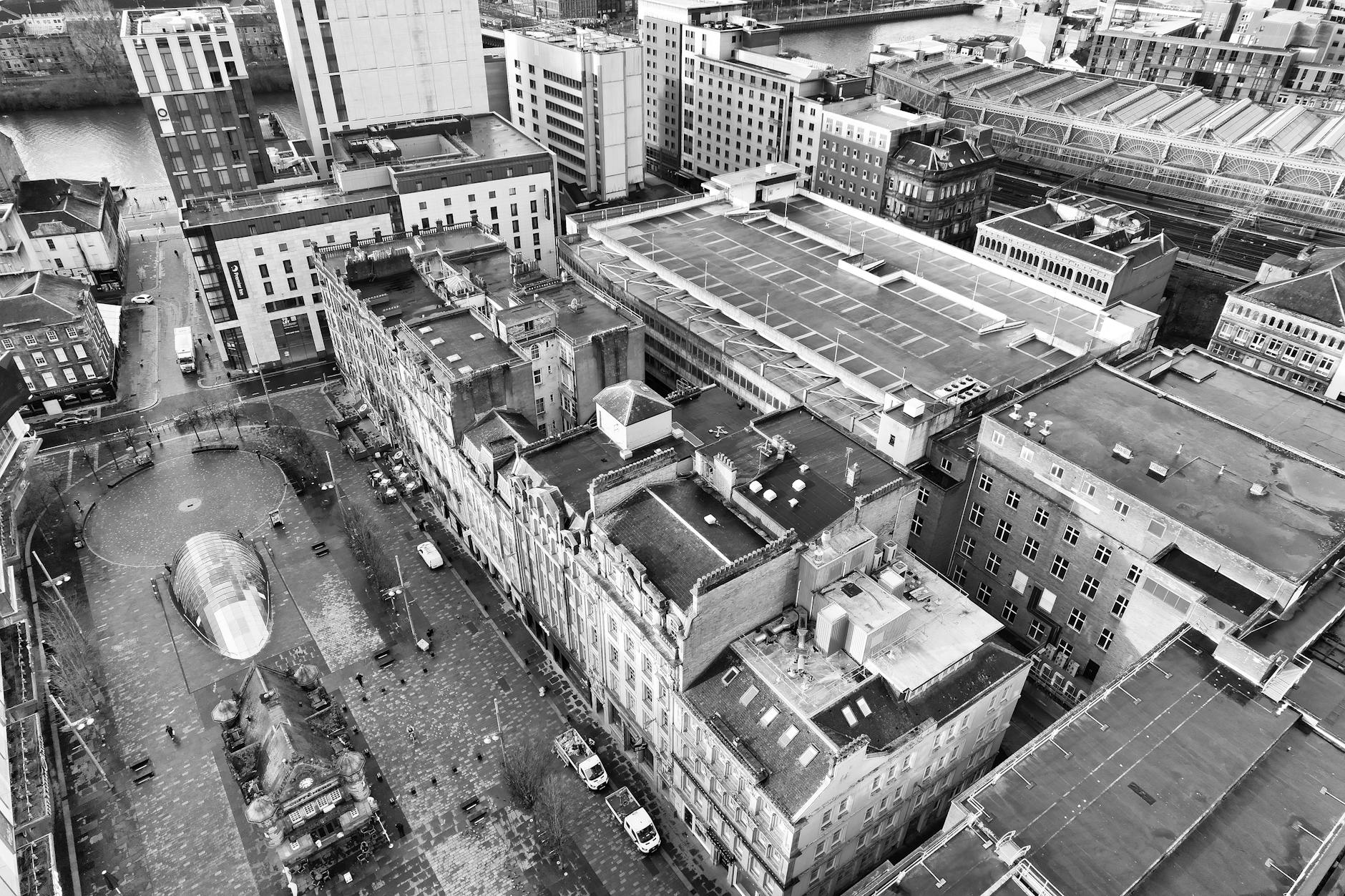
The eastern side is dominated by the magnificent City Chambers, which we described in detail above. The square itself serves as Glasgow’s main gathering place for public events, festivals, Christmas markets, and Hogmanay celebrations. It’s the natural starting point for any exploration of the city centre and connects easily to the Merchant City, the shopping streets of Buchanan Street and Argyle Street, and the medieval quarter around the cathedral.
The Merchant City Quarter
The Merchant City is Glasgow’s most elegant urban quarter — a grid of streets east of George Square where 18th-century tobacco merchants’ warehouses and townhouses have been beautifully restored as galleries, restaurants, boutique hotels, and independent shops. It’s the area that best illustrates Glasgow’s transition from medieval town to Georgian trading city.
Key architectural highlights include the Trades Hall on Glassford Street (1794, designed by Robert Adam), the City Halls and Old Fruitmarket (now a concert venue), the Trongate with its medieval Tron Steeple, and the Italian Centre on Ingram Street. The Merchant City is also the heart of Glasgow’s bar and dining scene, with some of the city’s finest restaurants occupying converted Georgian buildings. The annual Merchant City Festival in late July transforms the streets with outdoor performances, markets, and art installations.
The area’s history is inseparable from Glasgow’s role in the transatlantic slave trade, a connection the city has increasingly acknowledged in recent years. The wealth that built these elegant streets came largely from tobacco, cotton, and sugar plantations worked by enslaved people. Several civic initiatives and guided walks now explore this complex history with honesty and sensitivity — a visit to the Merchant City is richer for understanding the full story behind its architecture.
For visitors, the Merchant City is best explored on foot. Its compact grid of streets can be covered in about an hour, though the cafés, galleries, and independent shops will tempt you to linger much longer. On weekends, the Barras Market (Glasgow’s legendary flea market) operates just to the east, offering a vibrant counterpoint to the Merchant City’s refined elegance
The University of Glasgow
Founded in 1451, the University of Glasgow is the fourth-oldest university in the English-speaking world and one of the city’s most important architectural landmarks. The main campus in the West End, designed by Sir George Gilbert Scott and constructed between 1870 and 1891, is a masterpiece of Gothic Revival architecture — its tower is visible from across the city and has become one of Glasgow’s most iconic silhouettes.
The university’s cloisters, the memorial chapel, and the grand quadrangle are open to visitors. The Hunterian Museum and Art Gallery on campus includes the Mackintosh House and world-class collections spanning art, archaeology, and natural history. The surrounding West End neighbourhood — with its leafy terraces, independent cafés on Byres Road, and the Botanic Gardens — is one of Glasgow’s most charming areas for a visitor base.
Modern Glasgow: Reinvention and Regeneration
Glasgow’s 20th-century story is one of dramatic decline followed by remarkable reinvention. The collapse of shipbuilding and heavy industry from the 1960s onwards devastated the city’s economy and population. But Glasgow responded with a Glasgow history and cultural renaissance that began with its selection as European City of Culture in 1990 — a watershed moment that reframed the city’s image from post-industrial decline to creative dynamism.
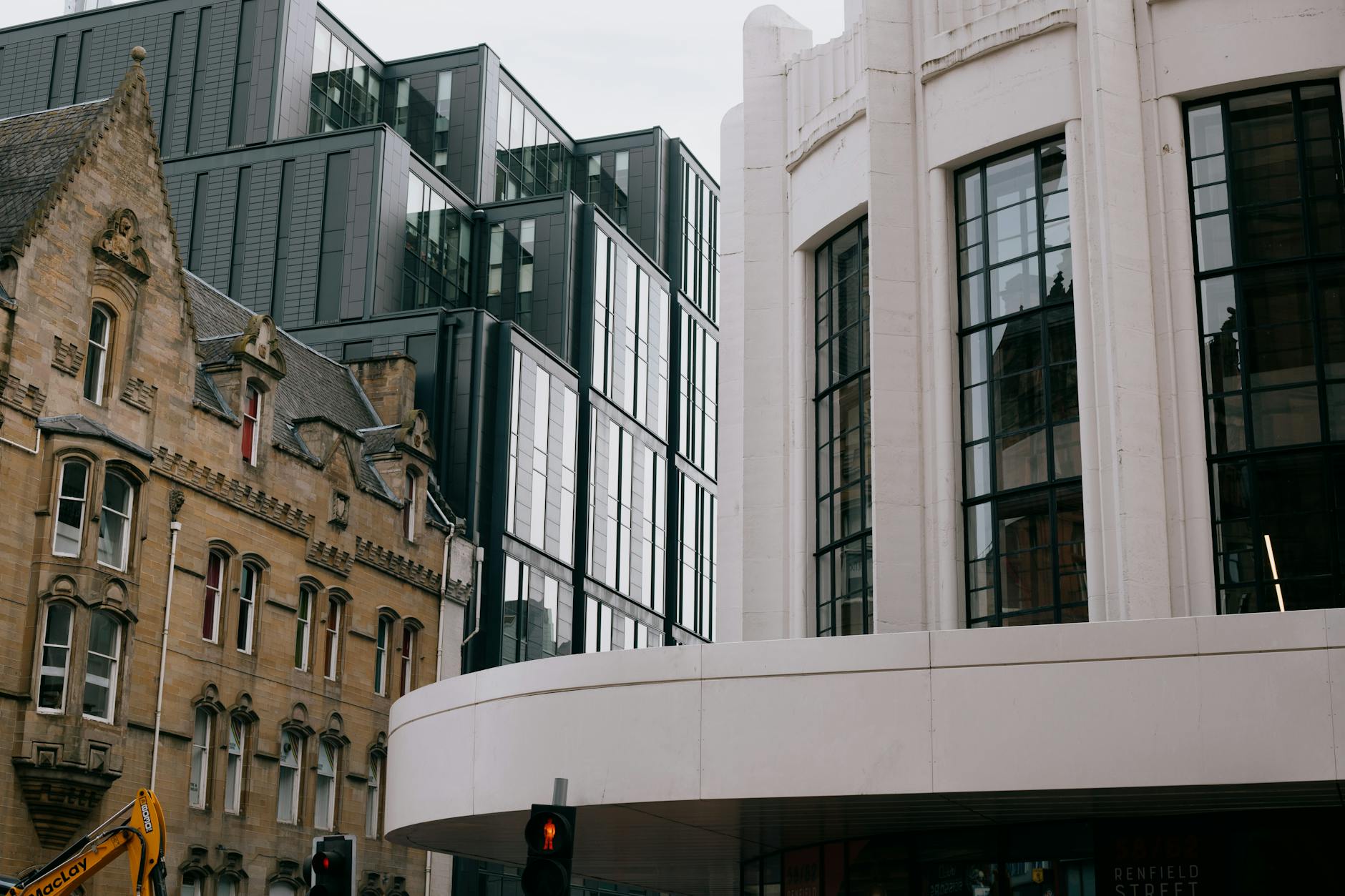
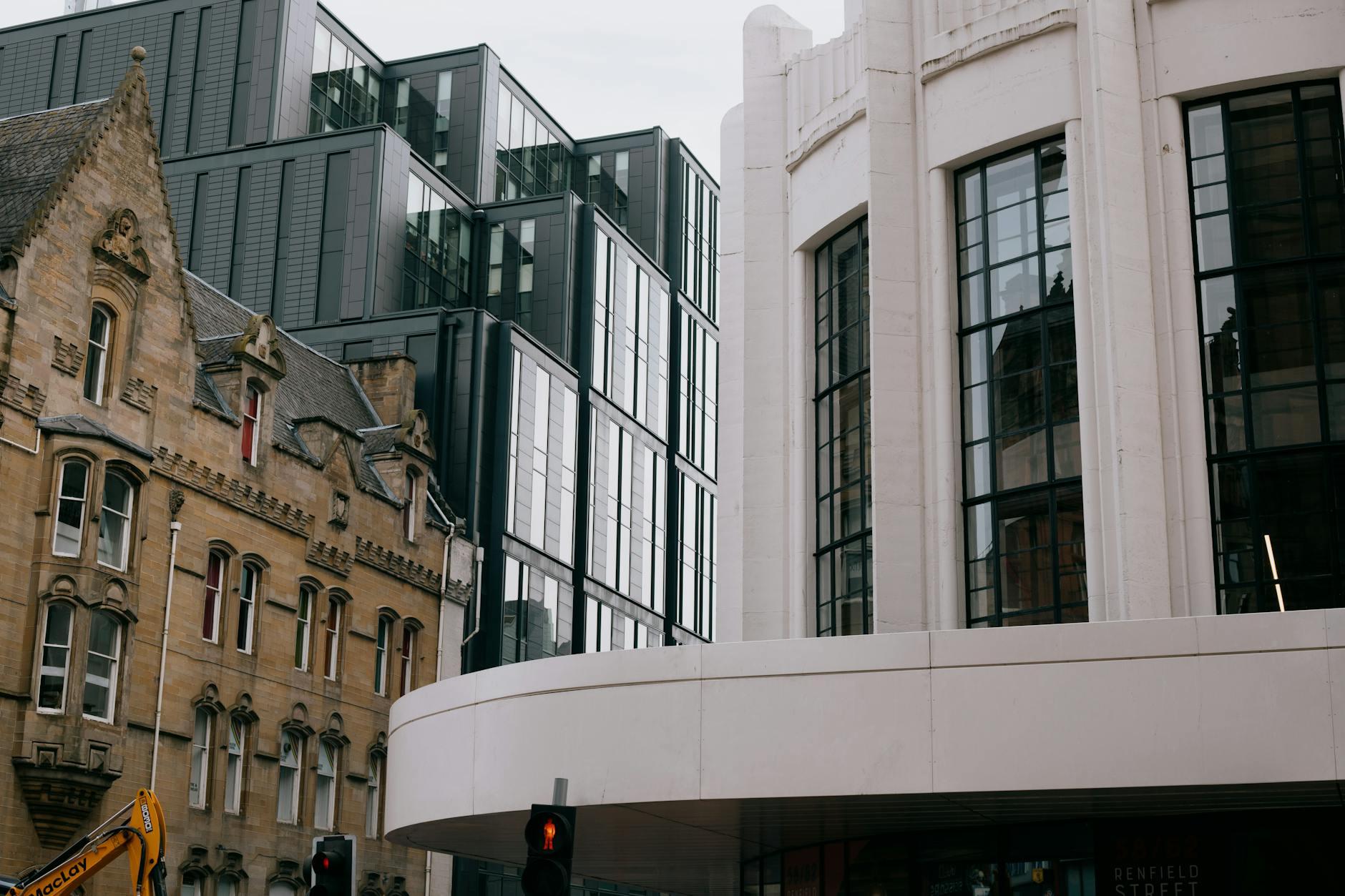
The architectural legacy of this regeneration is visible across the city: the Clyde Waterfront development transformed derelict shipyard land into a cultural corridor featuring the SEC Armadillo (designed by Foster + Partners), the SSE Hydro (one of the world’s busiest concert venues), and Zaha Hadid’s Riverside Museum. The Glasgow Science Centre, with its titanium-clad crescent and rotating tower, anchors the south bank. The Commonwealth Games in 2014 brought further investment in the East End, and the city continues to evolve — hosting the 2026 Commonwealth Games will bring another chapter of development and global attention.
Glasgow’s tradition of bold architecture continues in the 21st century. The city was named a UNESCO City of Music in 2008, reflecting its extraordinary cultural depth — from classical institutions like the Royal Scottish National Orchestra to its legendary live music scene that has produced bands from Simple Minds to Franz Ferdinand and Chvrches. The regeneration of the Buchanan Quarter, new student residences, and ongoing waterfront development show a city that still builds with ambition and imagination — just as it did in the days of the Tobacco Lords and the great Victorian engineers.
Heritage Walking Routes
Medieval Glasgow Walk
Start at Glasgow Cathedral, explore the atmospheric lower church and St Mungo’s tomb, then climb the Necropolis for panoramic views. Cross to the St Mungo Museum of Religious Life and Art, then visit Provand’s Lordship — Glasgow’s oldest house (1471). Continue down the High Street to Glasgow Cross and the Trongate Steeple. This walk covers Glasgow’s medieval core in about 90 minutes.
Victorian Grandeur Walk
Begin at George Square and tour the City Chambers (free tours at 10:30am and 2:30pm). Walk south to the Merchant City, admiring the Trades Hall and Italian Centre. Head west along Argyle Street to St Vincent Street Church (Alexander Thomson), continue to the Mitchell Library, and finish at Kelvingrove Art Gallery and Museum. Allow two to three hours.
Mackintosh Heritage Trail
Start at the Lighthouse on Mitchell Lane, then walk to the Willow Tea Rooms on Buchanan Street. Take the subway to Hillhead for the Hunterian Art Gallery and Mackintosh House. Continue to Scotland Street School (bus or subway to Shields Road). If time permits, visit House for an Art Lover in Bellahouston Park. A full day allows a thorough exploration.
Frequently Asked Questions
How old is Glasgow?
Glasgow’s origins date to the 6th century, when St Mungo founded a religious community on the site. The city received its royal burgh charter in 1175, making it officially 851 years old in 2026. Glasgow celebrated its 850th anniversary with special events throughout 2025.
What architectural styles can you see in Glasgow?
Glasgow’s architecture spans nearly every major period: medieval Gothic (Glasgow Cathedral), Georgian neoclassical (Merchant City townhouses), Victorian Beaux-Arts (City Chambers), Greek Revival (Alexander Thomson’s churches), Art Nouveau (Mackintosh’s Glasgow School of Art), postwar modernism, and 21st-century contemporary design (Riverside Museum, SEC Armadillo). Few British cities offer such range.
Can you visit the Glasgow City Chambers?
Yes — free 45-minute guided tours run at 10:30am and 2:30pm, Monday to Friday, on a first-come first-served basis. Arrive 30 minutes early to collect your ticket from reception. The tours reveal the magnificent marble staircases, banqueting hall, and council chambers — it’s one of Glasgow’s most impressive free experiences.
What happened to the Glasgow School of Art?
The Mackintosh Building of the Glasgow School of Art suffered devastating fires in 2014 and 2018. The second fire caused far more extensive damage, and a complex restoration programme is underway. Check the Glasgow School of Art website for the latest updates on the timeline for completion.
Is Glasgow Cathedral free to visit?
Yes, Glasgow Cathedral is free to visit and is managed by Historic Environment Scotland. It is open daily and guided tours are available. The adjacent Necropolis is also free and open during daylight hours.
Why is Glasgow called the Second City of the Empire?
Glasgow earned this title in the 19th century when its shipyards on the River Clyde produced around a quarter of the world’s shipping tonnage. Combined with its locomotive engineering, steel production, and global trading connections, Glasgow was arguably the most productive industrial city in the British Empire after London.
Who was Alexander Greek Thomson?
Alexander ‘Greek’ Thomson (1817–1875) was a Glasgow architect who developed a unique style blending ancient Greek, Egyptian, and Eastern influences. His St Vincent Street Church and Holmwood House are masterpieces. Despite being less famous than Mackintosh, Thomson arguably had a greater impact on Glasgow’s cityscape.
What is the best heritage walking route in Glasgow?
The medieval route from Glasgow Cathedral through the Necropolis to Provand’s Lordship and down the High Street is the most atmospheric. For architecture enthusiasts, the Victorian walk from George Square through the Merchant City to Kelvingrove covers Glasgow’s grandest buildings. Both can be done in under two hours using public transport to connect them.
Glasgow’s Heritage: A Living City
Glasgow’s history and architecture are not museum pieces — they’re the living fabric of a city that continues to evolve with the same energy and ambition that built the great ships, raised the grand civic buildings, and inspired Mackintosh’s revolutionary designs. From St Mungo’s 6th-century church to the Zaha Hadid museum on the Clyde, Glasgow’s built heritage tells the story of a place that has always reached for something greater.
Explore the city’s museums, food scene, nightlife, and surrounding countryside, and you’ll discover that Glasgow’s past and present are inseparable — each enriching the other in a city that truly rewards those who take the time to look up, look deeper, and listen to the stories in its stones.