This article contains advertising. Our booking links are routed through a partner that adds commission tracking automatically, so if you book through one we earn a commission from the provider, at no extra cost to you. It never affects what we recommend. Affiliate disclosure
On a Saturday morning the Gallowgate is all market: shutters up, a stall selling phone chargers next to one selling fishing tackle, a queue at the roll-and-sausage van. On a Saturday night the same building has a queue of a different sort stretching back towards Glasgow Cross, the stars on the frontage are lit, and 1,900 people are about to climb a staircase into a room that has been making bands nervous for four decades. The Barrowland Ballroom Glasgow is the one venue every touring musician in Britain seems to have an opinion about, and nearly all of them are the same opinion: there is nowhere else quite like it.
This guide covers how a 1930s dance hall above a street market became the most loved gig venue in the country, what actually makes the room sound and feel the way it does, the neon sign, the Barrowland Park pathway across the road, and the practical end — tickets, age limits, getting there and home, where to eat beforehand and what the night is like from the queue to the last song. Prices were checked in September 2026; treat them as the right order of magnitude and confirm on the listing before you buy.
Barrowland at a glance
| What | Detail |
|---|---|
| Address | 244 Gallowgate, Glasgow, above the Barras market |
| Opened | 1934, by Maggie McIver; rebuilt after a fire and reopened on 24 December 1960 |
| A gig venue since | 1983 |
| Capacity | About 1,900, standing |
| Typical ticket | £30–50 depending on the act; smaller bookings and tribute nights can be cheaper |
| Drinks | Around £5–6 for a pint at the bar — check on the night |
| Typical age policy | Set per show; commonly 14+ with under-16s accompanied |
| Nearest stations | High Street and Bellgrove (ScotRail), roughly 10 minutes’ walk; Argyle Street a little further |
| Doors to curfew | Usually doors around 7pm, headline from about 8.45pm, out by 11pm |
| Recognition | Named the UK’s best music venue by Time Out in 2024 |
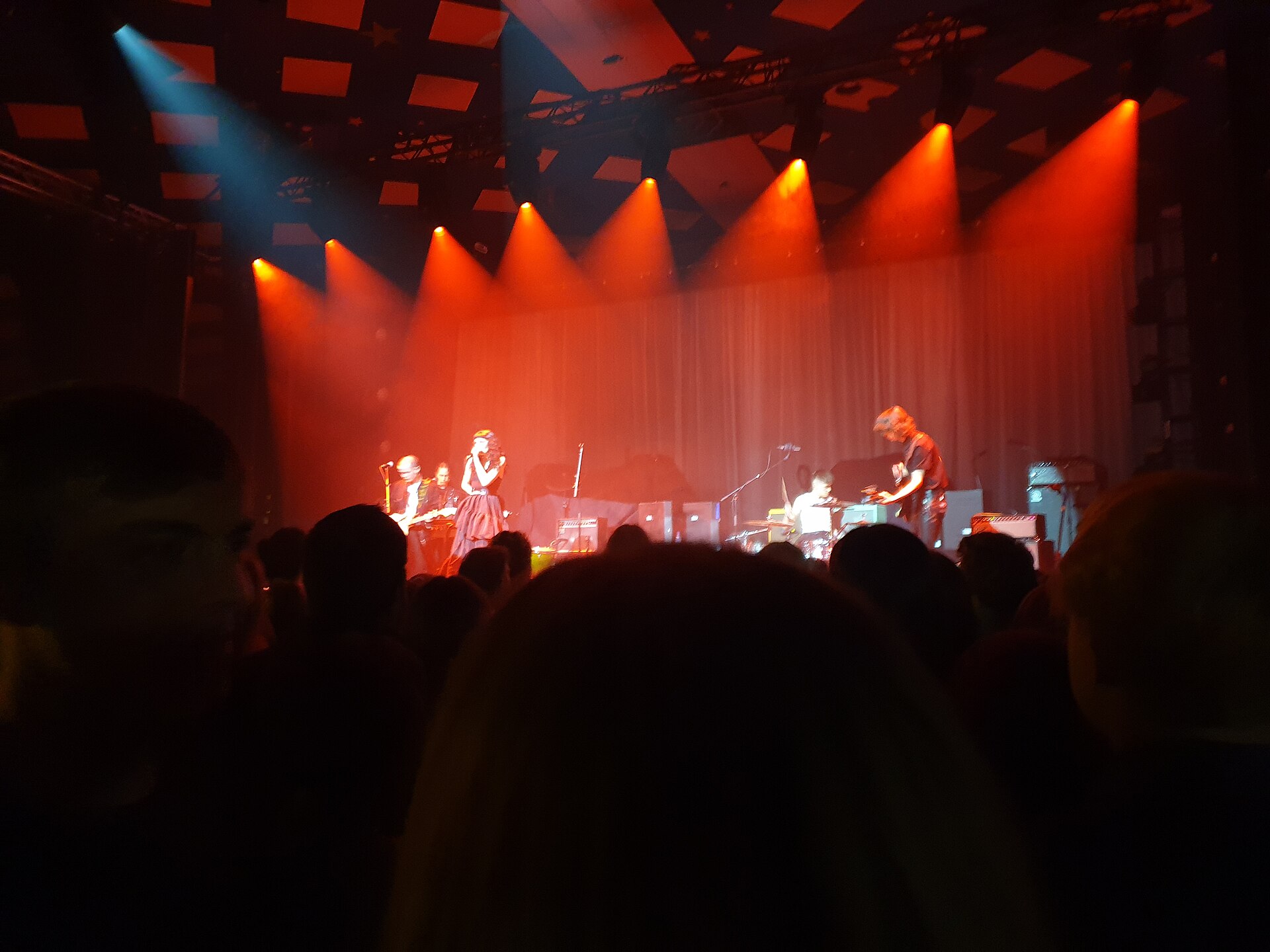
A dance hall first
The Barrowland was built by Maggie McIver, who had made her money in the Barras market below and was known across the East End as the Barras Queen. She opened a function hall above the stalls in 1934, extended it to nearly double the size in 1938, and ran it as a ballroom at a time when Glasgow was one of the most dance-mad cities in Europe. On a busy night in the 1930s and 1940s there were dozens of dance halls operating across the city, and the Barrowland was the one that working-class Glasgow went to.
Its resident band from the opening night into the 1960s was Billy McGregor and the Gaybirds, and for a generation of Glaswegians “going to the Barrowland” meant a suit, a pressed dress, a strict tempo and a very good chance of meeting the person you married. Ask older Glaswegians about it and a surprising number will tell you exactly that.
In 1958 a fire destroyed most of the building. Maggie’s son Sam McIver rebuilt it, and the new Barrowland opened on Christmas Eve 1960 with room for around 1,500 dancers. That rebuild is essentially the building you walk into today — the barrel-shaped ceiling lined with acoustic tiles, the stairs up from street level, and the sprung maple floor that everyone who plays here eventually mentions.
The darker chapter
It would be dishonest to write about the Barrowland’s history and leave this out, because many Glaswegians will not. In 1968 and 1969 three young women who had spent the evening at the ballroom were murdered after leaving it. The killer, never identified, became known in the press as Bible John, and the case remains one of Scotland’s most notorious unsolved crimes. It cast a long shadow over the ballroom at exactly the moment the dance-hall era was fading anyway. It is not something the venue trades on, and it is worth being aware of rather than dwelling on.
How it became the gig venue
The turn came in 1983. Simple Minds wanted somewhere to film a video in front of a real Glasgow crowd, used the Barrowland, and the bands that followed discovered what the dancers had known for fifty years: the room is built to move. From that point the Barrowland stopped being a ballroom that occasionally hosted concerts and became a concert venue that happened to have been a ballroom.
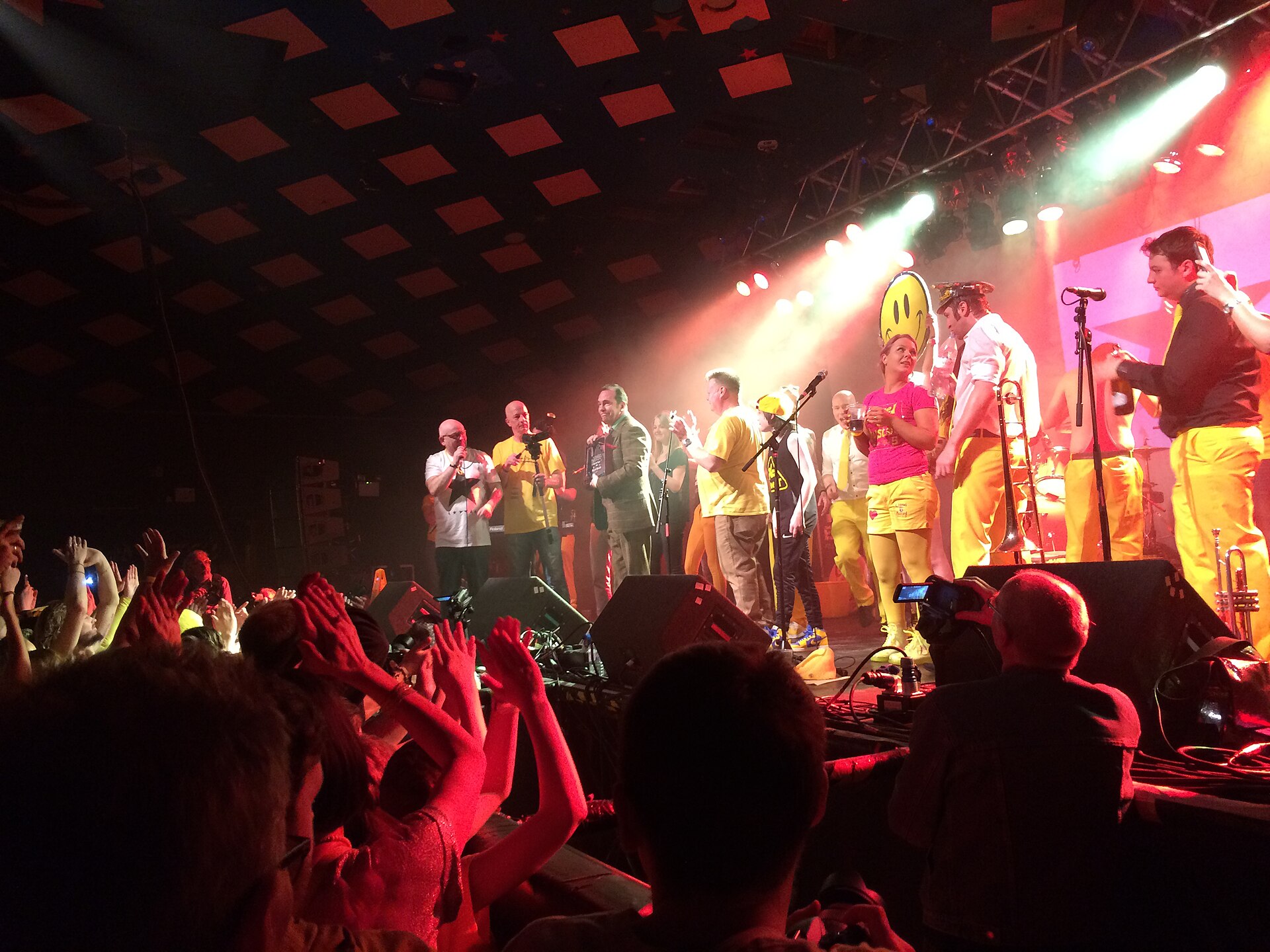
The list of acts who have played it since reads like a history of guitar music and a fair chunk of everything else — David Bowie, Oasis, Foo Fighters and Muse among them, alongside Simple Minds themselves and a long list of Scottish bands for whom a Barrowland headline show is the moment they know they have made it. The venue established a Hall of Fame in 2015 to mark the acts most bound up with its story.
The reason it lasted when so many other dance halls became bingo halls, carpet warehouses or car parks is partly luck and partly scale. At around 1,900 it is big enough for a band on the rise to sell it out as a statement, and small enough that the back of the room still feels close to the stage. It sits exactly on the rung of the ladder that a touring band hits at the point in their career when the shows are best.
What makes the room different
The floor
The sprung floor was designed so dancers could go all night without wrecking their knees. Fill it with 1,900 people jumping in time and the whole thing flexes. You feel it through your feet before you hear the song properly, and bands on stage can see the crowd rising and falling as one mass. It is the single biggest reason musicians talk about this place the way they do.
The ceiling and the sound
The low, curved ceiling with its tiles and scattering of stars keeps the sound in the room rather than losing it to a high roof, and the crowd noise comes back at the stage with it. That is why Glasgow’s reputation for loud, singing audiences is at its most obvious here. The sound for the audience is good rather than pristine — this is a 1960 ballroom, not a concert hall — but it is full, warm and very loud, and nobody is going for acoustic purity.
The layout
It is a single standing floor with the stage at one end, and the bar towards the back. There is no seating to speak of, so shorter people should aim for a spot just off the centre line where heads thin out. If you want to be in the middle of it, go forward; if you want to watch the crowd as much as the band, hang back near the bar — the view of the floor moving is half the experience.
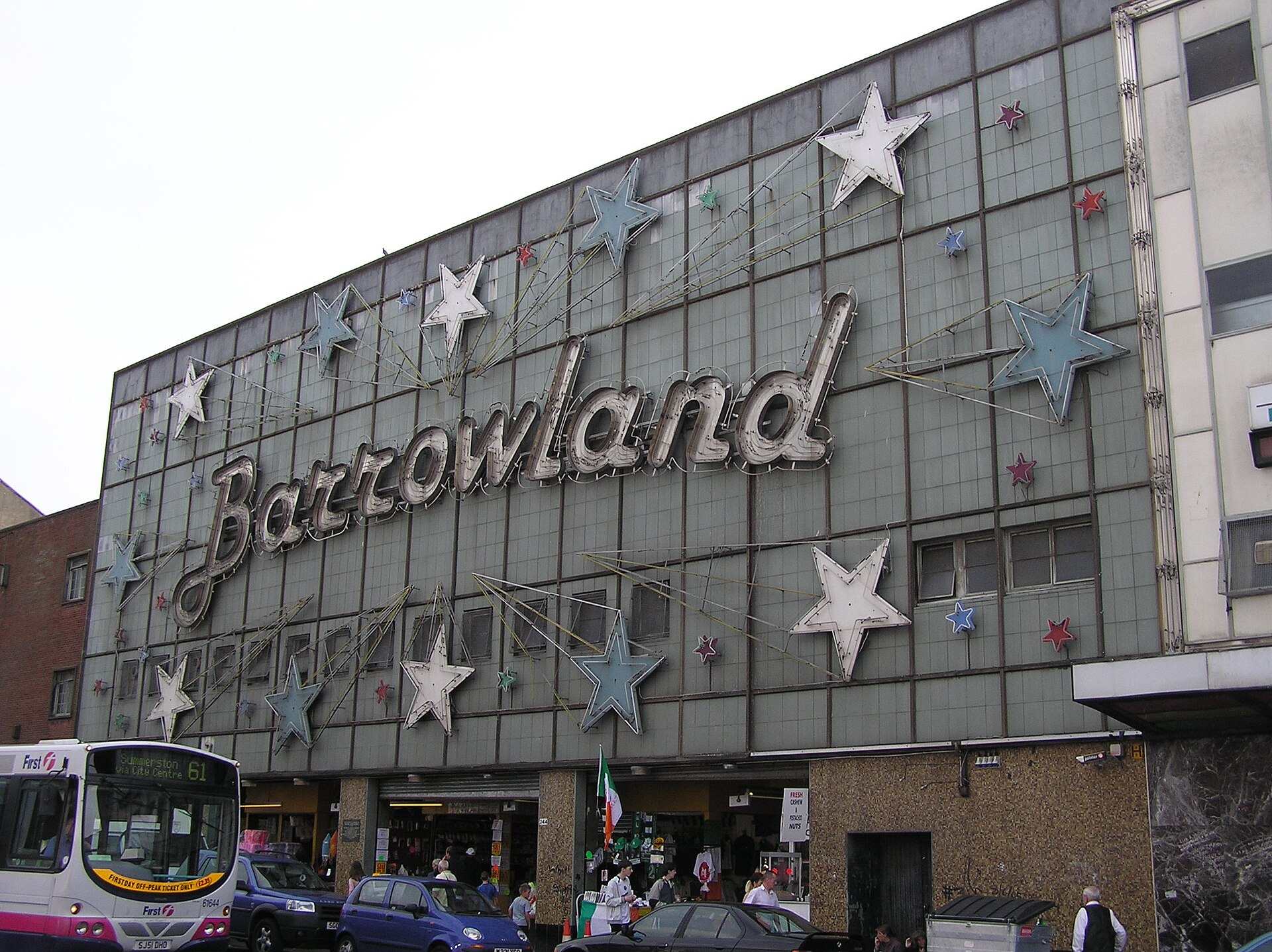
The neon sign
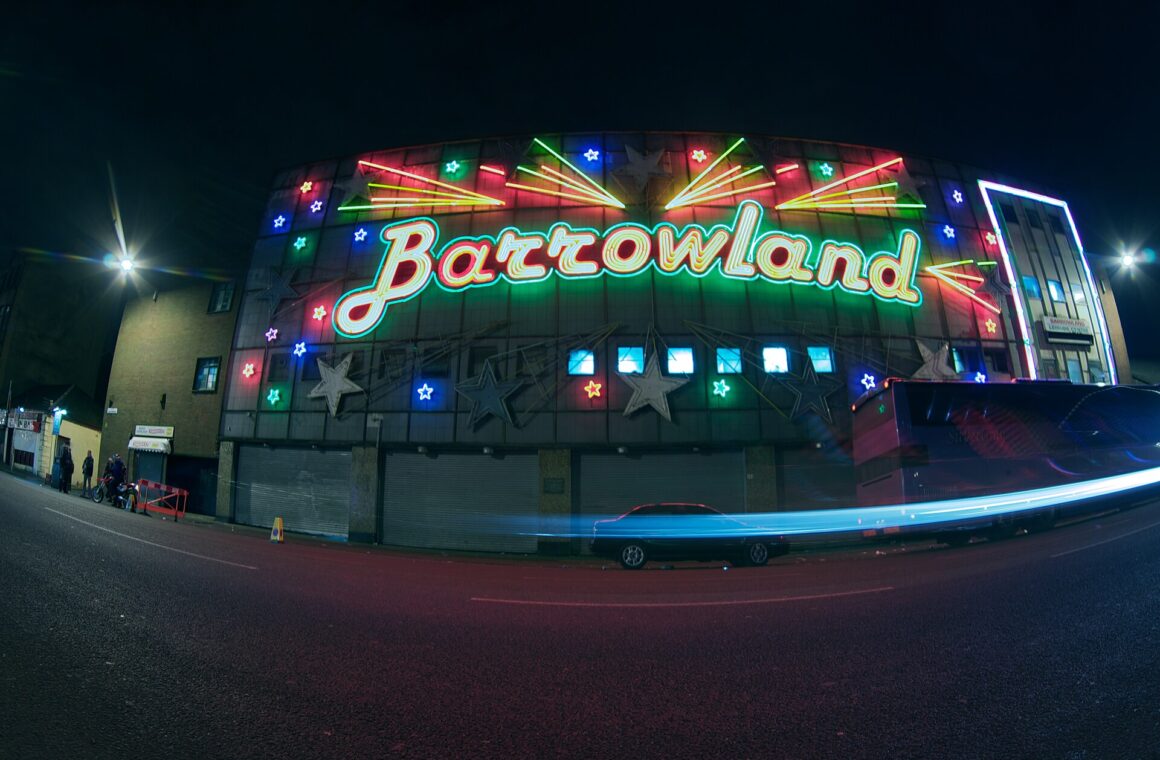
The Barrowland sign went up in 1985 and was switched on on 11 August that year by the comedian Russ Abbot during a festival named for Maggie McIver. The venue believes it is the largest neon sign in Britain, and nobody has made a convincing case otherwise. The script lettering, the shooting stars and the little coloured stars scattered across the tiled frontage have become one of the most photographed things in the East End, and the sign turns up on T-shirts, prints, tea towels and tattoos.
By day it is easy to walk past — unlit, a little weathered, sitting above the shutters and stalls of the market. By night it is the brightest thing on the Gallowgate. If you want a photograph, come after dark on a non-gig evening when there is no queue across the pavement, stand on the far side of the road and give yourself a wide lens. On a gig night the queue and the crowd in front of the doors are their own picture.
Barrowland Park and the album pathway
Directly across the Gallowgate is Barrowland Park, a small green space remodelled for the Glasgow 2014 Cultural Programme. Its centrepiece is a roughly 100-metre pathway by the Turner Prize-nominated artist Jim Lambie, laid out like the spines of records on a shelf and listing the names and dates of bands who have played the Barrowland since 1983.
It is free, it takes about ten minutes, and it is the kind of thing a music fan will spend considerably longer on than planned, hunting for bands they saw or wish they had. Be warned that weather and footfall have worn some of the names and a few are hard to read. It is best combined with the Barras market on a weekend morning, or as a quick look before the doors open on a gig night.
Tickets: how to get in
- Start on the venue’s own listings. The Barrowland’s website shows what is coming up and links to the authorised ticket agent for each show. Different promoters use different agents, so follow the link rather than guessing.
- Expect to pay £30–50 for a mid-level touring band, plus a booking fee. Tribute acts, club nights and smaller bookings can come in well under that; the very biggest names can go higher.
- Buy early for anyone you really care about. Unlike most Glasgow venues, the Barrowland sells out regularly, and popular shows can go the day they are announced. This is the room where walk-up hope usually ends in disappointment.
- Avoid resale sites. Named tickets and ID checks are increasingly common, and a resold ticket can be cancelled. If a show has sold out, check the official agent’s fan-to-fan resale option, which sells at face value.
- Check the age policy before buying. It is set show by show. A common pattern is 14+ with under-16s accompanied by an adult, but some shows are 18+.
What a Barrowland night is actually like
The queue
For a sold-out show the queue forms along the Gallowgate well before doors. Unless you want the barrier, there is no need to join it early — the room is not big enough for a bad view to be truly bad, and the line moves quickly once the doors open. Bags are searched, and it is wise to travel light: bring as little as possible and assume anything bulky will slow you down.
The stairs and the cloakroom
The ballroom is upstairs, and you climb to it. If there is a cloakroom on the night, use it in winter — a coat on a packed sprung floor is a miserable thing. Check the venue’s current bag and cloakroom policy on the show page before you go.
The crowd
Loud, friendly and completely committed. Glasgow audiences sing along, chant between songs, and cheer the support act as if they meant it. Near the front it gets physical when the floor gets going; towards the back and on the raised edges it is easy to find space. If you are nervous in crowds, stand by the back bar — you still get the atmosphere without being carried along by it.
Timing
Barrowland gigs run early by the standards of many cities. Doors around 7pm, a support act from about 7.30pm, the headliner from roughly 8.45pm, and out onto the street by about 11pm is a common shape. Always check the stage times for your show — turning up at 9.30pm because that is how gigs work where you live can mean missing half the set.
Getting there and getting home
The Barrowland is on the eastern edge of the city centre. From Glasgow Cross it is a walk of about ten minutes east along the Gallowgate, and from Buchanan Street or George Square about twenty to twenty-five minutes on foot. For most visitors staying centrally, walking is the simplest option in both directions.
- Train: High Street and Bellgrove stations are each around ten minutes’ walk away; Argyle Street is a little further. Check last trains before you go out, especially on Sunday.
- Subway: St Enoch is the nearest station, roughly a twenty-minute walk. The Subway closes early, particularly on Sundays, so do not rely on it for the journey home. Fares are £1.80 single with a £3.40 daily cap.
- Buses: Several routes run along the Gallowgate into the city centre. Check the current operator’s journey planner rather than trusting an old timetable.
- Taxis: Harder than you would expect straight after a sold-out show, because 1,900 people all want one at once. Walk west towards Glasgow Cross or the Trongate and pick one up there, or book in advance.
- Driving: The venue sits close to the edge of Glasgow’s Low Emission Zone. Non-compliant vehicles are banned from the zone rather than charged, with a £60 penalty. Check your route and your car before you drive in.
Our getting around Glasgow guide covers trains, buses and the Subway in more detail.
Before and after the gig
The Gallowgate itself is not a restaurant street. There are a few long-established pubs close to the venue, several of them football pubs with strong allegiances, and on a gig night they fill with fans early. Have a look through our guide to traditional pubs in Glasgow if you want the old-school end of things.
For a proper meal, head the other way. The Merchant City is about fifteen minutes’ walk west and has far more choice at every budget, and it is also where most people end up for a drink after the show. On a tight budget our cheap eats guide has plenty within walking distance. The Barras market below the venue is a weekend daytime operation and will be shuttered by the evening.
Making a day of the East End
A Barrowland night pairs well with a daytime wander that most visitors skip. The Barras market runs on weekends — our Barras market guide has current hours and what to look for. Glasgow Green, the city’s oldest park, is five minutes south with the Doulton Fountain and the riverside; see our Glasgow Green guide. Barrowland Park and the album pathway sit in between, and the medieval heart of the city around Glasgow Cross and the High Street leads up to the cathedral and the Necropolis.
That route — market, pathway, park, a meal in the Merchant City and then back east for the gig — is one of the best days in Glasgow for someone who likes music and would rather see a real neighbourhood than another shopping street.
Safety and accessibility
The Gallowgate on a gig night is busy, well lit near the venue and full of people heading the same way. Use ordinary city-centre sense on the walk back: stick to the main streets towards Glasgow Cross rather than cutting through quiet side streets, keep your phone in your pocket in the crowds, and travel with the people you came with. Our Glasgow safety tips cover the city more broadly.
Accessibility is the honest weak point. This is a 1960 building with the ballroom upstairs, and step-free access is limited. The venue does make arrangements for disabled gig-goers, but what is possible varies by show and promoter. Contact the venue well before you buy, explain what you need, and get the arrangement confirmed in writing rather than turning up and hoping.
Is the Barrowland worth it?
Yes — with one condition. If a band you like is playing while you are in Glasgow, buy the ticket, even if it means rearranging your plans. There is no better single gig experience in the city, and many musicians would say in the country.
The condition is that it is not a place to “see”, like a museum. Without a gig the Barrowland is a closed door above a market with a big sign on it. Come for the sign and the pathway if you are nearby, by all means, but do not cross the city just to look at a building. And if the only thing on during your trip is a band you would not otherwise pay to see, save your money for somewhere smaller and more interesting — Glasgow has plenty of those, covered in our live music venues guide.
Frequently asked questions
What is the capacity of the Barrowland Ballroom?
About 1,900, all standing. That is large enough for a sold-out crowd to feel enormous and small enough that nobody is very far from the stage.
Is it called the Barrowland or the Barrowlands?
Officially the Barrowland Ballroom, and that is what the sign says. Almost every Glaswegian calls it “the Barrowlands” anyway, and nobody will correct you either way.
Why is the Barrowland floor famous?
It is a sprung dance floor from its ballroom days, designed to flex under dancers. When a full crowd jumps, the whole floor moves — something you feel as much as hear, and the thing bands most often mention.
Can you visit the Barrowland without going to a gig?
Not inside — there are no regular public tours. You can see the sign from the Gallowgate at any time, walk the album pathway in Barrowland Park opposite, and visit the Barras market below at weekends.
Are under-18s allowed at the Barrowland?
It depends on the show. Many gigs are 14+ with under-16s accompanied by an adult, and some are 18+. The age policy is on each show’s listing and it is enforced, so check before buying.
Is there seating at the Barrowland?
Effectively no. It is a standing venue. If you need a seat for access reasons, contact the venue before buying and explain what you need.
What is the nearest station to the Barrowland?
High Street and Bellgrove railway stations, both roughly ten minutes’ walk. The nearest Subway station is St Enoch, around twenty minutes on foot, and most people staying in the city centre simply walk.
When did the Barrowland become a music venue?
It opened as a dance hall in 1934 and was rebuilt after a 1958 fire, reopening in 1960. It became a rock and pop concert venue in 1983 after Simple Minds filmed a video there.
Related Glasgow Guides
- The Glasgow Music Scene — the full picture, from basements to the arena.
- Live Music Venues in Glasgow — every rung of the ladder with capacities and addresses.
- The Barras Market — the weekend market directly below the ballroom.
- Glasgow History and Architecture — the city the dance halls were built in.
- Glasgow Nightlife — how a night out here is structured.
- Glasgow Green — the city’s oldest park, five minutes away.
- Merchant City — where to eat before and drink after.
- Getting Around Glasgow — trains, buses and the Subway.
Photo Credits
The Barrowland sign at night: The Barrowlands by Rob Sinclair, CC BY-SA 2.0, via Wikimedia Commons.
Lucia & The Best Boys on the Barrowland stage: Lucia & The Best Boys Barrowlands February 2022 by NemesisAT, CC BY-SA 4.0, via Wikimedia Commons.
A Barrowland Hall of Fame presentation: Gavin Mitchell accepting David Bowie’s induction into Barrowland Hall of Fame by Lirazelf, CC BY-SA 4.0, via Wikimedia Commons.
The Barrowland frontage by day: Wfm barrowland ballroom by user:Finlay McWalter, CC BY-SA 3.0, via Wikimedia Commons.