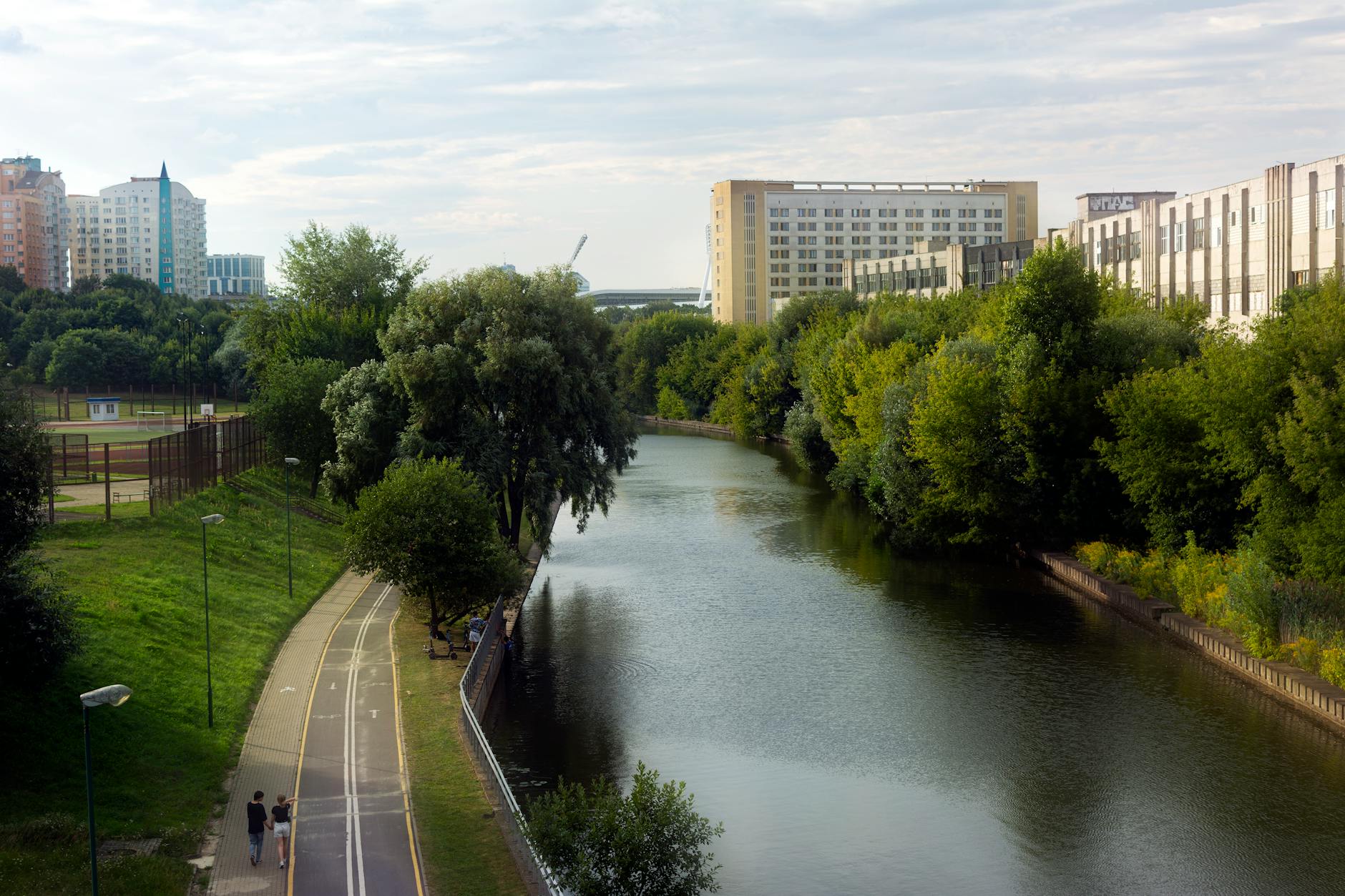
The Clyde Walkway is one of Scotland’s great walking routes — a 65-kilometre (40-mile) trail from Glasgow’s West End all the way to New Lanark World Heritage Site in the Clyde Valley. Whether you want to walk a short urban section through the heart of Glasgow, spend a day exploring the dramatic gorges of the Clyde Valley, or experience the full route from city to UNESCO World Heritage Site, the Clyde Walkway delivers one of Scotland’s most varied and rewarding walking experiences. This guide covers everything you need to plan your walk — from the best urban sections to transport connections, facilities, and the unmissable highlights along the route.
The Clyde Walkway: Essential Facts
- Total distance: 65km (40 miles)
- Start: Glasgow West End, near the confluence of the Kelvin and the Clyde (close to Riverside Museum)
- Finish: New Lanark World Heritage Site, South Lanarkshire
- Designation: One of Scotland’s Great Trails (NatureScot)
- Waymarking: Blue fish logo throughout the route
- Completed: 2005
- Terrain: Predominantly flat urban section through Glasgow; more varied (including some off-road sections) in the rural Clyde Valley
- Suitable for: Walking and cycling (urban sections excellent for cycling; rural sections more challenging)
The Clyde Walkway follows the River Clyde — the river that built Glasgow and defined its industrial identity for centuries — from the city’s western edge through its heart and out into the rural landscapes of South Lanarkshire. The contrast between the industrial-heritage urban sections and the ancient woodlands and waterfalls of the Clyde Valley is one of the route’s most striking characteristics. You begin surrounded by cranes, distilleries, and Victorian quaysides; you end at a model industrial village in a deep river gorge surrounded by oaks, kestrels, and red kites.
The Urban Section: Walking Through Glasgow’s History
The Glasgow urban section of the Clyde Walkway — approximately 12 miles from the West End to Cambuslang — is one of the most historically rich urban walks in Scotland. The Clyde is not just a river; it’s a living archive of Glasgow’s transformation from medieval trading town to industrial powerhouse to post-industrial cultural city. Walking along its banks is to read that history in real time.
Starting Point: Kelvingrove / Partick (near Riverside Museum)
The Clyde Walkway begins where the River Kelvin meets the Clyde, near the Riverside Museum in Partick. This is an excellent starting point in its own right — the Riverside Museum (designed by Zaha Hadid, free entry) is one of Glasgow’s best museums and a perfect way to set the scene for a river walk. The museum’s collections cover Glasgow’s maritime and transport history; spending an hour here before you set off gives the waterside landscape that follows a deeper resonance.
From the Riverside Museum, the path heads east along the north bank of the Clyde, passing the striking Clydeside Distillery — Glasgow’s own whisky distillery, housed in a beautifully restored Victorian pump house. Tours are available and the café is a good early refreshment stop if you want to begin your walk with a coffee.
Clydeside and Glasgow Harbour
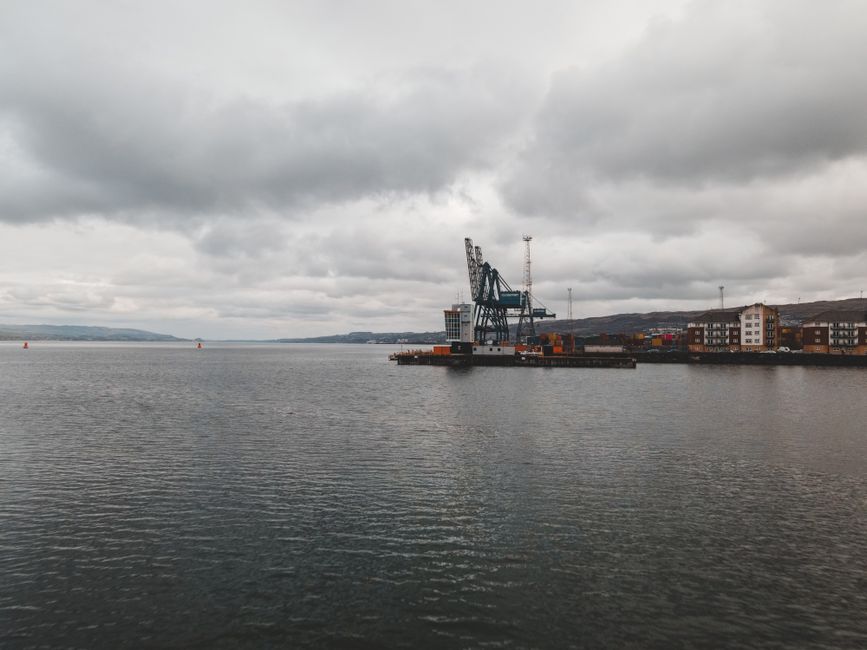
The Clydeside Expressway section passes through what was, for much of the 19th and early 20th centuries, the busiest stretch of river in the world. Ships were built and launched here in enormous numbers — during the peak of Clyde shipbuilding, the river produced a fifth of the world’s total ship tonnage. Today the former shipyards have been redeveloped into residential and commercial areas, but the scale of the industrial past is written into the landscape: the width of the river, the massive cranes that remain as listed monuments, the engineering of the quaysides. The BBC Scotland headquarters at Pacific Quay sits across the river at this point; on a clear day, the views back to the city skyline are excellent.
Broomielaw: The Victorian Quayside
Broomielaw, approaching the city centre, is where the Clyde’s commercial and passenger history is most vivid. This was the heart of the Clyde’s passenger traffic — the departure point for paddle steamers heading “doon the water” to the Clyde estuary resorts, and for emigrant ships carrying hundreds of thousands of Scots to new lives in North America, Australia, and beyond. The phrase “Clyde-built” became a global guarantee of quality during the Victorian era, and Broomielaw was its emblem. The quayside architecture from this period is impressive; the Suspension Bridge nearby is one of Glasgow’s most photographed river crossings.
Glasgow Green: The Heart of the Walk
Glasgow Green is the centrepiece of the Clyde Walkway’s urban section — and one of the great public parks in Scotland. As Britain’s oldest public park (it has been in public use since at least 1450, possibly earlier), Glasgow Green carries a remarkable weight of history. It was here that James Watt is said to have conceived the improvements to the steam engine that would transform the industrial world. It was here that the Chartists held their political rallies in the 1840s. It was here that Nelson’s Monument stood before Trafalgar Square was even planned.
Key highlights within Glasgow Green:
- People’s Palace and Winter Gardens: A magnificent Victorian museum dedicated to the social history of Glasgow’s working-class communities. The Winter Gardens — a grand greenhouse attached to the museum — contains a café and tropical planting. Both are free to enter and are among the most underrated attractions in the city.
- Doulton Fountain: The largest terracotta fountain in the world, commissioned for the 1888 International Exhibition and now beautifully restored after years of neglect. It’s an extraordinary piece of Victorian confidence in ceramic form.
- Templeton’s Carpet Factory (now Templeton on the Green): Arguably the most startling building in Glasgow — a factory designed in the 1880s to look like the Doge’s Palace in Venice, complete with polychromatic brickwork and Gothic arcading. It now houses a craft brewery and office spaces, but the exterior is breathtaking and one of the city’s great architectural surprises.
Glasgow Green is also a working park — it hosts major outdoor events throughout the year, including music festivals and community events. On weekdays, it’s used by joggers, dog walkers, and office workers on lunch breaks. On summer weekends, it fills with families. It is, in the best sense, a real public space that belongs to Glasgow’s people.
Rutherglen Bridge and Beyond
East of Glasgow Green, the Walkway continues through Rutherglen and Cambuslang, where the urban landscape transitions into the suburbs and then the beginning of the rural Clyde Valley. This section is less immediately spectacular than the city centre stretch but has its own interest — the built environment becomes residential and industrial in turns, and the river begins to feel more natural, narrowing and quickening as you leave the tidal section behind.
The Rural Section: Into the Clyde Valley
Beyond Cambuslang, the Clyde Walkway leaves the city behind and enters one of central Scotland’s most beautiful and undervisited landscapes — the Clyde Valley. The transformation is remarkable: within a few miles of Glasgow’s suburban fringe, the route enters ancient woodland, dramatic river gorges, and a landscape that has been farmed and settled for thousands of years.
Uddingston and Bothwell
The route passes through Uddingston and the village of Bothwell, where Bothwell Castle — a magnificent 13th-century ruin — sits above the river on a sandstone bluff. Bothwell Castle is one of the most impressive medieval ruins in Scotland and is managed by Historic Environment Scotland. It’s a detour worth making from the Walkway if you have the time; the castle’s position above the Clyde, surrounded by woodland, is dramatic in any season.
Blantyre and the David Livingstone Connection
Blantyre, on the south bank of the Clyde, was the birthplace of David Livingstone — the Victorian explorer and missionary who became one of the most famous Scots of the 19th century. The David Livingstone Birthplace museum is near the Walkway route and is worth a visit for those interested in Victorian history and Scotland’s complex relationship with empire and exploration. The museum has been recently renovated and takes a thoughtful approach to Livingstone’s complicated legacy.
Strathclyde Country Park
Strathclyde Country Park, between Hamilton and Motherwell, offers a broader landscape experience — a large country park with a loch created from former coal workings, now used for water sports, walking, and a theme park (M&D’s). The Walkway passes through the park’s southern edge; it’s a good place for a break if you’re tackling the full route over multiple days.
Garrion Bridge and the Gorge
South of Motherwell, the Clyde enters its gorge section — one of the most spectacular stretches of river in the Lowlands. The valley deepens, the woodland closes in, and the river takes on a completely different character. This section is famous for its spring wildflowers (bluebells, wood anemones, wild garlic) and for the orchards of the Clyde Valley, which have been cultivated for centuries and produce remarkable fruit in late summer and autumn. Some traditional farm shops and pick-your-own orchards operate in this area.
Falls of Clyde and New Lanark
The final section of the Clyde Walkway is its most dramatic. Above Lanark, the river plunges through a series of spectacular waterfalls in a deep woodland gorge managed by the Scottish Wildlife Trust. The Falls of Clyde — Bonnington Linn, Corra Linn, Dundaff Linn, and Stonebyres Linn — are among the most impressive waterfalls in Scotland, and the woodland gorge they occupy is a genuinely special nature reserve. Red Kites have been successfully reintroduced to the area and are regularly seen soaring above the gorge — a remarkable sight for anyone who knew the Clyde Valley before reintroduction.
The Walkway ends at New Lanark — a UNESCO World Heritage Site and one of the most remarkable places in Scotland. New Lanark is a complete Georgian cotton mill village, built in the 1780s and later run by the social reformer Robert Owen, who used it as a model community demonstrating that humane working and living conditions were compatible with commercial success. Owen’s experiments at New Lanark influenced the development of the cooperative movement, trade unionism, and early socialist thought across the world. The village is extraordinarily well-preserved, with a visitor centre, working exhibits, hotel, self-catering accommodation, and the magnificent Falls of Clyde nature reserve at its doorstep.
Cycling the Clyde Walkway
The urban section of the Clyde Walkway through Glasgow is excellent for cycling — largely flat, well-surfaced, and increasingly well-connected to Glasgow’s wider cycling infrastructure. The riverside paths from Partick through to Glasgow Green are popular with commuter cyclists and weekend riders alike. Bikes can be hired in Glasgow from several operators, including those on the nextbike cycle hire scheme which has stations across the city.
The rural sections are more varied. Some stretches are suitable for robust hybrid or mountain bikes; others include off-road sections that require more technical capability. For road cyclists, the Clyde Valley has quiet country roads that parallel the Walkway and offer excellent cycling through the orchards and gorge sections. The Sustrans National Cycle Network Route 74 follows parts of the Clyde Valley and is well-signed.
Planning Your Walk: Section by Section
Most visitors to the Clyde Walkway don’t attempt the full 40 miles in one go — they walk specific sections that suit their time, fitness, and interest. Here are the best approaches for different types of visitor:
Best Urban Day Walk: The Glasgow Green Loop (6–8 miles)
For visitors based in Glasgow with a day to spare, the best introduction to the Clyde Walkway is an urban loop taking in the city’s riverside between Partick and Glasgow Green. Start at the Riverside Museum, walk east along the north bank past the Clydeside Distillery and Broomielaw to Glasgow Green, explore the park and its highlights (People’s Palace, Doulton Fountain, Templeton’s), then return via the south bank or take public transport back to the city centre. This route is entirely flat, well-surfaced, and passes through some of the most historically interesting parts of the city. Allow 3–4 hours at a comfortable pace including stops.
Half-Day Urban Section (4–5 miles)
If you want a shorter walk, the section from Partick (Riverside Museum) to Broomielaw and back is an excellent half-day option. This covers the most historically significant stretch of the industrial Clyde, with the best riverside architecture and views. Return by subway from Buchanan Street or take a bus back.
Day Walk to New Lanark by Train
For a more ambitious day out, take the train from Glasgow Central to Lanark, walk down to New Lanark and the Falls of Clyde, then return to Lanark station for the train back. This gives you the most dramatic section of the Walkway — the gorge, the falls, and New Lanark — without requiring a multi-day commitment. The walk from Lanark to New Lanark is around 2 miles; the Falls of Clyde nature reserve circuit adds another 2–3 miles. Allow a full day including travel time.