This article contains advertising. Our booking links are routed through a partner that adds commission tracking automatically, so if you book through one we earn a commission from the provider, at no extra cost to you. It never affects what we recommend. Affiliate disclosure
At five to one on a weekday, a queue forms inside a converted church at the top of Byres Road. Everyone is handed a pie and a pint, and at one o’clock the lights go down on a brand-new play that did not exist a month ago. That evening, a mile and a half away, 1,785 people will settle into a gilded Frank Matcham auditorium for a touring West End musical. Glasgow does both extremes of theatre well, and plenty in between. The Glasgow theatres worth knowing range from Victorian and Edwardian palaces to a former tram depot, a new-writing house under a medieval steeple and one of Britain’s most admired producing theatres, freshly rebuilt in the Gorbals.
This guide covers each of the main theatres — what they stage, what the buildings are like, how big they are and how to get there — along with rough ticket prices, how to choose, and how to fit a show into a Glasgow trip. Details were checked in September 2026; treat prices as the right order of magnitude and always check the individual show.
Glasgow theatres at a glance
| Theatre | Where | Capacity | Best for |
|---|---|---|---|
| King’s Theatre | 297 Bath Street, near Charing Cross | About 1,785 | Touring musicals, big comedy and the city’s biggest panto |
| Theatre Royal | 282 Hope Street | About 1,541 | Scottish Opera, Scottish Ballet, touring drama and musicals |
| Pavilion Theatre | 121 Renfield Street | About 1,449 | Variety, comedy, tribute shows and a traditional panto |
| Citizens Theatre | 119 Gorbals Street | Main Victorian auditorium plus new studio space | Ambitious drama, classics and new productions |
| Tron Theatre | 63 Trongate, Merchant City | 230 main house, 50 studio | New writing and contemporary theatre |
| Tramway | 25 Albert Drive, Pollokshields | Two performance spaces | Contemporary performance, dance and visual art |
| Òran Mór | Top of Byres Road, West End | Lunchtime theatre | A Play, A Pie and A Pint — new one-hour plays at 1pm |
The big three: Glasgow’s historic theatres
Three large, historic theatres sit within a short walk of each other in the city centre. Between them they handle most of the big touring productions that come to Glasgow.
Theatre Royal
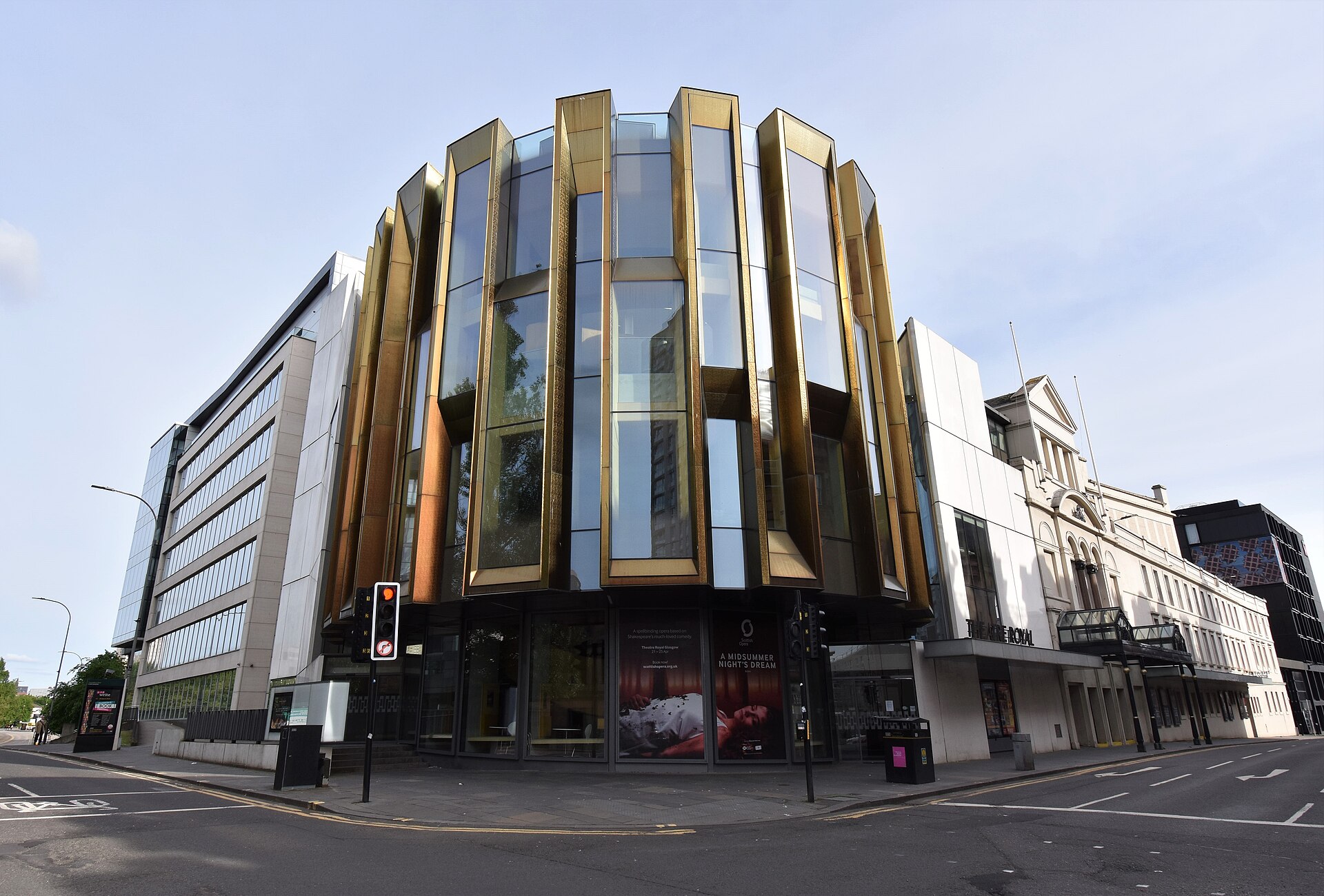
The Theatre Royal on Hope Street opened in 1867, making it the oldest theatre in Glasgow and the longest-running in Scotland. It seats around 1,541 and is the Glasgow home of Scottish Opera, with Scottish Ballet also performing here. Alongside opera and dance, it hosts touring drama, musicals and comedy.
The Victorian auditorium is the star, but the building has a very different face on the street: a modern glass and gold-finned extension on the corner of Hope Street and Cowcaddens Road, which houses the foyers and bars. Cowcaddens Subway station is a few minutes’ walk away, and it is also easy to reach on foot from Buchanan Street. Our classical music in Glasgow guide covers Scottish Opera in more detail.
King’s Theatre
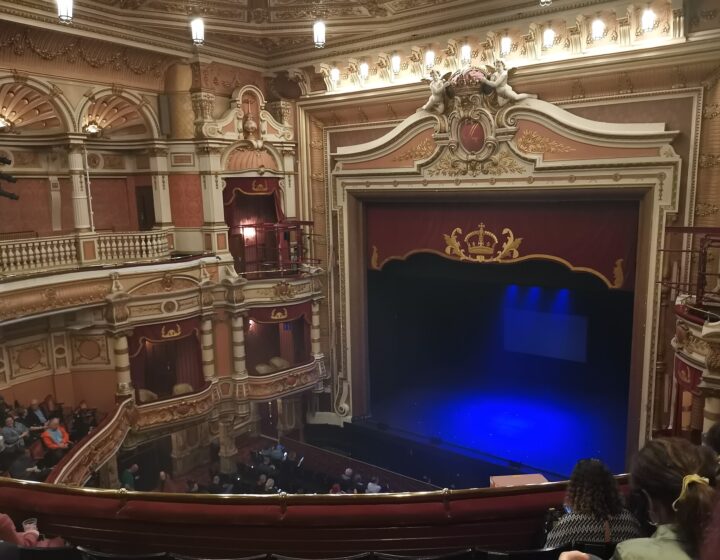
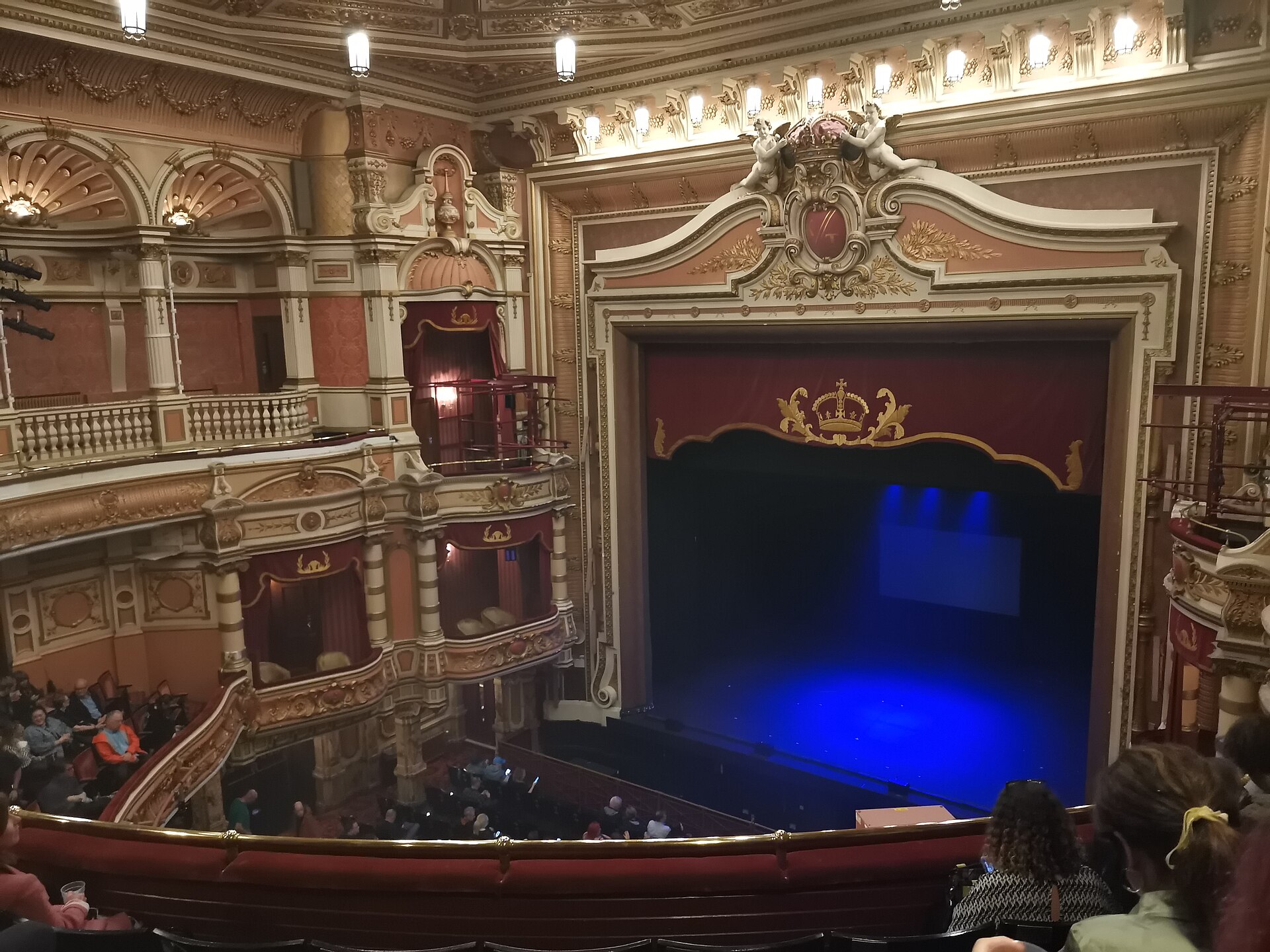
The King’s Theatre on Bath Street was designed by the celebrated theatre architect Frank Matcham and opened in 1904 as a sister house to the Theatre Royal. Its ornate auditorium, spread over four levels with around 1,785 seats, is one of the most beautiful in Scotland.
The King’s is where you will find many of the big touring musicals, comedy shows and plays, and it is home to Glasgow’s biggest pantomime every Christmas. For 2026–27 that is Aladdin; our Glasgow pantomime guide has the details. Charing Cross station is close by, and it is around fifteen minutes’ walk from the centre of town.
Pavilion Theatre
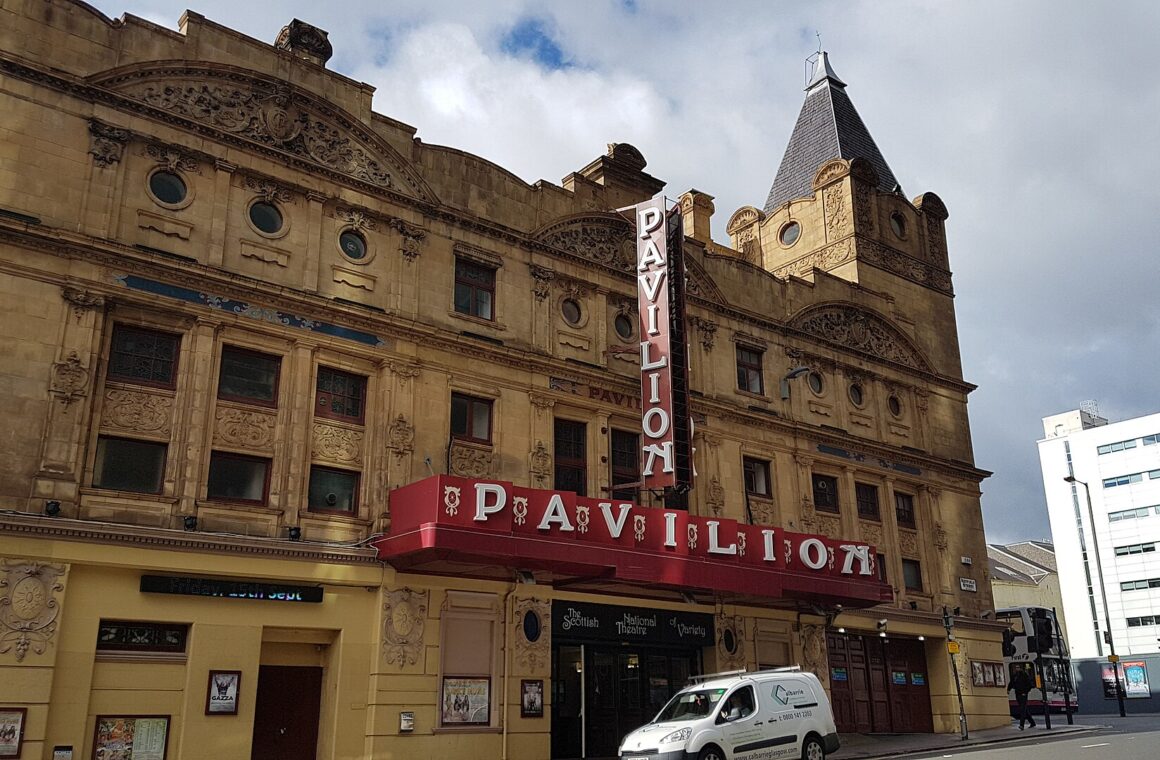
The Pavilion on Renfield Street opened on 29 February 1904 and holds around 1,449. For many decades it was Scotland’s only privately run theatre, surviving without public subsidy on variety, comedy and popular entertainment. It is now owned by Trafalgar Entertainment, but its character has not changed much: expect comedians, tribute acts, music nights, family shows and one of the city’s most traditional pantomimes.
The Pavilion is not where you will find experimental theatre, and it does not pretend otherwise. It is a proper old-fashioned entertainment house with a loyal local audience, and a night here is a good way to see Glaswegians enjoying themselves.
The producing theatres
Citizens Theatre
The Citizens Theatre in the Gorbals opened in 1878 as Her Majesty’s Theatre and became one of the most admired producing theatres in Britain. It reopened in August 2025 after a seven-year redevelopment that kept the original Victorian auditorium, opened up the building’s history, improved accessibility and added new rehearsal, studio and social spaces.
The Citizens makes its own productions, from bold reinterpretations of classics to new work, and its Christmas show for 2026 is Cinderella. It is just south of the river, a short walk across the Clyde from the city centre, and close to Bridge Street Subway station.
Tron Theatre
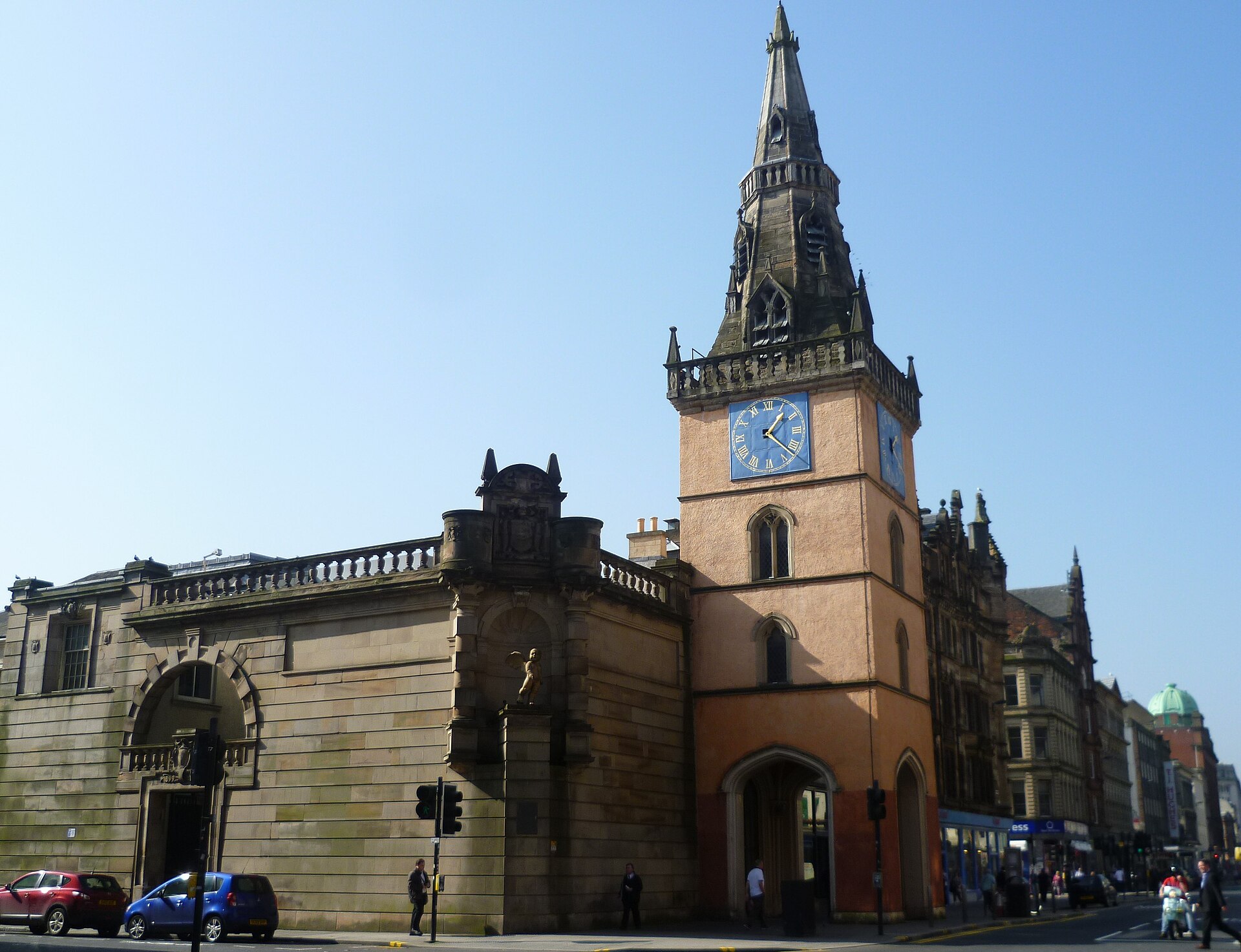
The Tron sits on the Trongate in the Merchant City, beneath the old Tron Steeple. Its main auditorium holds 230 and the Changing House studio holds 50, and it describes itself as Glasgow’s home for new writing and independent theatre. Expect contemporary plays, Scottish voices, new work and its famous alternative Christmas panto.
The Tron has a good bar and is surrounded by places to eat in the Merchant City, so it is an easy night out to plan.
Beyond the city centre
Tramway
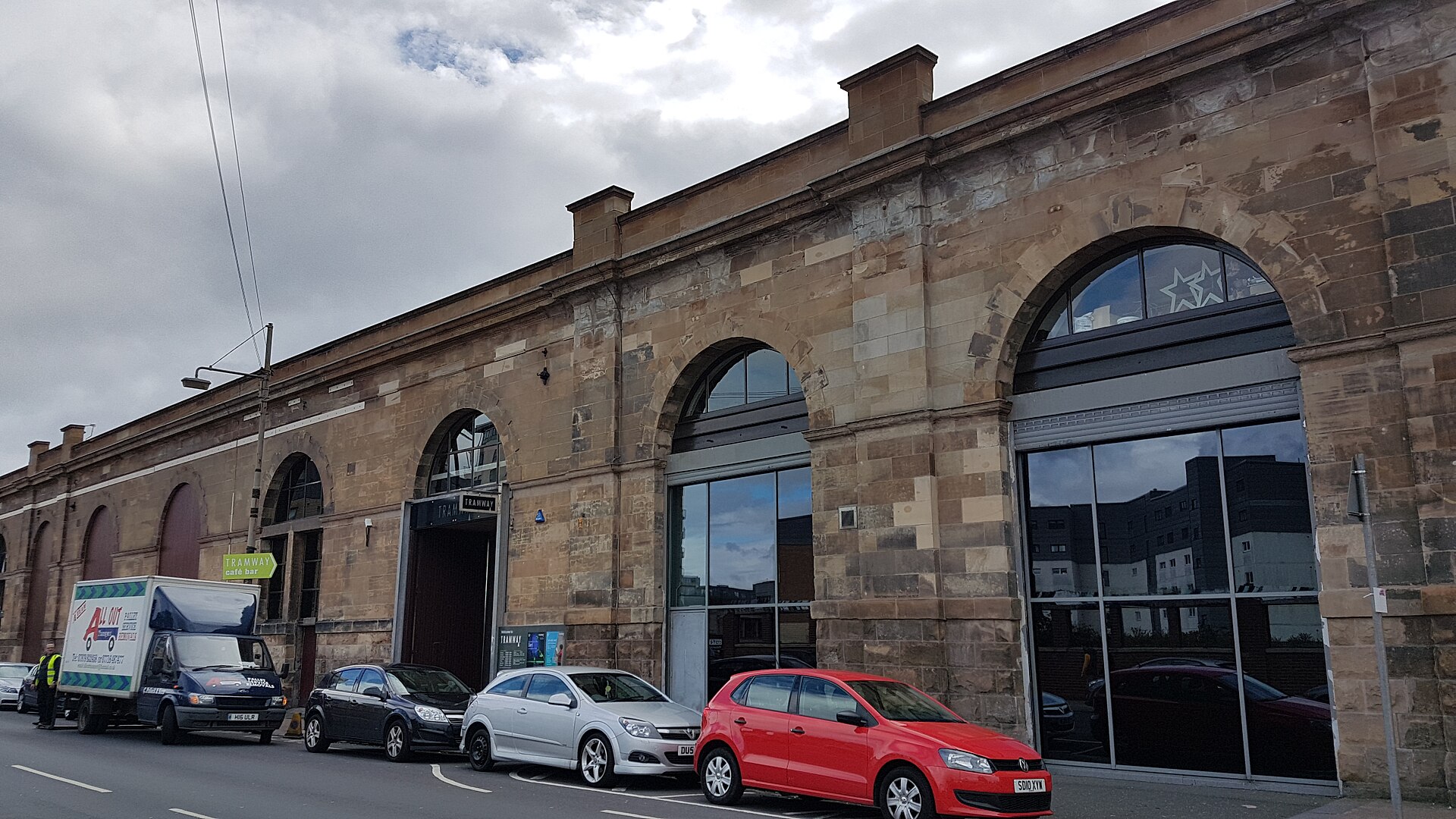
Tramway, at 25 Albert Drive in Pollokshields, is a former tram depot turned international arts venue, with two performance spaces and two galleries. It stages contemporary theatre, dance, live art and exhibitions, and it is where Scottish Ballet is based. It is also a venue for festivals including Celtic Connections.
Pollokshields East station is about two minutes’ walk away, with frequent trains from Glasgow Central. Next door is the Hidden Gardens, a peaceful community garden worth visiting before a show, and Queen’s Park is close by.
Òran Mór: A Play, A Pie and A Pint
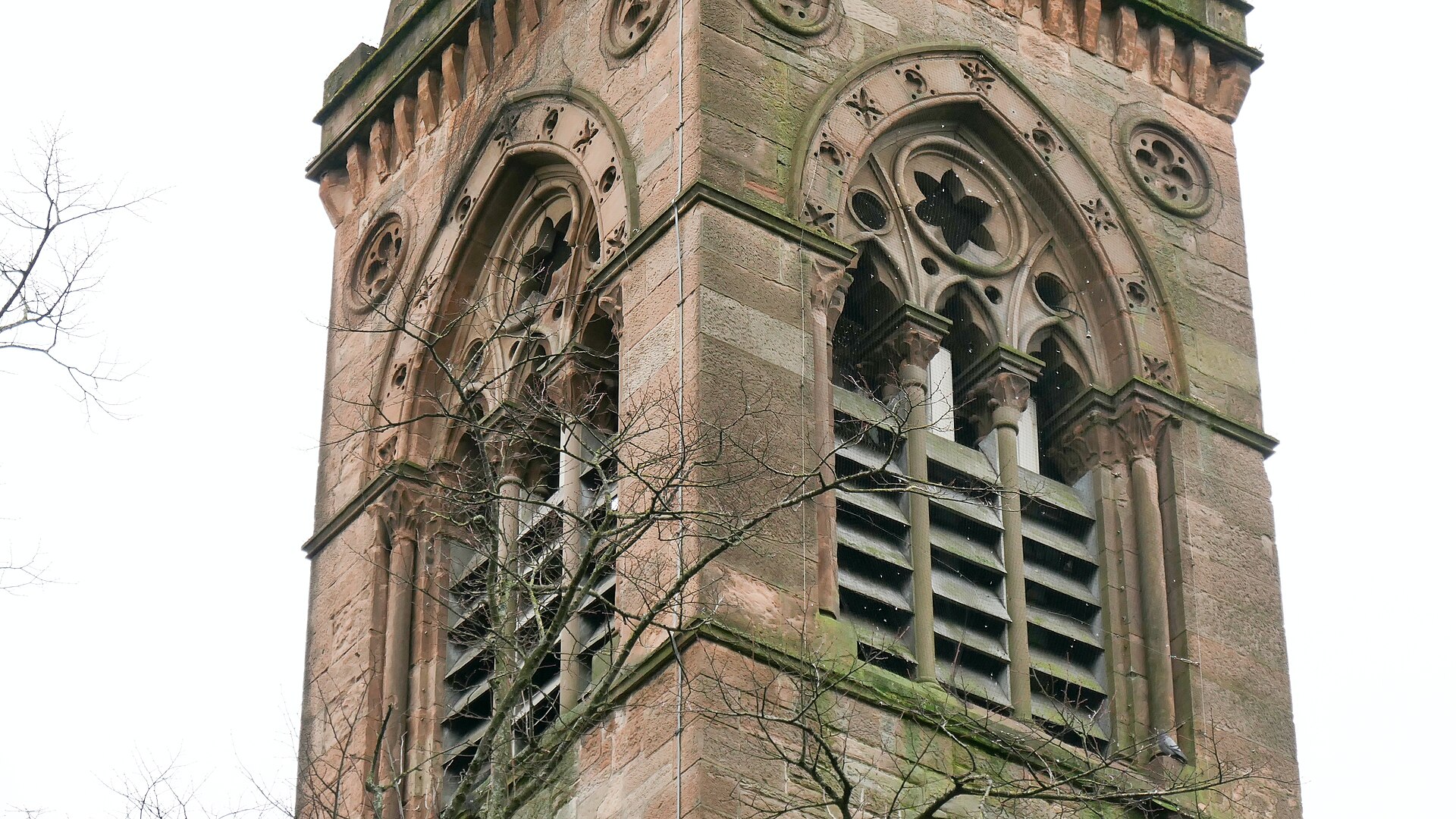
At the top of Byres Road, Òran Mór is a former church converted into a bar, restaurant and arts venue. It is famous for A Play, A Pie and A Pint, a lunchtime theatre series that puts on a new play of around 60 minutes at 1pm, with a pie and a pint (or a soft drink) included in the ticket. The spring 2026 season alone featured 18 productions between February and June.
It is one of the most distinctive theatre experiences in Britain, a great way to see new Scottish writing, and a perfect fit for a day exploring the West End. Hillhead Subway station is a short walk down Byres Road. Book ahead — performances often sell out.
What theatre tickets cost in Glasgow
| Type of show | Rough price |
|---|---|
| A Play, A Pie and A Pint | Check the current price — ticket includes a pie and a drink; season tickets are available |
| Tron and Tramway productions | Typically modest; often under the price of a big touring show |
| Citizens Theatre productions | Varies by show; concessions available |
| Pantomime | From £15 at the King’s and £23 at the Pavilion for 2026–27 |
| Big touring musicals at the King’s or Theatre Royal | Wide range; the best seats cost several times the cheapest |
| Scottish Opera | Wide range; under-26 pricing available |
Booking fees apply at most venues. For the big theatres, weekday performances and higher-level seats are usually the cheapest. Our Glasgow on a budget guide has more ways to save.
How to choose a theatre
- For a big musical or West End tour: the King’s or the Theatre Royal.
- For opera or ballet: the Theatre Royal.
- For a traditional night of comedy or variety: the Pavilion.
- For serious drama in a historic auditorium: the Citizens.
- For new plays and Scottish voices: the Tron or Òran Mór.
- For contemporary performance and dance: Tramway.
- For something quick and unusual: A Play, A Pie and A Pint at lunchtime.
Making a night of it
The King’s, the Theatre Royal and the Pavilion are all within a short walk of Sauchiehall Street, Bath Street and Buchanan Street, with lots of restaurants offering pre-theatre menus. Our lunch deals and pre-theatre menus guide lists good-value places. After the show, our things to do in Glasgow at night guide has ideas for a late drink or a gig.
A good theatre day in Glasgow might look like this: a morning in the West End, A Play, A Pie and A Pint at Òran Mór at 1pm, an afternoon at Kelvingrove or the Botanic Gardens, then an evening show at the King’s or the Citizens.
Theatre with children
Glasgow is a good city for introducing children to theatre, as long as you pick the right venue and the right time of year.
- Christmas: the pantomime is the obvious start. The King’s Theatre show is the classic big family production, and several theatres run relaxed performances for children who find a busy auditorium overwhelming.
- Touring family shows: the King’s, the Theatre Royal and the Pavilion all take touring productions based on children’s books and television through the year. Weekend matinees are the easiest for younger children.
- Dance: Scottish Ballet’s Christmas production at the Theatre Royal is a lovely first ballet, particularly for children who enjoy music and costumes more than dialogue.
- What to check: age guidance, running time and whether there is an interval. A show that finishes at 10.15pm is a very different proposition for a six-year-old than a 2pm matinee.
- Where to sit: the upper levels of the big Victorian and Edwardian theatres are steep. With small children, the stalls or the lower circle are more comfortable, and aisle seats make toilet trips easier.
Our Glasgow with kids guide has ideas for the rest of the day, and family-friendly restaurants near the theatres make a pre-show meal much less stressful.
When to go
Glasgow’s theatres run all year, but the busiest periods are the Christmas panto season from November to early January and the spring and autumn touring seasons. Comedy fans should look at the spring, when the Glasgow International Comedy Festival fills venues across the city — see our comedy festival guide. For the full calendar, see our Glasgow events and festivals guide.
Practical tips
- Arrive early. The big theatres have stairs, busy bars and queues for toilets at the interval. Allow at least 20 to 30 minutes.
- Check the seat level. The upper levels at the King’s and the Theatre Royal are steep and high. Worth knowing if you are uneasy with heights or have mobility needs.
- Order interval drinks before the show. Most big theatres let you do this and it saves a long wait.
- Book accessible seats directly. All the major venues offer accessible seating and many have captioned, audio-described or relaxed performances. Contact the box office.
- Plan the journey home. The Subway closes early, particularly on Sundays. Fares are £1.80 single with a £3.40 daily cap; our Subway guide has timetables.
Is theatre in Glasgow worth it?
Yes. Glasgow offers a remarkable range for a city of its size: historic palaces for big musicals, a Scottish national opera company, a rebuilt Citizens Theatre, a dedicated new-writing house and a lunchtime play that comes with a pie. Prices are generally lower than in London, and audiences are warm and responsive.
The honest note: if you only have a short trip, do not spend an evening on a touring musical you could see in any other British city. Choose something distinctly Glaswegian instead — a Citizens production, a new play at the Tron, the Pavilion panto at Christmas or A Play, A Pie and A Pint. That is where the city’s theatre culture really shows itself.
Frequently asked questions
What is the oldest theatre in Glasgow?
The Theatre Royal on Hope Street, which opened in 1867. It is also the longest-running theatre in Scotland.
What are the main theatres in Glasgow?
The King’s Theatre, the Theatre Royal, the Pavilion Theatre, the Citizens Theatre, the Tron Theatre, Tramway and Òran Mór, home of A Play, A Pie and A Pint.
Is the Citizens Theatre open?
Yes. The Citizens Theatre reopened in August 2025 after a seven-year redevelopment that kept its Victorian auditorium.
What is A Play, A Pie and A Pint?
A lunchtime theatre series at Òran Mór on Byres Road. A new play of about an hour starts at 1pm, and the ticket includes a pie and a pint or soft drink.
Where can I see musicals in Glasgow?
Mostly at the King’s Theatre on Bath Street and the Theatre Royal on Hope Street, which host the big touring musicals.
Where does Scottish Opera perform in Glasgow?
At the Theatre Royal on Hope Street, which is also where Scottish Ballet performs in the city.
How many seats does the King’s Theatre Glasgow have?
About 1,785, spread across four levels in Frank Matcham’s 1904 auditorium.
Related Glasgow Guides
- Glasgow Events and Festivals — the year-round calendar.
- Things to Do in Glasgow at Night — evening plans before and after a show.
- Glasgow Pantomime — the city’s Christmas theatre tradition.
- Classical Music in Glasgow — Scottish Opera, the orchestras and more.
- Lunch Deals and Pre-Theatre Menus — where to eat before curtain up.
- Glasgow Comedy Festival — spring laughs across the city.
- Merchant City — the neighbourhood around the Tron.
Photo Credits
The Pavilion Theatre, Renfield Street (featured image): Pavilion Theatre, Glasgow by Stinglehammer, CC BY-SA 4.0, via Wikimedia Commons.
Tramway, Albert Drive: 25 Albert Drive, Tramway Theatre, Glasgow by Stinglehammer, CC BY-SA 4.0, via Wikimedia Commons.
The tower of Òran Mór: 09277 Former Kelvinside Botanic Gardens Church of Scotland, Hillhead 013 by WeeHolly, CC BY-SA 4.0, via Wikimedia Commons.
The King’s Theatre auditorium: Glasgow City – Kings Theatre – 20230915192125 by Crowsus, CC BY-SA 4.0, via Wikimedia Commons.
The Theatre Royal, Hope Street: Glasgow. Theatre Royal by Daniel Naczk, CC BY-SA 4.0, via Wikimedia Commons.
The Tron Theatre, Trongate: Tron Theatre, Glasgow by Kim Traynor, CC BY-SA 3.0, via Wikimedia Commons.