Glasgow’s story is one of the most dramatic in British history. In less than three centuries, a quiet medieval cathedral town on the banks of the River Clyde transformed itself into a global industrial colossus — the workshop of the British Empire, the birthplace of the modern steamship, and a crucible of radical politics that shaped the left wing of British public life for a century. The city has reinvented itself more than once: from medieval burgh to tobacco entrepot, from industrial powerhouse to post-industrial ruin, and finally to the creative, vibrant European city it is today.
Understanding Glasgow’s history unlocks the city. It explains the grand Victorian architecture that lines George Square, the tenement culture that shaped working-class Scottish identity, the reason the Clyde remains so central to the city’s sense of self, and why Glasgow has a fiercer, more argumentative civic pride than almost anywhere else in Britain. This is the complete history of Glasgow, from its sixth-century founding to the present day.
The Founding of Glasgow: St Mungo and the Medieval City
Glasgow’s origins lie in the sixth century AD, when a young monk named Kentigern — known by his affectionate nickname Mungo, meaning “dear one” — established a small Christian community on the banks of the Molendinar Burn, a stream flowing into the River Clyde. Mungo had been trained by St Serf at Culross in Fife and had wandered south before settling on this marshy ground in what is now the East End of the city.
The place where Mungo established his church was already a sacred site — tradition holds that St Ninian had consecrated a burial ground there in the fourth century. Mungo built his church beside this cemetery, which would eventually become the site of Glasgow Cathedral. He is said to have died in 614 AD, and his tomb in the crypt of the cathedral remains one of the most important pilgrimage sites in medieval Scotland.
Glasgow’s coat of arms tells Mungo’s story in four symbols: the bird that he brought back to life (a robin killed by his jealous companions, restored through prayer), the tree that he lit with fire from heaven (to relight a fire that his enemies had extinguished), the bell he brought back from Rome, and the fish holding a ring in its mouth (recovering a queen’s ring from the belly of a salmon). The motto is Let Glasgow Flourish — a truncation of a longer Mungo blessing that reads “Lord, let Glasgow flourish by the preaching of thy word and the praising of thy name.”
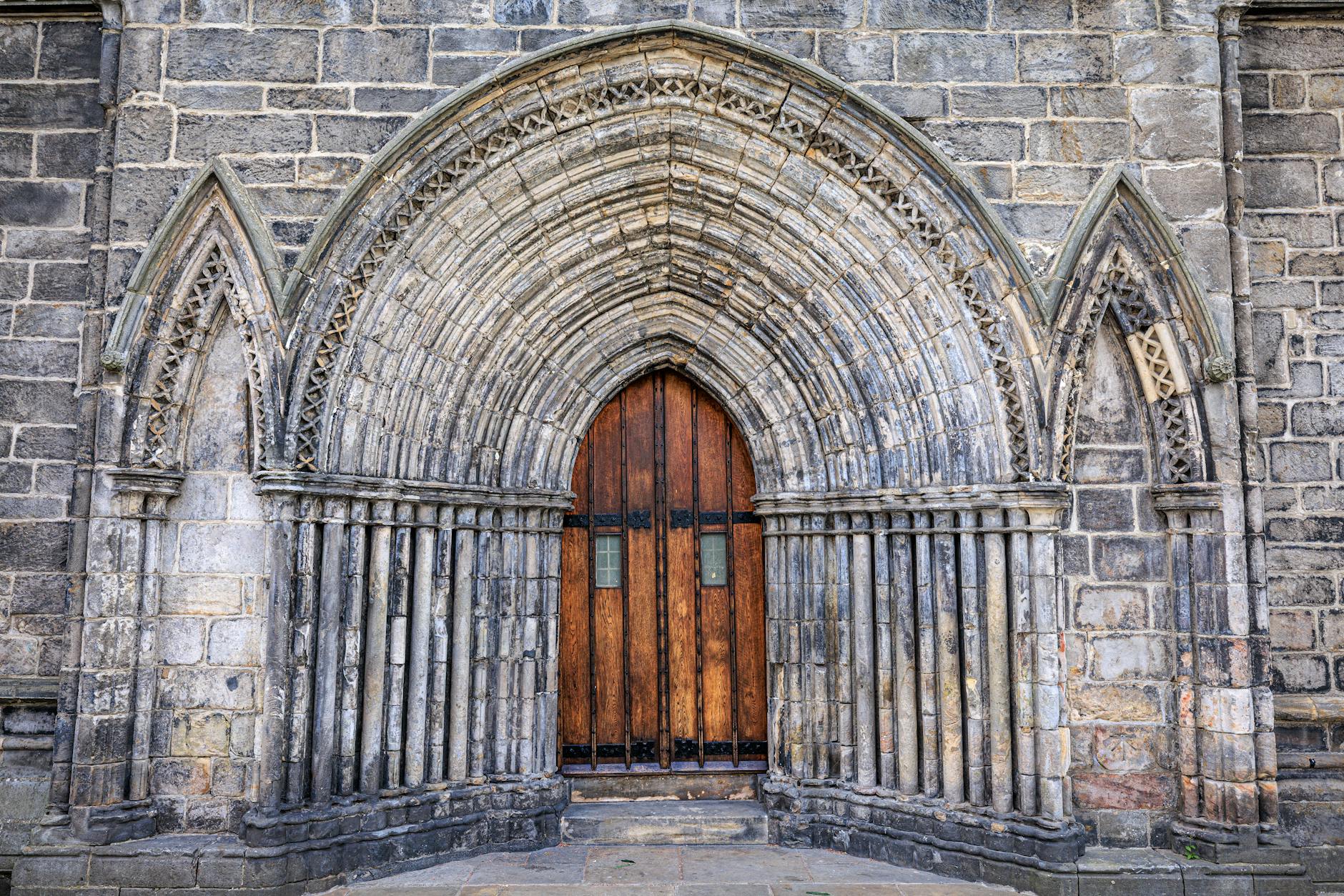
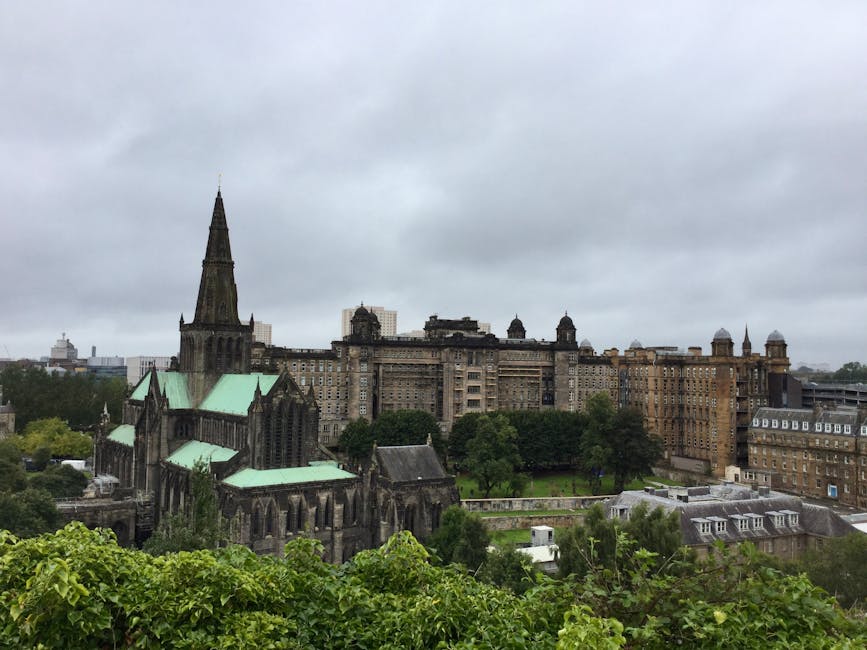
For its first seven or eight centuries, Glasgow was a small ecclesiastical settlement of no great importance. It had a bishop from 1114 and was granted burgh status around 1175, which allowed it to hold markets and trade. Its population in the medieval period was probably no more than 1,500 people. The great landmark of this era is the cathedral, which was built and rebuilt between the 12th and 15th centuries and remains today one of Scotland’s finest medieval buildings — extraordinary in the context of Scotland’s Reformation, which destroyed most of the country’s ancient churches. Glasgow Cathedral survived intact partly because the city’s tradesmen guilds physically defended it from demolition by reforming mobs in 1560, arguing that if the building was to come down, it should be stone by stone so they could use the materials.
Glasgow University: Scotland’s Second Oldest
In 1451, Bishop William Turnbull obtained a Papal Bull from Pope Nicholas V establishing a university in Glasgow — the second university in Scotland, after St Andrews. The institution was founded in the cathedral chapter house and migrated several times over the centuries, eventually settling in its current magnificent Victorian Gothic home on Gilmorehill in the West End in 1870. In its early centuries, the University of Glasgow was a modest institution, but it would go on to play a central role in the Scottish Enlightenment and produce some of the most important minds in modern history.
The Act of Union and the Tobacco Lords (1707–1775)
The event that transformed Glasgow from a pleasant but minor Scottish burgh into one of the great commercial cities of the world was the Act of Union of 1707, which merged the Scottish and English parliaments and created the Kingdom of Great Britain. Many Scots fiercely opposed Union — Edinburgh rioters attacked the home of the treaty’s main Scottish negotiator — but Glasgow’s merchants quickly understood what it meant for trade: access to the British Empire’s Atlantic colonies.
Glasgow’s geography made it uniquely suited to exploit this opportunity. Sitting on the west coast of Scotland, it was significantly closer to the American colonies than any English port. Ships from the Clyde could reach Virginia and Maryland in weeks, beating Bristol and London merchants to the markets. As early as 1674, the first tobacco cargo had arrived in Glasgow, but it was after Union that the trade exploded.
By the 1740s and 1750s, Glasgow dominated the entire British tobacco trade. At the peak of the trade in the early 1770s, Glasgow merchants were importing more tobacco than all the English ports combined — over 46 million pounds of tobacco per year passing through the Clyde. The men who ran this trade became known as the Tobacco Lords: fabulously wealthy Virginia merchants who strode the Plainstanes (the pavement in front of the old Tolbooth on Trongate) in scarlet cloaks, jewelled cocked hats, and gold-headed canes, demanding that ordinary citizens step aside as they passed.
The wealth of the Tobacco Lords built modern Glasgow city centre. They constructed the elegant Georgian streets of the Merchant City — Virginia Street, Jamaica Street, Glassford Street, Ingram Street — and commissioned grand townhouses and warehouses that you can still see today (many now converted into bars, restaurants, and apartments). They also invested in banks, sugar refineries, and the beginnings of manufacturing. The tobacco trade ended abruptly with the American Revolution of 1776, which severed trade links with the colonies — but by then, Glasgow’s merchants had diversified, and the city’s commercial infrastructure was in place for the next phase of its rise.
Population Explosion and Industrial Revolution (1780–1850)
The decades after the tobacco era saw Glasgow’s population grow at a pace that astonished contemporaries. In 1750, the city had around 32,000 inhabitants — a significant town, but not a great city. By 1800 the population had risen to around 77,000. By 1821 it had reached 147,000. By 1851 it stood at 329,000. The pace of this growth — driven by the Industrial Revolution and migration from the Scottish Highlands and Ireland — had few parallels in European history.
The industries that drove this growth were many and varied. The cotton mills established in the late 18th century (Scotland’s first steam-powered cotton mill opened in Glasgow in 1792) attracted thousands of workers from rural Scotland. Chemical industries, engineering workshops, and iron foundries proliferated along the Clyde and its tributaries. But the defining industry of Victorian Glasgow was shipbuilding.
The Clyde and the Age of Steam
The River Clyde is at the heart of Glasgow’s industrial story, though its role was not inevitable. In the 18th century, the Clyde was too shallow to accommodate ocean-going vessels — ships had to unload their cargoes at Port Glasgow, 20 miles downstream, and transfer them to smaller boats for the final journey to the city. A programme of dredging begun in the 1770s progressively deepened the river, and by the 19th century the Clyde had become one of the world’s great industrial rivers.
The first practical steamship to navigate a river — Henry Bell’s Comet — launched on the Clyde in 1812, offering passenger service between Glasgow, Greenock, and Helensburgh. From this beginning, the Clyde became the world’s foremost centre of shipbuilding innovation. By the mid-19th century, the phrase “Clyde-built” was a global guarantee of quality — ships built on the river set standards for marine engineering that the rest of the world aspired to match.
The shipyards clustered along both banks of the Clyde from Glasgow to Greenock employed tens of thousands of workers and built some of the most famous vessels in maritime history. Among the ships launched on the Clyde were: the Cutty Sark (1869), still preserved at Greenwich; the Lusitania (1906), sunk by a German U-boat in 1915; the Queen Mary (1934), now a hotel ship in Long Beach, California; and the Queen Elizabeth 2 (1967). At its peak, the Clyde was launching over 20% of all the world’s shipping tonnage every year.
The Second City of the Empire (1850–1914)
By the second half of the 19th century, Glasgow had become what contemporaries called the “Second City of the British Empire” — a label borne with immense civic pride. Only London was larger in the Empire. The city’s population passed 500,000 in the 1870s and exceeded 900,000 by 1901, making it one of the largest cities in Europe.
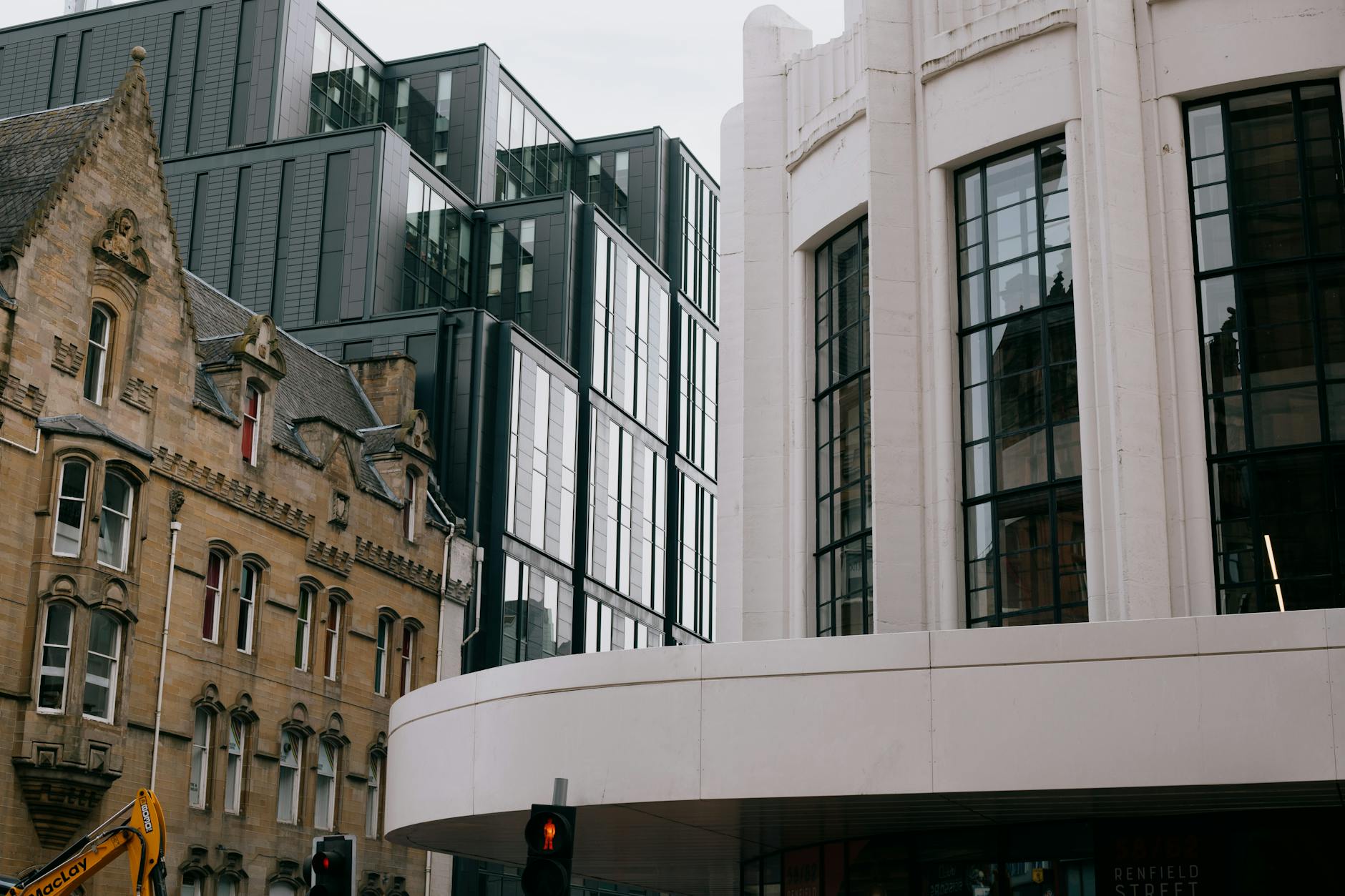
This era produced the magnificent Victorian architecture that still defines central Glasgow. George Square was laid out as a civic showpiece, dominated by the City Chambers — opened by Queen Victoria in 1888, its marble-columned interiors rivalling anything in London. The grand commercial buildings along Buchanan Street, Sauchiehall Street, and Argyle Street were built by merchants competing to display their wealth and confidence. Alexander “Greek” Thomson — Glasgow’s most distinctive and original Victorian architect — designed churches, villas, and commercial buildings in a unique fusion of Greek Revival and Egyptian motifs that earned him international admiration.
Glasgow hosted two great International Exhibitions in this period: the 1888 Exhibition in Kelvingrove Park, which attracted over 5 million visitors and raised funds to build the People’s Palace on Glasgow Green; and the 1901 Exhibition, which attracted 11 million visitors and prompted the construction of the Kelvingrove Art Gallery and Museum. Both exhibitions showcased Glasgow’s industrial and cultural achievements to the world.
The University of Glasgow produced towering figures of the Scottish Enlightenment during this era. James Watt, who developed the practical steam engine (the device that drove the Industrial Revolution), worked as an instrument maker at the university in the 1750s. Adam Smith, the father of modern economics and author of The Wealth of Nations, taught at Glasgow from 1751 to 1763. Lord Kelvin (William Thomson) was the university’s most celebrated physicist, making fundamental contributions to thermodynamics and electrical science from his Glasgow base.
The Other Side of Victorian Glasgow
The grandeur of Victorian Glasgow existed alongside appalling poverty. The rapid influx of migrants from the Highlands (driven off the land by the Clearances) and Ireland (fleeing the Famine) created desperate overcrowding in the city’s slums. The Gorbals, south of the Clyde, became notorious across Britain as one of the most densely populated and disease-ridden urban environments in Europe. Cholera epidemics in 1832, 1848–49, and 1853–54 killed thousands. Infant mortality rates in the worst slum areas exceeded 200 per thousand live births.
The city’s response was, eventually, progressive. A visionary City Medical Officer, Dr J.B. Russell, documented the conditions of Glasgow’s poor with devastating precision in the 1880s, and his work drove major reforms. The city built a celebrated municipal water supply from Loch Katrine in 1859, dramatically reducing waterborne disease. Glasgow Corporation — the city council — became famous for its “municipal socialism,” taking gas, water, electricity, and tramway services into public ownership and running them, profitably, for the public good.
Red Clydeside: Radicalism and the Labour Movement (1900–1945)
The poverty and inequality of industrial Glasgow created fertile ground for radical politics. In the early 20th century, the Clyde became the heartland of the British labour movement — a period known as Red Clydeside.
The key figures of this era include John Maclean, a Glasgow schoolteacher and Marxist organiser who was appointed Soviet Consul to Scotland by Lenin in 1918 and became the most prominent socialist agitator in Britain; James Maxton, the firebrand MP for Bridgeton who wore his long hair and passionate oratory like a badge of working-class identity; and David Kirkwood, a shop steward at the Parkhead Forge who was deported from Glasgow by the government during the First World War for organising industrial action in the munitions factories.
The most dramatic episode of Red Clydeside was the Battle of George Square on 31 January 1919. Seventy thousand workers had gone on strike demanding a 40-hour working week (to share employment among the soldiers returning from the trenches). A massive demonstration filled George Square. The city’s sheriff read the Riot Act, and police charged the crowd with batons. The government, fearing a Bolshevik revolution on Scottish soil, sent in tanks and troops — the only time in British history that troops were deployed against a crowd in a British city centre.
The First World War brought a different kind of crisis. With thousands of men away at war and munitions factories working flat out, the city’s already overcrowded housing became impossibly stretched. In 1915, Glasgow’s private landlords raised rents during a wartime housing shortage — an act of breathtaking callousness that triggered a city-wide rent strike. Thousands of Glasgow women refused to pay their rent increases, organised rent courts in their tenements, and physically prevented sheriff’s officers from serving eviction notices. The government, terrified of industrial disruption in the munitions factories, passed the Rent Restriction Act within weeks — a landmark moment in British housing law that owed everything to the organised action of Glasgow’s working-class women.
Decline and Deindustrialisation (1945–1980)
The Second World War brought both destruction and full employment to Glasgow. The Clyde shipyards worked at maximum capacity for the war effort, and the city was bombed heavily — particularly the Clydebank Blitz of March 1941, in which 528 people were killed and 35,000 made homeless in two nights of raids targeting the shipyards (though the bombers’ navigation errors meant that much of the damage fell on civilian housing rather than the yards themselves).
After the war, the city faced a slow catastrophe. Deindustrialisation began in the late 1950s and accelerated through the 1960s and 1970s. The Clyde shipyards, which had seemed invincible, struggled against lower-cost competitors in Japan, South Korea, and Germany. Orders dried up. Yards merged, then closed. By 1980, the great shipbuilding industry that had defined the city for a century had effectively ceased to exist.
The city’s population began to fall — from its early 20th-century peak of over 1 million (greater Glasgow) to 766,000 by 1971 and falling further. The council’s response to the overcrowded inner-city slums — mass demolition and replacement with peripheral housing estates and high-rise tower blocks — created new social problems as communities were broken up and relocated to places like Easterhouse, Drumchapel, and Castlemilk, which lacked the shops, pubs, and social infrastructure of the tenement streets they replaced.
By the late 1970s, Glasgow had one of the highest rates of unemployment, heart disease, and alcohol-related mortality in Western Europe. The Gorbals, once a vibrant if desperately overcrowded immigrant community, had been demolished and replaced with modernist tower blocks that were already deteriorating. The perception of Glasgow outside Scotland — and in much of Scotland itself — was of a violent, declining city.
The Renaissance: From “No Mean City” to “City of Culture” (1980–2000)
The transformation of Glasgow from post-industrial ruin to celebrated European city is one of the most remarkable urban regeneration stories of the late 20th century — and it was largely self-generated.
The turning point is often dated to 1983, when the city launched its “Glasgow’s Miles Better” marketing campaign — a deliberate effort to challenge the city’s image, featuring a smiling Mr Happy character. It was derided by critics (Edinburgh wags put up posters saying “Edinburgh’s Slightly Superior”) but it worked: it forced a national conversation about Glasgow’s identity and potential, and it began to shift perceptions.
The Garden Festival of 1988 transformed a derelict stretch of the south bank of the Clyde into a showcase of landscape design and culture, attracting over 4 million visitors and demonstrating what the riverfront could become. It was a critical moment in Glasgow’s relationship with the Clyde — the beginning of a long process of turning its back on industrial decline and reimagining the river as an asset.
Most dramatically, in 1990 Glasgow was named European City of Culture — a designation that astonished a continent that associated the city with deprivation and violence. The city used the year brilliantly, staging over 3,000 cultural events, investing in venues and infrastructure, and generating an unprecedented level of civic confidence. Pavarotti sang at Bellahouston Park. The Mayfest theatre festival brought international companies to working-class venues. The year left Glasgow with a transformed self-image and a legacy of cultural investment that continues to pay dividends.
Glasgow also won the title of UK City of Architecture and Design in 1999, cementing its new identity as a city that had found a creative economy to replace its industrial one. The Burrell Collection, opened in 1983 in Pollok Country Park, had already demonstrated the city’s capacity to draw international visitors through cultural tourism. The restoration of Charles Rennie Mackintosh’s buildings — particularly his extraordinary Glasgow School of Art (tragically damaged by fires in 2014 and 2018) — made Glasgow a pilgrimage site for design enthusiasts worldwide.
Glasgow Today: A Modern City with Deep Roots
Modern Glasgow is a city of approximately 600,000 people in the city proper (1.8 million in Greater Glasgow), Scotland’s largest city and the third-largest in the UK after London and Birmingham. Its economy has shifted decisively from manufacturing to services — financial services, higher education, the creative industries, tourism, and digital technology are now the main employers.
The Clyde waterfront has been transformed beyond recognition. Where shipyards and docks once covered both banks of the river, there are now the Riverside Museum (which houses the city’s astonishing transport collection in a Zaha Hadid-designed building), the SSE Hydro (one of the busiest indoor arenas in the world), the SEC Centre exhibition halls (which hosted COP26 in 2021), and the Tall Ship Glenlee, one of only five Clyde-built sailing ships still afloat. The river that built the city is now one of its prime cultural assets.
Glasgow’s music scene is one of the finest in the UK — the city has produced Belle and Sebastian, Mogwai, Franz Ferdinand, Frightened Rabbit, Twin Atlantic, and dozens of other internationally acclaimed acts, and its live music venues (King Tut’s Wah Wah Hut, Barrowland Ballroom, the O2 Academy) are among the best-loved in Britain. Its restaurant scene has undergone a revolution since the 1990s and now rivals Edinburgh for quality and diversity. Its art galleries — Kelvingrove, the GoMA, the Burrell — are consistently among the most visited museums in Scotland.
The city retains a rough edge — inequality, deprivation, and the chronic health problems associated with deindustrialisation have not disappeared — but Glasgow wears its complexity honestly. It is a city that knows its own story: the poverty and the grandeur, the radicalism and the commerce, the ships and the songs. That self-knowledge gives it a depth and authenticity that many more prosperous cities envy.
Key Historical Sites to Visit in Glasgow
Glasgow’s history is still physically present across the city. These are the most important sites for understanding how the city became what it is:
Glasgow Cathedral and the Necropolis
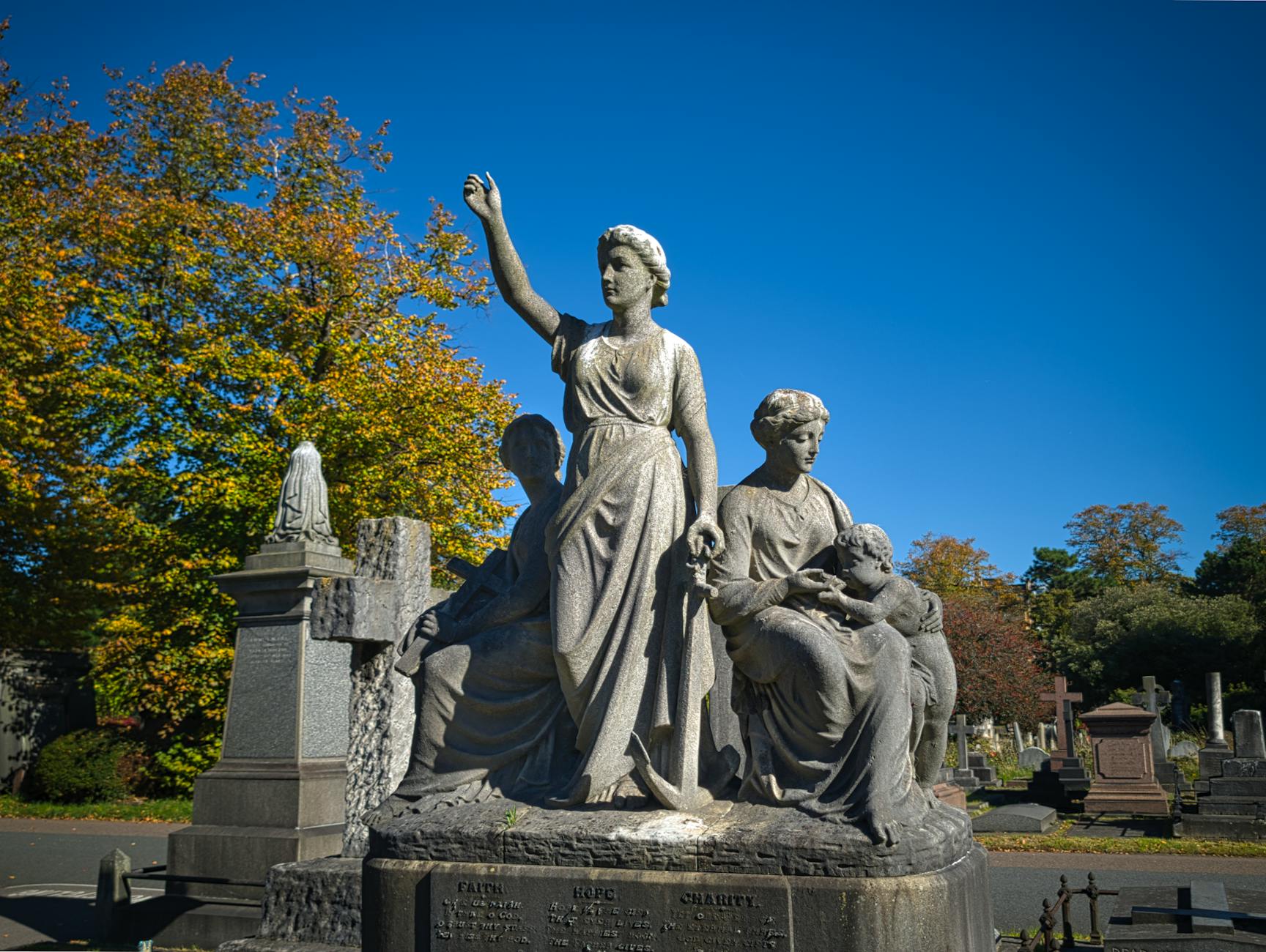
The oldest building in the city and the finest medieval building in the west of Scotland. St Mungo’s tomb is in the crypt — it has been a place of pilgrimage for over 1,400 years. Immediately beside the cathedral, the Necropolis is a Victorian garden cemetery containing some 50,000 burials and the most elaborate collection of Victorian funerary architecture in Scotland. The views of the cathedral from the top of the Necropolis are extraordinary. Free admission to both.
The Merchant City
The elegant Georgian streets immediately east of George Square were built by the Tobacco Lords and their successors. Wander Virginia Street (named after the tobacco colony), Glassford Street, and Ingram Street to see the warehouses and townhouses that tobacco wealth built. The area is now one of Glasgow’s most fashionable districts, full of bars, restaurants, and independent shops — but the bones of the 18th-century commercial city are clearly visible.
Kelvingrove Art Gallery and Museum
Opened in 1902, the building itself is a monument to Victorian Glasgow’s confidence and cultural ambition. The collections — spanning art, natural history, and social history — include world-class works by Rembrandt, Botticelli, Dalí, and Charles Rennie Mackintosh, as well as an outstanding display on Glasgow’s industrial history. Free admission.
The Riverside Museum
The city’s transport and social history museum, on the north bank of the Clyde where the shipyards once stood. The collection includes locomotives, trams, cars, bicycles, and a beautifully reconstructed 1900s Glasgow street. The Zaha Hadid building is a masterpiece of contemporary architecture. Free admission.
The Tenement House
A National Trust for Scotland property in Garnethill, the Tenement House is a perfectly preserved Victorian tenement flat — the home of shorthand typist Agnes Toward, who lived here from 1911 to 1965 and threw almost nothing away. It is the most intimate social history museum in Glasgow: you can stand in the kitchen where Agnes cooked, see the range she heated her flat with, and read the letters she kept. A remarkable window into Glasgow working-class life. Admission charge applies.
People’s Palace and Glasgow Green
Glasgow Green is the city’s oldest public park — Glaswegians have had the right to use it since the medieval period. At its heart is the People’s Palace, a social history museum telling the story of Glasgow and its people since 1750 through objects, photographs, and personal testimonies. Free admission. The adjacent Winter Gardens glasshouse (currently closed for restoration) is a Victorian gem.
Glasgow History: A Timeline
- c.543 AD: St Mungo establishes a church on the Molendinar Burn
- c.614 AD: Death of St Mungo; his tomb becomes a place of pilgrimage
- 1114: Glasgow gets its first bishop
- c.1175: Glasgow granted burgh status
- 12th–15th centuries: Glasgow Cathedral built and developed
- 1451: University of Glasgow founded by Papal Bull
- 1560: Scottish Reformation; tradesmen defend the cathedral from demolition
- 1674: First tobacco cargo arrives from Virginia
- 1707: Act of Union opens Atlantic trade to Scotland
- 1740s–1770s: Tobacco Lords era; Glasgow dominates British tobacco trade
- 1750: Population approximately 32,000
- 1776: American Revolution ends tobacco trade; merchants diversify
- 1780s onwards: Industrial Revolution; cotton mills, engineering, chemicals
- 1812: Henry Bell’s Comet launched — first practical river steamship
- 1821: Population reaches 147,000
- 1859: Loch Katrine water supply opened — major public health advance
- 1870: University of Glasgow moves to Gilmorehill campus
- 1888: International Exhibition; People’s Palace funded; City Chambers opened by Queen Victoria
- 1901: International Exhibition; Kelvingrove Museum and Art Gallery opens; population exceeds 900,000
- 1915: Glasgow Rent Strikes; Rent Restriction Act passed
- 1919: Battle of George Square; government deploys tanks against striking workers
- 1941: Clydebank Blitz — worst wartime bombing in Scotland
- 1960s–1970s: Deindustrialisation; shipyards close; population declines
- 1983: “Glasgow’s Miles Better” campaign; Burrell Collection opens
- 1988: Garden Festival on the Clyde
- 1990: European City of Culture
- 1999: UK City of Architecture and Design
- 2011: Riverside Museum opens (Zaha Hadid)
- 2021: COP26 Climate Conference hosted at the SEC Centre, Glasgow
Further Exploration
Glasgow’s history is richly documented and physically present across the city. The best way to understand it is to walk through it — from the medieval Cathedral Quarter to the Georgian Merchant City, through the Victorian grandeur of the city centre and the West End, and out to the regenerated Clyde waterfront. Our guides to Glasgow’s history and architecture will take you through the city’s built heritage in detail. And when you’re ready to explore beyond Glasgow, our day trips guide covers the landscapes — Loch Lomond, the Highlands, the islands — that shaped the history and character of the people who built this extraordinary city.