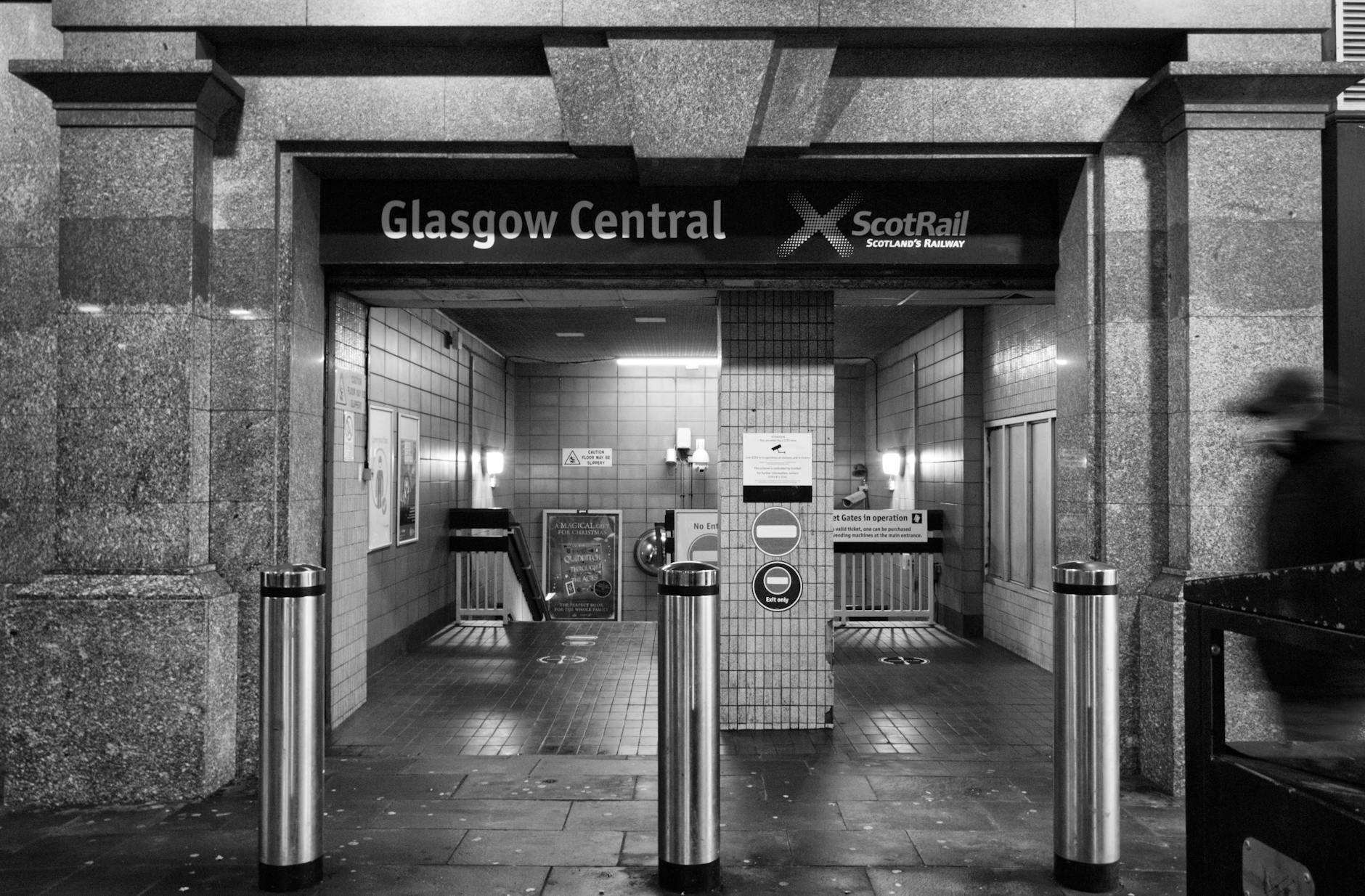
Trains in Glasgow are run by ScotRail and are by far the easiest way to reach the city’s day-trip destinations. Two main stations — Glasgow Central and Glasgow Queen Street — handle 30+ million passenger journeys a year between them, with services to Edinburgh, the Highlands, the Lowlands, the West Coast, the Cairngorms and even the world-famous Hogwarts Express line.
This is the complete 2026 guide to trains in Glasgow — both stations explained, where each one goes, the most useful tourist routes, ticket types, and how to save on fares.

Trains in Glasgow at a glance
Operator: Almost all services are ScotRail. Cross-border services to England are run by Avanti West Coast (from Central) and LNER (from Edinburgh, with Queen Street connections). Two main stations: Glasgow Central (south side; English routes, Lowlands, Edinburgh-via-Carstairs) and Glasgow Queen Street (north side; Highlands, Edinburgh-via-Falkirk, Stirling). Walk between them: 8-10 minutes via Buchanan Street.
Glasgow Central: the bigger station
Glasgow Central is the larger of the two main stations and the busier — 32 million passenger journeys per year. It’s a Grade A listed Edwardian glass-and-iron grand terminal (1879, expanded 1899-1906) with a brilliantly preserved interior. The station has 17 platforms; major shops; left-luggage; food courts; toilets and a station hotel.
What goes from Glasgow Central
- London Euston via Avanti West Coast — 4h 30m direct.
- Edinburgh Waverley via Carstairs — 1h 15m (the slower of the two Edinburgh routes).
- Glasgow Airport (via Paisley) — 8 minutes to Paisley Gilmour Street, then airport bus or taxi.
- Pollokshaws West (for the Burrell Collection) — 10 minutes.
- Lanark, East Kilbride and the South Lanarkshire suburbs.
- Ayr, Largs, Troon and the Ayrshire coast.
- Stranraer (for ferries to Northern Ireland).
- Suburban services across the south side and the south-west.
Glasgow Central is Scotland’s busiest railway station and your gateway to the south and the coast. This is where the trains from England arrive — London, the north-west and the Borders on the West Coast Main Line — along with services to the Ayrshire coast, the Clyde towns and, crucially for arrivals, Paisley Gilmour Street, two stops away, where you change for the airport bus. Pause under the great glazed Victorian trainshed before you leave: the glass-walled bridge carrying the station over Argyle Street is known locally as the ‘Hielanman’s Umbrella’, once a sheltered meeting spot for Highland migrants.
Glasgow Queen Street: the Highlands and Edinburgh fast-train station

Glasgow Queen Street is the smaller of the two main stations but handles the most useful tourist routes — the fast Edinburgh service, the Highland Main Line and the West Highland Line. The station was rebuilt in 2021 with a new glass-fronted entrance on George Square. 7 platforms; smaller food court than Central; left-luggage and toilets.
What goes from Glasgow Queen Street
- Edinburgh Waverley express via Falkirk — 50 minutes (the fast route).
- Stirling — 30 minutes; for our Stirling Castle day trip from Glasgow guide.
- Inverness via the Highland Main Line — 4h 35m, 14 services daily.
- Aberdeen via Dundee — 2h 30m.
- Oban, Fort William, Mallaig via the West Highland Line — Britain’s most scenic train route.
- The Hogwarts Express — the Jacobite Steam Train runs Fort William to Mallaig (board the Hogwarts Express by taking ScotRail Glasgow-Fort William).
- Helensburgh, Loch Lomond and the Trossachs.
A ten-minute walk away, Glasgow Queen Street handles the north and east. This is the station for the Edinburgh shuttle (every 15 minutes, about 50 minutes), for Stirling, Perth, Dundee and Aberdeen, and for the spectacular West Highland Line to Fort William and Mallaig — regularly voted one of the most scenic rail journeys in the world. It is also your train for a Loch Lomond day trip at Balloch. Recently rebuilt behind a wall of glass, it is bright, central and easy to navigate.
The most useful trains in Glasgow for tourists
1. Glasgow Queen Street to Edinburgh Waverley (50 minutes)
The fastest route between Scotland’s two biggest cities. Off-peak day return £15.50; anytime return £30. Trains every 15 minutes. See our Edinburgh day trip from Glasgow guide.
2. Glasgow Central to Pollokshaws West (10 minutes)
The standard tourist route to Pollok Country Park and the Burrell Collection. £4 return; trains every 30 minutes. See our Burrell Collection guide.
3. Glasgow Queen Street to Stirling (30 minutes)
For Stirling Castle and the Wallace Monument. £10.50 off-peak day return.
4. Glasgow Queen Street to Fort William and Mallaig (West Highland Line)

One of the world’s most scenic train journeys — Glasgow to Mallaig in 5 hours 30 minutes via Loch Lomond, Rannoch Moor, Glen Coe and Fort William. The Glenfinnan Viaduct (the Hogwarts Express bridge) is visible from the train. Single fare around £40-£60. Strong overnight or 2-day option.
5. Glasgow Queen Street to Inverness (Highland Main Line)
4h 35m direct service via Stirling and the Cairngorms. Single fare £45-£90. The Cairngorm National Park views are spectacular; recommended seat on the right going north.
6. Glasgow Central to Largs (Ayrshire coast)
1 hour to a charming Victorian seaside town with the best ice cream in Scotland. £8 off-peak day return.
7. Glasgow Central to Ayr (and Robert Burns country)
50 minutes; £10 off-peak day return. Day trip to Burns Cottage, Culzean Castle (with a bus connection) and the Ayrshire coast.
8. Glasgow Queen Street to Helensburgh / Balloch (Loch Lomond)
40 minutes to Balloch on the southern shore of Loch Lomond. £8 off-peak return. See our Loch Lomond day trip.
A handful of routes cover almost everything a visitor needs:
- Edinburgh from Queen Street — every 15 minutes, about 50 minutes.
- Balloch from Queen Street — the easy gateway to Loch Lomond, around 45 minutes.
- The Ayrshire coast (Largs, Ayr) and Wemyss Bay for the Clyde islands, from Central.
- Paisley Gilmour Street from Central — two stops, then the airport bus.
- Stirling from Queen Street — under an hour for the castle and the Wallace Monument.
How to buy train tickets in Glasgow
1. Buy at the station
Both stations have ticket offices and self-service machines. Machines accept cash, contactless and Apple/Google Pay. Ticket offices reduce hours after 8pm.
2. Buy on the ScotRail app
Download the official ScotRail app, create an account, and buy tickets up to 12 weeks ahead. Mobile tickets are accepted at all gates; some stations have e-ticket-only fastlanes.
3. Buy contactless on tap-on, tap-off lines
Suburban routes around Glasgow (Strathclyde area) are gradually rolling out contactless tap-on payments — by 2026 most central routes accept it. Check the ScotRail “Smart Ticketing” page for the current list.
4. Use Trainline or split-ticketing apps
Trainline aggregates ScotRail and other operators’ fares. Split-ticketing via apps like Trainsplit can save 30-50% on long journeys (legitimate; you stay in the same seat). Particularly useful for Glasgow-London journeys.
Buy before you board. The simplest route is the ScotRail app or website, which shows live times and the cheapest fares; the station ticket machines and staffed counters are the fallback, and contactless ‘tap in, tap out’ is rolling out on some city lines. For longer journeys, advance singles booked ahead are far cheaper than buying on the day — though for the frequent Edinburgh and Stirling shuttles you can just turn up. Many suburban stations have no barriers, but you still need a valid ticket before you travel.
Trains in Glasgow ticket types
- Anytime return: Travel any time on the day. Most expensive.
- Off-peak return: Travel after 9.15am Mon-Fri (any time on weekends). Cheaper than anytime.
- Super off-peak: Restricted to specific time windows; cheapest if you fit.
- Advance fares: Booked specific train, sold in tiers; often the cheapest option (£8-£25 single for typical city-pair routes).
- Day Tripper Travelpass: £24.10 for a full day’s unlimited rail/Subway/bus across Greater Glasgow — best value for a day exploring multiple destinations.
- Spirit of Scotland Travelpass: £149 for 4 days’ unlimited rail across Scotland — for visitors doing a wider Scotland trip.
The fare jargon is simpler than it looks. Anytime tickets are flexible and dearest; Off-Peak tickets are cheaper but barred from the busiest commuter trains; and Advance tickets, booked ahead for a specific train, are the cheapest of all on longer routes. Singles are often barely cheaper than returns, so check both. For a few days of heavy rail use, a multi-day Rover pass can beat buying tickets one by one.
Railcards that work on trains in Glasgow
UK railcards save 33% on most train fares. The relevant ones:
- 16-25 Railcard (£30/year)
- 26-30 Railcard (£30/year)
- Senior Railcard (£30/year, age 60+)
- Two Together Railcard (£30/year, two named adults)
- Family & Friends Railcard (£30/year)
- Disabled Persons Railcard (£20/year)
One Glasgow-Edinburgh return pays for most railcards twice over.
If you qualify, a railcard pays for itself almost immediately — each knocks roughly a third off:
- 16–25 and 26–30 Railcards for younger travellers.
- Senior Railcard for over-60s.
- Two Together for two named adults travelling together.
- Family & Friends, which also discounts accompanying children.
- Multi-day Rover passes if you’re touring Scotland by rail.
How to walk between Glasgow Central and Glasgow Queen Street
It’s an 8-10 minute walk through the city centre — exit Central via the main doors onto Gordon Street, walk east along Gordon Street and St Vincent Street to Buchanan Street, follow Buchanan Street north to George Square, and Queen Street is on the western side of the square. Signposted throughout. The walk is mostly covered in summer (under shop awnings) — you’ll get rained on slightly but not soaked.
The two main stations are not connected, and a surprising number of visitors miss a train assuming they are. They sit about a ten-minute walk apart: from Central, head up Gordon Street, along Buchanan Street and West George Street to Queen Street on George Square. Leave yourself fifteen minutes with luggage, and don’t book a tight connection between an arrival at one and a departure from the other.
Glasgow trains and the Subway connection
Both train stations connect to the Subway:
- Glasgow Central: St Enoch Subway is 5 minutes’ walk via the Argyle Street arcade.
- Glasgow Queen Street: Buchanan Street Subway is 2 minutes’ walk via Queen Street.
Trains and Subway are NOT on a single integrated ticket — each requires its own. See our Glasgow Subway guide.
Trains and the Subway work best together. Partick is the key interchange where the rail network meets the Subway and gets you to the Riverside Museum and the western West End; Buchanan Street Subway sits right beside Queen Street rail. Think of the train for longer hops and the suburbs, and the Subway loop for quick central and West End journeys.
Glasgow trains and the airport
Glasgow Airport doesn’t have a direct rail connection. The standard route from Glasgow Central is: train to Paisley Gilmour Street (8 minutes), then bus 757 or taxi to the airport (10 minutes). Total cost £8-£15. Most travellers find the McGill’s Glasgow Airport Express bus 500 (direct from Buchanan Bus Station, 15 minutes, £9 single) easier. See our Glasgow Airport to city centre guide.
One thing to know before you fly in: there is no direct train to Glasgow Airport. Your options are the train to Paisley Gilmour Street and a short bus or taxi from there, or the Glasgow Airport Express bus straight from outside Central and Buchanan Bus Station. Edinburgh Airport, by contrast, links to its city by tram — worth remembering if you’re choosing between the two. Full detail is in our getting around Glasgow guide.
Trains in Glasgow accessibility
Both Glasgow Central and Glasgow Queen Street are fully step-free. ScotRail’s “Passenger Assist” service provides free pre-booked help with boarding, alighting and luggage — book at least 2 hours ahead via the ScotRail app or website. All ScotRail trains are wheelchair-accessible with priority spaces. Smaller suburban stations sometimes have step-only platforms; check the ScotRail “stations and facilities” page.
Most Glasgow stations and ScotRail trains are step-free and accessible, with staff assistance available — ideally booked ahead through ScotRail’s Passenger Assist, though they’ll help on the day where they can. The big central stations have lifts, accessible toilets and tactile platform edges; some smaller suburban stops are trickier, so check ahead if step-free access matters for your journey.
Trains in Glasgow opening hours
Both main stations are open from around 5am to 12.30am Mon-Sat, and from 7.30am to 11.30pm Sunday. Most ScotRail services run 6am-11pm; Sunday services start later (around 8am) and finish earlier.
Common mistakes by visitors using trains in Glasgow
- Going to the wrong station. Glasgow Central and Glasgow Queen Street are very different stations. Edinburgh fast trains run from Queen Street; Edinburgh slow trains run from Central. Highlands services from Queen Street; English services from Central.
- Buying a peak ticket when off-peak is fine. Off-peak starts at 9.15am Mon-Fri — wait 15 minutes for a 30%+ saving.
- Standing on platform 1. Both Glasgow stations now use platform numbers strictly; the destination board is more reliable than the platform memory.
- Getting on the wrong fast train. Edinburgh-via-Carstairs (slow) and Edinburgh-via-Falkirk (fast) both leave from Glasgow Central — check destination board carefully.
The classic visitor error is assuming Central and Queen Street are the same place or are connected — they’re a ten-minute walk apart, so never book a tight transfer between them. Other traps: buying on the day for a long journey (advance fares are far cheaper), and not realising Central has both high-level and low-level platforms, with the low-level Argyle line tucked underneath. When in doubt, ask — Glasgow station staff are famously helpful.
FAQs
What’s the difference between Glasgow Central and Glasgow Queen Street?
Glasgow Central serves cross-border English routes, the Lowlands and the south-west. Glasgow Queen Street serves the Highlands, Stirling and the fast Edinburgh route. Both are 8-10 minutes’ walk apart in central Glasgow.
How do I get from Glasgow to Edinburgh by train?
The fast train is from Glasgow Queen Street to Edinburgh Waverley — 50 minutes, every 15 minutes, £15.50 off-peak day return.
Are trains in Glasgow expensive?
For local routes (£4-£15.50 off-peak return), no. For long-distance routes (Inverness £45-£90, London £30-£250), advance booking saves significantly.
Can I use contactless on Glasgow trains?
Yes on most Strathclyde-area suburban routes (gradually rolling out). For longer routes you need a paper or mobile ticket.
What’s the most scenic train journey from Glasgow?
The West Highland Line from Glasgow Queen Street to Mallaig — 5h 30m through Loch Lomond, Rannoch Moor and the Glenfinnan Viaduct. Voted one of the world’s most scenic train rides.
How do I get to the Burrell Collection by train from Glasgow?
Glasgow Central to Pollokshaws West (10 minutes, £4 off-peak return), then 5-10 minute walk into Pollok Country Park. See our Burrell Collection guide.
Plan more of your Glasgow transport
This article is part of our wider getting to and around Glasgow guide. Pair it with our Glasgow Subway guide, our Glasgow bus guide, our Glasgow Airport to city centre guide, and our cheapest way to get to Glasgow deep-dive.