The Glasgow bus network is the most extensive single transport system in the city. Over 80 routes operated mostly by First Bus and McGill’s reach every corner of Glasgow and its suburbs — places the Subway and ScotRail trains don’t go — and a flat-fare £2.20 single (Mon–Fri) or a £5 all-day pass cover most visitor journeys.
This is a complete 2026 Glasgow bus guide: every operator, ticket type, the most useful routes for tourists, fares, opening hours and the multi-operator Tripper day pass that locals use to ride them all.
Glasgow bus operators
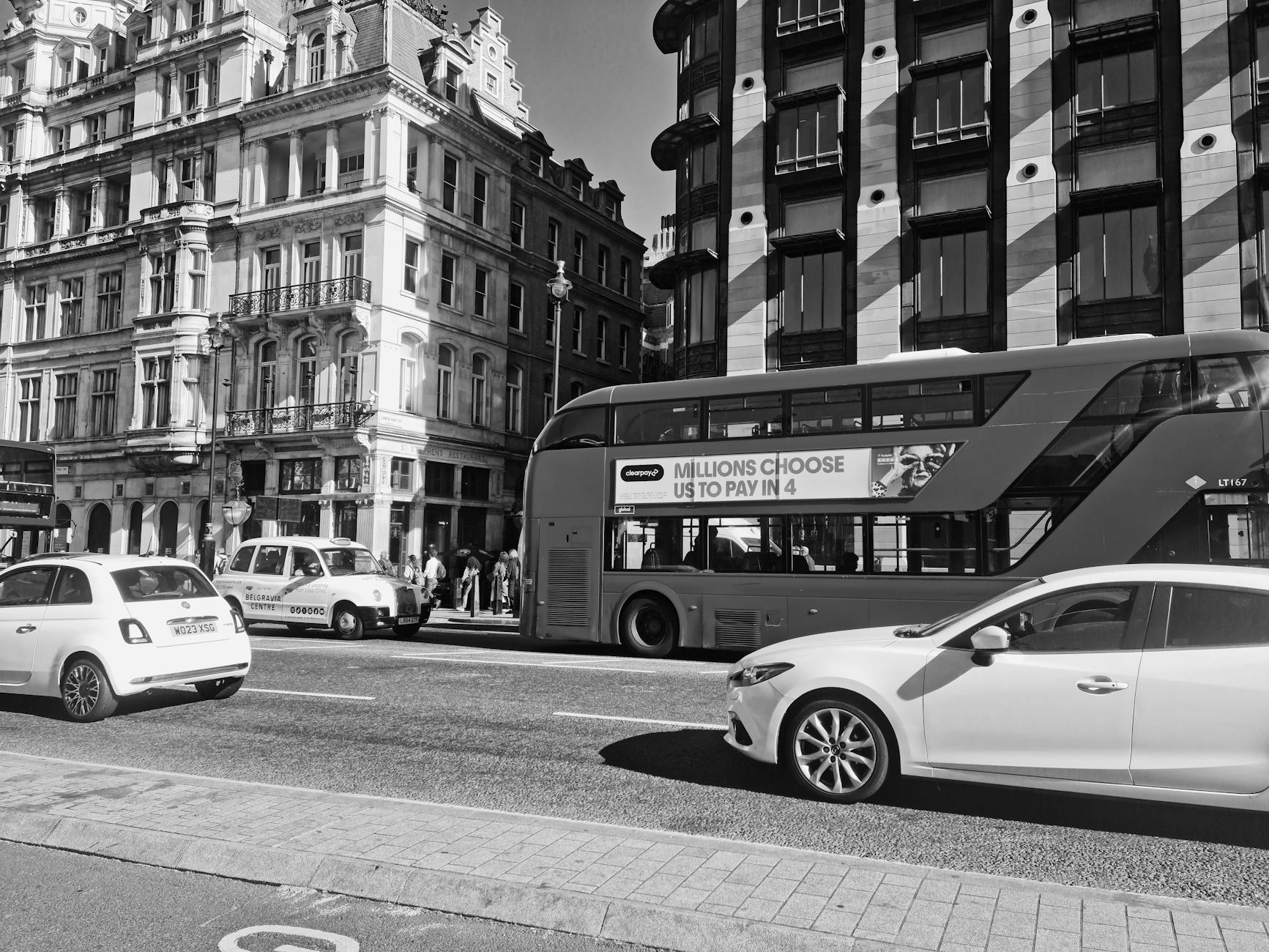
Three operators run almost all Glasgow bus services:
First Bus Greater Glasgow
The biggest operator. Over 80 routes covering central Glasgow, the West End, the Southside and most main suburbs. Easily identifiable purple-and-pink livery. Most tourists will use First Bus for the majority of their journeys.
McGill’s Buses
The second biggest. Strong on routes to Renfrewshire, Inverclyde and Greenock — also runs the Glasgow Airport Express bus 500 (city centre to Glasgow Airport).
Stagecoach West Scotland
Operates routes to Ayrshire, the south-west and parts of Lanarkshire — most relevant to visitors planning day trips to the coast (Largs, Troon, Ayr).
Smaller operators (West Coast Motors, Whitelaws) run routes to outlying suburbs.
Glasgow’s buses are run by private operators rather than one city authority, and the dominant name is First Glasgow, whose branded buses cover most routes you’ll need; McGill’s and a few smaller operators run others, mainly to the suburbs and beyond. The practical catch for visitors is that a ticket bought from one operator isn’t always valid on another, so it pays to know who runs your route — though for most city-centre and West End journeys that means First.
In practice, the name to know is First Glasgow, whose branded buses cover the overwhelming majority of routes a visitor will use; McGill’s and a handful of smaller operators run mostly suburban and regional services. Because tickets don’t always cross between companies, the one habit worth forming is a quick glance at the operator on the front of the bus before you tap or buy — for most central and West End trips, it’ll be First.
Glasgow bus tickets: what to buy
Single Glasgow bus tickets
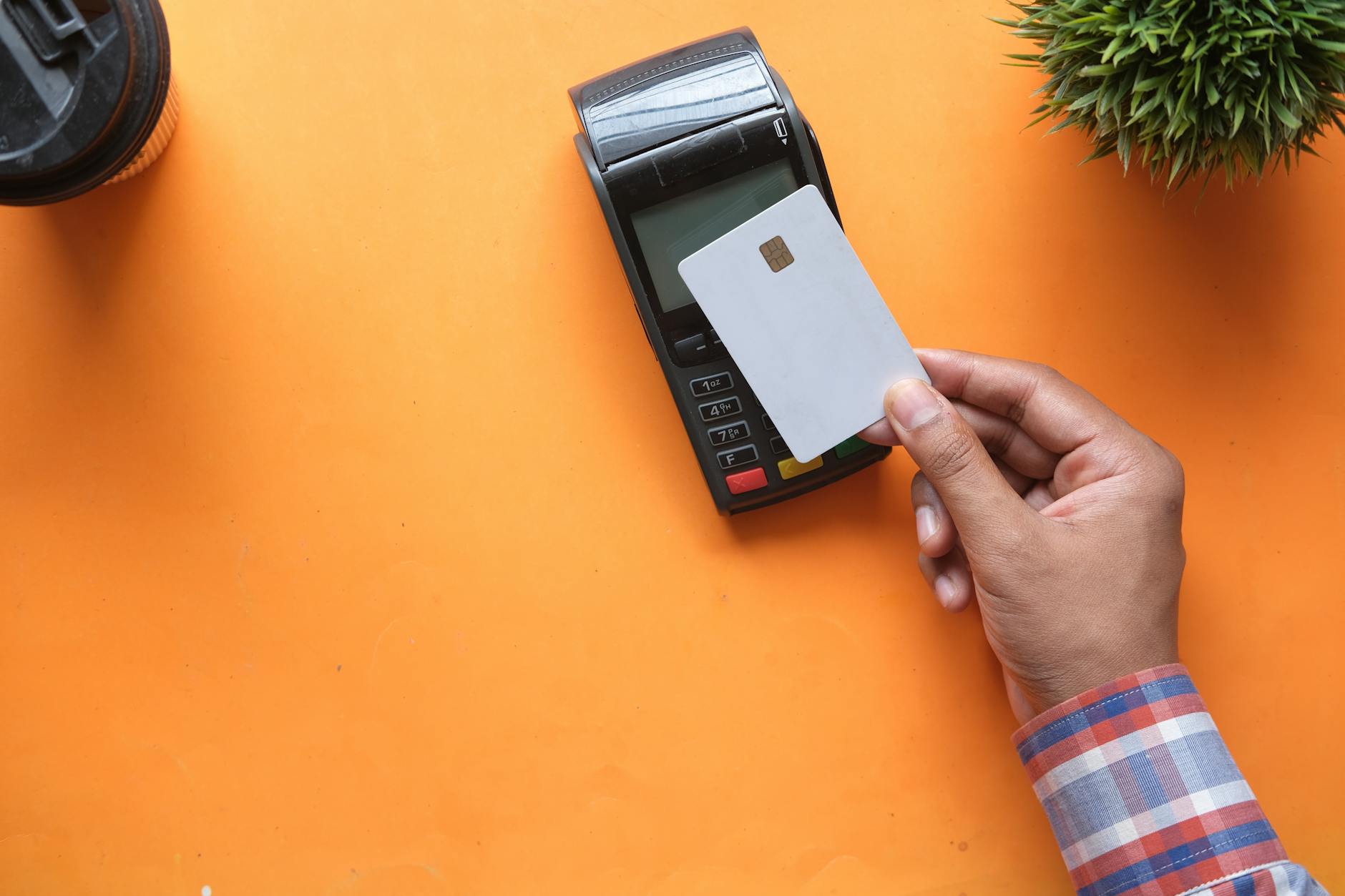
A standard adult single on First Bus costs £2.20 Mon–Fri 6am–9.30am, £1.90 off-peak. Children 5–15: £1.10. Buy on board with contactless or Apple/Google Pay (a single tap charges the right fare automatically). Cash accepted but exact change preferred.
First Bus day ticket — £5
Unlimited First Bus travel for one day (until 2.30am the following morning). Buy on board, on the First Bus app or at PayPoint stations. Best single ticket for tourists exploring multiple neighbourhoods in one day.
Glasgow Tripper — £6
The multi-operator day pass — covers First Bus, McGill’s, Stagecoach West Scotland, West Coast Motors and Whitelaws across the entire Greater Glasgow zone. Costs £6 a day. Available on the First Bus, McGill’s and West Coast Motors apps. The best value Glasgow bus ticket if you’re crossing operators.
Tap on/Tap off contactless
Contactless caps automatically: tap on every journey with the same card and you’ll never pay more than the day-ticket price (£5 First Bus / £6 Tripper across operators). Apple/Google Pay works the same way. The simplest way to pay if you’re not sure how many journeys you’ll do.
Weekly and longer passes
First Bus weekly: £18. Tripper weekly: £24. Tripper 4-week: £80. Useful if you’re staying a week+.
The easiest way to pay is contactless, tapping your card or phone as you board; First Glasgow caps your daily contactless spend, so you can’t pay more than the price of a day ticket however many journeys you make. Alternatively, buy single or day tickets in the operator’s app before you travel. One old-school rule still applies on board: drivers don’t give change, so if you pay cash, bring coins.
The most useful Glasgow bus routes for tourists
Bus 500 — Glasgow Airport Express
The dedicated airport express run by McGill’s. Runs every 10 minutes between Glasgow Airport and Buchanan Bus Station via Glasgow Central. Single £9, return £15. Journey 15–25 minutes. See our Glasgow Airport to city centre guide.
Buses 4 and 4A — city centre to West End
First Bus services running along Argyle Street and Sauchiehall Street up to Kelvingrove and the University. The most useful single tourist route for getting between the centre, Kelvingrove Park and the West End restaurants.
Bus 6 / 6A — University and Kelvinside
Useful for visiting Glasgow University and the Botanic Gardens.
Bus 18 — Glasgow Green and the East End
Connects the city centre with Glasgow Green, the Barras and the People’s Palace.
Bus 38, 38A — Cathedral, Necropolis and the East End
Runs from Buchanan Bus Station to Glasgow Cathedral, the Necropolis and the East End. Useful for visiting these historic sights.
Bus 57 — Pollok and the Burrell Collection
The standard public-transport route to The Burrell Collection and Pollok Country Park. From Argyle Street; takes 25 minutes.
Bus 100 — Riverside Museum
From George Square to the Riverside Museum and the Tall Ship.
Buses 23, 26 — Glasgow Science Centre
From the city centre to the Glasgow Science Centre via Pacific Quay.
Buses N1, N2, N3 — night services
First Bus runs limited night services on key corridors after the Subway closes (after 11.40pm Mon–Sat, after 6.10pm Sun). Useful for getting home from city-centre nightlife.
A few routes do most of the heavy lifting for visitors. The Glasgow Airport Express (500) runs frequently between the airport and the city centre; core First Glasgow services link the centre to the West End (for Kelvingrove and Byres Road) and out to the Southside; and a hop-on-hop-off sightseeing bus loops the main landmarks if you’d rather have the commentary. You rarely need to know route numbers in advance — a journey planner will hand you the right one.
For sightseeing without the planning, the hop-on-hop-off bus loops the headline sights — the Cathedral, the West End, the Clyde — with commentary and a ticket valid all day, which suits a first-timer wanting the lie of the land. Otherwise, the workhorse corridors out to the West End and down to the Southside run frequently enough that you can treat them almost like a turn-up-and-go service.
Glasgow bus stops and finding routes
Major bus hubs are Buchanan Bus Station (most long-distance and Citylink coaches), George Square (city-centre routes), Argyle Street (West End services) and Hope Street / Renfield Street (city-centre southbound services).
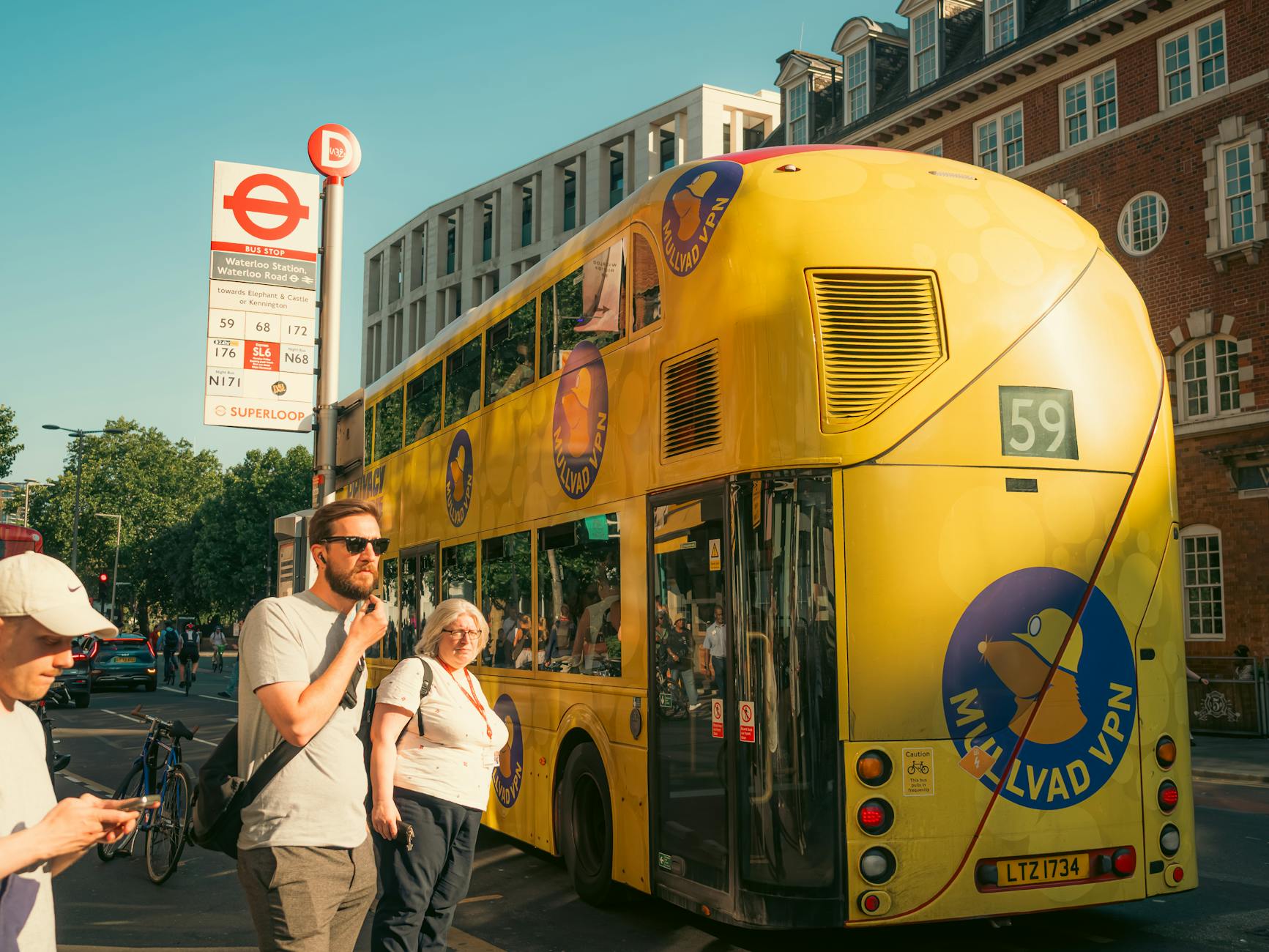
Every bus stop displays the routes that serve it and live next-bus times via QR code. The First Bus app and Google Maps both pull live arrival data and are reliable for planning. Citymapper covers Glasgow but isn’t quite as accurate as the official First Bus app.
Finding your bus is easiest with an app: the First Bus app shows live arrivals and caps your daily contactless spend, while Google Maps and Traveline Scotland cover every operator. At the stop, check the flag for the routes that call there. Two local quirks matter — many stops are request stops, so you must stick your arm out to make the bus stop, and you ring the bell once to get off. Stand and wave; don’t assume it’ll pull in.
One genuinely useful detail: paying by contactless on First Glasgow triggers automatic daily capping, so however many journeys you make, you’ll never pay more than the price of a day ticket — no need to work out in advance whether a day pass is worth it. The app shows your bus moving on a map in real time, which takes the anxiety out of waiting at an unfamiliar stop in the rain.
Glasgow bus opening hours
Most routes run from around 5.30am to 11.30pm. Sundays start later (around 8am) and finish slightly earlier. Night services on key corridors only — not as comprehensive as London. Plan an Uber or taxi for late-night returns to peripheral neighbourhoods.
Core routes run frequently through the day, roughly from early morning until late evening, thinning out after about 6pm. On Friday and Saturday nights a limited NightBus network covers the main corridors when the Subway has shut, which can be a cheap way home from a night out. Sunday and public-holiday services are reduced across the board, so check times rather than just turning up.
Frequencies are highest through the working day on the core routes, when popular corridors see a bus every few minutes. Plan a little more carefully for early mornings, late evenings and Sundays, when services thin out, and remember the weekend NightBus network if you’re heading home in the small hours. As ever, the app’s live times beat guessing at the stop.
How Glasgow bus fares compare to the Subway and trains
Subway flat fare: £1.80 single / £4.30 day. Train Glasgow Central to Pollokshaws West: £4 return. Bus £2.20 single / £5 day. The bus generally wins for whole-day exploration but is slower than the Subway across the city centre. The Subway is faster West End → centre; the bus is the only option for many south-side and east-end destinations.
For getting around, buses, the Subway and trains each have a place. Buses reach far more of the city than the compact Subway loop, which is brilliant but only serves the centre and inner West End and Southside. Trains are best for longer hops and the suburbs. For most visitors a mix works: the Subway for quick central hops, buses to reach the rest, and your contactless card capping the cost either way. See the full getting around Glasgow guide for the whole network.
On pure value for a day of city sightseeing, the bus often wins: contactless capping means a full day of hopping on and off costs no more than a single day ticket, and the network reaches far more of the city than the compact Subway loop. The trade-off is speed and simplicity — the Subway is quicker and easier on its central route, while the bus is the tool for everywhere the Subway doesn’t go.
Glasgow bus accessibility
All First Bus and McGill’s buses are low-floor with wheelchair spaces, audio-visual next-stop announcements and induction loops. Drivers will deploy the ramp on request. Free travel for personal assistants (apply via SPT). Guide and assistance dogs welcome.
Glasgow’s modern bus fleet is largely low-floor and wheelchair accessible, with a dedicated wheelchair space, priority seating and audio-visual ‘next stop’ announcements on most First Glasgow buses. Drivers will lower the ramp on request. If you use a mobility aid, board at the centre doors where indicated, and note that the wheelchair space takes priority over buggies, which may need to be folded at busy times.
Common mistakes by visitors using the Glasgow bus
- Trying to pay with notes — drivers can give change but it slows boarding. Use contactless.
- Not knowing about the multi-operator Tripper — paying single fares to two different operators is wasteful if you can buy a £6 day pass instead.
- Standing at the wrong stop — Glasgow has paired one-way streets where outbound and inbound stops are 100m apart. Check the route number on the stop pole.
- Boarding from the back door — All Glasgow buses board only at the front; pay the driver or tap on as you board.
- Hailing the bus — All Glasgow buses stop only at marked bus stops; you don’t need to flag the bus, but raising a hand confirms to the driver you want to board.
The things that trip up first-time bus users here:
- No change given — pay the exact fare in coins or, better, tap contactless.
- Tickets aren’t always valid across operators, so a First ticket may not work on another company’s bus.
- Not hailing the bus — at a request stop the driver won’t stop unless you signal.
- Missing your stop because you didn’t ring the bell in time.
Tipping and etiquette
No tipping. Standard etiquette: have your card or pass ready, board through the front door, give priority seating to elderly and disabled passengers, ring the bell at least one stop before you want to alight, exit via the rear door if possible.
You don’t tip bus drivers in Glasgow, but there is one lovely local custom: a quick ‘thanks, driver’ as you step off, which most Glaswegians do without thinking. Give up the priority seats near the front to those who need them, keep bags off seats on a busy bus, and you’ll fit right in.
How the Glasgow bus compares to Edinburgh
Edinburgh’s Lothian Buses is generally considered the better network in Scotland — slightly more frequent, better integrated, cheaper day fares (£4.50 day pass). Glasgow’s bus network is bigger by route count but slightly less coordinated because of multiple operators (the Tripper pass solves most of that).
If you’ve used the buses in Edinburgh, expect Glasgow to feel a little less seamless. Edinburgh is served mainly by a single operator (Lothian), so one ticket and one app cover everything; Glasgow’s network is run by several companies, chiefly First Glasgow, so it pays to know who runs your route. The flip side is reach — between them, Glasgow’s buses get you to far more corners of a bigger, more spread-out city.
None of this should put you off — once you’ve grasped the ‘know your operator, tap contactless, hail the bus’ basics, Glasgow’s buses are cheap, frequent and genuinely the key to seeing the city beyond the centre.
FAQs
How much is a single Glasgow bus fare?
£2.20 peak (Mon–Fri 6am–9.30am), £1.90 off-peak with First Bus. Children 5–15 half price. Day passes from £5.
What’s the best Glasgow bus pass for tourists?
The £6 Glasgow Tripper for multi-operator coverage if you’ll cross First Bus and McGill’s. The £5 First Bus day pass if you’re staying within First Bus territory.
Can I pay contactless on the Glasgow bus?
Yes — every bus accepts contactless cards and Apple/Google Pay. Daily caps automatically apply if you tap on with the same card.
What time does the Glasgow bus stop running?
Most routes finish around 11.30pm. Night services run on key corridors after that; check the First Bus app for the route nearest your stop.
How do I get from Glasgow Airport to the city centre by bus?
McGill’s Glasgow Airport Express bus 500 runs every 10 minutes; £9 single / £15 return. 15–25 minutes journey. See our Glasgow Airport to city centre guide for all options.
Are Glasgow buses safe at night?
Yes — central routes are well-used and CCTV-covered until 11.30pm. After that, take a taxi or Uber for peripheral journeys.
Plan the rest of your Glasgow transport
This guide is part of our wider getting to and around Glasgow guide. Pair it with our Glasgow Subway guide for the underground option, and our Glasgow Airport to city centre guide for arrivals.