Hiring a car in Glasgow opens up a world of possibility — not just the city itself, but the dramatic Highland landscapes, coastal villages, and whisky distilleries that lie within an hour or two’s drive. Whether you’re arriving at Glasgow Airport and heading straight for the Highlands, or based in the city and planning a day trip, this comprehensive guide covers everything you need to know about car hire in Glasgow: where to pick up, what to pay, how to navigate Scotland’s roads, and which road trips are worth every mile.
Should You Hire a Car in Glasgow?
Before diving into the details, let’s answer the most important question: do you actually need a car? The honest answer depends entirely on your itinerary.
If you’re spending your entire trip in Glasgow and Edinburgh, the answer is almost certainly no. Both cities have excellent public transport networks, and driving in Glasgow city centre brings its own headaches — parking costs, Low Emission Zone restrictions, and the simple fact that Glasgow’s compact centre is best explored on foot or by subway. The Subway, nicknamed the Clockwork Orange, serves the key areas perfectly. Buses reach everywhere else.
But if your plans include the Scottish Highlands, Loch Lomond, the Trossachs, Ayrshire coast, Argyll, or any of Scotland’s islands accessible by ferry, then a hire car transforms your trip entirely. Rural Scotland has limited public transport, and the freedom to stop at a passing loch, detour to a distillery, or linger at a Highland viewpoint is something no train schedule can replicate.

Where to Hire a Car in Glasgow
Glasgow Airport (GLA) — The Easiest Pick-Up Point
Glasgow International Airport (GLA) is the most convenient place to collect a hire car, particularly if you’re arriving by air and planning to head straight to the Highlands or another destination outside the city. All major international rental companies have desks in the terminal building, so collection is seamless after landing.
Companies operating at Glasgow Airport include:
- Avis: One of the largest international operators, with a broad fleet from economy to premium SUVs. Good loyalty programme.
- Hertz: Wide selection, competitive pricing when booked in advance. Gold Plus Rewards members can skip the desk entirely.
- Enterprise: Consistently strong customer service ratings, good selection of newer vehicles. Often competitive on price for longer rentals.
- Budget: Economy-focused, often the cheapest headline price. Read the insurance excess terms carefully.
- Europcar: European market leader, good availability, solid fleet.
- Sixt: Premium fleet with competitive pricing, particularly strong on premium and SUV categories.
Booking advice: Always book in advance online rather than walking up to the desk. Last-minute airport rentals can cost two to three times more than the same car booked a week earlier. Use a comparison site like Rentalcars.com, Kayak, or Auto Europe to compare across providers, then book directly with the company for the best terms.
City Centre Pick-Up Points
If you’re already in Glasgow and don’t need a car from day one, picking up in the city centre makes more sense. Several major companies maintain branches in and around the city centre:
- Arnold Clark: Scotland’s largest car dealer chain also operates one of the UK’s biggest car rental businesses. Multiple Glasgow locations, broad fleet, competitive prices, and the reassurance of a Scottish company familiar with local conditions. Excellent for longer-term rentals.
- Avis: City centre branch available for collections without the airport premium.
- Enterprise: Multiple Glasgow branches including city centre.
- Hertz: City centre options available.
City centre pick-up is ideal if you’re combining a day or two in Glasgow with a longer Highland driving trip — spend your first nights using public transport, then collect the car when you’re ready to head north.
Age Requirements and Licence Rules
Minimum Age for Car Hire in Glasgow
Age requirements vary between rental companies, but as a general rule:
- Minimum age: Usually 21, sometimes 23 depending on the company and vehicle category. Sports cars, luxury vehicles, and large SUVs often have higher minimums (25+).
- Under-25 surcharge: Most companies apply a “young driver” surcharge for drivers aged 21-24. This can add £15-30 per day to the rental cost. Factor this in when comparing prices.
- Licence holding period: Many companies require you to have held a full licence for at least one year, sometimes two. Some companies require three years for younger drivers renting premium vehicles.
- Maximum age: Some companies impose an upper age limit (typically 75-80). Check terms if this applies to you.
International Drivers: Which Licences Are Accepted
Scotland follows UK rules for driving licence acceptance:
- EU driving licences: Fully accepted. You can drive in the UK on your EU licence without any additional documentation.
- US and Canadian licences: Valid for driving in the UK on a visit. An International Driving Permit (IDP) is not legally required but is worth obtaining from your country’s automobile association before travel — some rental companies prefer to see one, and it can help with police checks.
- Australian and New Zealand licences: Accepted. An IDP is recommended.
- Most other nationalities: Can drive on a valid home country licence for up to 12 months as a visitor. Always carry your licence plus your passport. An IDP is advisable.
- Non-Latin script licences: If your licence is in a language that doesn’t use the Latin alphabet (Arabic, Chinese, Japanese, Korean, etc.), you will need an IDP. Without one, UK rental companies may refuse to rent to you.
Essential Scottish Driving Rules
If you’re visiting from outside the UK, Scotland’s road rules will require some adjustment. Here are the most important things to know before you turn the key.
Drive on the Left
Scotland — and the entire UK — drives on the left side of the road. For visitors from countries that drive on the right (the majority of the world), this is the single biggest adjustment required. Most drivers adapt quickly, but the moments of greatest risk are: pulling out from a parked position, exiting a car park or petrol station, and navigating roundabouts.
A useful mental trick: keep the kerb on your left side and your passenger on your right. When in doubt, look at where the other cars are and follow the flow. Take extra care after breaks when you’ve been out of the car.
Speed Limits
UK speed limits apply throughout Scotland unless signed otherwise:
- Built-up areas (urban): 30 mph (48 km/h). Applies whenever there are street lights unless otherwise signed.
- Single carriageway roads (rural): 60 mph (96 km/h) national speed limit for cars. Many rural roads are physically incapable of this speed — drive to conditions.
- Dual carriageways: 70 mph (112 km/h).
- Motorways (M8, M74, etc.): 70 mph (112 km/h).
- 20 mph zones: Increasingly common in Glasgow’s residential streets and city centre areas. Watch for signs.
Scotland operates average speed cameras on many major routes, including the A9 between Perth and Inverness. These measure your average speed across long sections of road — you cannot speed up between fixed cameras. Take these seriously.
Drink Driving: Scotland’s Stricter Limit
This is critical. Scotland has a lower drink-driving limit than England and Wales. The Scottish legal limit is 50mg of alcohol per 100ml of blood, compared to 80mg in England/Wales. In practical terms, this means even one or two drinks could put you over the limit, depending on your size, metabolism, and what you’ve eaten.
The safest and simplest rule: if you are driving, do not drink alcohol at all. Glasgow has excellent soft drinks, non-alcoholic spirits, and alcohol-free beer options. Designated driver status is widely respected. Penalties for drink-driving in Scotland are severe: an automatic 12-month driving ban, a criminal record, an unlimited fine, and potential imprisonment.
Mobile Phones
Using a handheld mobile phone while driving is illegal throughout the UK. This includes when stationary at traffic lights — if your engine is running and you’re in a public place, using a handheld device is an offence. Penalties include a £200 fine and six penalty points on your licence.
Hands-free use (phone mounted on dashboard, Bluetooth) is legal but you must maintain full control of the vehicle. Set up your navigation and music before you start driving. For Highland routes with poor signal, download offline maps in advance via Google Maps or Maps.me.
Roundabouts
Glasgow has many roundabouts. The rule is simple: give way to traffic already on the roundabout, approaching from your right. Enter only when there’s a safe gap. Signal left as you exit. Large multi-lane roundabouts can be intimidating at first — follow lane markings and don’t panic.
Seatbelts
Compulsory for all occupants of a vehicle, front and back seats. The driver is legally responsible for ensuring all passengers under 14 are properly restrained. Child car seats are required for children under 135cm tall or under 12 years old.
Glasgow’s Low Emission Zone (LEZ)
Glasgow operates a Low Emission Zone (LEZ) covering the city centre. The LEZ is designed to reduce air pollution by restricting access for the most polluting vehicles. Here’s what you need to know:
- What it covers: Glasgow city centre, roughly within the inner ring road. The zone is clearly signed at entry points.
- Which vehicles are affected: Most modern rental cars (Euro 6 petrol or diesel, or electric/hybrid) automatically comply and can drive in the LEZ freely. Older, more polluting vehicles cannot enter.
- Hire car compliance: Virtually all cars from major rental companies at Glasgow Airport and city branches will meet LEZ requirements. Confirm with your rental company when booking — any reputable company will be able to confirm compliance.
- Penalties for non-compliance: £60 fine for private vehicles (doubles for repeat offences within 90 days, up to a maximum of £480). Fines are issued automatically via camera recognition — there are no manual checks.
- EV charging in the LEZ: Glasgow has a growing network of EV charging points throughout the city centre. If you hire an electric vehicle, the ChargePlace Scotland app and network make charging straightforward.
Parking in Glasgow
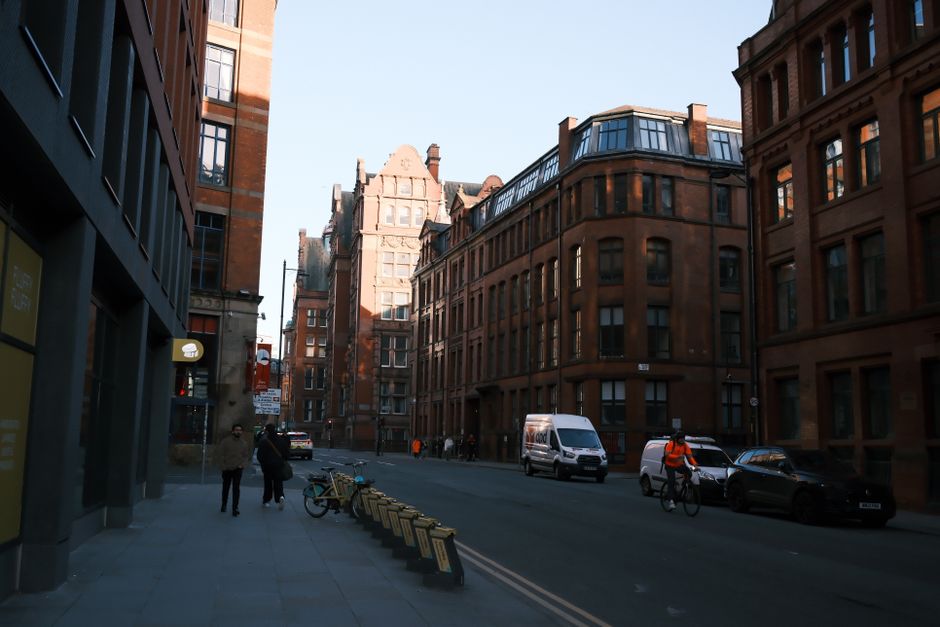
Parking in Glasgow city centre requires some knowledge to avoid surprises. Here’s how it works:
Car Parks
Multi-storey and underground car parks are the easiest option for city centre parking:
- NCP Car Parks: Multiple locations throughout the city centre. Pre-booking via the NCP app saves money vs. paying on arrival. Typical day rates: £8-20 depending on location and duration.
- Q-Park: Premium car park operator with several Glasgow locations including near the SECC/OVO Hydro and city centre.
- Glasgow City Council multi-storeys: Often cheaper than private operators. Look for council-operated signage.
- Hotel parking: If you’re staying at a hotel with parking, this is often the simplest solution for overnight stays. Negotiate parking into your room rate where possible.
On-Street Parking
On-street parking exists throughout Glasgow but requires careful attention to signage:
- Pay-and-display: Common in commercial areas. Buy a ticket from the machine, display it on your dashboard. Time limits and rates vary by zone.
- Resident permit zones: Many residential streets are permit-only during certain hours. A yellow “Residents” sign with times means you need a permit — don’t park here unless you hold one.
- Single yellow line: No parking during the times shown on nearby signs. Outside those hours, parking is permitted.
- Double yellow line: No parking at any time.
- RingGo app: Glasgow uses the RingGo parking payment system for on-street pay-by-phone parking. Download it before you arrive and register a payment method to make street parking straightforward.
Security note: Never leave valuables visible in a parked car anywhere in Glasgow — or anywhere in Scotland. Store bags in the boot before you arrive at your destination. Car break-ins, while not epidemic, do occur, and prevention is simple.
Driving on Single-Track Roads
If you’re venturing beyond Glasgow into the Highlands and rural Scotland — which you absolutely should — you’ll encounter single-track roads. These are roads wide enough for only one vehicle, with passing places at intervals. For many visitors, they’re initially alarming. Within an hour, they become part of the pleasure of driving in Scotland.
The Rules of Single-Track Roads
- Passing places: Marked with a white diamond sign or a white-tipped post. These are laybys wide enough for one vehicle to pull aside and let another pass.
- Who pulls in: Whoever reaches the passing place first pulls in to let the other vehicle pass. If the passing place is on your right, pull up opposite it and wait — don’t cross to the wrong side.
- Uphill priority: If two vehicles are approaching and neither has reached a passing place, the vehicle travelling uphill generally has priority (it’s harder to restart on a hill). Use common sense.
- Never park in a passing place: Passing places are for passing, not parking. Even briefly stopping to take a photo here blocks the road for everyone.
- The wave: It’s tradition — and good manners — to wave at the other driver after a successful pass. A simple hand raise is fine. This is Scotland; friendliness on the road is expected.
- Speed: Slow down significantly. Many visitors make the mistake of driving too fast for conditions — a car appearing around a blind bend on a single-track road requires you to have enough speed to stop in time.
- Livestock: Sheep, cattle, and even deer may be on or near the road. Approach carefully. Never honk aggressively at livestock — move slowly and they’ll usually shift.
Fuel: What to Know
Fuel prices in the UK are quoted in pence per litre. Typical prices for unleaded petrol (gasoline) range from 140-160p per litre (roughly $1.80-2.00 USD per litre, or $6.80-7.50 per US gallon at time of writing). Diesel is similarly priced. Fuel costs are significantly higher than in the United States but broadly comparable to much of Europe.
Key fuel tips for Scotland:
- Fill up in cities and towns: Petrol stations in remote Highland areas are less common and typically charge more. When driving through a town with a petrol station, fill up — don’t assume the next one is close.
- Supermarket fuel: Tesco, Asda, and Morrisons petrol stations typically offer the best prices. Glasgow and larger towns have these; remote areas don’t.
- Petrol vs diesel: Confirm which fuel your rental car takes before you drive off. Using the wrong fuel is an expensive mistake — rental companies typically don’t cover misfuelling, and cleaning a contaminated fuel system costs hundreds of pounds. The fuel cap is usually labelled.
- EV charging: If hiring an electric vehicle, the ChargePlace Scotland network provides charging points across Scotland, including many rural areas. Rapid chargers are available in most towns. Download the ChargePlace Scotland app and Zap-Map (which shows all UK charge points) before your trip.
Insurance: Getting It Right
Car hire insurance is one of the most misunderstood — and most financially important — aspects of renting a car. Here’s what you need to know:
What’s Included
Most rental cars in the UK include:
- Collision Damage Waiver (CDW): Covers damage to the hire vehicle, but usually with an excess of £500-£2,000 that you’re liable for even if the accident wasn’t your fault.
- Theft Protection (TP): Covers theft of the vehicle, again usually with an excess.
- Third Party Liability: Covers damage or injury to other people/vehicles. This is legally required and will always be included.
The Excess Problem — and the Solution
The most important thing to understand: even with CDW included, you will typically be liable for the first £500-£2,000 of any damage claim. Rental companies will offer to reduce or eliminate this excess for an additional daily fee — this is usually very expensive (£15-30 per day) and profitable for the rental company.
A much better option: purchase an annual hire car excess insurance policy from a third-party provider before you travel. Companies like iCarhireinsurance.com, AXA, and Questor Insurance offer annual policies covering your excess on any hire car worldwide, typically for £40-70 per year. This pays for itself on even a single rental and provides peace of mind for the entire year.
Credit Card Cover
Some premium credit cards (American Express Platinum, certain Visa and Mastercard products) include hire car excess cover as a benefit. Check your card’s terms carefully before assuming coverage applies — many cards exclude UK rentals, require the card to be used for payment, or have specific exclusions. Don’t rely on this without reading the small print.

Driving from Glasgow Airport to the City Centre
Glasgow Airport (GLA) is approximately 8 miles west of the city centre. By car, the journey takes 20-30 minutes under normal conditions via the M8 motorway, though rush hour (7:30-9:30am and 4:30-6:30pm weekdays) can extend this to 45-60 minutes.
The route is straightforward: exit the airport, join the M8 heading east, and follow signs for Glasgow City Centre. The motorway leads directly into the city’s ring road system. Most hire car sat-navs or your phone’s navigation will handle this without difficulty.
If you’re driving straight from the airport to the Highlands — a common strategy for visitors who want to get north quickly — head west on the A8 briefly, then pick up signs for the A82 north via Dumbarton and Loch Lomond. You can be driving alongside Loch Lomond within 30-40 minutes of leaving the airport.
Navigation Tips for Scotland
Navigating Scotland by car has become dramatically easier with smartphone technology, but there are important considerations:
- Google Maps: Excellent for most of Scotland. Real-time traffic data is useful around Glasgow and on the A9. Download offline maps for your intended travel area before you go — Highland areas have mobile signal black spots.
- Waze: Strong for traffic management around cities. Less useful in remote areas.
- What3words: This app divides the world into 3m x 3m squares, each with a unique three-word address. Scottish emergency services use it, and it’s invaluable for directing people to your exact location on a remote Highland road where there may be no postal address. Download it and know how to use it.
- Physical maps: An OS (Ordnance Survey) road atlas for Scotland is old-fashioned advice but genuinely useful when your phone dies or signal fails. Available at petrol stations and tourist information centres.
- Sat-nav units: Most hire cars include a sat-nav unit or phone mount. Confirm before collection.
Best Road Trips from Glasgow
This is where hiring a car in Glasgow truly pays off. Scotland’s driving routes are among the most spectacular in the world, and Glasgow sits at the centre of several legendary routes.
North: The A82 via Loch Lomond to the Highlands
The A82 is one of the world’s great drives. Head north out of Glasgow through Dumbarton, and within 20 minutes you’re running alongside the western shore of Loch Lomond — Scotland’s largest loch, surrounded by mountains that change character with every cloud. Continue north through the Trossachs, Glen Coe (one of the most dramatic landscapes in Europe, especially in moody weather), and on to the Highlands proper. Fort William, Ben Nevis, Inverness, and the North Coast 500 all become possible.
Day trip option: Loch Lomond and Balloch (30 minutes). Weekend option: Glen Coe and Fort William. Full week: The North Coast 500 loop from Inverness.
West: The Cowal Peninsula and Argyll
Head west on the A8 towards Greenock, take the ferry from Gourock across to Dunoon, and you’re in the Cowal Peninsula — a finger of Argyll pointing into the Firth of Clyde. From here, Inveraray (with its magnificent castle), Loch Fyne, and the rest of Argyll’s coastal splendour await. The drive south through Argyll and around the Kintyre Peninsula is extraordinary. You can also continue south from Greenock down the Ayrshire coast.
South-West: Ayrshire Coast and Burns Country
The A77 south from Glasgow leads to the Ayrshire coast — one of Scotland’s most underrated drives. Visit Alloway near Ayr, birthplace of Robert Burns, where you can tour the Burns Cottage and Brig o’ Doon. Continue south through Troon (famous golf) and Turnberry (home to Trump Turnberry golf course and views of Ailsa Craig rising from the Firth of Clyde). Culzean Castle, perched dramatically on coastal cliffs, is a National Trust for Scotland gem. The drive to Girvan and the Mull of Galloway rewards those who continue further.
East: Edinburgh and Beyond
The M8 motorway connects Glasgow to Edinburgh in under an hour — making a day trip to the capital entirely feasible by car, though the train is equally easy between cities. More interesting is what lies beyond Edinburgh: the Kingdom of Fife and St Andrews (home of golf), the Borders region with its ruined abbeys, and East Lothian’s coastal fishing villages and Tantallon Castle. East Lothian also has some of Scotland’s finest beaches.
Practical Tips for Driving in Glasgow
Getting Out of the City
Glasgow’s motorway network is extensive but can be confusing. The M8 is the main artery running east-west through the city. The M74 heads south towards England. The M80 heads north-east towards Stirling. Signage is generally good, but having your navigation running before you start moving is strongly recommended for city driving.
Road Conditions
Scottish winter weather can affect driving conditions significantly, particularly in Highland areas. Snow, ice, and low visibility are possible from October through April in upland areas. The Traffic Scotland website (traffic.gov.scot) and the Met Office provide real-time road conditions. Many Highland passes close in severe snow — check before you go. Hire car tyres may be summer tyres — if driving in winter conditions, ask specifically about winter tyre availability.
Breakdowns
All hire cars come with breakdown cover. Locate the breakdown number before you drive away and save it in your phone. In remote Highland areas, breakdown response times can be several hours — the RAC and AA operate throughout Scotland, and Highland breakdown specialists are available, but patience may be required.
Car Hire Costs: What to Budget
Hire car prices in Glasgow vary significantly depending on season, advance notice, vehicle type, and provider. As rough guidance:
- Economy car (Fiesta/Corsa class): £25-50 per day booked in advance; £60-100+ last minute or in peak summer.
- Mid-size (Golf/Focus class): £35-65 per day in advance.
- SUV/4×4: £50-100+ per day. Worth considering for Highland driving where ground clearance and all-wheel drive are useful on forestry tracks.
- Electric vehicle: Often competitively priced with economy cars; fuel savings can offset the premium if one is available.
- Automatic vs manual: Most European hire cars are manual/stick-shift. If you need an automatic (particularly common for US drivers), specify this when booking — automatic cars cost more and availability is limited, so book early.
Final Recommendations
Hiring a car in Glasgow is one of the best decisions you can make for a Scotland trip that goes beyond the cities. The freedom it provides — to stop at a Highland loch on a whim, to take a narrow coastal road on the Ayrshire coast, to reach a remote distillery that no bus visits — is transformative.
Our practical summary:
- Book in advance — always online, always early. Last-minute airport rental prices are painful.
- Don’t hire for city-only stays — use Glasgow’s excellent public transport instead.
- Get excess insurance before you travel from a third-party provider.
- Confirm LEZ compliance with your rental company for Glasgow city centre driving.
- Download offline maps for Highland areas before you leave cities.
- Don’t drink if driving — Scotland’s limit is strict and enforcement is real.
- Fill up in towns — Highland fuel is expensive and petrol stations are sparse.
- Embrace the single-track roads — they’re not as scary as they look, and they lead to the best places.
Scotland awaits. The car hire desk is in the terminal. Turn left when you leave Glasgow and head for the mountains — you won’t regret it. For more on getting around the city itself before your Highland adventure, see our complete guide to getting around Glasgow.